With the 2032 Olympic and Paralympic Games in Brisbane on the horizon, Australia is hard at work – and not just in the gym. As well as getting its athletes gold-medal ready, the country is seizing the opportunity to shape its national image.
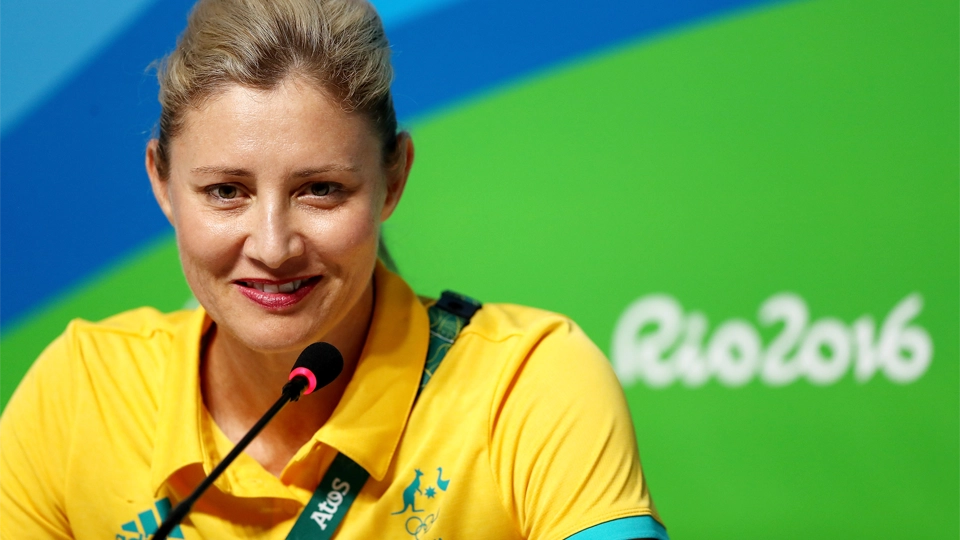
Fiona de Jong was instrumental in helping Australia secure the Brisbane 2032 Olympic Games. As Director of Sport and Chief Executive of the Australian Olympic Committee (AOC) from 2004 to 2016, she successfully delivered 10 Australian campaigns in nine countries. Now, she is helping the nation prepare for its next challenge by leading the Australian Institute of Sport’s European operations.
Madrid-based Bloom Consulting worked with the Australian Trade and Investment Commission on Australia’s nation-brand strategy in 2019. Its CEO, José Filipe Torres, talks to de Jong about storytelling on the global stage, the relationship between intellectual property (IP) strategy and nation branding and how Australia is approaching the 2032 Olympic Games. Its performance philosophy? “Win Well”.
You began your career in law before moving into sports leadership and nation branding.
I was at law school when I discovered triathlon and began juggling the demands of life as a student and as an athlete for Australia. After a number of years practicing law as an intellectual property lawyer in the IT sector, I wondered whether I could combine my love of law and sport to bring those worlds together.
Fundamentally, sport is about rules. So my background turned out to be important. I volunteered at my local triathlon club and quickly established that I was able to add a lot of value through governance and project management skills.
That led me to a role at the AOC in 2004, where I worked for 12 years – nine of those as Director of Sport organizing Australian Olympic teams, and three leading the organization as CEO.
During my time in 10 Olympic Villages, I rubbed shoulders with the rest of the world, which meant I was well placed to understand how the world views Australia. Combined with rebranding the Australian Olympic movement in my time as CEO, that led to my work on nation branding for Australia.
What did your legal experience allow you to see in sport that others may have overlooked?
A large part of organizing an Olympic team is project management and governance. A critical step in the process is selecting the teams. One of the fundamental aspects of my role as Director of Sport was developing selection policies for our Olympic teams that were clear, fair and transparent, so that any athlete could understand what they had to do in order to be selected for an Australian Olympic team.
Legal precedents are all based on telling stories, and the ability to tell the right story to the right audience is very important in nation branding
One of the things I am most proud of is the work we did to evolve, clarify and document those processes. It was also important that there was a legal process, so that athletes could appeal decisions they did not agree with. The person on the starting line at the Olympic Games has to be the person who deserves to be there.
So, from a legal perspective, what I perhaps saw more clearly was the need to ensure a sense of justice and fairness was brought to the Olympic selection process.
What about nation branding?
Nation branding is about using words wisely and articulating a vision in a compelling manner to a large extent. Lawyers are trained to do that – use words wisely, persuade, consume large amounts of information, synthesize it, and make decisions.
That skill set is important in a nation-branding context, because you need to digest what the world is thinking, saying and feeling, and then turn that into a coherent, well-articulated plan for the world to comprehend.
The second part is storytelling. Legal precedents are all based on telling stories, and the ability to tell the right story to the right audience is very important in nation branding.
Nation branding differs from classic IP rights. IP is based on finding a unique idea and protecting it from use by others for commercial outcomes. Nation branding is about identifying what differentiates your country from any other, then finding consistent ways to bring that to life with as many people as possible.
How do you prevent the national image of sport from becoming too narrow, or too defined by one sport or one personality? Can IP strategy help shape a more coherent national narrative?
I don’t think you can separate the two – individuals and nations. The risk is that when an athlete does something inappropriate, it reflects poorly on the country’s image.
In Australia, for example, the 2018 cricket sandpaper scandal was damaging to our national image because it went against the values that Australians hold dear: sportsmanship, fairness, playing by the rules.
That is why clarity in IP matters. It is important to structure rights and contracts clearly so that national teams, athletes and commercial partners understand where they stand, what rights they have, and who can exploit what opportunities and when.
One major change I’ve witnessed in recent years is the unbundling of IP rights in sporting properties, especially with the rise of social media. It used to be that broadcasters bought access to everything associated with a major sporting event. Now, those rights can be broken apart: internet rights, TV broadcasting rights, live television rights and social media rights.
That changes the IP landscape dramatically and gives organizations more tools to shape a coherent narrative across different audiences and platforms.
National teams and athletes are often perceived as public symbols. From an IP perspective, what constitutes the core assets of a national team?
It’s an interesting question, and one we had to answer when I was CEO of the AOC and we undertook a rebranding of the Australian Olympic properties.
When rebranding the Australian Olympic properties, the challenge was to modernize the brand and make it relevant to young people
It is not something you mess with lightly – there is a lot of history in national Olympic teams. So, we had to be very respectful of the past, but also to modernize, contemporize and simplify it.
We asked: what does the Australian Olympic brand have to represent?
And what are the attributes that our Olympic athletes carry that make them different from any other individual?
A few common attributes were highlighted by our research. First and foremost, there is what we call “mateship”. Being part of an Olympic team is so much bigger than who you are as an individual or your individual performance. The spirit of mateship is fundamental to the Olympic Movement, as is excellence. Mediocrity does not cut it. As Olympians, you are the best of the best, and that exclusivity is part of what makes it so special.
Then there is respect – respect for the rules, for each other, for authority – and sportsmanship. Often, the moments of sportsmanship are what move audiences most emotionally. For example, an Ethiopian and Kenyan runner sharing water in the final kilometers of the marathon.
When rebranding the Australian Olympic properties, the challenge was to capture mateship, excellence and sportsmanship while respecting the past, modernizing the brand and making it relevant to young people growing up in Australia.
The result was a vibrant and strong branding architecture that stood the test of time. It was a proud moment to see the colors and symbols we reimagined more than a decade ago looking strong and vibrant at the 2026 Milano Cortina Olympic Games.
How did you bring a strategy mindset into sports governance in Australia?
People think of sport as highly competitive on the field, but off the field there is a lot of collaboration. I would look at systems from other sporting organizations, consider what we could learn from them and then adapt them to the Australian context.
In 1981, in response to not winning any gold medals at the 1976 Montreal Olympic Games, Australia became one of the first nations to establish a centralized sports training facility, the Australian Institute of Sport. Australia went on to win a record 18 gold medals in the 2024 Paris Olympic Games.
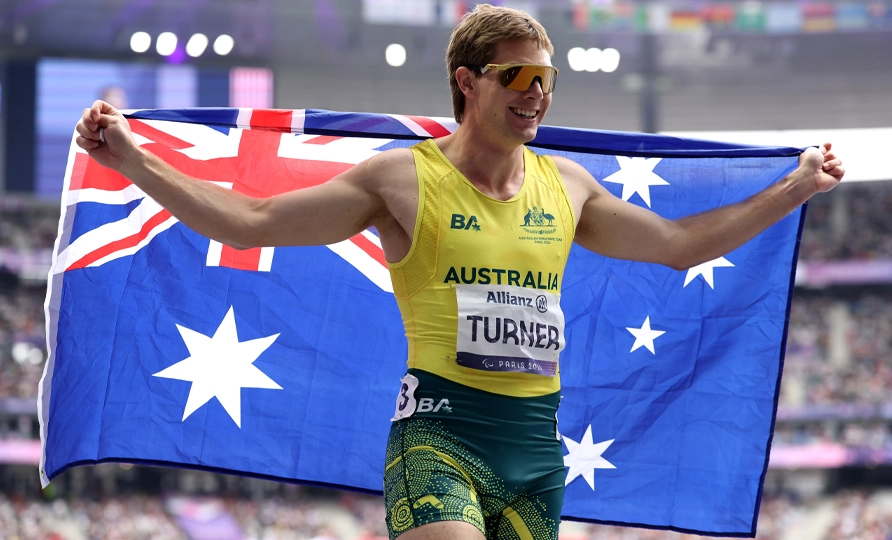
Many countries have set up similar institutes since 1981. Did other countries copy our idea of a centralized center of excellence for sport? Yes. And have we copied concepts from other sporting nations over the years? Yes.
The key is to adapt those ideas to account for the strengths and weaknesses of your own national sporting systems, policies and cultural practices.
Inspiration and sharing ideas are important, but blindly copying the approach of another country is unlikely to work.
Can you give an example?
A practical example is how each nation prepares its Olympic teams. A new edition of the Games takes place every four years, with the same structure but in a different city, with different conditions and challenges. So, from a National Olympic Committee perspective, you need to adapt to every new Olympic Games environment.
For Milano Cortina 2026, for example, Australia’s disadvantage was that it’s summer in Australia when it’s winter in Europe. So, our athletes had to spend many months away from home qualifying and competing prior to the Games.
Our competitive advantage, however, came in creating a home away from home, at the Australian Institute of Sport (AIS) European base in Italy.
Because we had local staff and native Italian speakers [in Italy] all year, we were able to source accommodation and high-performance facilities close to the competition venues but outside of the Olympic Village.
We had a base in Europe, we spoke the language, and we knew the region, so we were able to tailor a World Cup-style performance environment, rather than the typical high-pressure Olympic Games environment.
For the Olympic Games in the French Alps in 2030, we will need a different strategy. The key to each of the Games is seeing what drives a competitive advantage: understanding our past decisions that worked and what needs to evolve. No two countries approach it the same way because no two countries start with the same problems to solve.
How do you protect team marks and athletes’ image rights without eroding authenticity? Where do conflicts arise between personal image rights and national representation?
This was part of my role as CEO at the AOC. As a National Olympic Committee, we basically only sell the rights to the team for four weeks every two years, for the Summer and Winter Games.
The only real opportunity to leverage our brand is during those short periods, so you need a strong IP framework and a strong brand to make the commercial model work.
The AOC and its sponsors have exclusive rights to use an athlete’s image during the Games. For the rest of the year, the athlete has the opportunity to sell their own rights and manage their own image.
That model has come under scrutiny in recent years, particularly with the rise of social media. However, because it is such a short period, though, the legal construct says it is acceptable – you are not unreasonably restraining the trade of the individual.
The athlete gets to tell a more personal story in the moments between Games, while the national team brings people together with a collective story.
I believe there is space for different brands in the market. Olympic team sponsors are often large multinationals looking to connect with international or national audiences, while individual athletes may have smaller, more nimble brands that want closer alignment with that athlete’s personality and audience.
How have you been involved in Brisbane 2032?
I was born in Brisbane, it’s my hometown. Welcoming the world to Brisbane for the Olympic Games will be a full-circle moment.
I have lived in Australia my whole life, but I moved to Italy in 2023 to lead the European Training Center of the Australian Institute of Sport.
It has been a great privilege to run the Center for the past three years, with two consecutive Olympic Games in Europe. It has also allowed me to learn more about high-performance sports systems in European countries and practice sports diplomacy every day, advocating the strengths of the Australian sports system.
Having lived in Europe, I now have a better understanding of how the rest of the world sees Australia and, as countries prepare for the Brisbane 2032 Olympic and Paralympic Games, I’m able to guide them on some of the fundamentals.
For example, the 24-hour travel that Australians are used to is not usual for Europeans. I can help connect them with the right people in Australia to design important elements of their high-performance training and pre-Games camps.
Recently, the French team travelled to Australia for their first planning visit, looking for training facilities for their athletes. Being from Brisbane myself, I want their team to have a positive experience in Australia, starting now.
The other aspect of my work has been connecting companies that successfully delivered services for Paris in 2024 or Milano Cortina in 2026 and wish to use those learnings to support Brisbane 2032.
What is the Brisbane 2032 strategy?
We are two years into the 10-year 2032 strategy. At the core of this high-performance strategy is a philosophy: “Win Well”.
Yes, we want to win a lot of medals, but we want to do it well. We care about the wellbeing of our athletes. The philosophy is that, if we can deliver high performance in a sustainable way, the results will follow.
This logic may even extend to the role of IP, for instance, in how we approach the protection and strategic use of the "Win Well" slogan as part of our branding and communications.
The economic effect of the Games will not be judged at the closing ceremony; it will be judged 10 years later
This philosophy has also shaped some deliberate policies and programs, including equal access for women to ensure their needs are met in a high-performance environment as well as guidance in areas such as personal branding and image rights.
Every country and every city is now more conscious of the long-term economic impact that major sporting events can bring. The International Olympic Committee (IOC) has also changed its host city model to reflect this more sustainable model. It is no longer about placing the burden on one city to build everything needed to host the Olympic Games.
Getty Images/Ampueroleonardo
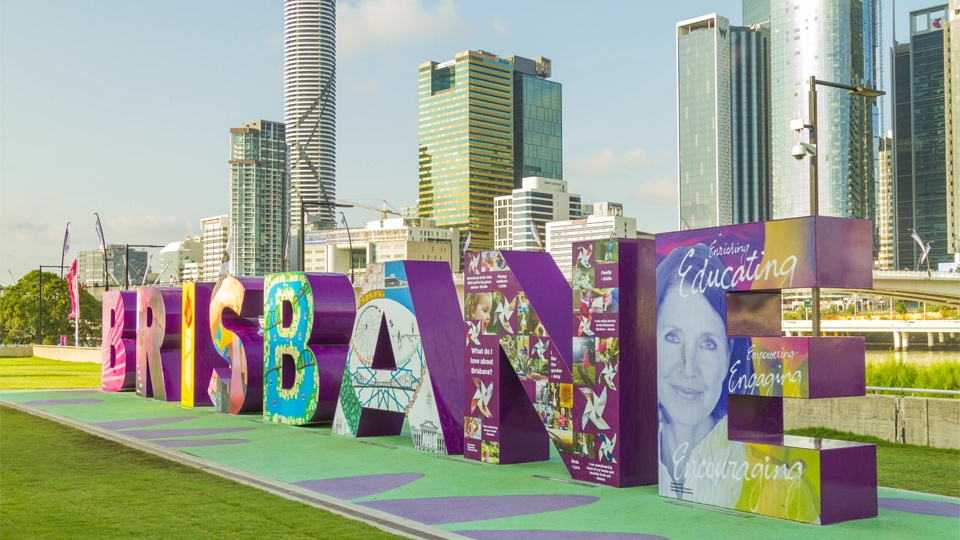
The same is true for Brisbane: the 2032 Olympic Games represent an opportunity to accelerate infrastructure developments that southeast Queensland needs to sustain its positive migration over the coming decade.
It is important that the Games leave Brisbane and Queensland in a better place beyond the 10-year lead-up. The economic effect of the Games will not be judged at the closing ceremony; it will be judged 10 years later.
When we worked together in 2019, Australia was one of the pioneering countries in employing the nation brand as an asset that brings economic value. In 2023, the country took part in our research on the impact of nation and place brands. How do you think sports strategy contributes to a nation’s brand and economy?
Sport is a vehicle through which the rest of the world encounters Australia. We are not well known internationally for many things, but we are recognized for our sporting success. This gives us an opportunity to tell stories about who we are beyond the field.
That is how sport becomes useful to nation branding: it opens the door to wider economic and reputational value
One of the most important things I learned from our nation-branding work is that no two countries have the same problems to solve. Australia does not really have a likeability or favorability problem – most people think quite positively about Australia. What we have is a relevancy problem.
People tend to only think about Australia as a tourism destination. But if we want to grow our economy, we need more people around the world to buy our products and services. That means they need to know our strengths.
For us, sport is not just about being good on the field. It is also about telling stories about our sports technology, sports medicine, sports science, and the systems and expertise that sit behind our sports performance. Sport becomes useful to nation branding by opening the door to wider economic and reputational value.
With Brisbane 2032 on the horizon, that opportunity becomes even greater. The world will have a reason to pay attention to Australia, and we can use that platform to tell stories not only about sports performance, but also about the technology behind it, the sustainability initiatives related to the venues, the governance structures and the standards around how the event is being delivered.
The lead-up to the Games is every bit as important as what happens on the field.
About the author
José Filipe Torres is a nation and city branding expert, consultant, and spokesperson. He is the CEO and founder of Bloom Consulting, a global firm specializing in nation and city branding, which he founded in 2003 and is based in Madrid, Spain.