
IP around the World
IP and Development: Tunisia – Developing a Knowledge Economy
Plans X and XI focus on policy reform in education, stimulating research and development through the creation of technology poles, increasing access to the Internet and strengthening the country’s intellectual property (IP) system.
The Arts and Copyright - New Publication for Schools
Aimed at 9 to 14 year-olds, The Arts and Copyright weaves a richly informative account of the principles of copyright law around a wealth of colorful examples.

Rock ’n Roll in Bangladesh: Protecting IP Rights across Borders
This is an abridged version of a case study written by Abul Kalam Azad, Professor of Economics at the University of Chittagong, Bangladesh, and first published by the World Trade Organization (WTO) in “ Managing the Challenges of WTO Participation: 45 Case Studies.”
Geographical Indications: From Darjeeling to Doha
This is the first in a new series of WIPO Magazine articles on geographical indications (GIs), responding to readers’ requests for greater coverage of GI-related topics.
WIPO Awards for Cuban Innovators
Two teams of Cuban scientists received WIPO Gold Medals in April for biotechnological inventions, which were singled out for their high social and economic impact.
National Strategies and Policies for Innovation: A View from China and India
Two invited government officials, Mr. Liu Jian, Division Director, International Cooperation Department, State Intellectual Property Office of the Peoples’ Republic of China (SIPO), and Mr. T. C. James, Director of the Intellectual Property Division, Ministry of Commerce and Industry, India, presented the intellectual property policies of their respective government.
Letters and Comment
This article is part of our archive, offering insights from past editions. Continue reading to discover how intellectual property can foster creativity, innovation and social progress.
IP Rights and Economic Development: A Historical Perspective
Professor Zorina Khan's award-winning book, “The Democratization of Invention,” contrasts the structures of the IP systems in Europe and the U.S. during the 19th century, and analyzes the effect on industrialization and economic development in these regions. In this interview she draws analogies with the situation in developing countries today.
Country Focus: IP Revolution – How Japan Formulated a National IP Strategy
This article is excerpted from Mr. Arai’s latest book, Intellectual Property Revolution, published (in Japanese) by Kadokawa Publishing Corporation, Tokyo, in September 2006.

Hounding Out Piracy: Operation Double Trouble
Malaysia’s new champions in the fight against film and music piracy are only three years old, but are already making their mark. Meet Flo and Lucky.
Green Design – From Cradle to Cradle
The green market is expanding rapidly and eco-friendly design is helping companies to stand out from the competition. Green designers – a new breed of environmentally conscious engineers and architects – are rethinking entire product life cycles, from the industrial manufacturing processes, to what happens at the end of the life of the product. Some products created according to these principles now carry a new certification mark: Cradle to Cradle (C2C).
Brazil harvests the wealth of its rain forests
This article by Michael Ryan was first published in the IP Legal Times of May 2006. Mr. Ryan is the Director of the Creative and Innovative Economy Center at the George Washington University Law School. He is currently writing a book on drug innovation, patents, and health security in developing countries. This article is reproduced with the permission of the author.
Technology Based on Traditional Knowledge and Genetic Resources: Sharing the Benefits
Technological developments have increased our ability to derive industrial and commercial benefits from traditional knowledge (TK) and genetic resources. As seen in the previous article on Brazil, there are many examples of TK and genetic resources providing essential inputs to the development of valuable new products including medicines, crops and industrial enzymes.
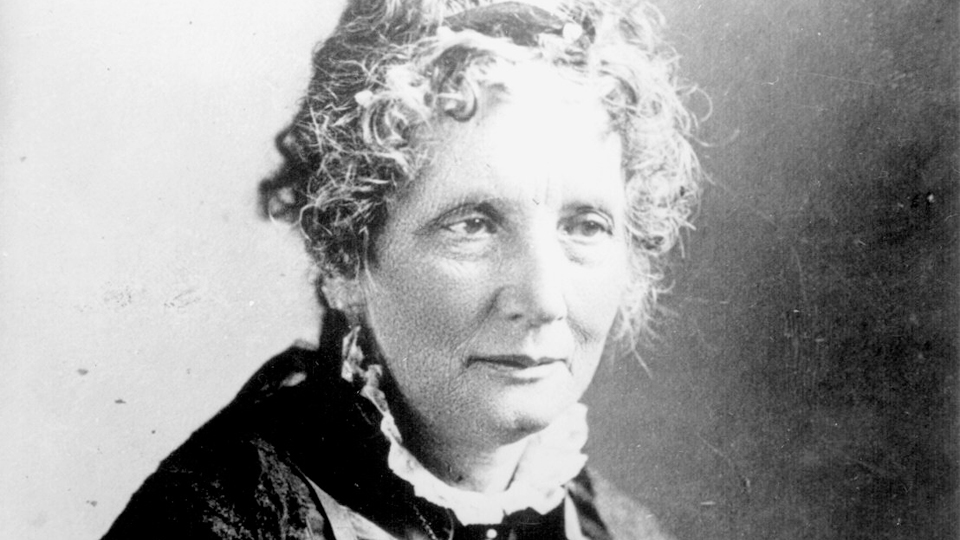
Book review: American Women Authors and Literary Property, 1822-1869
To mark International Women’s Day, March 8, WIPO Magazine reviews Melissa Homestead’s work on American women authors and literary property, which portrays the plight of women authors in a society that did not permit married women to exercise their own copyright and that lacked an instrument for the international protection of copyright.
Committee Meetings
This article is part of our archive, offering insights from past editions. Continue reading to discover how intellectual property can foster creativity, innovation and social progress.
Green Technologies: Electric Cars with Hydrogen Fuel Cells
Hydrogen is one of the most plentiful elements in the universe. It can be extracted from natural gas, coal, crude oil, etc., but water is the only pollution-free source of hydrogen. The hydrogen and oxygen atoms in water can be easily and cleanly split apart by electrolysis, ideally using electricity from clean sources, such as solar panels and wind turbines. The resulting hydrogen can be compressed for storage and use in fuel cells.
Results of the 2006 Assemblies of WIPO Member States
The Assemblies of WIPO’s 183 Member States concluded on October 3, having achieved consensus on every item on the agenda. This article is a report of the principal decisions of the meetings.
Showing 20 of 471 results