Sport makes us think of competition, athletic achievement and global spectacle. But behind every record-breaking performance, contentious referee decision or new fan experience lies something less visible: innovation.
From advanced materials in sports gear to wearable sensors that monitor athletes’ physiology, technology is increasingly shaping how sport is played, governed and experienced. And data analytics, digital platforms and assistive technologies sit alongside physical skill as key drivers of performance.
Sport is evolving. Patents, trademarks and designs do more than protect inventions, brands and product designs. Together, these intellectual property (IP) rights form a vast dataset that reveals where innovation is happening, who is driving it, and how technologies develop over time.
From intuition to data
Not long ago, decisions in professional sport were guided by intuition. Talent scouts trusted their instincts, coaches relied on experience, and players were valued as much for perceived potential as measurable performance. Over the past 25 years, however, the ways that sports data can challenge convention, uncover hidden opportunities and change decision-making have become increasingly clear.
In 2002, Billy Beane, the coach of the Major League Baseball team Oakland Athletics, used statistical analysis to build a competitive squad on a limited budget. Instead of relying only on traditional scouting judgments, he focused on overlooked performance metrics to identify players whose true value was underestimated by others. The “Moneyball” story, which became a bestselling book in 2003 and a feature film starring Brad Pitt in 2011, demonstrated that performance, value and competitive advantage can be measured rigorously and uncover insights that contradict long-held assumptions.
Between 2016 and 2025, the sports sector generated more than 1.25 million trademark registrations
Today, data analytics is embedded throughout sport: teams adjust tactics using real-time performance data; athletes monitor training load, recovery and injury risk through wearables; and fans engage through advanced statistics, fantasy leagues and increasingly data-rich broadcasts.
Data has become a strategic asset. Innovation can be understood in much the same way. IP records can spotlight innovation and tell us how technologies are moving from concept to market. Analyzed systematically, IP data becomes a powerful tool for tracking innovation itself.
What the data reveals
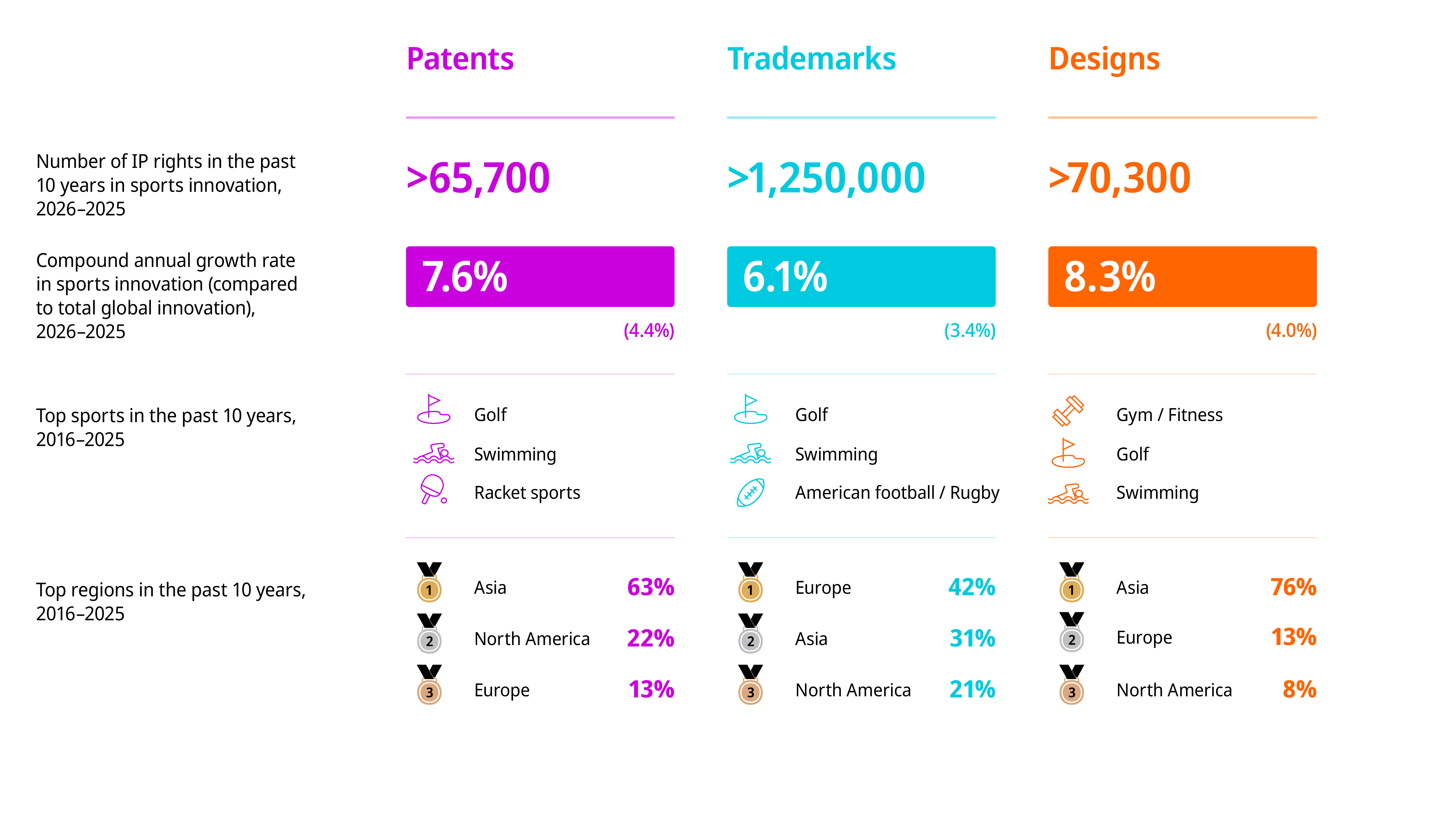
Between 2016 and 2025, more than 65,700 sports technology inventions were disclosed in published patent families worldwide. Over the same period, the sports sector generated more than 1.25 million trademark registrations and about 70,000 design filings.
The growth rates are even more telling. Sports technology patents increased at a compound annual growth rate of 7.6 per cent, compared with 4.4 per cent for patents globally.
Commercial activity shows a similar pattern. Sports-related trademarks grew by 6.1 per cent annually, nearly double the 3.4 per cent growth rate across all trademarks.
The strongest relative growth appears in design filings, where sports-related designs increased by 8.3 per cent annually, compared with 4 per cent across all sectors.
Put together, these trends suggest sport is not merely keeping pace with global innovation, but across invention, commercialization and product design, it is outpacing it.
The IP data also reveals that innovation differs from sport to sport. Golf, for example, leads sports technology patenting, with nearly 19,000 inventions published since 2016. It is followed by swimming, racket sports, basketball and football (soccer).
Golf has a strong presence among patent owners in sports technology. Major golf brands such as Titleist, Srixon and Ping appear alongside global sportswear companies including Nike and Adidas.
Design data tells another story. Here, the gym and fitness sector dominates filings, reflecting the role of product aesthetics, ergonomics and consumer appeal in fitness equipment and apparel.
As participation in recreational sport and personal fitness expands globally, design has become an increasingly important competitive differentiator.
Swimming is another notable case. It ranks second in patents and trademarks, and third in designs, making it one of the strongest sports across all major forms of IP.
This reflects a diverse innovation ecosystem that extends beyond elite competition, spanning performance apparel, goggles, pool equipment, training aids and recreational products. In swimming, as in fitness, technical performance, brand strength and product design shape competition in the market.
Global sports innovation
The geography of sports innovation mirrors broader global patterns in IP activity. Asia leads the world in sports-related patents and designs, reflecting the region’s strong manufacturing base and growing investment in technology development.
Europe, by contrast, stands out in trademark activity. This likely reflects the region’s dense ecosystem of sports clubs, brands and commercial actors, as well as its many smaller but highly active jurisdictions.
Technology companies, media platforms and entertainment brands are shaping the ways sport is commercialized
At national level, different sports dominate. Golf-related patents are particularly prominent in the United States, Japan and the Republic of Korea. Racket-sports technologies are especially active in China, driven by patents for badminton and table tennis.
Meanwhile, football-related patents feature strongly in Germany, home of Adidas and one of the strongest football nations in the world.
Trademark data also reflects the global commercial reach of sport. Because brands often register trademarks in multiple jurisdictions and across a range of goods and services, large international companies appear prominently among sports-related trademark owners.
Some of the these may seem unexpected. Alongside sports organizations such as the NBA (National Basketball Association), WWE (World Wrestling Entertainment) and sporting goods retailer Decathlon are the likes of Disney, Apple and Amazon.
The presence of technology and entertainment companies underlines how far the sports economy has expanded beyond competition itself. Whether through Disney’s sports broadcasting activities, Apple’s digital fitness ecosystem or Amazon’s investment in live sports streaming, the sports economy now encompasses media, streaming, digital services, merchandising, fan engagement and more.
In other words, technology companies, media platforms and entertainment brands are increasingly shaping how sport is consumed and commercialized.
Data and smart equipment
One of the clearest signals in the IP data is the rise of smart sports equipment. Sensors, connectivity and embedded analytics are transforming traditional equipment into intelligent systems capable of capturing detailed performance data.
In football, basketball, rugby and cricket, equipment embedded with inertial sensors can measure the speed, spin, trajectory and impact characteristics of the ball. These technologies can support athlete training, enable more detailed performance analysis and even assist officiating decisions.
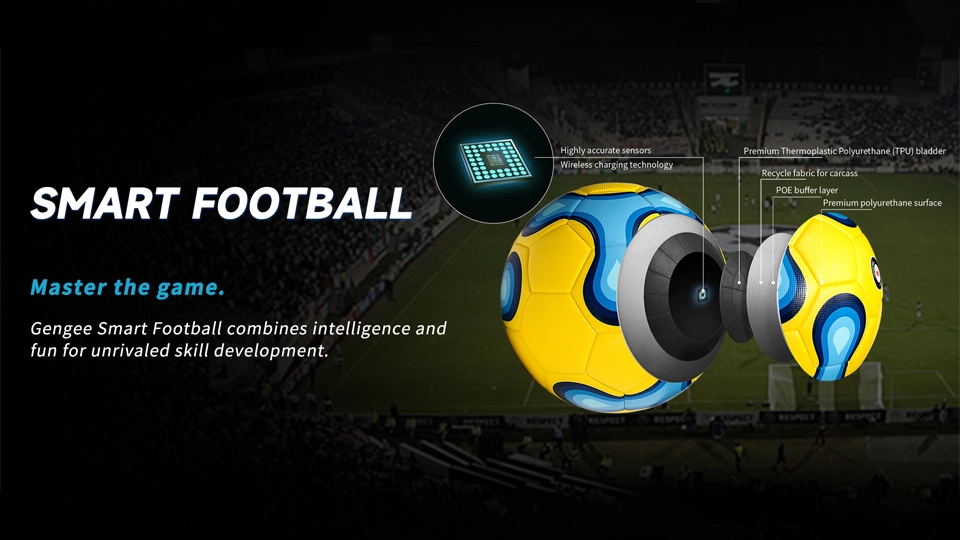
Chinese company Gengee Technology Co., Ltd. has developed a patented smart ball system designed to capture detailed motion and positioning data during play. As Weidan Chen, chairman and CEO of Gengee Technology, puts it: “In sports, victory is decided by milliseconds; in technology, breakthroughs are defined by patents.
“At Gengee, we protect our core innovations to transform every touch and every run on the field into a data-driven language that empowers the sports industry.”
One of Gengee’s patents is a ball equipped with a six-axis inertial sensor, micro-control unit, wireless communication module and onboard data storage. The system collects motion-related data and timestamps each movement before transmitting the information to mobile devices or cloud servers for analysis.
By combining sensor data with wireless positioning systems, the technology can reconstruct the ball’s trajectory and movement patterns with high precision. The results can be used to analyze technique, measure performance and support more data-driven training methods.
Technologies such as these are unlikely to be confined to elite sports. As sensors become smaller, cheaper and more integrated into everyday equipment, connected sports technologies are increasingly moving towards grassroots participation.
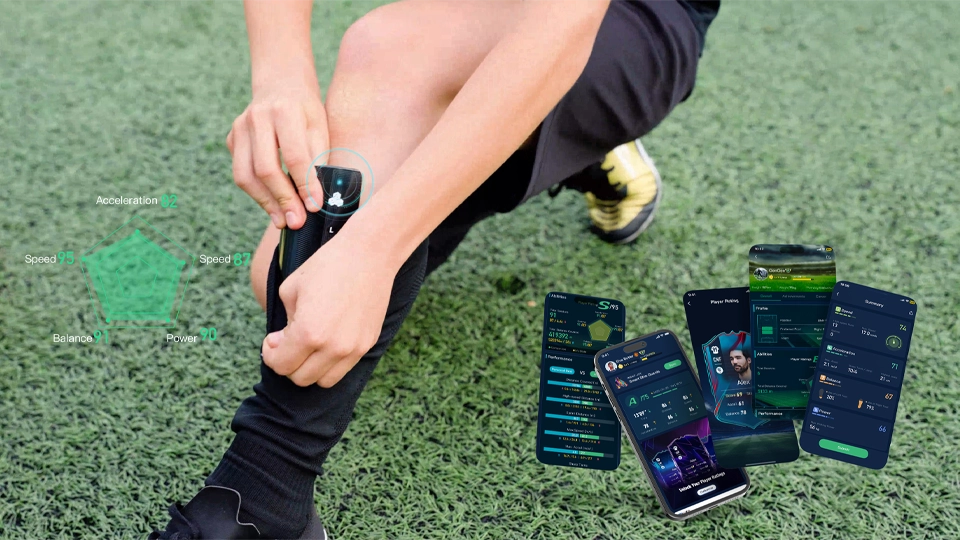
Young players training at local clubs may soon use smart balls, sensor-enabled shin guards or connected rackets that track key statistics and provide feedback through mobile apps.
In many ways, this mirrors what we have already seen in consumer fitness. Over the past decade, wearable devices that track distance, heart rate, sleep and other metrics have become a routine part of activities such as running, cycling and recreational training.
By looking at patterns in patents, trademarks and designs, we can track how industries evolve over time
IP data is also useful for spotting innovation in more specialized areas, such as parasports.
Here, the role of academic research institutions is particularly visible. About 26 per cent of patents related to parasports originate from universities or research institutions, compared with 17 per cent across sports technologies overall.
This points to a more research-intensive innovation ecosystem, reflecting both the technical complexity of assistive technologies and the importance of public research in supporting inclusive sport.
Assistive sports equipment, prosthetics, adaptive wheelchairs and rehabilitation technologies often emerge from collaborations between researchers, engineers and athletes.
These innovations can significantly expand participation in sport while generating broader benefits for healthcare and mobility technologies.
Seeing innovation more clearly
We experience sport through dramatic moments: a last-minute goal, a world-record sprint, a championship-winning shot. These flashes of brilliance make up the visible surface of a much larger system of technological progress. IP analytics help us see that system more clearly.
By looking at patterns in patents, trademarks and designs, we can track how ideas emerge, how technologies converge, how industries evolve over time and how innovation diffuses from elite performance environments into broader commercial and consumer applications.
It also uncovers the connections that are easy to miss when we focus only on performance data; for example, how advances in materials science, sensor technology or digital platforms move across sports and into adjacent sectors such as health, fitness and entertainment.
Seen through this lens, sport is far more than competition and entertainment. It is also a dynamic laboratory for technological innovation, shaped not only on the field of play but also in research labs, engineering workshops and design studios around the world.
To explore these trends in more detail – including sport-by-sport patent analysis for golf, football, racket sports, cricket and swimming, as well as case studies on smart equipment, wearables and ball-tracking systems – see the WIPO Technology SPARK Report on Sports Technology.
You may also learn more about innovation in the gym and fitness sector or check out WIPO Magazine's special edition on sports.