Technology diffusion is the process by which technology spreads across firms, industries, or economies as more users gradually adopt it. With digitalization, the speed at which new technologies are diffused has accelerated at unprecedent rate. ChatGPT is a great example of this trend. When it was launched in 2022, it was adopted worldwide in just a few days whilst the take-up of historical innovations took decades.
The World Intellectual Property Report “Technology on the Move” explores how technology spreads globally and how economies can encourage technological progress.

Factors influencing technology diffusion
The rapidity with which technology is diffused will depend on several factors including:
- the type of innovation,
- the price,
- the need for supporting infrastructure,
- the flow of information,
- the capacity to understand and effectively apply new knowledge,
- local capabilities,
- regulatory and institutional frameworks including IP policies.
(Click to enlarge)
Top technology diffusion trends and patterns
Research on how technological innovations spread globally highlights the following technology diffusion trends and patterns:
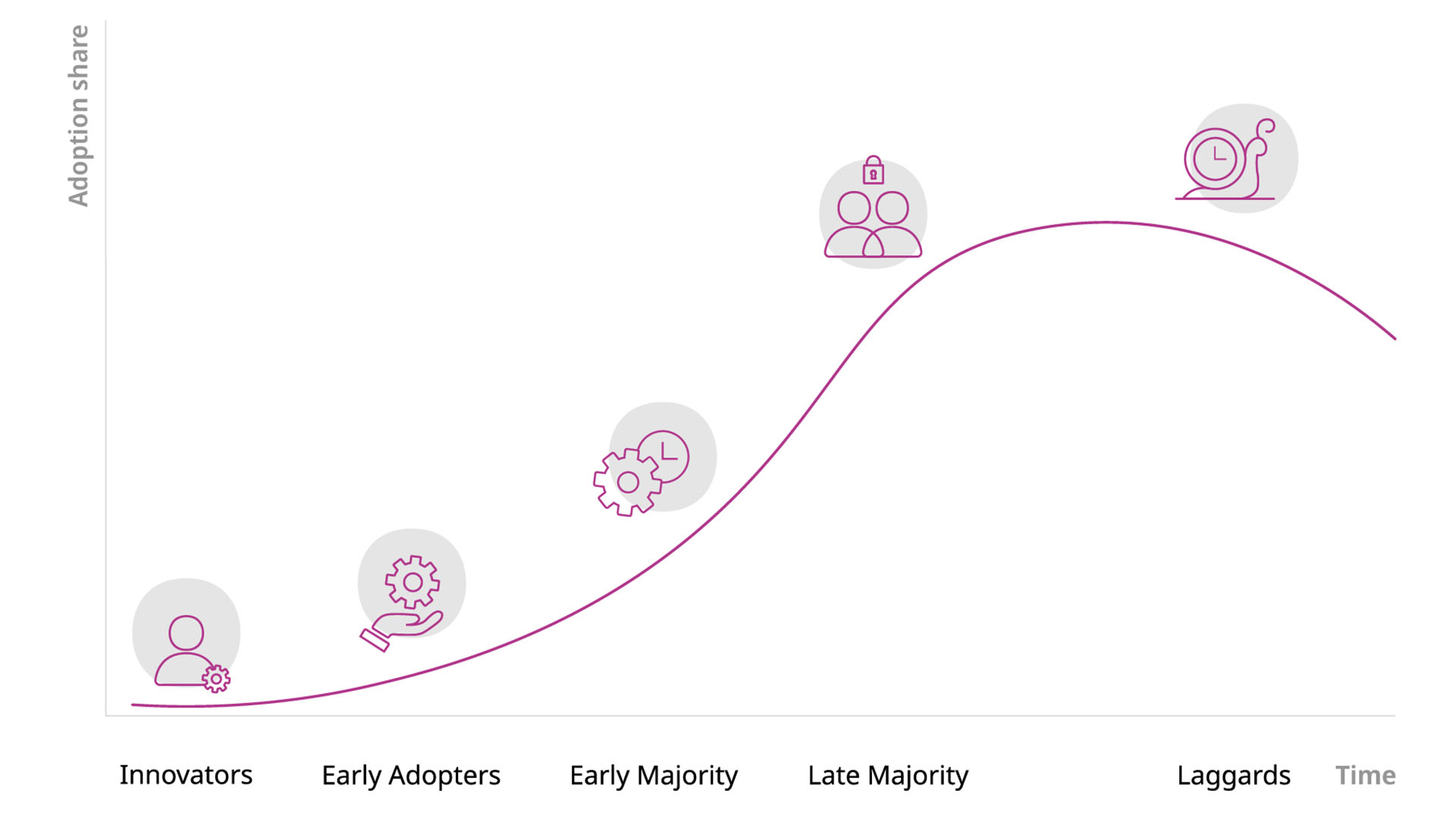
- S- curve: the diffusion of an innovation often takes the shape of an S curve from slow early adoption of the innovation, through rapid growth to widespread mass usage.
- Diffusion of innovations is accelerating with digital innovations being adopted a lot faster than historical innovations.
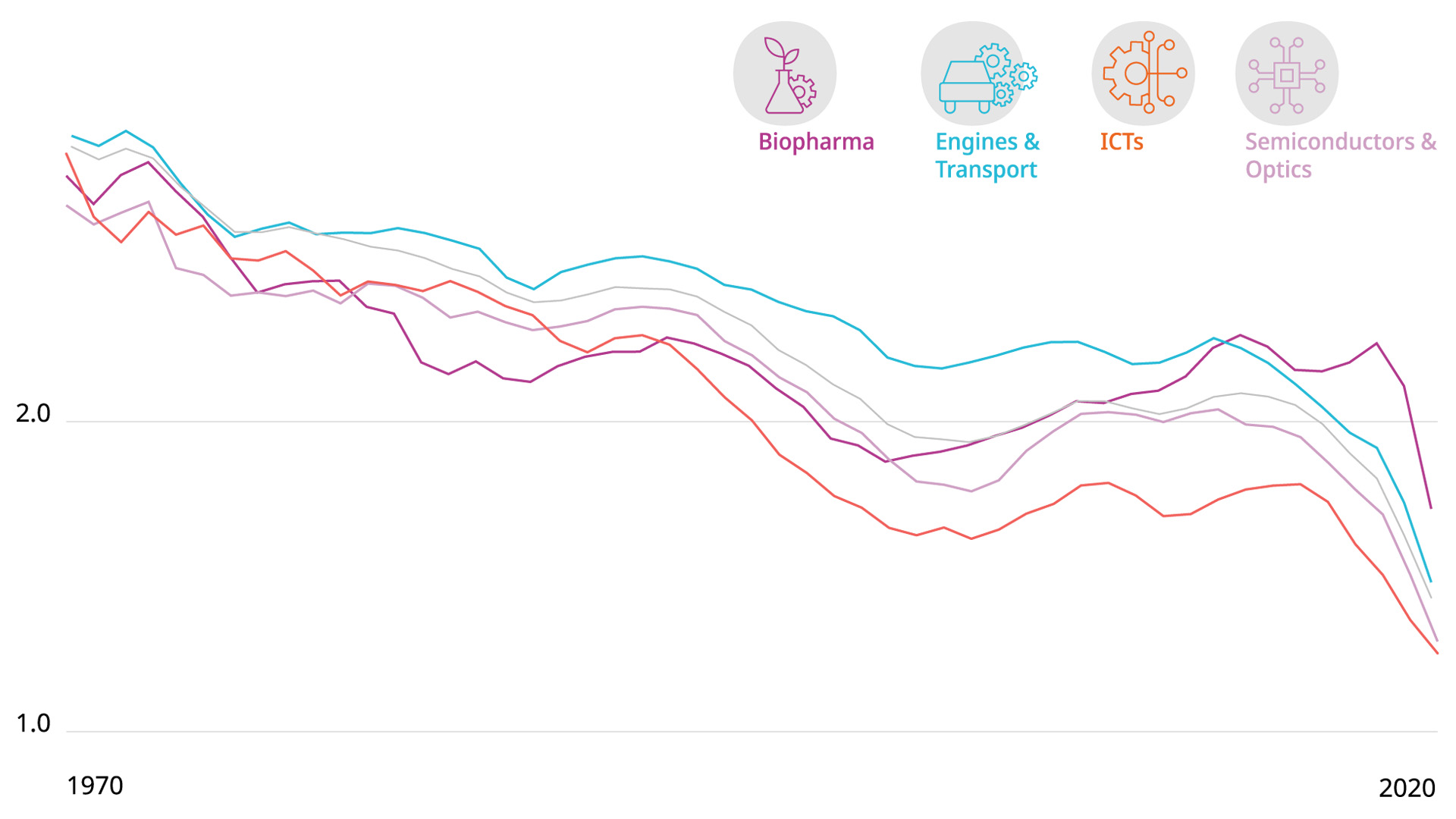
- Shortening lags in technology adoption where new technologies reach other parts of the world faster.
- Wider technology diffusion: the adoption lag between developing and developed countries has decreased.

(Click to enlarge)
Global diffusion of technological knowledge and deep tech
Technological knowledge refers to the dissemination of know-how that allows the adoption of technology and can be measured via patent data.
International knowledge diffusion is vital to shape the future global economic landscape and is spreading faster than in the past through trade, skilled migration, foreign direct investment and global value chains.
Scientific discoveries participate in driving the creation of emerging technologies such as Ai-powered innovations, advanced biotechnology and clean energy solutions. However, they take longer to be transformed into industrial applications.
The US, Japan and Western Europe are leaders for the creation and diffusion of deep tech innovations, whist developing economies face challenges in technology adoption due in part to a lack of infrastructure.
(Click to enlarge)
Technology diffusion case studies
The World IP Report’s case studies offer insights into how technologies diffuse in real life in agriculture, clean technologies and the digital world, revealing opportunities and challenges that can affect these industries.

Agricultural technologies diffusion
Agricultural progress has dramatically reduced poverty, improved food security, and raised living standards worldwide.
Find out how certain factors can influence the diffusion of technologies in agriculture.

Clean technology diffusion
Clean technologies are essential to tackle climate change. However, their adoption is uneven across countries.
Discover the diffusion journey of solar photovoltaics, electric vehicles, and hydrogen.

Digital technologies diffusion
Digital technologies have reshaped our lives, changing the way we communicate and access information.
Learn about the barriers that hamper the adoption of digital technologies in developing countries and how IP foster the diffusion of technologies.