
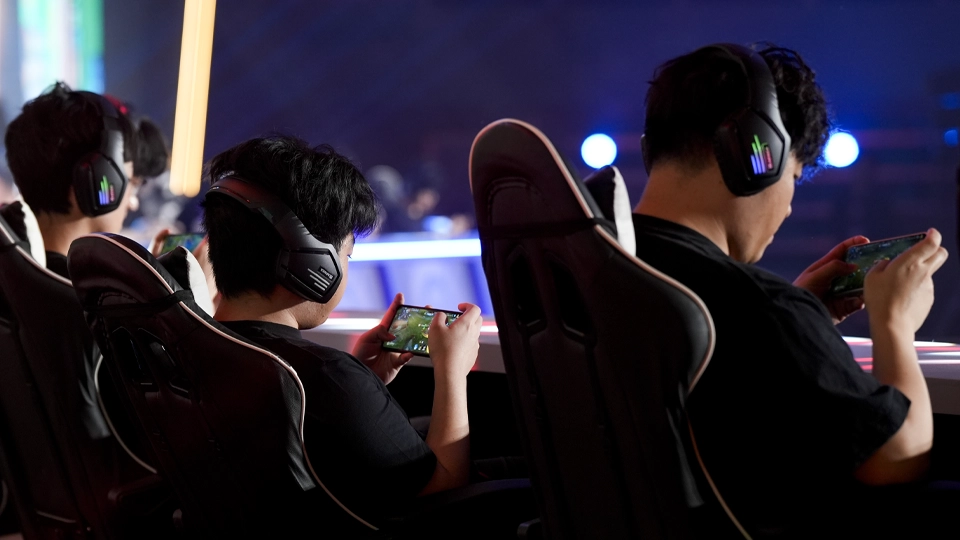
In 1990, Nintendo organized the Nintendo World Championships, a 29-city tour across the United States searching for the country’s best Super Mario Bros, Rad Racer and Tetris players. The event, a pre-internet way of connecting gamers, drew thousands of young participants.
And, in a sense, the Championships foreshadowed what we now know as esports, (electronic sports), a global scene made up of sold-out stadiums, star players on million-dollar contracts, and a business model designed to exploit the intangible assets of a creative industry saturated with intellectual property (IP).
Esports work much like traditional sports, with fans tuning in typically to watch teams compete in commercial video games such as League of Legends, Counter-Strike and Rocket League. Pundits, commentators and live editors ensure the action is as engaging as possible.
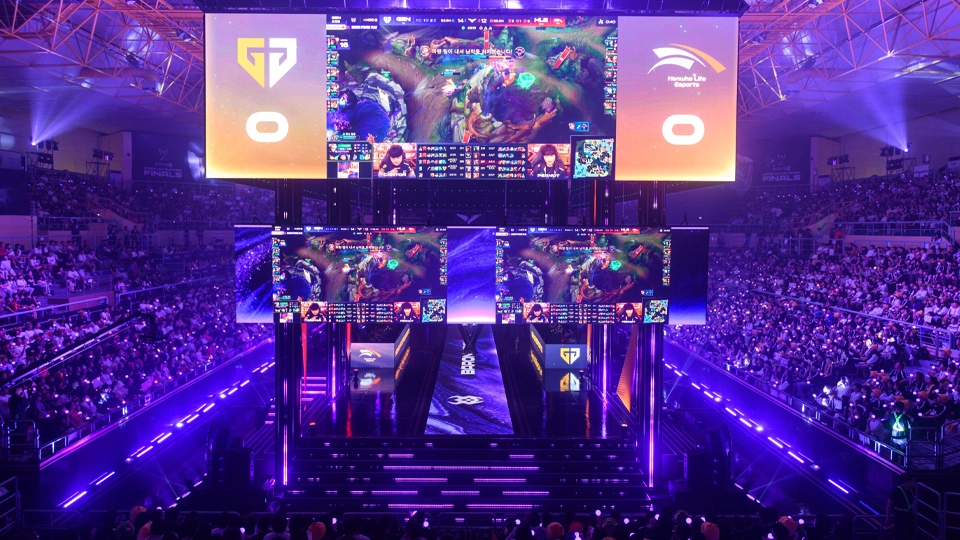
The Esports World Cup, the industry’s flagship tournament, reportedly drew more than 500 million online viewers and 2.6 million in-person attendees in 2024. Its 2026 edition carries a record US$75 million prize pool, with US$7 million awarded to the overall winner.
Players are contracted to professional organizations such as T1, Gen.G and DRX, which manage rosters, secure sponsorships and control rights over player likenesses, for example.
Underpinning all this is a complex ecosystem that video game publishers have historically governed through IP and contract law, often acting as tournament organizers directly or indirectly as well, with considerable control over how competitions are structured, rights allocated and revenues distributed.
Catching the next wave: from K-game to K-esports
The Republic of Korea is an esports industry leader, with video games and their competitive ecosystem representing the country’s largest cultural export. According to data from the Korea Creative Content Agency (KOCCA), game exports reached approximately US$8.67 billion in recent years, outpacing other “K-wave” industries such as Korean cinema and K-pop.
This economic reality has shifted the way gaming is perceived, moving it from the fringes of hobbyist culture to the centre of national economic policy and international legal discourse. And its central figure is the player.
The Korean esports industry does not merely train professional players. Instead, it creates K-pop-style stars by adopting principles from the idol system, with a production process that can involve casting, intensive coaching – not just in high-dexterity gameplay skills but also in media and international etiquette – and global promotion.
However, this is far from a universal rule. The stars of major organizations such as T1, Gen.G and DRX may undergo professional grooming, but many players learn the ropes playing in online servers and informally through their own daily livestreams and fan interactions.
There is also a question of priorities: in K-pop, training for artists from day one comes as a complete package – singing, dancing, media training and foreign language skills. In esports, winning comes first. The players’ media development, managed by their teams and the publishers of the games they play, comes second to their ability to act quickly and decisively in-game.
LCK League sets new standards for esports players protection
Made up of ten teams, League of Legends Champions Korea (LCK) is the country’s top professional league and perhaps the most influential esports circuit in the world. The league leaves nothing to chance, treating players as a business priority. LCK does this by using standardized contracts and risk-sharing systems to balance the massive commercial interests of the teams with the legal protection of their players. It was not always this way.
In 2019, an investigation by League of Legends publisher Riot Games and the Korean eSports Association (KeSPA) uncovered a story that would have far-reaching legal and political implications for the industry.
Griffin, then a relatively new top-tier team, was found to have locked a player, Seo “Kanavi” Jin-hyeok, then a minor, into a potentially exploitative contract. Further similar reports led to a public outcry to which the LCK reacted. Griffin’s head coach and director were suspended indefinitely, and the team was fined KRW100 million.
The controversy also caught the attention of the Korean government, leading to an institutional overhaul. Until then, trainee players had lived in uncertainty. Teams used “lion’s share” clauses, for example, to trade players or extend terms, sometimes without the latter’s consent. The Griffin incident was the breaking point, proving that the industry lacked a safety net.
The Griffin incident set a precedent for players’ protection
After months of discussions with players, teams and experts, the Ministry of Culture, Sports and Tourism introduced new draft contracts: the Esports Player Standard Contract, the Esports Trainee Standard Contract and the Teenage Esports Player Standard Affiliated Agreement.
The new rules set out in the standard contract put an end to the legal limbo for players in the Republic of Korea. Based on the LCK official framework, teams can no longer so easily lock players into long-term deals; there is now a three-year cap on most contracts. Teams also lost the power to extend a player’s stay or trade them away. Now, if a team wants to transfer a player to another organization, it needs the player’s written consent first.
In 2022, the LCK also introduced the rookie development clause to balance player protection with team interests.
Dispute resolution in esports
The 2019 Griffin incident set a precedent. The indefinite suspensions that the Committee issued to the team’s head coach and director established its authority to defend players. It may impose administrative sanctions or professional bans that can effectively end a career or a team’s license. It is a fast-track justice system designed specifically for the pace of the professional gaming world.
One of the most significant changes concerns dispute resolutions, with the LCK moving from ordinary litigation or team discretion to a specialized arbitration process managed by the KeSPA Sports Fairness Committee.
The Committee is the industry’s specialized court. In the Republic of Korea, if a player and a team fall out over a contract, for example, they do not usually start with a lawsuit in a regular court, which could take years and involve traditional judges with a limited understanding of esports.
Instead, the Committee (which runs its own transparency portal) steps in to resolve the conflict, starting with formal mediation. If that fails, it moves to binding arbitration.
The measures are not limited to the Republic of Korea. The following year, the World Intellectual Property Organization (WIPO) and the Esports Integrity Commission (ESIC) established the International Games and Esports Tribunal (IGET), a specialized alternative dispute resolution (ADR) system for video games and esports. Its foundation represents a major step towards professionalizing the sector, providing a roadmap for resolving cross-border conflicts that traditional national courts are often ill-equipped to handle.
WIPO released three more guidelines in 2026, addressing questions around esports and IP generally, plus esport players and tournament organizers specifically.
Protecting esports players' personality rights
In the Korean esports ecosystem, it’s not just about the teams; it’s about the massive entertainment and tech conglomerates behind them. These organizations take financial risks by investing in early-career players when their market value is essentially zero.
In return, this clause gives the company a legal window to extend a player’s exclusivity for two seasons, provided that they guarantee salary increases and minimum playtime.
This is a practical solution to a classic economic problem: it protects the team’s investment just as a player hits their peak, while ensuring that he or she is not locked in without fair pay. The structural reforms in the LCK have provided not just safety; they have paved the way for professionalized commercial growth.
The digital environment as esports field of action creates a complex IP triad
Once esports players acquire sufficient notoriety, avenues for the commercial exploitation of publicity rights open up, with a highly active fanbase ready to engage with them. The ownership of image and publicity rights is thus a sensitive and complicated issue.
The peculiarity lies in the field of action: the digital environment. Unlike in traditional sports, in video games competition occurs in a virtual arena (the game) owned by a third party (the game’s publisher). Athletes do not physically cast spells, score goals or fire weapons in a neutral space. Instead, virtual avatars respond to their instructions within a copyrighted software environment.
This creates a complex IP triad, wherein the publisher’s copyright of the game’s engine and characters interacts with the player’s right of publicity and the team’s commercial licenses.
In the Republic of Korea, image rights by law belong originally to the individual. At the same time, the LCK contract largely grants an exclusive license to the team for commercial exploitation in practice.
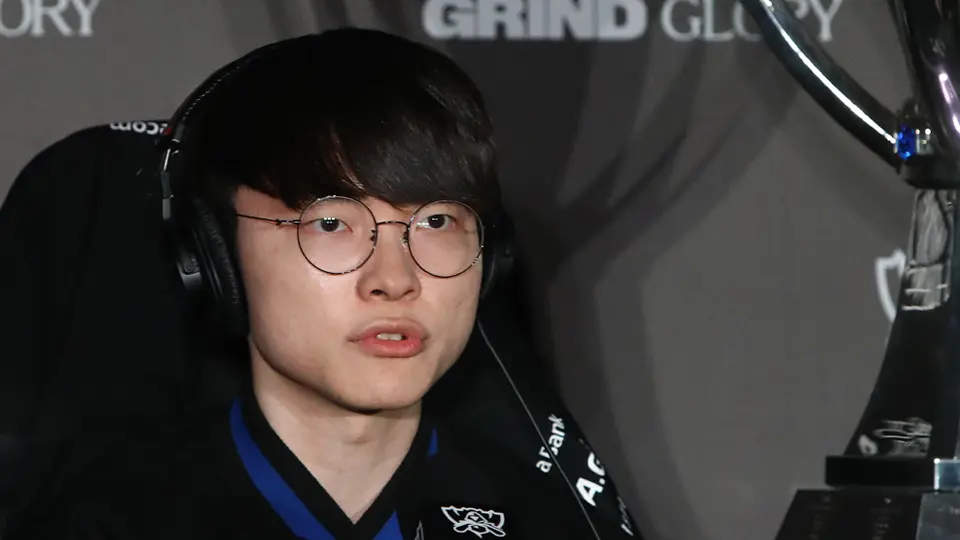
Lee “Faker” Sang-hyeok is among the most successful esports players of all time. The protection of his image against unauthorized use constitutes a landmark example of the legal enforcement of an esports player’s personality rights.
In May 2025, a Korean presidential candidate mimicked Faker’s signature “shush” pose. That prompted T1, Faker’s team and an esports powerhouse, to issue a statement distancing its star player from political endorsements.
“We hope that Faker’s likeness or related expressions will not be misconstrued or cause misunderstanding,” wrote T1 on social media.The case shows that, in the Republic of Korea, elite esports players have attained the status of leading public figures.
Protection follows players across platforms, from digital game skins to real-world billboards. It also marks an important change in law, with the industry moving away from merely licensing software and towards protecting the personality rights of professional players.
Drafting a new blueprint for esports
Protecting the personas of esports players is not just a concern for the Republic of Korea; other countries too have been working on legislation for a market with audiences in the hundreds of millions.
We have come a long way from the US$10,000 prize money issued to the winner of the inaugural Nintendo World Championships back in 1990. The evolution of esports from a 29-city tour of the United States to a global, multibillion-dollar, IP-driven industry demonstrates that video games, and their professional players, are sophisticated intangible assets that require robust, international and specialized legal frameworks in order to thrive.
Be cautious to prevent any claims
Review your content. Infringement could lead to your online profile being blocked or claims brought to court.
Manage your IP
Elements you use can be protected by IP. Register them to protect your rights in the territories that are commercially relevant.
Personalize your work
Watermarks or branding can help identify your work and prevent unauthorized use.
Define ownership for work created by your team
Reflect in writing who owns the outcome of a project when more than one person is involved.
Authorize the use of your content
Make sure everybody understands how your content can be used and for how long, preferably in the form of a licensing agreement.
Monitor and enforce unauthorized use of your content
Regularly monitor the internet for unauthorized use of your content. If you find unauthorized use that you would like to stop, take appropriate and immediate action.
Seek legal advice
The safest solution is to consult a legal professional to understand your rights and the best ways to protect your content.
Be a team player
If you are asked to join a team, make sure you understand the agreement with the team to avoid unpleasant surprises.
About the author
Juan Sebastián Raigoso is an IP lawyer working on technology governance and cultural and public policy. His advanced training includes a Master in Intellectual Property and Development Policy (MIPD), which he obtained at KDI School in the Republic of Korea in a program supported by WIPO.
To learn more about esports visit WIPO’s IP and esports hub.
For more about IP and sports, see the special edition of WIPO Magazine.


