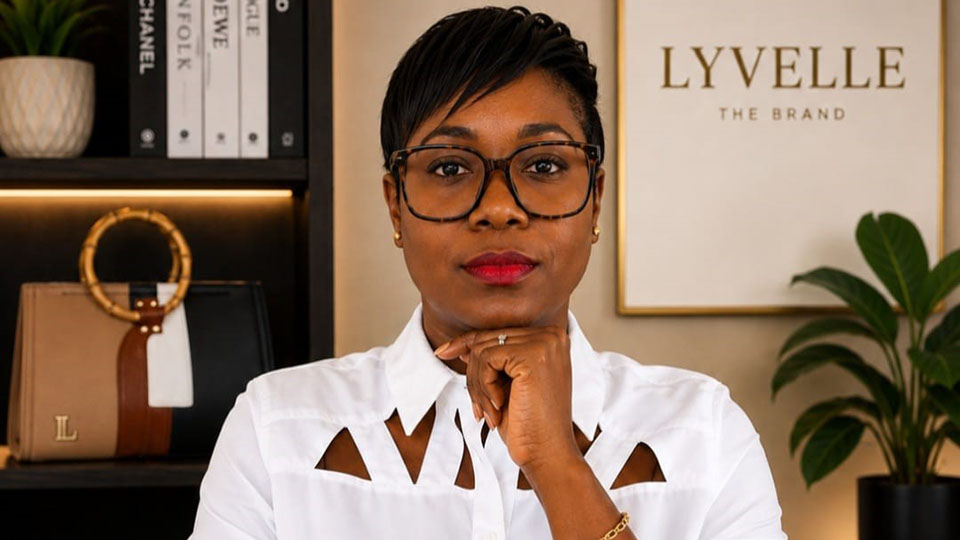
In 2014, Cristian León Ibarra set out on a multi-day trek through the Torres del Paine National Park in Chilean Patagonia. Along the trail, he came across a vast expanse of burned forest – more than 17,600 hectares, destroyed by an illegal campfire several years earlier. The sight affected him profoundly.
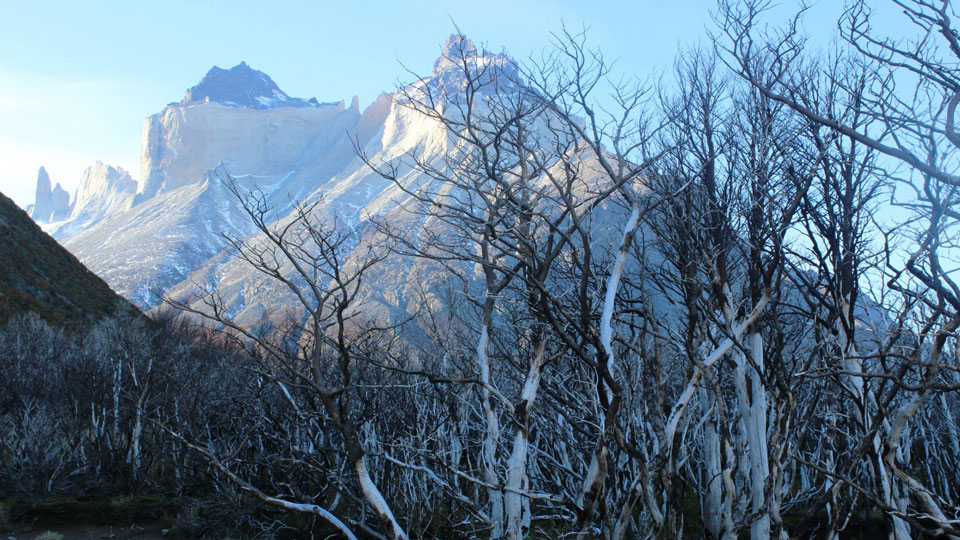
It wasn't until the COVID-19 pandemic of 2020, and the unexpected time it gave him, that Cristian returned to a question that had lingered in his mind since that trek: how could tragedies like this be prevented? What emerged was a technology built on a simple but powerful premise: Don't wait for a fire to start.
AI-powered wildfire risk detection
The initial concept focused on aerial monitoring using drones. From there, it evolved into a more complete technological ecosystem. The team developed AirWERD (an AI-powered platform engineered for early fire and smoke detection), and AirRAPT (focused on detecting human risk factors and unauthorized activities such as illegal logging). Both technologies were integrated into a modular, multi-user SaaS platform, to enable different teams and decision-makers to work with the same data in real time.
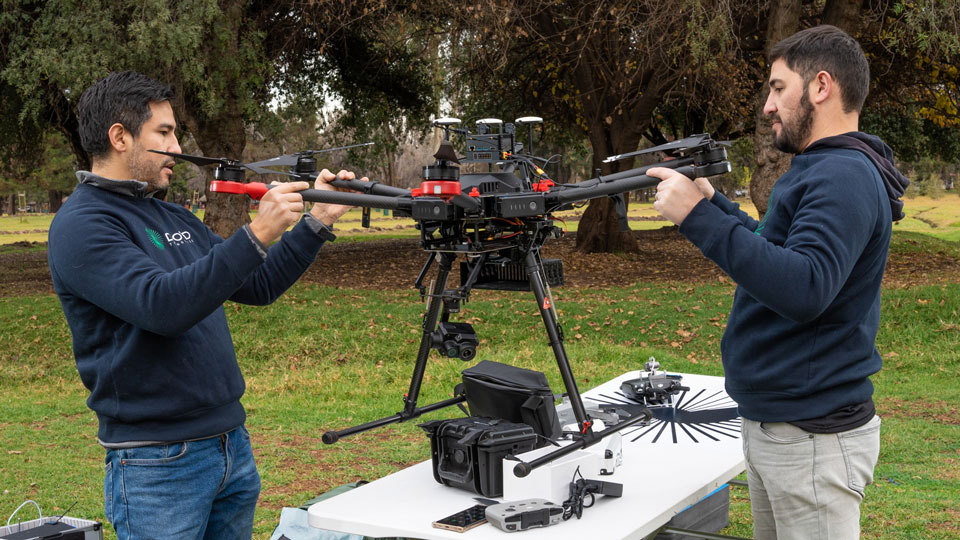
Today, Santiago-based Drovid’s AI-enabled drones are capable of autonomously monitoring large areas of forest and identifying wildfire risk factors. “Instead of streaming continuous video to the cloud for review later, the drones analyze the data on board, in real time,” explains Cristian. “That’s a very different starting point from satellites or watchtower cameras, which only flag a fire once it’s already visible from a distance, well after ignition.”
Field-testing wildfire-detection drone technology
Before Cristian could validate his product commercially, he needed proof that it worked in the field. That proof started with technical validation from Chile's National Forestry Corporation and BIDEMA (the Investigative Brigade of Crimes against the Environment and Cultural Heritage). Academic and scientific validation from Chile’s INRIA Research Center came in parallel.
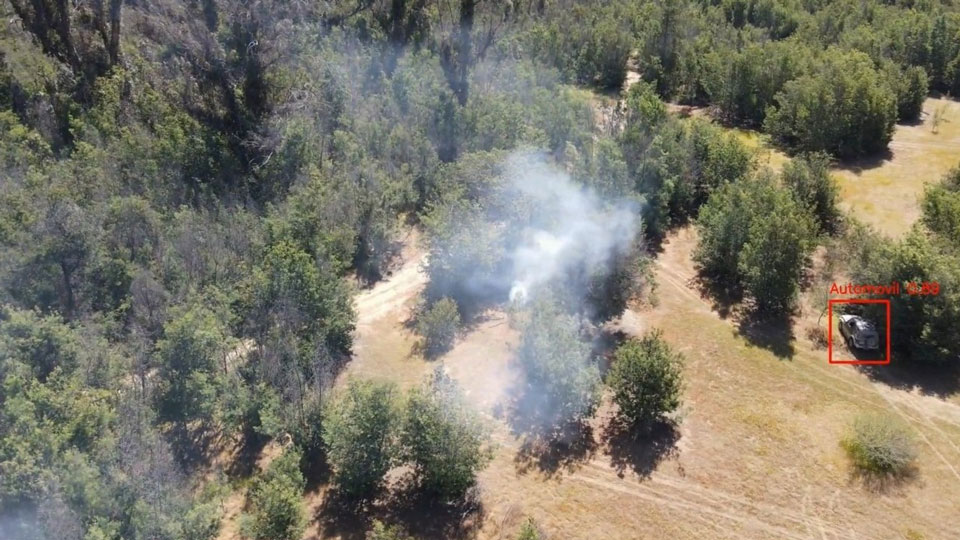
But the real commercial test came next; a pilot program with a Chilean Forestry company, carried out across a 2,500-hectare mixed forest. It resulted in a purchase commitment.
Trademark strategy: Registering the Drovid brand
The name “Drovid” carries two layers of meaning. First, it reflects the fact that the technology's process begins with data captured from the sky, using drones. Second, it's a direct nod to the COVID-19 pandemic — the period that gave Cristian the time to return to his idea.
“Drovid was short and easy to remember,” says Cristian. “Before committing to the name, I conducted an exhaustive trademark search to confirm the name was available, and that nothing similar was already on the market. I registered the name in Chile in 2020.”
Securing the brand didn't stop there. In parallel, Cristian moved quickly to secure Drovid's digital identity too. But the domain drovid.com was already taken.
“The domain name wasn’t being used, and I knew that the longer I waited, the harder it would be to acquire it. So, I negotiated its purchase, reaching an agreement in 2021. Along with the main domain, I also registered several additional extensions to protect the brand as broadly as possible and prevent third parties from appropriating variations of our name.”
Cristian León Ibarra, Founder and CEO, Drovid
Global trademark protection via WIPO's Madrid System
In August 2025, Cristian used his Chilean trademark registration as the basis for global protection through WIPO’s Madrid System, seeking protection across 57 export markets. Protection has already been secured in 33 of those markets but, along the way, Drovid has received provisional refusals from China, New Zealand, Ukraine, and the United States.
“The China National Intellectual Property Administration identified similar names already registered in the same classes of goods and services”, says Cristian. “Given the high probability that an appeal would be denied, I decided instead to apply for national protection in China of an alternative name 'DROVIDEX' — as a word mark without a logo.”
In New Zealand, the team is negotiating with a local law firm to resolve an issue with the wording of some services, the terms used being too broad. Drovid has decided not to pursue international registration in Ukraine for now, prioritizing instead markets with higher forestry exposure. And in the United States, objections were raised with the description of the mark itself as well as some of the services. “We needed to use local attorneys to make minor adjustments,” Cristian says. “Hopefully now we're moving towards protection granted.”
Why Drovid chose the Madrid System for global trademark protection
Cristian's path to the Madrid System began, somewhat indirectly, through patents. Having already started the process to protect Drovid's technology through WIPO’s PCT System, he was familiar with how one of WIPO's IP Services worked. While researching how to apply that same international scalability approach to the Drovid trademark, he discovered WIPO offered an equivalent system for trademarks. He dug deeper, driven by a clear goal: to find a solution that could scale across multiple markets at once.
The Madrid System was, in his words, by far “the more practical and efficient option”, enabling global protection through a single language application and a centralized fee cycle administered by WIPO.
“For a resource-constrained start-up like Drovid, being able to centralize such a complex procedure through a single international trademark application, and without the need to build relationships with local agents in every jurisdiction from day one, is a decisive advantage.”
Cristian León Ibarra
But centralization didn't erase the particularities of each designated member — “each Madrid System member has its own substantive examination criteria; for some that meant additional work”. The case of China is one example of the kind of extra effort a system spanning so many jurisdictions can sometimes demand.
Choosing which markets to designate came down to a combined criterion: the company prioritized markets with the largest addressable forest-market potential, and those where international patent protection was already advancing — aligning brand and technology protection within the same strategic territories. That meant Brazil, Canada and the United States for the Americas; the European Union, and the United Kingdom; and a selection of markets across Africa, Asia, the Middle East and Oceania, identified as having the greatest growth potential for preventative forest protection.

Whether more markets will be added remains an open question — but Cristian knows he can continue to expand the geographical scope of his international trademark registration as the company's commercial and scaling strategy requires.
Asked whether he'd recommend the Madrid System to other Chilean businesses, Cristian doesn't hesitate: "Absolutely."
“For a Chilean company with international ambitions, the Madrid System solves a very specific problem — the ability to manage trademark protection across dozens of markets through a single application, instead of launching separate processes market by market. That represents a significant saving in time and legal costs, something especially valuable for a technology-based startup that needs to focus its resources on product development rather than administrative management across dozens of jurisdictions.”
Cristian León Ibarra
His advice for first-time users is straightforward? “Do your homework before you file, not after. Check the availability of the trademark in advance in each target market and anticipate the specific requirements of each Office — because, even within a centralized system, every country retains its own trademark laws.” Having specialized legal advice ready in any jurisdiction where an objection arises, he notes, can make the difference between resolving it within weeks and losing months of protection.
Drovid’s global growth strategy
Drovid's international traction so far has been more about reputation than revenue. It's a familiar pattern for many deep-tech companies transitioning from technical validation into commercial scaling.
In commercial terms, business remains almost entirely rooted in Chile, but the company’s ambitions extend much further. Europe and the United States are already emerging as strong overseas footholds, with recognition now starting to translate into real interest.
In Europe, recognition has followed a similar trajectory. In 2025, Environmental Business Review named Drovid the region's Advanced Forest Surveillance System of the Year, and Drovid is currently being evaluated for the Efficient Solutions label from the Switzerland-based Solar Impulse Foundation. Add to that the 2026 WIPO Global Awards win, and participation in the WIPO GREEN Technology Showcase in October, and a pattern of growing visibility starts to emerge.
In the US, Drovid has the backing of a local hardware provider, where the team completed hands-on, in-person training to integrate its technology into extended-endurance drone systems. In 2024, the company was also selected for ProChile’s Invest Readiness LA program, where its potential was validated human security technologies experts. “California alone absorbs billions of dollars in wildfire costs every year, and agencies like CAL FIRE are exactly the kind of institutional partner our platform was built to serve,” explains Cristian.
Looking three to five years ahead, the goal is to scale into Europe, North America, India and Brazil.
“The protection we have through WIPO’s Madrid System gives us the confidence to enter new markets,” says Cristian. “We don’t need to start from scratch in each one — our brand identity is already secured. That certainty makes a real difference when it comes to speeding up commercial negotiations and strategic partnerships.”
Find out more about Drovid’s international trademark registration.
More about the Madrid System
The Madrid System is a convenient and cost-effective solution for registering trademarks across 130+ countries by filing one application in one language and paying one set of fees in one currency.