Rejuvenated Knitwear Attracts a Youthful, Creative, and Nontraditional Public
In Colombia, a young artist transformed classic knitwear into fashionable, colorful, exclusive collections for youth, staying true to the principles of wearable art and slow fashion. After about 14 years, Laura Acevedo Trillos is now considering expanding Papel de Punto’s scope to include new materials and a broader audience.
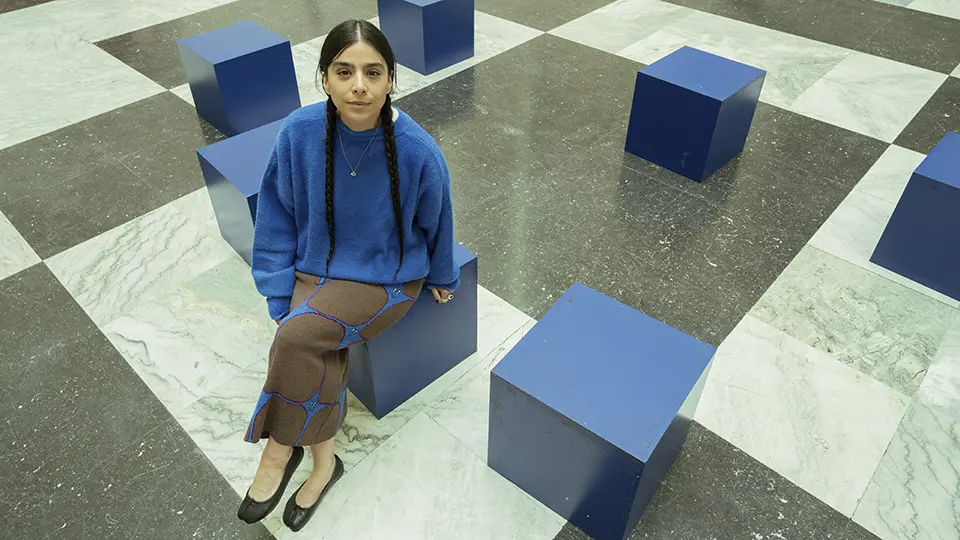
Although Laura had a strong interest in fashion since childhood, she chose to study art at university, believing it would better serve her artistic expression. Her first encounter with fabric during her studies came while creating textile art. “That was my first technical introduction to fashion.”
Freshly out of university, Laura had second thoughts; she felt at an impasse and went on a retreat. When she returned, she decided to study fashion at Arturo Tejada Cano, a design and fashion school, a technical school where she could develop the technical facets of fashion while using her artistic background and creativity.
Breaking fashion rules: pairing denim and knitwear
During the 3rd semester, students were asked to create a collection, a company project, and a business plan. The focus was on a denim collection, and “I thought denim was a little bit boring, so I decided to match denim with knitwear.” Without the internet and search engines, she started calling factories to see whether they would produce knitted pieces for her collection.
However, the knitting industry was inflexible and resistant to change, and most factories declined. Fortunately, Coditex proved open-minded and welcomed Laura’s innovative ideas to help complete her denim/knitwear collection. They appreciated her creativity and ideas. Although they were typical knitwear producers with industrial machinery who made thousands of identical pieces, the company produced a dozen pieces for Laura’s small denim collection. She spent time in the factory, watching people work and learning to program the machines. They became longtime partners.
Laura was now determined to launch a knitwear brand. In 2012, one year after graduating, she partnered with an architect to launch her business and to learn how to become an entrepreneur.
Edgy unisex knitwear for youth
Laura wanted a name for her company that would reflect her vision of art, fashion, creativity, and knitwear. She chose Papel de Punto (papel is paper in Spanish) “because I use knitwear as a paper to bring all my ideas in knitwear.”
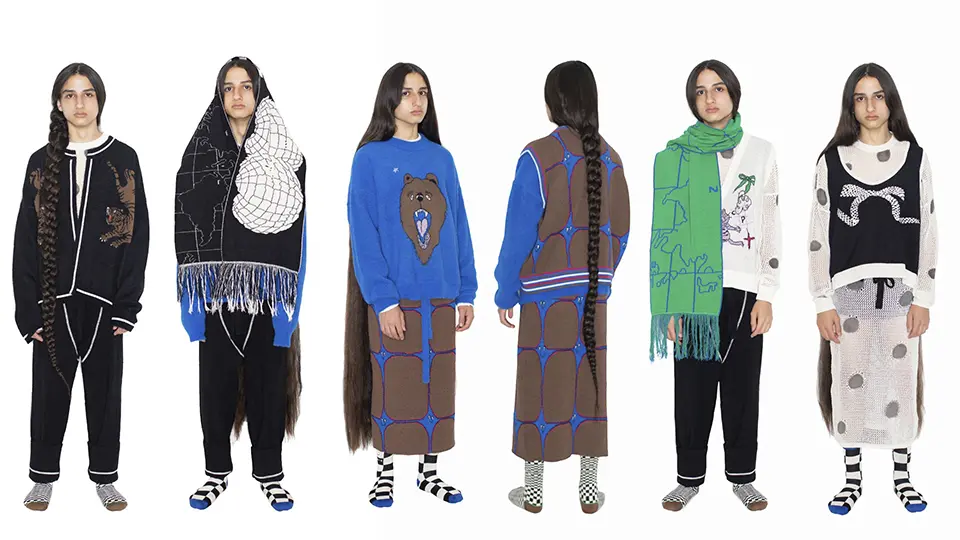
As a child, Laura said she felt different, far from gender stereotypes. “I am a woman, but I always felt very comfortable in my father’s clothes,” she said. “That was reflected in my work.”
In 2012, according to Laura, no knitwear brands were dedicated to youth. She saw a gap in the market and an opportunity to challenge the old-fashioned, conservative perception of knitwear with a fresh approach.
Papel de Punto, “was designed for people who wanted to add to their identity without feeling like a woman or a man, and who were relaxed about it,” she explained. Far from entrenched clichés, Laura designed knitwear with a global vision of fashion and gender.
A subversive designer knitwear brand
“I have a motto,” she explained. “It’s called ‘Neat but Fun.” Neat reflects the brand’s quality and durability, while the contrast of fun, color, and boldness in the graphics echoes the game of opposites.”
Papel de Punto’s first collections featured only knitted sweaters, but they gradually expanded to include scarves, trousers, dresses, and traditional Colombian ponchos, all bearing Laura’s inspiration. Colditex manufactures the knitwear, which is then hand-finished.
She also begun using fabrics and designing socks and T-shirts, as she tries to diversify her collections to reflect societal changes and make her creations accessible to all.
“Young people have different ways of thinking, feeling, and dressing than 10 years ago.” They are shunning bright colors, preferring earthy tones, for example, she said.
Confronted with illegal copying of her collections, notably the Amulet collection, Laura registered her brand when she created Papel de Punto and began registering her designs.
Papel de Punto’s limited-edition knitwear collections
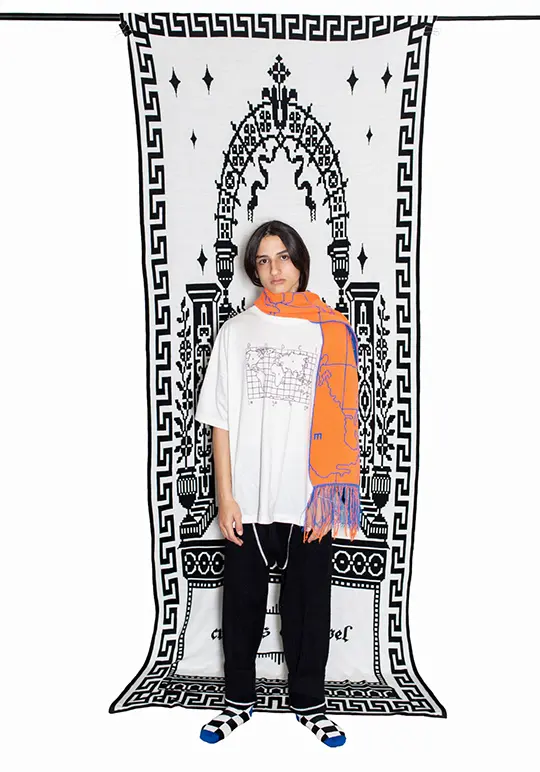
The company issues only small, themed collections twice a year in two sizes (small/medium and large/extra-large). “Every piece we make has a history,” she said, adding that she researches extensively before deciding on each theme, using colors and graphic metaphors and playing with opposites. Each collection has a name, such as “Amulet” in 2015, which featured a stylized jaguar conveying pride in being Colombian. It was an instant success.
Each piece in Papel de Punto’s collection is numbered, Laura explained. “I call my customers the creative class,” she said, adding, “they are creative people who want to see and feel different in their clothes.” Papel de Punto’s customers range from 25 to 45, though Laura’s collection is wearable by anyone.
Papel de Punto previously operated a small boutique that closed in 2024 due to the country’s economic conditions. It also ran pop-up shops in Paris, Milan, Mexico, and Spain. Today, customers can order from the company’s website, and items are shipped worldwide.
“We try to make our garments of the highest possible quality, so they last.” Like all artists, Laura has a special connection to her creations and expects customers to cherish them. “You will feel very special wearing our garments, but it is also very special to me, as each item holds a little part of my universe.”
The sustainable shift to art-infused slouch
Looking ahead, Laura wants to get more involved in the art world, refine her techniques, and experiment with different materials for her ever-changing collections. She also wants to open a new boutique that is more accessible to customers than the previous one. “I guess I have to be more business-oriented.”
Changes may come, but Laura insists that the core of Papel de Punto will remain the same: expressing her creativity in her own way, collaborating with other artists, releasing only exclusive small collections, and using recycled materials and reusable packaging.
“I like to be alone on the street and think about everything.” That’s how she thought about her next creation: a suit made from unused material from bus seats, as the city is refurbishing its public transportation vehicles.
Laura participated in the Cross-Regional Forum on Women Creators and Entrepreneurs: Leveraging IP for Asia-Pacific, Latin America and the Caribbean, taking place from 21-23 September in Manila, Philippines. The forum was co-organized by WIPO, the Intellectual Property Office of the Philippines (IPOPHL), and the Japan Patent Office (JPO). She was also a speaker in a live-streamed session of the forum; a talk show on design and fashion, organized with the support from the Funds-in-Trust Korea.