Innovation Capabilities
Innovation ecosystems are like bands: they start with a few key players, each bringing specialized skills. The most sophisticated ecosystems evolve into symphonic orchestras, where diverse, highly specialized players work in harmony to create outputs only a few can replicate.
Up-and-coming ecosystems are still in the process of finding their style. Strategically picking which instruments to add can help them, little by little, play this beautiful music too.
Despite decades of advances in communication and digital infrastructure that have simplified the global exchange of ideas, income levels across innovation ecosystems still vary widely. The reason: innovation capabilities.
Innovation capabilities are the ability of an ecosystem to absorb, apply, and adapt knowledge to deliver competitive outputs across science, technology, entrepreneurship, and production. Economies with more diverse and complex capability portfolios tend to be wealthier and more resilient. These capabilities are deeply embedded in a region's workforce and culture, which is exactly why they're so hard to replicate, and why some regions hold an advantage in certain fields.
Yet capabilities are hard to see from the outside. Measuring them systematically gives policymakers and researchers a grounded picture of where an ecosystem holds genuine strength, where gaps are opening, and where the conditions for the next move already exist.


About WIPO’s Innovation Capabilities

Innovation Capabilities Outlook 2026
Latest insights
The stories behind the numbers. Interviews, findings, and updates from across the project.


Tracking innovation capabilities worldwide
Innovation policy has entered a new era of urgency. Governments worldwide are re-engaging in industrial policy, making decisions in science, technology, and innovation that shape how resources are allocated across entire economies. Getting these decisions right requires understanding not just where an economy stands today, but how the global landscape is shifting around it.
The Innovation Capabilities Outlook (ICO) tracks these shifts each year: which economies are expanding their capabilities, mastering new and more sophisticated fields, or falling behind global trends.
For policymakers, this annual view is a benchmark. It shows how national progress compares against global patterns, helping governments recognize emerging opportunities early and adjust strategy before gaps widen.
Learn more about how the project can help you unlock the potential of your innovation ecosystem.
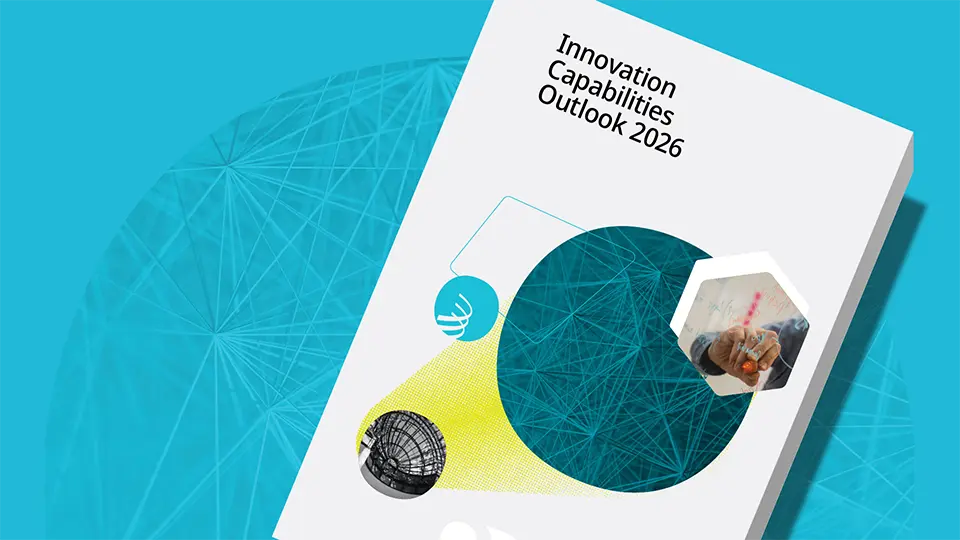
Innovation Capabilities Outlook
An annual report tracking how economies build, expand, and lose innovation capabilities over time.
Effective policy starts with an honest diagnosis. Rather than replicating strategies from other regions, approaches like smart specialization call for policy grounded in local capabilities and local needs, using each region's existing strengths as the starting point.
The Innovation Capabilities Navigator (ICN) makes that diagnosis possible. It shows where an economy holds a competitive advantage across 2,508 fields spanning science, technology, entrepreneurship, and production, where it doesn't, and where the conditions for the next move already exist.
For policymakers, this means directing limited resources toward the areas where action will have the greatest impact, instead of guessing or copying what worked elsewhere.

Innovation Capabilities Navigator
Innovation Capabilities Navigator

Unfolding the capability path

Assess current capabilities

Find new opportunities
Going deeper into specific economies and fields
Broad diagnostics reveal where an economy stands overall, but policy often needs to go deeper. Some economies excel at producing scientific research but struggle to translate discoveries into commercial applications. Others contribute significantly to global production yet fail to develop the technological learning that drives long-term growth. Understanding these specific mismatches requires focused research, not just aggregate scores.
In-depth studies address exactly these gaps, examining specific economies, fields, or research questions in detail. They give policymakers the granular evidence needed to design targeted interventions, rather than broad, one-size-fits-all policy. New studies are added as the research evolves.
Innovation Complexity Navigator

Innovation Capabilities Studies
A growing collection of research on specific economies and fields.
Opening the data and methods behind the findings
Good policy depends on good evidence, and that evidence should be open to scrutiny and reuse. Bottom-up approaches that use data to measure capabilities allow policies to stay aligned with local realities, rather than relying on assumptions or borrowed models from elsewhere.
The underlying datasets, together with technical notes documenting the ICO methodology, are openly available through the WIPO Knowledge Repository. This gives researchers, analysts, and policymakers the ability to verify findings, run their own analysis, and build custom research tailored to their own questions.

Innovation Capabilities Datasets
The underlying data behind the findings, open for reuse and independent analysis.
Exploring resources from the field
Innovation capabilities research does not exist in isolation. It sits within a broader field that spans economic complexity theory, smart specialization, IP policy, and development economics, and draws on data, methods, and evidence produced by researchers and institutions around the world.
Explore publications, datasets, tools, and open-source code from WIPO and the broader research community, curated to support researchers, analysts, and policymakers working in the field.

Literature

Datasets

Codes

Visualizations
General enquiries
General enquiries relating to the Innovation Capabilities project may be sent to the Innovation Capabilities Team.