In the Philippines, a group of researchers helps cerebral palsy and dementia patients with virtual gamification rehabilitation
Children with cerebral palsy need rehabilitation and stimulation to optimize their mobility and independence. At the other end of life, adults with age-related dementia also need specialized rehabilitation to improve their quality of life. In the Philippines, a group of healthcare professionals and engineers developed an immersive gamification technology that can help both patient groups.

Department of Physical Therapy College
of Allied Medical Professions
Maria Eliza Ruiz Aguila, a physiotherapist and academic at the University of the Philippines’ Department of Physical Therapy College of Allied Medical Professions, leads a research program to develop immersive gamification technology for cerebral palsy and dementia. The technology is named AXEL Virtual Care, after the university’s Augmented Experience e-Health
Current rehabilitation strategies for cerebral palsy and dementia have limitations, she said, and the project sought to address the specific needs of these clinical populations with cognitive and motor disabilities.
The goal was to increase patients’ engagement in therapy sessions by providing fun, safe interactions, encouraging imagination in an immersive virtual environment, and supporting sustained repetition and goal-oriented therapeutic activities. “We thought that with this technology, therapists working with children with mobility limitations and older adults with dementia could deliver high-intensity, long-term goal-specific therapy,” she said.
Developing AXEL Virtual Care gaming suites was a collaborative and inclusive process. Different specialists participated in the research, including engineers, an anthropologist, game developers, computer scientists, rehabilitation medicine doctors, occupational therapists, physical therapists, neurodevelopmental practitioners, pediatricians, patients and their carers, and patient advocacy groups.
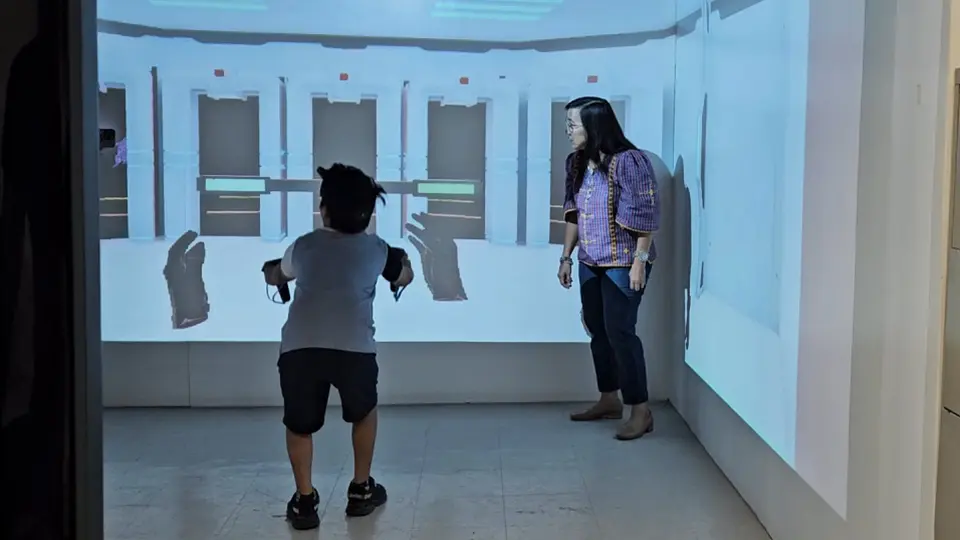
Gaming rehab for cerebral palsy and dementia patients
Complete immersion of patients in a virtual environment allows them to try and experience activities that are not possible or safe in the real world, Dr. Aguila explained. AXEL Virtual Care applies game elements such as goals, challenges, scores, levels, and rewards. The research group focused specifically on children with cerebral palsy experiencing mobility limitations.
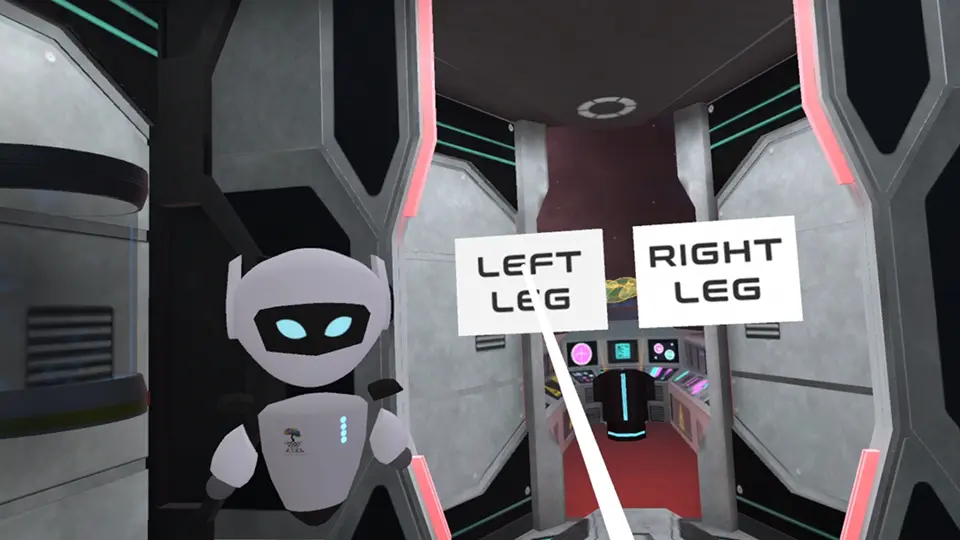
The technology includes three mini-games for cerebral palsy and three for dementia. Each game, she explained, targets a particular goal. For cerebral palsy, the first game is for developing balance, the second for leg strength, and the third for developing walking ability. For dementia, games target reminiscence and orientation and include relaxation, similar to some forms of art therapy, and music therapy that relies on the Filipino culture of loving karaoke or videoke, like community singing.
For older adults, virtual reality headsets allow them to keep their glasses on, and all games are played while seated for safety.
Immersive and Safe Virtual Reality in Physical Therapy
The AXEL Virtual Care system uses two different setups. The first is a typical virtual reality headset, and the second is a “semi-cave” virtual environment. The typical virtual reality cave has six walls, she explained; the four walls, ceiling, and floor of a room. The semi-cave only uses three walls: the front and two sides. The semi-cave can be deployed in clinics and hospitals, the primary targets, and even in a household.
Phase one trials involving 30 children without cerebral palsy proved the technology was safe, acceptable, and usable, she said. A very low incidence of virtual reality sickness symptoms, such as fatigue and headaches, was detected. The children found the games entertaining, colorful, and fun, and felt immersed. The same trial results were observed in the group of 30 older people without dementia.
The next phase is to resume clinical trials shortly involving 24 children with cerebral palsy and 7 adults with dementia.
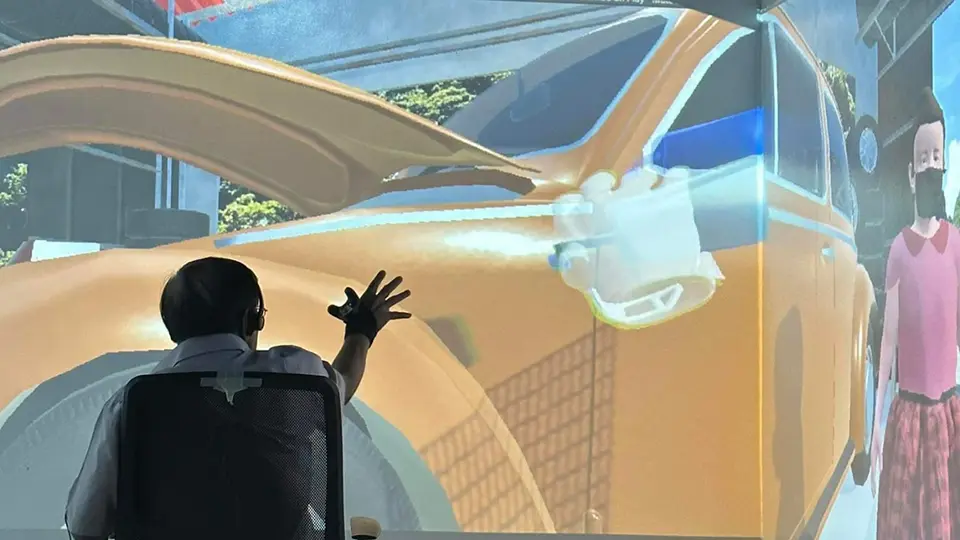
Trial and tested virtual reality treatment
Nathan is an eight-year-old with cerebral palsy. He became the first child with a motor disability to participate in the AXEL Virtual Case test and became the poster child for the games.
Lola Pilar, a retired elementary school teacher, has age-related dementia, and she, too, was chosen to be one of the first participants of the AXEL Virtual Case test.
Both are AXEL Virtual Care poster persons as they represent the population targeted by the project, and they helped the research team demonstrate the system's use in a real-world context. They illustrate the challenges faced by children with motor disabilities and older adults with cognitive disabilities, and how AXEL Virtual Care can be adapted and used across different age groups and clinical needs, Dr. Aguila detailed.
Commercializing AXEL Virtual Care System
After five years of research to refine the design of the AXEL Virtual Care system, the team is considering the best way to market it. “Our target for initial commercialization is within the next 2-3 years, she said, adding that the next six months should allow the completion of the ongoing clinical trials.
The business model is being discussed by the team, particularly following its participation in the WIPO-ASEAN Lab-to-Market (L2M) Program. The program, funded by the Korea Funds-in-Trust for Industrial Property, supports university-based technology innovation and provides technology transfer professionals with skills and mentoring to commercialize IP.
“Our vision,” Dr. Aguila said, “is to make the technology as available and as accessible as possible to those who need it the most, especially in unserved and underserved areas of the Philippines who might not even have access to traditional therapy.” “We hope AXEL Virtual Care will provide a more accessible and applicable solution to as many patients as possible.”
The L2M program allowed the team to refine its value proposition, IP strategy, business model, and to help identify potential technology partners. “We could clarify who will use the system, even when we thought we were so clear about it.”
Before the L2M WIPO mentoring, the team was considering a licensing model, but now they are looking into other options, including a spin-off.
The logo and the name have been registered, and a patent is pending on the immersive gamification technology with a therapist module.
Interest in VR Therapy from Local Government, Schools
One avenue explored is the involvement of local government units, which could purchase the system, avoiding out-of-pocket expenses for patients and families. The AXEL Virtual Care system has been introduced to hundreds of therapists from at least 36 centers, hospitals, and schools across the major island groups of the Philippines, and their feedback has demonstrated interest in a national deployment of the games.
Roadshows have also revealed interest from the general public and therapists' training schools.
Further Development of AXEL Virtual Care Therapeutic Games
After developing the two sets of three games for their initial clinical targets, the research team is now developing a third set of games for Parkinson’s disease and looking into games for people who had a stroke.
The team hopes that in the next five years, the technology will be on the market, and scaled-up versions will be available in new games and levels for the same clinical population, targeting additional goals with additional technology, such as augmented or mixed reality.
The project is primarily funded by the Department of Science and Technology Philippine Council for Health Research and Development, and the National Innovation Council of the Philippines, with counterpart support from the University of the Philippines.