From freestanding steel structures to continuous overhead tracking, RCI built a family of adventure attractions around repeatable engineering protected through patents, trademarks and design rights.
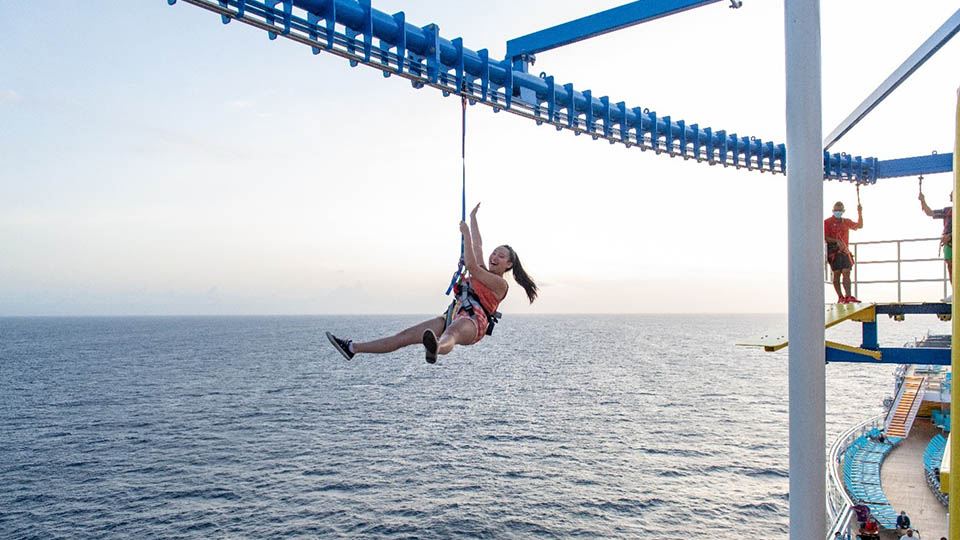
The appeal of a ropes course is the feeling of movement, challenge and choice. The harder business challenge is making that experience work reliably across different venues and markets. RCI Adventure Products built its growth around that challenge, turning early ropes-course know-how into a protected platform of engineered adventure attractions.
Founded by Jim and Michelle Liggett in Michigan in 1989, the company, formerly Ropes Courses Incorporated, grew from custom tree-to-tree ropes courses into an international supplier of engineered adventure attractions. Product innovation drove that transformation, while intellectual property (IP) helped protect the technical systems, brands and design elements that could be repeated across products and installations. Today, RCI reports more than 1,000 installations in over 30 countries.
At the center of RCI’s development is its continuous overhead tracking concept, which allows participants to remain connected as they move through a course. That system became the foundation for a wider product family, including Sky Trail®, Sky Tykes®, Sky Rail® and Sky Tour®. Patents, trademarks and design rights helped RCI move from bespoke installations to a repeatable product platform that could be adapted across venues, markets and countries.
Building beyond tree-to-tree courses
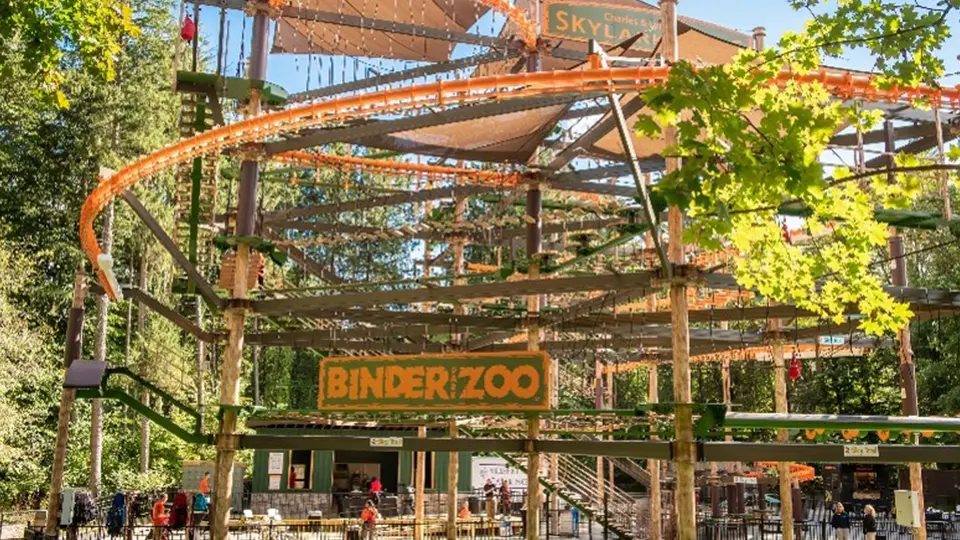
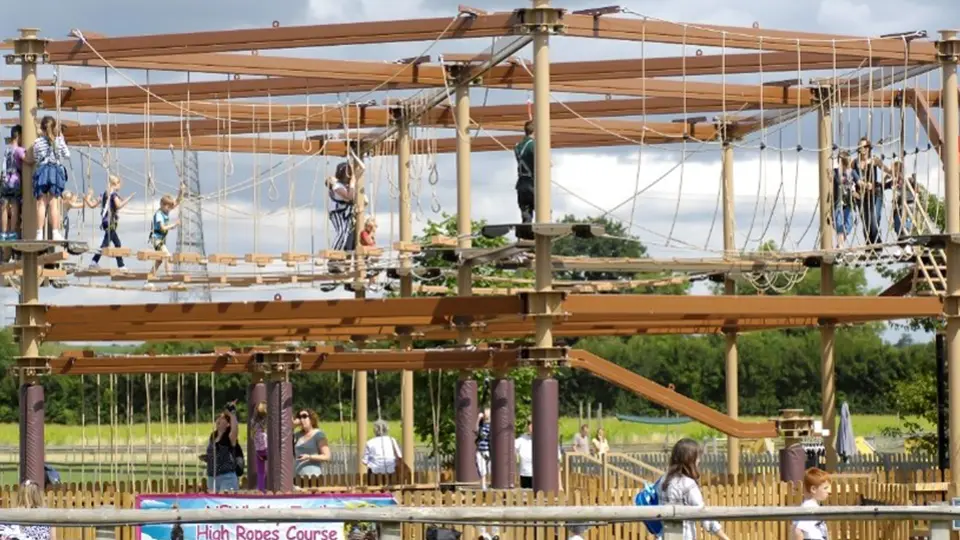
Long before RCI became a company, Jim Liggett was already working with ropes courses, camps and early zip-line systems in the 1980s. These installations delivered memorable adventure experiences, but they were also operationally complex. They depended on suitable trees or natural anchors, required close supervision and often involved repeated clipping and unclipping as participants moved from one course element to another.
As demand grew, Liggett saw a wider opportunity. With the right design, ropes courses could move beyond camps and specialized outdoor programs and become attractions for families, commercial venues and high-volume visitor environments. That meant rethinking the experience for smoother guest flow, more predictable operation and a broader public audience.
Ropes Courses Incorporated was established in 1989 as Liggett began turning his early experience with aerial adventure systems into a business. In its first years, the company built custom installations for camps, YMCAs and outdoor recreation sites, mainly in Michigan and the Midwest. Growth was gradual, and each project helped RCI refine its designs, strengthen its operating practices and better understand what customers needed. Early projects, including Stone Mountain in Georgia, showed that the concept could work in larger destination settings where visitor flow, durability and commercial performance were increasingly important.
A shift to scalable engineering
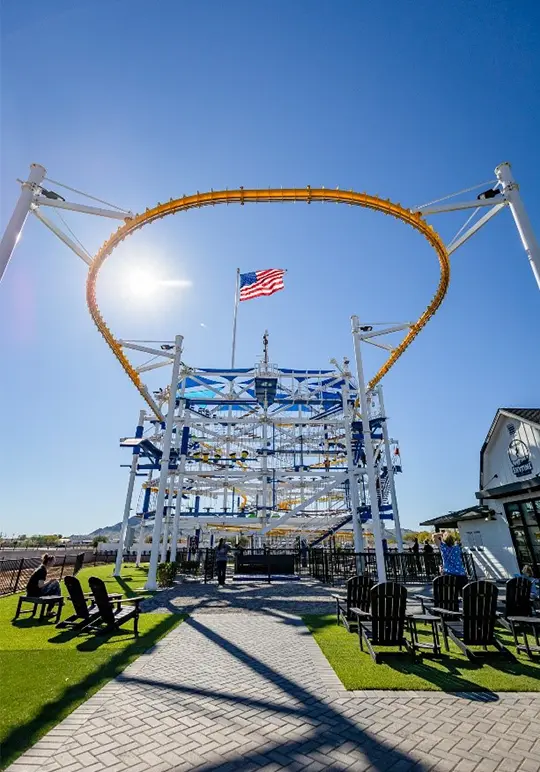
Around 2000, RCI made a strategic shift from tree-based courses to freestanding steel structures. This was more than a change in materials. It changed how the business could grow. Tree-based systems were site-dependent and difficult to standardize. Their design and maintenance could vary according to terrain, weather and the condition of natural supports. Freestanding steel structures allowed RCI to create more durable, modular and repeatable attractions that could be installed in a much wider range of places.
This opened new markets, including family entertainment centers, resorts, shopping destinations, municipal parks, zoos and cruise ships. These venues needed exciting attractions that were also reliable, space-efficient and manageable for operators. The shift also changed what RCI had to protect. The company moved on from only building individual courses. It was developing repeatable structures and technical systems that could be protected, replicated and adapted across projects and markets.
Continuous connection as the core invention
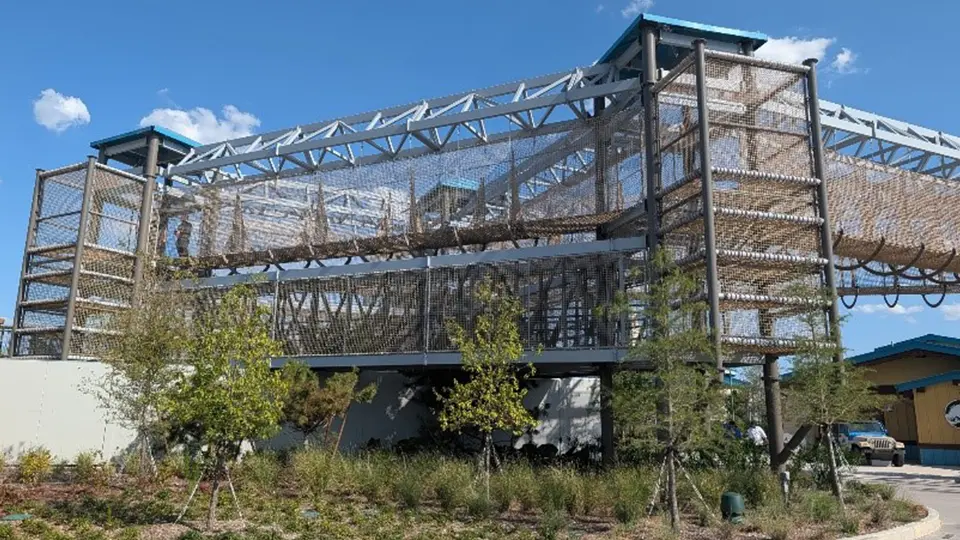
The central technical development behind RCI’s modern product range is its continuous overhead tracking technology. Participants wear a safety harness that is attached to a connector running along a track above the course. As they climb and move from one obstacle to the next, the connector travels with them, allowing them to remain secured to the system from start to finish instead of repeatedly unclipping and reconnecting.
For visitors, continuous connection keeps the experience focused on movement, choice and challenge. For operators, it can support steadier guest flow, fewer delays at transition points and more predictable supervision. The patent record shows how this feature became part of RCI’s technical strategy and related to other early patents, such as a tracking system designed to keep a participant secure while moving between challenge-course elements and changing direction.
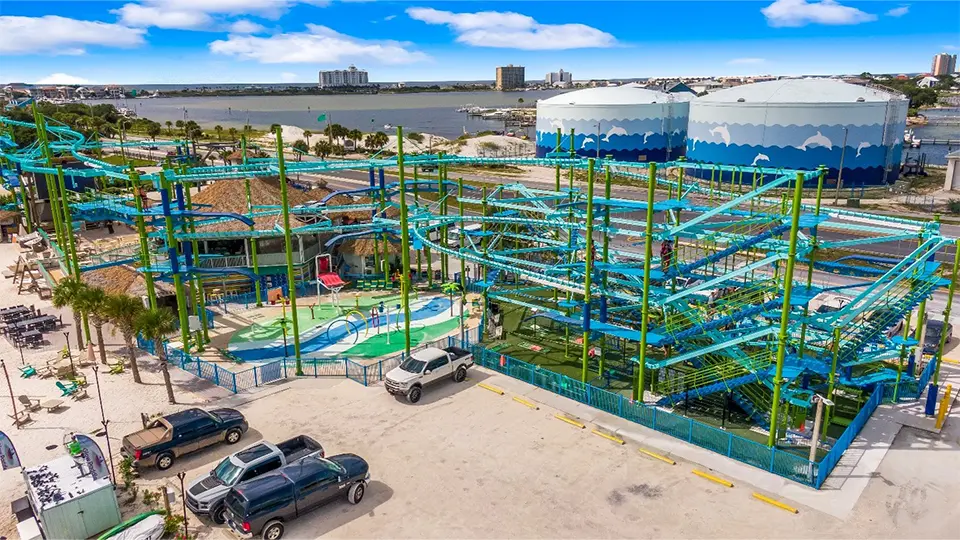
This system became the foundation for Sky Trail®, RCI’s flagship product line. Sky Trail® combines elevated obstacles, modular elements and multi-level structures built around overhead tracking. Sky Tykes® adapts the concept for younger children. Sky Rail® and Sky Tour® extend the platform into rail-based and zip-style experiences.
Over time, RCI expanded further through additional attractions and partnerships, including Clip ’n Climb, Amaze’n Mazes, Adventure Trail, Adventure Tykes and the Destination Series. Together, these products positioned the company as a broader adventure-attractions platform rather than a single-product manufacturer. That broader product range is also evident in repeat installations. In 2024, RCI worked with Great Wolf Lodge on new US locations that combined Sky Trail®, Sky Rail® and Adventure Trail® attractions in Naples, Florida, and Webster, Texas.
Protecting a platform, not just a product
As RCI’s system matured, intellectual property became central to the company’s business strategy. The protectable value extended beyond a single attraction or component. It was in the design logic that made the attractions repeatable, adaptable and commercially viable across different operating environments.
“The key driver was the need to protect core technology that made high-throughput, public-access courses practical and safe, while preventing easy copying as we moved into broader commercial and international markets.”
Michelle Liggett
From the early 2000s, RCI developed a patent portfolio covering technologies related to challenge-course structures, overhead tracking, zip-track and rail-based systems, braking and return mechanisms, connection systems, slingline assemblies and safety-check components. The portfolio developed around different parts of the operating system. Tracking technology addressed continuous connection. A later member-slide invention focused on the reliability of that connection by addressing the risk of dependence on a single load-bearing point. Zip-track and rail technologies extended movement into new formats, while other patents addressed braking, return-track configurations and safety checks.
Seen together, the inventions trace the practical problems RCI kept working on as the platform evolved: keeping participants connected, extending movement into new formats, controlling flow and checking attachment before entry. The result is a layered patent strategy around an integrated operational platform. Rather than centering protection on one feature alone, the portfolio developed around different parts of the engineering behind RCI’s product family.
Using the PCT for selected inventions
An international patent-filing strategy had to follow the way RCI’s market actually developed. A new opportunity could begin with a distributor conversation, a venue project or customer interest in a country where demand was still being tested. Committing early on to separate patent filings in every possible market would have been expensive and premature.
For selected inventions with clear potential beyond the United States, RCI used the Patent Cooperation Treaty (PCT) to keep those choices open. The PCT does not grant a global patent. It provides an international filing route that gives applicants more time, usually up to 30 months from the earliest priority date (and in some markets later), before deciding where to continue seeking protection through selected national or regional patent offices.
For RCI, that additional time had practical value. It allowed the company to assess where its products were gaining commercial traction, where distributor relationships were developing and where patent protection would support real business opportunities. In an industry shaped by project-based installations, local partners and different regulatory environments, the PCT helped align patent decisions with market evidence. The PCT was a way to preserve options to pursue patents internationally while RCI identified which markets mattered most for its protected adventure-attractions platform.
Building the “Sky” brand family
While patents protected technical inventions, trademarks helped build the commercial identity around them. RCI’s “Sky” family of brands, including Sky Trail®, Sky Rail®, Sky Tour® and Sky Tykes®, created a clear naming structure for related products. Each name identifies a distinct experience, while also showing that the products belong to a common system.
That brand architecture becomes especially useful as the products move across markets and partners. RCI works with distributors, installers and commercial partners across different regions. Trademarks help ensure that products are presented consistently, that customers recognize the relationship between different attractions and that the company’s reputation remains attached to its product family. As the company built a recognizable family of product names, trademark protection helped those names travel with the business.
Design rights and visible product elements
RCI’s design-rights strategy focused on protecting course elements that are visible to visitors, operators and competitors. They specifically protect the appearance of selected course components that people encounter during the attraction. One protects the look of the strap-and-connection equipment that links a participant’s harness to the overhead safety system. Another protects the appearance of a rail element, the fixed overhead path that guides movement through part of the attraction. A third protects the appearance of a walking challenge element, the kind of obstacle a participant crosses while moving through the course.
This added another layer of IP protection around RCI's adventure-attractions business. Utility patents protected functional systems such as overhead tracking, rail movement, braking and connection mechanisms. Trademarks protected product names such as Sky Trail®, Sky Rail® and Sky Tour®. Design rights helped protect selected visible components that competitors might otherwise try to imitate while avoiding the functional patent claims. Design protection can be valuable when the market recognizes a product through its visible features. In RCI’s case, registered designs helped protect the look of specific course elements within a broader IP strategy built around engineering, branding and international expansion.
Expanding through partners
International expansion has also depended on trusted local partners. Distributors, installers and strategic partners in markets including the United Kingdom, Japan, South Korea, Australia and New Zealand help adapt each project to local regulations, site conditions, customer expectations and after-sales needs.
A partner-led model requires careful knowledge sharing. Technical documentation, training materials, brand assets and design specifications need to move across borders without losing consistency. For RCI, patents, trademarks and design rights protect registered assets, while trade secrets help safeguard technical know-how, manufacturing processes and operational practices shared with trusted partners. These tools support international expansion while helping the company maintain control over the systems, standards and identity behind its products.