Manila Hosts Training of Trainers to Strengthen Collective Marks in the Philippines
January 16, 2026
With more than 40 participants, including six collective mark holders, the three-day program strengthened national capacity to support collective marks as tools for local economic development in the Philippines.
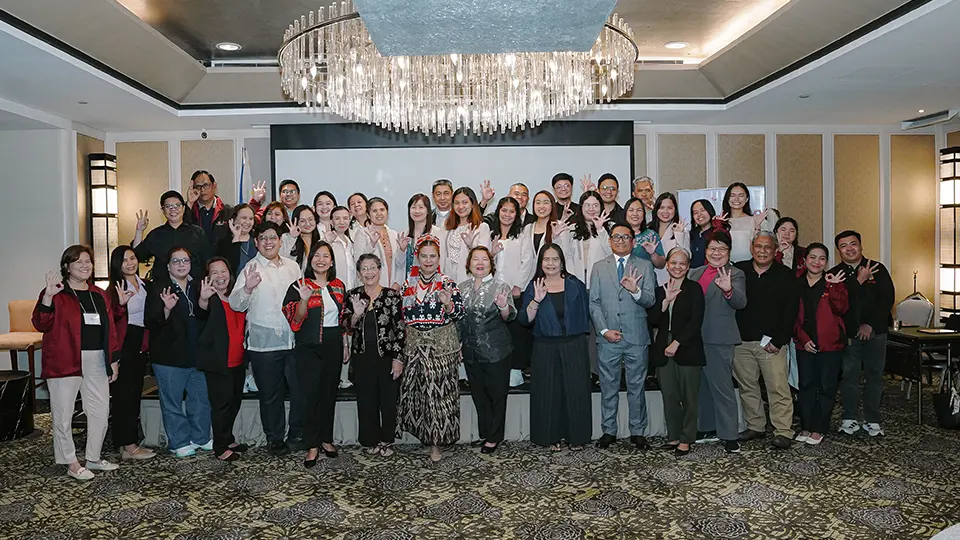
The World Intellectual Property Organization (WIPO) held a training of trainers on collective marks in Manila, Philippines, from December 17 to 19, 2025, under the Development Agenda Project on Sustaining and Strengthening the Role of Collective Marks as a Tool for Economic, Cultural, and Social Development through a Holistic Developmental Approach. The training was organized in cooperation with the Intellectual Property Office of the Philippines (IPOPHL).
The training brought together 34 IPOPHL officers and six collective mark holders in the Philippines, with the objective of enhancing national expertise in supporting the development, registration, and management of collective marks. By training trainers, the initiative aims to ensure that knowledge on collective marks can be effectively disseminated to local stakeholders, producer groups, and small enterprises across the country.

Building National Capacity on Collective Marks
The training followed a modular approach developed under the DA Project, covering the full life cycle of collective marks. Sessions addressed key topics such as the concept and purpose of collective marks; strategies for building and developing a collective mark; the registration process; management and enforcement mechanisms; and ways to promote and leverage collective marks for improved market visibility and competitiveness. Practical discussions and exchanges enabled participants to explore how these tools can be applied in real-world settings.
Interactive elements throughout the program encouraged participants to share experiences and discuss challenges faced by producer groups and institutions in supporting collective marks. This exchange helped strengthen a common understanding of how collective marks can be used as practical instruments for local development.
Showcasing the Philippine Experience
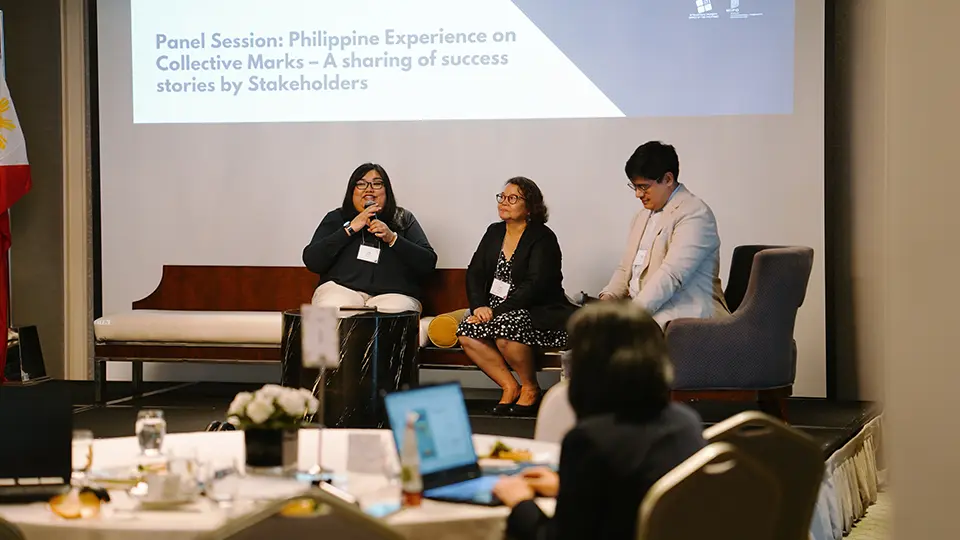
The training also featured panels by local collective mark holders, who shared their personal experiences on the development, registration and management of their respective collective marks. During these sessions, Philippine collective mark holders presented practical insights from their own initiatives, including the experience of the Orgullo Kan Bicol Association (OKB) from the Bicol Region, who had participated in the first phase of the project. OKB manages a registered collective mark based on Pili, a tropical tree that grows in the region’s volcanic soil. The association brings together producers of Pili-based products, including food items, handicrafts, and cosmetics. Registered in April 2022, the collective mark is now actively used by the association to highlight product origin, quality, and shared standards.
WIPO has worked closely with IPOPHL, and other national and local partners to support OKB in developing and implementing its collective mark. This case provided a concrete example of how collective marks can contribute to value creation for local products and communities.

The Manila training highlighted the importance of institutional capacity-building and peer learning in advancing the effective use of collective marks. With further activities planned, the DA Project continues to support national efforts to use intellectual property as a driver of economic development.
Find out more
- Development Agenda for WIPO
- Committee on Development and Intellectual Property (CDIP)
- DA Project on Sustaining and Strengthening the Role of Collective Marks as a Tool for Economic, Cultural, and Social Development through a Holistic Developmental Approach
- Collective Marks as a Tool for Development: Philippines