About Intellectual Property IP Training Respect for IP IP Outreach IP for... IP and... IP in... Patent & Technology Information Trademark Information Design Information Geographical Indication Information Plant Variety Information (UPOV) IP Laws, Treaties & Judgments IP Resources IP Reports Patent Protection Trademark Protection Design Protection Geographical Indication Protection Plant Variety Protection (UPOV) IP Dispute Resolution IP Office Business Solutions Paying for IP Services Negotiation & Decision-Making IP Cooperation Innovation Support Public-Private Partnerships The Organization WIPO and Artificial Intelligence Working at WIPO Accountability Patents Trademarks Designs Geographical Indications Copyright Trade Secrets Future of IP WIPO Academy Workshops & Seminars IP Enforcement WIPO ALERT Raising Awareness World IP Day WIPO Magazine Case Studies & Success Stories IP News WIPO Awards Business Women Universities Indigenous Peoples Judiciaries Youth Examiners Innovation Ecosystems Economics Finance Intangible Assets Global Health Climate Change Competition Policy Sustainable Development Goals Genetic Resources, Traditional Knowledge and Traditional Cultural Expressions Frontier Technologies Mobile Applications Sports Tourism Music Fashion PATENTSCOPE Patent Analytics International Patent Classification ARDI – Research for Innovation ASPI – Specialized Patent Information Global Brand Database Madrid Monitor Article 6ter Express Database Nice Classification Vienna Classification Global Design Database International Designs Bulletin Hague Express Database Locarno Classification Lisbon Express Database Global Brand Database for GIs PLUTO Plant Variety Database GENIE Database WIPO-Administered Treaties WIPO Lex - IP Laws, Treaties & Judgments WIPO Standards IP Statistics WIPO Pearl (Terminology) WIPO Publications Country IP Profiles WIPO Knowledge Center World Intangible Investment Highlights WIPO Technology Trends Global Innovation Index World Intellectual Property Report PCT – The International Patent System ePCT Budapest – The International Microorganism Deposit System Madrid – The International Trademark System eMadrid Article 6ter (armorial bearings, flags, state emblems) Hague – The International Design System eHague Lisbon – The International System of Appellations of Origin and Geographical Indications eLisbon UPOV PRISMA Mediation Arbitration Expert Determination Domain Name Disputes Centralized Access to Search and Examination (CASE) Digital Access Service (DAS) WIPO Pay Current Account at WIPO WIPO Assemblies Standing Committees Calendar of Meetings WIPO Webcast WIPO Official Documents Development Agenda Tailored Initiatives & Projects Collaborative Forums & Dialogues Innovation, Creativity and Development Acceleration Program IP for Impact National IP Strategies Cooperation Hub Technology and Innovation Support Centers (TISC) Technology Transfer Inventor Assistance Program IP Commercialization WIPO GREEN WIPO's Pat-INFORMED Accessible Books Consortium WIPO for Creators Member States Observers Director General Activities by Unit External Offices Global Forum on IP and AI AI Infrastructure Interchange AI Tools & Services Staff Positions Affiliated Personnel Positions Procurement Results & Budget Financial Reporting Oversight

Chile Becomes First Latin American Country to Use WIPO CASE

September 22, 2016

From September 2016, the Chilean intellectual property office (INAPI) will use WIPO CASE to securely share search and examination reports on patentability with other national offices. Since a large number of patent applications are filed in multiple offices, such information sharing can help avoid unnecessary duplication of efforts.

Using WIPO CASE will enable INAPI to provide a more modern, higher-quality experience to its users. This is in line with the industry-wide goal to achieve greater speed, efficiency and quality in both informing about and granting IP rights.
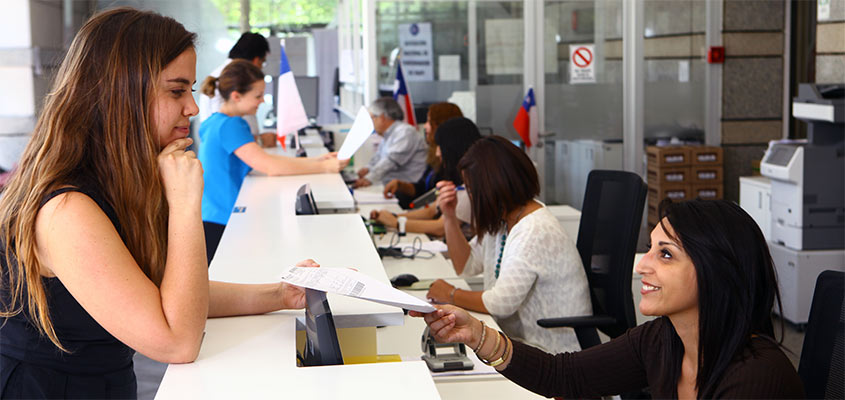
A customer in the INAPI office
(Photo: INAPI CHILE)

More about WIPO CASE

WIPO CASE is a system that allows IP offices to interact with each other, in two ways:

  • It gives offices access to a platform through which they can view documents related to the patent examination process.
  • It allows them to contribute their own patent documents for other offices to use.

By sharing documents in this way, work carried out in one participating country can easily be re-used in another.

WIPO CASE is used by the national IP offices of: Australia, Brunei, Cambodia, Chile, China, India, Indonesia, Israel, Japan, Lao People's Democratic Republic, Malaysia, Mongolia, New Zealand, Papua New Guinea, Philippines, Singapore, Thailand, United Kingdom, United States of America, Viet Nam, Eurasian Patent Office (EAPO) and European Patent Office (EPO).