Science, technology, engineering, and mathematics (STEM) can open pathways to research, invention, and technology-driven entrepreneurship. When more women enter and stay in these fields, more women become inventors, launch businesses, and use the intellectual property (IP) system.
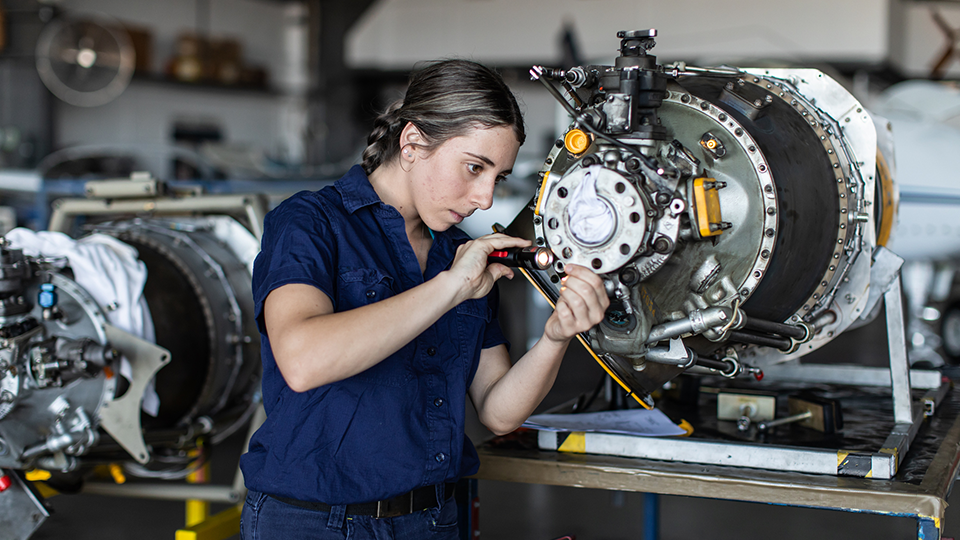
The European Patent Office (EPO) and CERN show how institutions can support women and girls at different stages, from school to professional life. Their initiatives inspire girls to explore STEM careers, showcase women scientists and inventors, support professional development, and connect research to innovation through knowledge transfer and entrepreneurship.
EPO advances women in STEM through education and role models
The EPO’s Advancing Women in STEM study shows that women remain underrepresented as inventors, technology entrepreneurs, and patent professionals. Women’s participation in European inventorship rose from approximately 2% in the 1970s to 13.8% in 2022, while 24.1% of European patent applications now include at least one-woman inventor. Progress, however, remains gradual, and the gap is widest among startups. Only 13.5% of startups with European patents include a woman founder. Women are also better represented among patent professionals, at approximately 25% to 30%.
To help close this gap, the EPO makes STEM, innovation, and the IP system more accessible and visible to women and girls. Through initiatives such as Girls’ Day, it introduces girls to science, technology and invention through hands-on activities and direct exchanges with scientists, engineers and inventors. These activities complement the EPO’s engagement for International Day of Women and Girls in Science and International Women’s Day, which encourage girls and women, to see STEM and innovation as pathways open to them.
Access to patent knowledge, technology transfer, IP education and professional development are equally central to EPO’s approach. In 2025, EPO Academy trainings reach almost 23,140 learners internationally, 53.2% of whom were women. Women are also gaining ground to the EPO’s professional certifications. In 2025, more than 41% of candidates for the European Qualifying Examination were women, as were over 80% of candidates for the European Patent Administration Certification. Women also made up to approximately 82% of the applicants for the Candidate Support Program for these qualifications. The EPO’s Young Professionals Programme connects with more than 166 universities across its 38 member states, and women represented 63% of those joining the programme in 2025.
The EPO also works to make women innovators visible as role models. Its Women Inventors platform brings together studies, inventor stories, case studies, podcasts and events on women’s contributions to innovation and society. Among the women featured is Katalin Karikó, winner of the European Inventor Award 2022 and Nobel Prize laureate in 2023, whose pioneering work on modified mRNA contributed to the development of mRNA-based vaccines.
CERN strengthens the innovation pipeline for women
CERN’s contribution to innovation is rooted in its wider knowledge-transfer ecosystem. Technologies developed for particle physics including accelerators, detectors and computing have found applications in medical imaging and cancer treatment, environmental monitoring, materials, energy and industry. CERN transfers this knowledge through licensing, open-source software and hardware, consultancy, contract research and collaborative research and development. Within this ecosystem, CERN supports women and girls at different stages of their STEM journeys, from early exposure to science to career development, mentoring, and entrepreneurship. The following initiatives are examples and do not represent an exhaustive list.
For the International Day of Women and Girls in Science, women scientists and engineers serve as ambassadors. They visit schools with partners including UNIGE, EPFL and LAPP and give interactive presentations and demonstrations. CERN also shares the stories of women scientists working in physics, engineering and accelerator operations, using these role models to challenge stereotypes and inspire girls to consider STEM careers.
Retaining women already working in STEM is equally important. CERN’s Women in Technology (WIT) grassroots community, founded in 2016, offers talks, mentoring, networking and diversity activities. The Inclusion Matters initiative (2026–2030), shifts the focus from attracting talent to long-term retention and belonging. It builds on the “25 by ’25” initiative, which raised the share of women among CERN staff, fellows and graduates from 21% in 2021 to nearly 25%.
CERN Venture Connect, its deep tech startup support program, helps spin-offs and start-ups access CERN technologies and expertise, and connects them with investors, talent, and a network of 60 partners offering funding, laboratory space, legal advice, and industry expertise. In 2026, CERN launched the CERN Entrepreneurship Academy, a six-month program that trains scientists to take research to market, covering IP, team development, funding, pitching, minimum viable products, market entry and investor readiness.
Explore similar initiatives worldwide
To explore more initiatives supporting women in STEM, innovation, entrepreneurship and IP, visit WIPO’s IP and Gender Action Plan (IPGAP) Database. It brings together policies and programs from around the world and offers practical examples and approaches that can inspire further action and collaboration.
Acknowledgements: Theano Evangelou, Senior Advisor, Sustainability, Diversity and Inclusion, European Patent Office (EPO), and Myriam Ayass, Head of Entrepreneurship and Innovation Networks, CERN.