Patents and the Sustainable Development Goals in Latin America
October 15, 2025

In 2015, the United Nations laid out a bold vision for humanity: the Sustainable Development Goals (SDGs) – 17 ambitious targets to tackle poverty, inequality, climate change and environmental degradation by 2030. IP analytics offers an opportunity to measure innovative progress in achieving these goals. By mapping patent families to specific SDGs, WIPO has utilized a data-driven framework to track the pace and direction of innovation globally. The methodology goes beyond simple patent counts, instead aligning technological developments with goals like climate action, clean energy, sustainable industry, and life below water.

In 2015, just one in four active patents around the world were related to the SDGs. Fast forward less than a decade, and the picture has shifted dramatically: today, nearly one in three patents (31.4%) support the SDGs. More details can be found in the WIPO 2024 report “Mapping Innovations: Patents and the United Nations Sustainable Development Goals” which looks at a global overview of patents relating to the SDGs.
Looking specifically at the Latin America and the Caribbean (LAC) region, patent analysis revealed that the LAC region is outpacing the global average when it comes to patenting relating to the SDGs. While 32% of patents worldwide are aligned with the SDGs, in LAC that share jumps to 40%. In particular, the LAC region shows a focus in SDG 3 (Good Health and Well-Being) with 12% of LAC patents relating to SDG 3 compared to 7% worldwide. Also, the LAC region is proportionally stronger in SDG 2 (Zero Hunger), SDG 7 (Affordable and Clean Energy) and SDG 12 (Responsible Consumption and Production). It does, however, have proportionally lower levels in SDG 9 (Industry, Innovation and Infrastructure) and SDG 13 (Climate Action).
Percentage of SDG related patents in LAC countries
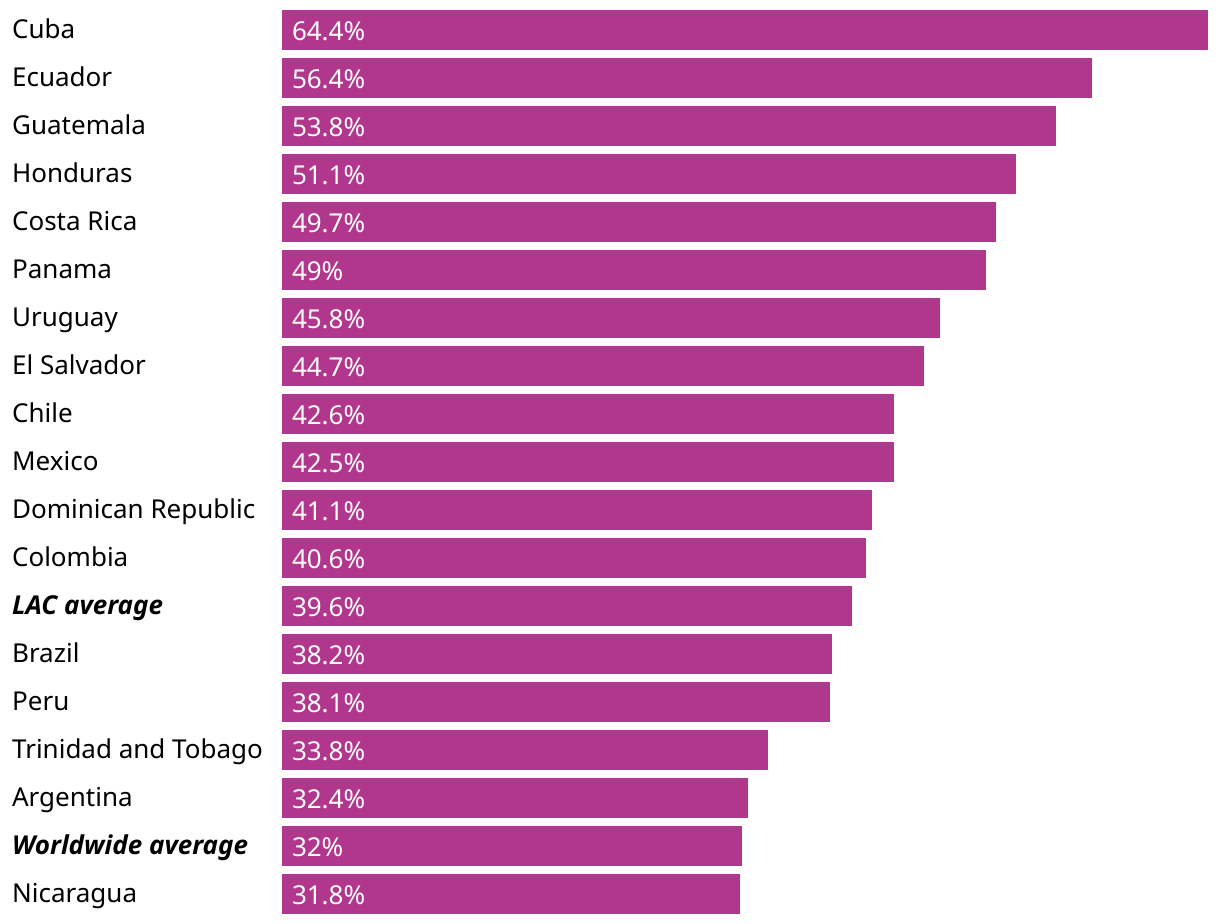
Within the LAC region, Brazil leads with over 30,000 active patent families, followed by Mexico (~14,000) and Argentina (~5,500). Together, these three larger countries account for the significant proportion of LAC's patenting activity. But, when looking specifically at how many patents were mapped to the SDGs, the picture changes. Whilst Brazil maps 38% of its patents to the SDGs, and Mexico achieves 42%, the regional standout is Cuba with a notable 64% SDG mapping rate. The total number of patents in Cuba is relatively low, with 574 patents, but it is interesting that nearly two-thirds relate to the SDGs. In addition to Cuba, other smaller countries in the LAC region show high proportions; Ecuador achieves 56% SDG mapping, while Guatemala hits 54% – both significantly above both the regional and worldwide averages.
Proportion of patents linked to specific SDG goals in LAC countries
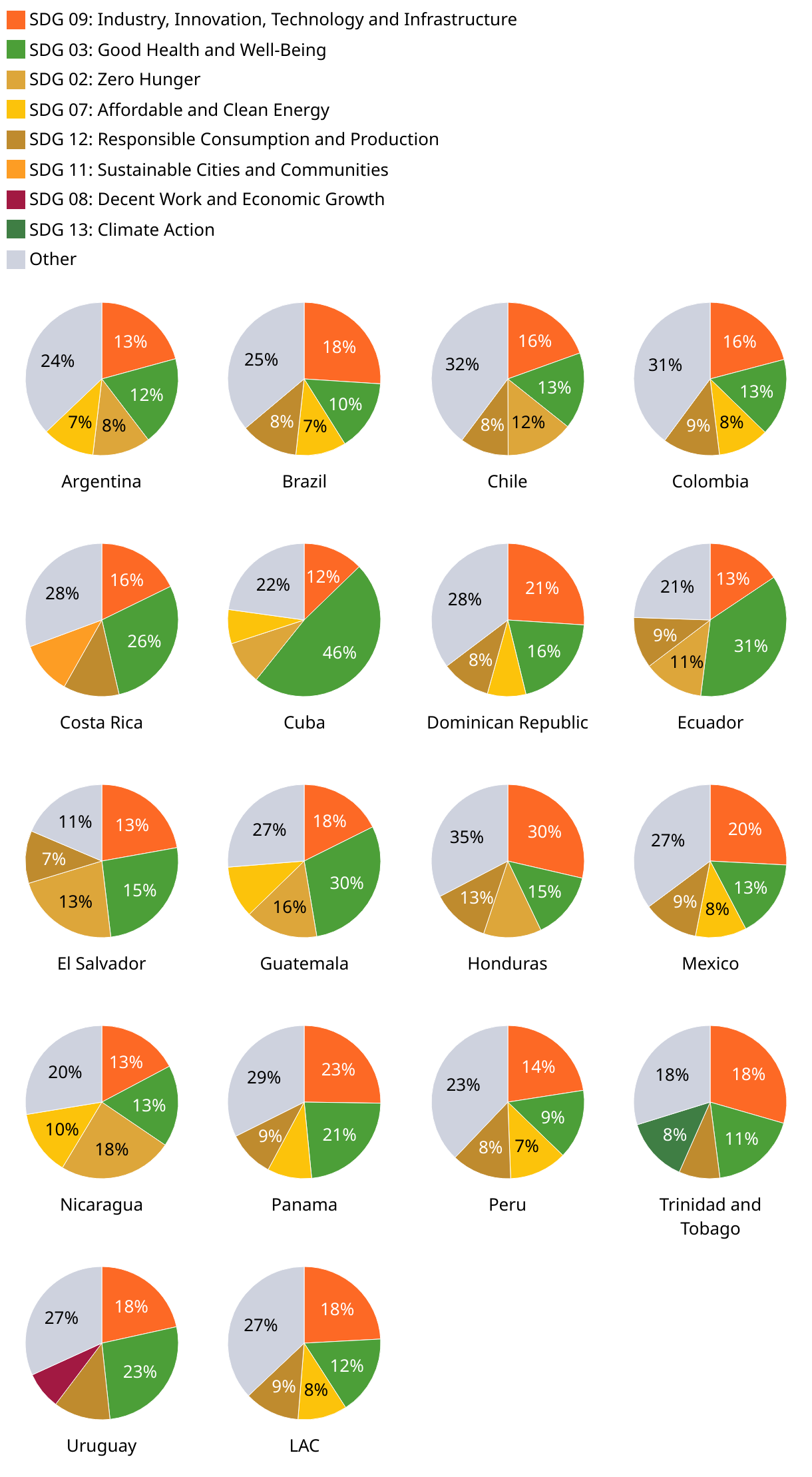
Cuba's 45.9% concentration in SDG 3 (Good Health & Well-Being) is particularly notable. This likely relates to the country’s known focus on healthcare and well-being. Costa Rica shows a concentration in SDG 11 (Sustainable Cities and Communities) with 10% of patents related to this, and to SDG 12 (Responsible Consumption and Production) with 11% of their patents related to this SDG. Additionally, 5% of Costa Rican SDG patents relate to SDG 4 (Quality Education), which is an area where it is less than 1% for most LAC countries. Guatemala and Nicaragua are the only LAC countries with double-digit proportions (>10%) in SDG 7 (Affordable and Clean Energy), with most LAC countries in the 6–8% range. 5.5% of Chilean SDG patents relate to SDG 14 (Life Below Water), which is an area where it’s <2% for most LAC countries.
To summarize, LAC countries continue to innovate in SDG-related technologies and, despite lower absolute levels of patenting, proportionally more than the global average are for patents related to the SDGs. This is especially significant because the region is one of the most biodiverse regions on the planet, but it is also one facing persistent challenges such as poverty, inequality and environmental vulnerability. This makes the alignment of patents related to the SDGs not only relevant, but essential, for the region’s sustainable future.