On the International Day of Women Judges, WIPO showcases the inspiring careers of women adjudicators from around the world, all of whom are guiding examples in the effort to promote balanced and effective intellectual property (IP) ecosystems globally.
WIPO is committed to realizing an inclusive IP ecosystem that encourages diversity and the equal participation of women, both in the innovation ecosystem and in supporting structures and organizations. This work reflects WIPO’s vision of a world where IP supports innovation and creativity for the good of everyone, everywhere.
The WIPO Judicial Institute is honored to collaborate with extraordinary women who shape the development of IP adjudication within their jurisdictions and beyond. Since 2022, WIPO has celebrated the International Day of Women Judges by highlighting some of their remarkable experiences.
Angela Furlanetto, Justice, Federal Court of Canada, Ottawa, Canada

I became interested in being a judge early on in law school by serving on the student court. I felt comfortable and confident in the role and the experience stayed with me. I developed an interest in litigation during practice and again found myself at my happiest, and most effective, when I was in the courtroom. I was drawn to practice initiatives that involved liaising with the Court. These experiences gave me a deeper understanding of the Court and enriched my desire to be a judge.
Being a judge is a privilege that brings both rewards and challenges. The decisions we make are not easy and can involve high stakes for parties. Knowing that you have listened and understood the parties and have provided them with a fair and reasoned decision is critical and rewarding. Being able to help parties solve a complex dispute provides not only the personal satisfaction of solving a difficult problem, but also the fulfillment of helping others.
Adjudicating intellectual property cases provides added intellectual challenge and reward. I particularly enjoy patent matters where I must put myself in the shoes of the person of ordinary skill in the art and learn about the relevant science from the experts. As a former IP practitioner with a technical background of my own, I enjoy navigating through complex technical issues. As the field of intellectual property centers on innovation, there are always new and interesting issues to be resolved.
The importance of having a strong role model cannot be overstated. In my experience, the best type of mentor is someone who not only teaches you about the law, but also the importance of personal development and of giving back to your profession and community. I was lucky to find several role models along the way who encouraged me to find opportunities and provided me with invaluable guidance and encouragement.
I would advise any woman who wants to be a judge to stay confident and driven. Being a judge is a long-term goal and there will be many challenges along the way. Hard work and stamina will be keys to your success. Gain as much litigation experience as you can; it will help with understanding the dynamics of the courtroom. Speak and write often on your area of practice and push yourself to take on challenges outside of your comfort zone. Take on a leadership role outside of work too. Choose an initiative that is true to yourself where you can make an impact. Try to find opportunities to work with the Court on practice initiatives. This will help you to broaden your understanding of the Court overall.
I am optimistic about the future of women in the judiciary. There is a growing recognition of the importance of diversity in our justice system. The number of women judges in Canada continues to grow, with almost half of appointed federal judges in Canada now being women, including five out of nine current Supreme Court of Canada justices.
Patricia Ivonne Inglés Aquino, Presiding Judge, Civil Chamber, First Section of the West, Santa Ana, El Salvador

When I was a child, El Salvador went through an armed civil conflict, which caught my attention so intensely that I decided at that moment to become a lawyer to help achieve social justice. I completed my high school education at a Jesuit school, where they made us aware of the need for justice in Salvadoran society and that we should be professionals at the service of the community. This was another idea that I fully identified with. During my first years of university, I had the opportunity to enter the courts as a judicial collaborator, where I trained in various areas of the law, such as civil, commercial, criminal and traffic law. At that time, I became interested in becoming a judge, because I admired the work of the judges whom I assisted as a collaborator. I revered their commitment to administering prompt and complete justice.
My path to becoming a judge required a lot of effort and dedication to prepare myself for what I consider to be one of the main challenges of my life, which consists of providing high-quality justice to parties. My journey began when the Initial Training Program for Judges was formed. Candidates were selected from a group of 350 applicants. When selected, aspiring judges were educated with specialized training in subjects not studied in the law degree, such as legal logic and office administration, among others. I have completed the academic years of a Master’s degree in Judicial Studies, which gave me new insight on how to improve my performance as a judge, and I am now preparing my thesis. Furthermore, I completed Master's studies with an emphasis on private law, which reaffirmed my preference for the commercial and intellectual property area.
There are several challenges faced by women judges. The first challenge is achieving entry into the highest spheres of the judiciary. Although there are a considerable number of female judges in my country, the number of female judges in the Supreme Court of Justice has always been lower than the number of male judges. No woman has had the honor of being appointed president of the Supreme Court of Justice; despite the fact there are no legal impediments to reaching these positions, in the last three decades, only 23.6% of those elected as judges of the Supreme Court of Justice are women. Keeping in mind that in our country, 52% of the population is female, it is necessary to achieve a balance and have better representation and equality in opportunities, with more women occupying these senior positions.
The second challenge is to constantly educate ourselves and update our legal knowledge. We are on the verge of a fourth industrial revolution, and we must be prepared for the challenges that lie ahead. We must be knowledgeable in new topics such as artificial intelligence and law, neuro rights, blockchain, defense of digital rights, defense of intellectual property on the internet, the metaverse, etc., in order to provide proper answers to the new challenges that these technologies bring.
The third, and no less important, challenge is to achieve a balance between our personal and professional lives in such a way that we can have quality time for our families and promote our mental and spiritual health. The fourth challenge is to remain independent and impartial in the face of any pressure. We must remember that the commitment of a judge is enormous, since our decisions can affect the lives of people and have economic consequences for the country and companies.
When it is my responsibility to resolve cases related to intellectual property, I always take into consideration that by protecting intellectual property, not only am I protecting the rights holders, but I am also encouraging creativity and innovation. When a culture of protecting intellectual property is promoted, economic development is promoted, and creators are encouraged to be recognized and compensated. Furthermore, I am interested in correctly applying all the international treaties that my country has signed on this matter, since they are commitments to the world regarding the protection of these rights. One of my hopes is that someday, specialized courts will be created in El Salvador for IP protection.
The best advice I could give aspiring women judges is to never stop preparing yourself academically. Always update your knowledge. Don't give up easily. A judicial career is full of challenges, but it is gratifying to serve justice for your country, and your contribution will be extremely valuable. Support other women, especially those in whom you can identify the capacity to fulfill the position. Never lose sight of your target, and remember that adversities are opportunities for growth that can help you foster a solid character. Don’t give in to outside pressures that might be presented to you. Always go the extra mile. Promote honesty and respect, know how to listen patiently, study every case thoroughly, and have a vast knowledge of the jurisprudence of your country and of other countries that might have similar legislation. Most importantly, know and understand that being a judge is a lifestyle. It will touch your professional and personal life equally.
Upendo L. Ngitiri, Deputy Registrar, High Court, Dodoma, United Republic of Tanzania

My journey in the judiciary was driven by a deep passion for administering justice and ensuring the protection of individual rights in society. Growing up, I witnessed few people seeking justice and striving to defend their rights. These experiences fueled my ambition to be part of the solution to uphold justice and fairness in society. Pursuing a law degree was the first step toward fulfilling this dream. My academic journey reinforced my belief in the power of the law to transform lives and restore hope. I joined the judiciary in 2012 as a Resident Magistrate, marking the realization of my aspiration. In both my judicial role and my current administrative role as Deputy Registrar of the High Court, I am constantly reminded of the immense responsibility we carry to interpret and apply the law with integrity, uphold the principles of justice, and contribute to a fair and equitable society.
The most interesting aspect of adjudication is that the outcome of a case hinges entirely on the application of the law and the evidence presented by the parties involved. A court decision is not swayed by external influences but is grounded strictly in the facts brought before the court and the relevant laws governing the matter at hand.
The most challenging aspect is the breadth of legal fields that judicial officers must navigate. In many jurisdictions, judicial officers are required to handle cases across various specialized areas of law, and it is unrealistic to be a master of all. Particularly in highly technical fields like IP, understanding the subject matter is crucial. In such cases, lack of expertise may lead to unfair decisions and miscarriages of justice. Therefore, continuous judicial capacity building and seeking expert opinions become essential to mitigate the risks of inadequate understanding and to ensure fair and just outcomes.
Adjudicating IP disputes is both gripping and impactful on society. Resolving IP disputes fosters innovation and creativity, promotes social and economic growth, drives technological advancement and plays a crucial role in protecting public health by eliminating counterfeited products, which can be a serious public health concern resulting from the infringement of trademarks. Given the far-reaching impact of IP law, adjudicating these disputes becomes very fascinating.
When I joined the judiciary, I realized that IP law was not widely understood or developed in our jurisdiction. Recognizing the need for reform and IP judicial capacity building and the great passion I had, I sought opportunities to enhance my knowledge inside and outside the country. With strong support from the judiciary’s leadership, I initiated an IP awareness and judicial capacity-building project within the judiciary, which led to a robust partnership between the Judiciary of Tanzania and WIPO. Since then, the judiciary, in collaboration with WIPO, has undertaken numerous capacity-building programs, including IP workshops, judicial colloquiums, the participation of Tanzanian judges in WIPO activities, the improvement of mediation services within the judiciary, and the development of customized IP training materials and a compendium of IP decisions and laws. Moreover, the initiative has sparked increased engagement among judges and magistrates, facilitating deliberation of IP matters and exchange of IP decisions and useful materials.
Judges play a seminal role in shaping the IP landscape in any country through the interpretation of various IP statutes and the resolution of IP disputes. They also play a significant role in developing and shaping IP jurisprudence in their respective countries. Considering this vital role, it is crucial for judges to have in-depth knowledge and understanding of IP, which will enable them to pronounce landmark decisions that continue to shape and strengthen IP jurisprudence. This calls for continuous judicial capacity building.
I am optimistic about the future of women in the judiciary because I strongly believe in their ability. The growing number of women stepping into adjudication and leadership roles, and their meaningful contributions in the judiciary in various jurisdictions, reaffirms their capability. Women bring invaluable perspectives to the judiciary, playing a pivotal role in shaping legal frameworks, safeguarding justice, and enhancing the rule of law. Their increasing contributions in the judiciary reinforces public trust in the legal system. As more women rise to higher positions in the judiciary, they pave the way for future generations, proving that women are very capable and can pursue extraordinary achievements.
Let us remain committed to this noble profession, striving to make a meaningful impact by promoting justice, equality and encouraging all individuals, particularly women, who aspire to break barriers and lead in the legal field.
Jiyoung Yi, High Court Judge, Intellectual Property High Court, Daejeon, Republic of Korea
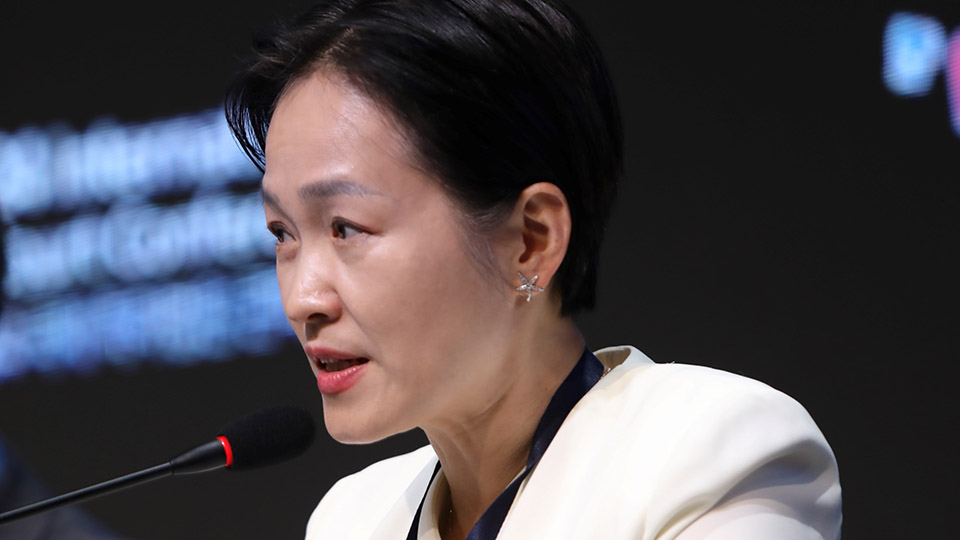
Initially, I aspired to be a scientist, but while preparing for a Ph.D. in pharmacy, I developed a passion for intellectual property law. This interest led me to study law and ultimately pursue a judicial career to promote social justice. After several years handling civil, criminal, administrative, and family law cases, I realized that courts do more than resolve disputes; they uphold fairness and legal order. Today, drawing on my scientific and legal expertise, I serve as a specialized IP judge at the IP High Court of Korea, the first specialized IP court in Asia.
I am most captivated by the dynamic interplay between law and technology in IP adjudication. Every technological breakthrough brings new legal challenges that often require comparing frameworks across jurisdictions. In addition to my background in pharmacy and life sciences, I continually explore emerging fields such as electronics, semiconductors, and telecommunications. Although this ongoing learning journey is demanding, it is incredibly fulfilling to contribute to my personal growth and the advancement of the IP High Court of Korea.
When I first joined the judiciary, although the number of women judges was increasing, their representation in specialized fields remained low. In higher judicial positions, the percentage of women often decreased, and areas such as IP law had traditionally been male dominated. However, I have witnessed a gradual transformation, with more women assuming significant roles across various legal fields. By 2025, women comprised over 35% of the bench at the IP High Court of Korea.
Women judges continue to face significant challenges in advancing to leadership roles and specialized fields, even as their overall numbers grow. Underrepresentation in key decision-making positions and the struggle to balance work and family remain pressing issues. Greater recognition of their contributions and enhanced institutional support are essential. Nonetheless, I remain optimistic about the future. As the legal profession increasingly values merit over gender, and younger judges introduce diverse perspectives, the role of women is set to expand. In the IP field, and in the IP High Court of Korea, I have seen a move toward fair, competence-based evaluations.
I am honored to introduce two inspiring women mentors who have profoundly influenced my judicial journey. Justice Sook Yeon Lee, Korea's first woman Supreme Court Justice with a robust background in science and technology, served as my presiding judge at the IP High Court of Korea and has long been a role model for many, including myself. Similarly, Presiding Judge Hye Jin Lee has been pivotal in my introduction to IP law, and has paved the way for women in this specialized field.
To aspiring judges, I urge you to seek outstanding mentors, embrace valuable guidance, and uphold your duty with fairness and dedication. With these qualities, excellence in the judiciary is within reach.

Read more inspiring stories:
- WIPO celebrates the International Day of Women Judges: Six judges from Brazil, the Republic of Kazakhstan, South Africa, the United States of America, the Unified Patent Court, and Viet Nam reflect on their inspiring journeys in the judiciary
- WIPO Commemorates the International Day of Women Judges: Inspiring Words from Three Judges from Jordan, Mexico and Uganda
- WIPO Celebrates the International Day of Women Judges: Hear from Women Judges who Shape the IP System