Maggerose Carado, a Filipina Designer, is Using her Talent to Help Filipino Indigenous Tribes
Maggerose Carado’s career took many turns before she settled on what was most important to her: helping mothers in rural and Indigenous communities in the Filipino province of Iloilo. A few years later, she heads Modern Ilongga, an ethical native fashion brand, and works with more than 200 artisans and makers. A new innovative textile recycling project is set to help another 240 families earn a sustainable income.
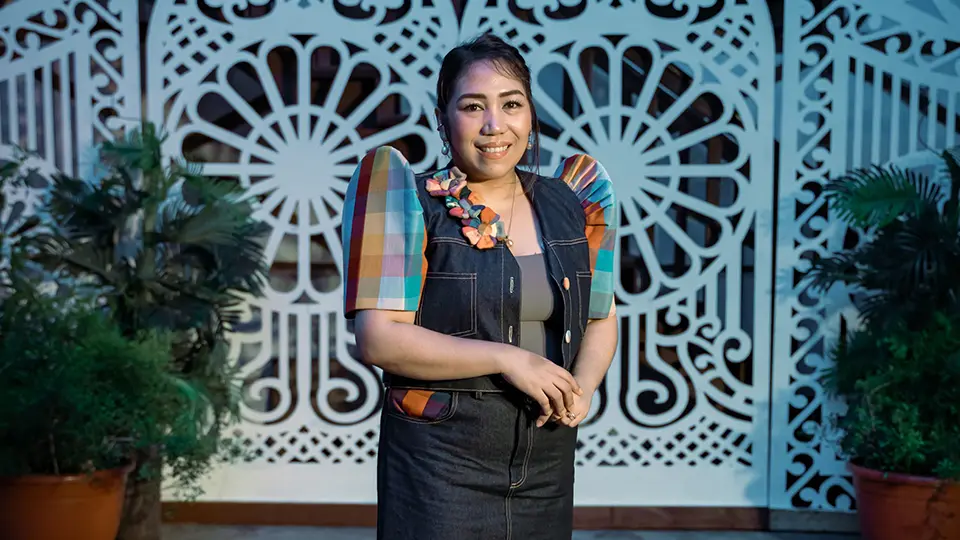
As a child, Maggerose grew up in a disadvantaged environment. In elementary school, her family did not have electricity. “We had to cross the river to go home,” she recalled, adding that they used “a little kerosene lamp or candles to study.” She started working at 14 to support her studies and graduated with a Bachelor of Arts in English and chemistry.
After university, Maggerose struggled to find her niche. “I’ve pretty much worked all lines of business,” she said, from customer service to English literature and economics teacher, financial consultant, wealth planner, and university instructor. She was looking for a job she would really love.
Following her heart and her love of writing, she wrote a coffee-table book for communities on Panay Island and built close relationships with women in those communities. That experience became an inspiration as she saw she could relate to the harsh economic conditions and the unmet needs of those women for their handicrafts. “I wanted to create a sustainable income for mothers so they can stay at home and still get an income for their families,” she said, noting that many women have to go seek work abroad, leaving their kids behind.
Working with weavers from indigenous groups in the Philippines

Maggerose founded Modern Ilongga in Iloilo City in 2019. “Ilongga generally refers to a woman from Iloilo or a female speaker/member of the Ilonggo cultural community,” she said. She works with two indigenous peoples’ communities: the Ati and the Panay Bukidnon tribes. The Panay Bukidnon, from which Maggerose’s husband is a descendant, are oral chanters and embroiderers, and the tribe is one of the country's pre-Hispanic tribes, Maggerose explained. She also works with over 200 artisans across seven communities, including weavers, embroiderers, sewers, and other women artisans.
Although Maggerose is the Creative Director of Modern Ilongga, she said the designs are developed in collaboration with weavers and sewers. Starting with bags from weavers and accessories, the COVID crisis pushed the company toward wearables. “We had so much weave during the pandemic, and our weavers needed income.”
However, starting a wearable line using local weavers is expensive. The weaving community came together and offered Maggerose a “credit line,” in which they would supply a large length of woven material to start a collection.
Adding a new spin to Filipino traditional clothing
Modern Ilongga’s signature women's garments are short denim jackets with Hablon sleeves. Hablon is a traditional handwoven textile originating from the province of Iloilo. The men’s line includes a reversible barong bomber in different colors. “This item was designed for those who travel for conventions, where they would want to change but don’t like to bulk up their luggage, so they can have one jacket with two looks.” And it is still Filipino because it is still barong,” she said. Barong refers to the Filipino men’s traditional outfit.
The social enterprise is exploring a children’s line “because my eight-year-old son has been bugging me,” she said.
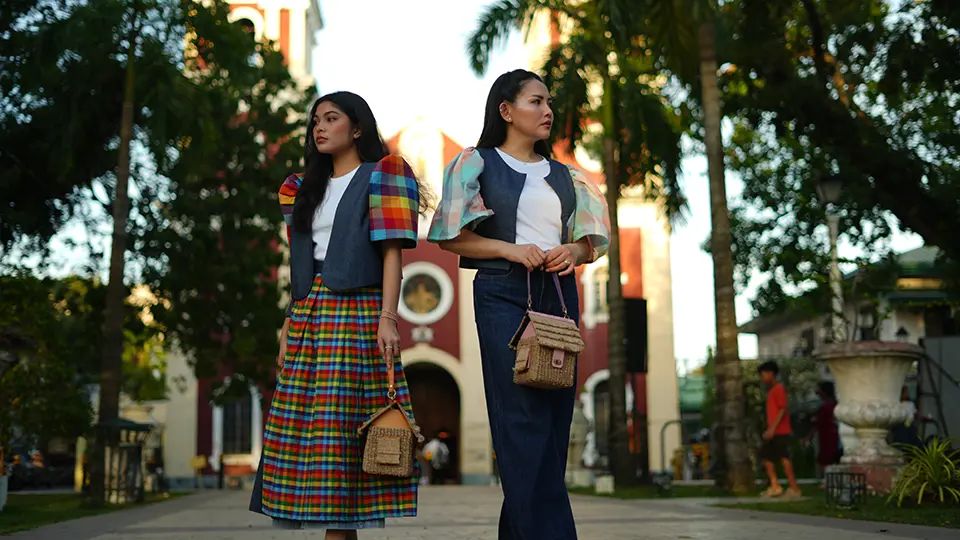
Preserving the art of making Filipiniana in the Philippines
According to the 38-year-old, ethical production starts from a concept. “As the founder of a local brand, I wanted to source everything locally.” She also insists on the social impact of what she sources and creates. “I believe that ethical production should start with the people,” she said.
“Most brands would rather have their production in China rather than in the Philippines as it’s more expensive here, but as for us, it would not happen because we would want to generate a livelihood for our artisan partners.”
To accommodate a range of financial means, Modern Ilongga has created different lines. Product prices range from 350 pesos (US$ 5,7) to over 7,000 pesos (US$ 114). “It is a multi-tier approach, just so we can cater to different market segments.”

Customers can purchase products online on Facebook and Instagram, and at local trade fairs, like Manila FAME. The company also partners with government agencies to create and design convention jackets. Iloilo visitors and tourists are also avid consumers. Modern Ilongga’s products are displayed at Belmont Hotel Iloilo. The company has also started exporting to the United States and Australia.
The Iloilo City Government is working to provide Maggerose with a physical store and production facility that will allow her to expand production capacity and employment, enforce quality control, and allow visitor access.
Recycling textiles to give a second life to clothing
The Textile Ledger is a new initiative that aims to collect used cotton textiles from companies and turn them into new yarn. The textiles would primarily come from hotels, numerous in the area, and cotton sacks from five flour companies. The flour sacks alone could amount to 5 tons of material per week. Maggerose is working with several universities to integrate an algae-based technology to clean textiles, making them toxin- and bacteria-free. Once reduced to cotton form through a mechanical process, the material will be sent to the yarn facility for spinning, she said, and then on to weavers to create a new fabric.
The initiative aims to create green jobs for a dump-site community of 240 families that is set to be displaced in 2027. The company is working with the Department of Science and Technology to create that zero-waste circular project. The Textile Ledger answers to circularity, technology, and heritage.
Protecting Filipino Heritage
Maggerose is no stranger to IP. She was an SME consultant, helping social enterprises and small companies with grant proposals and IP documentation. She registered Modern Ilongga trademark and is working to protect some of her creations industrial designs, notably for the reversible barong bomber.
As a designer, her work has been copied many times. Once, she recalled, a large company copied her denim with the hablon. “I started this design back in 2023.” However, the public associated the typical garment with Modern Ilongga, particularly because Maggerose had asked a famous TV anchor to wear it. The large company decided to stop producing the unauthorized copy, she said.
According to Maggerose, the idea for the textile ledger came from her participation in a recent WIPO Clinic and mentoring. She said the clinic expanded her knowledge of IP, which will serve not only her company but also members of the Provincial Entrepreneurs Group Association, to which she belongs.
In the next five years, Maggerose would like to be a globally recognized community enterprise, “not just a fashion brand,” and expand her artisans’ network. She is also proud of the Textile Ledger, expected to launch in September, which she said is the first such initiative in the country.
Maggerose participated in the Cross-Regional Forum on Women Creators and Entrepreneurs: Leveraging IP for Asia-Pacific, Latin America and the Caribbean, taking place from 21-23 September in Manila, Philippines. The forum was co-organized by WIPO, the Intellectual Property Office of the Philippines (IPOPHL), and the Japan Patent Office (JPO). She was also a speaker in a live-streamed session of the forum; a talk show on design and fashion, organized with the support from the Funds-in-Trust Korea..