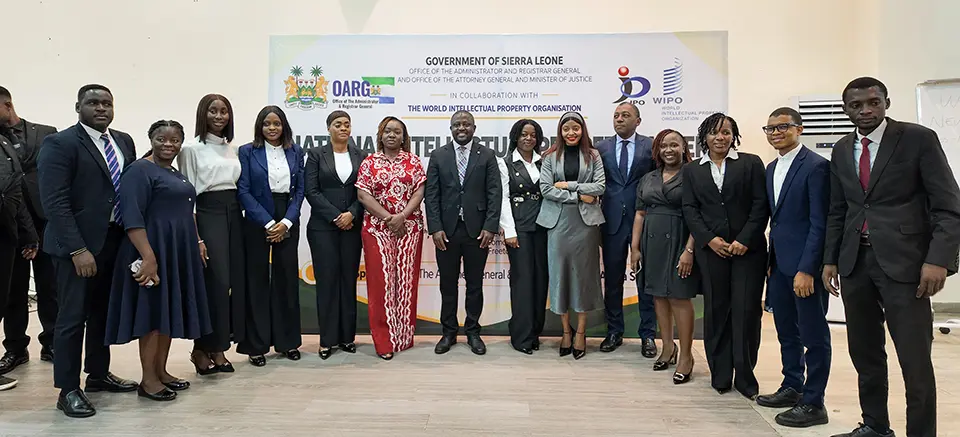
WIPO, in cooperation with the Government of Sierra Leone, organized a National Intellectual Property (IP) Week in Freetown from October 13 to 16, 2026, with financial support under the Funds-In-Trust Japan Industrial Property Global (FIT/Japan IP Global).
Two Tailored Workshops
IP Weeks aim to strengthen the capacity of countries in the region that have taken steps to harness the IP system to accelerate their economic transformation. Each IP week marks the beginning of a longer-term engagement with national stakeholders and is followed by projects tailored to each target group, such as coaching and mentoring, to ensure continuity and the practical application of the knowledge and skills acquired.
The IP Week in Sierra Leone featured two consecutive two-day workshops designed for distinct target groups: (1) universities and research and development (R&D) institutions and emerging innovators, and (2) micro, small and medium-sized enterprises (MSMEs), startups, young entrepreneurs, creative industries and producer communities.
The IP Week brought together approximately 130 participants, with around 60 attending each workshop. Participants included senior government officials, representatives of the Office of the Administrator and Registrar General (OARG), universities and R&D institutions, academics, researchers, innovators, entrepreneurs, representatives of the private sector, the creative industries and other stakeholders of Sierra Leone's innovation ecosystem.
The workshops aimed to strengthen participants' capacity to identify, protect, manage and commercialize their intellectual assets, and to use IP as a tool for innovation, business development and economic competitiveness.
High-Level Participation
The first workshop, held on October 13 and 14 under the theme "Empowering Universities, Research and Development Institutions and Emerging Innovators Through Intellectual Property," was officially opened by the Honorable Alpha Sesay, Attorney General and Minister of Justice. He emphasized that Sierra Leone's relatively limited IP output reflects not a lack of talent, but gaps in the legal, institutional, educational and public-access systems needed to connect creativity with IP protection and economic value. He also welcomed recent progress in modernizing the national framework, including Parliament's ratification in July 2026 of the Singapore Treaty on the Law of Trademarks and the WIPO Copyright Treaty.
The second workshop, held on October 15 and 16 under the theme "Transforming Innovative Ideas and Creativity into Competitive Businesses: Leveraging Intellectual Property for MSMEs, Startups, Creative Industries and Producer Communities," featured a keynote address by the Honorable Saptieu Elizabeth Saccoh, Deputy Minister of Justice.
On behalf of WIPO, Mr. Yves NGOUBEYOU highlighted the Organization's commitment to strengthening Sierra Leone's innovation ecosystem and promoting the effective use of IP by universities, researchers and enterprises as a means of creating value, generating employment and enhancing competitiveness.
In video messages at both openings, Mr. Minoru Nitta, Director of the International Cooperation Division of the JPO, stressed that excellent research results and good ideas alone are not enough — they must be protected and strategically used to reach society and the market — noting that "intellectual property serves as a bridge connecting people, countries, and industries."
Strong Engagement and Practical Learning Outcomes
The workshops delivered substantive and practice-oriented sessions tailored to the needs of each target group, combining technical presentations and interactive discussions led by national and regional experts.
The university component focused on institutional IP policies, the management and protection of research outputs, technology transfer and the commercialization of innovations, while emphasizing the importance of strengthening collaboration between universities, research institutions, industry and potential investors. Discussions also introduced the concept of "M to M – Mind to Market," encouraging students to think freely, nurture their creativity and innovative potential, and progressively translate their ideas into marketable solutions.
The MSME workshop examined the practical use of IP by enterprises, startups, creative professionals and producer communities to strengthen business competitiveness and market access. Presentations addressed the strategic use of trademarks, industrial designs, patents, copyright and trade secrets, as well as branding, licensing and commercialization, with particular attention to integrating IP into business strategies and leveraging intellectual assets to support enterprise development and market expansion. Participants underscored the relevance of IP to Sierra Leone's economic development priorities, including entrepreneurship, youth employment, agricultural value addition, food security and the creative economy.
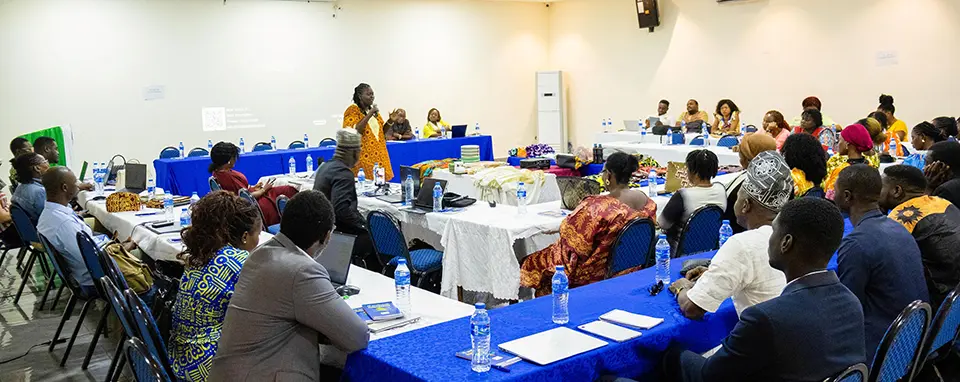
Both workshops generated active discussions and considerable interest. The exchanges highlighted the need to move beyond general IP awareness towards practical support and institutional mechanisms that enable universities to manage and commercialize research outputs, and businesses to identify, protect and derive economic value from their intellectual assets.
The key recommendations emerging from the university workshop included: the development of institutional IP policies for universities and R&D institutions; the conduct of a targeted survey, including specific questions addressed to university management, to assess institutional capacities, needs and readiness for IP management; the participation of university staff and researchers in relevant WIPO Academy training programs; the integration of IP modules into university curricula, particularly in engineering, scientific and technical disciplines; and the organization of sustained IP awareness-raising activities.
An important development was the participation of a representative of the banking sector, reflecting the growing interest of financial institutions in understanding the economic value of IP assets. This participation offered an encouraging indication of the potential for further engagement with financial institutions towards exploring the use of IP assets as collateral to facilitate access to finance for enterprises. While this would require appropriate valuation methodologies, institutional frameworks and risk assessment mechanisms, it represents a promising avenue for future cooperation.
Overall, the IP Week demonstrated the importance of addressing the needs of two complementary segments of the national innovation ecosystem: universities and R&D institutions, which require stronger institutional capacities to manage and commercialize research outputs; and MSMEs and entrepreneurs, which need practical assistance to develop their IP assets, strengthen their brands and access markets and financing. These priorities are closely aligned with Sierra Leone's Medium-Term National Development Plan 2024–2030, particularly its objectives relating to food security, human capital development, job creation and economic transformation.
Looking Ahead
Building on the IP Week, WIPO will work with the OARG and national partners for follow-up cooperation, which may include support for institutional IP policies and research commercialization for universities, and IP coaching, mentoring and commercialization assistance for MSMEs and startups, as well as engagement with financial institutions on the use of IP assets as collateral.