Music and Gender Insights
March 7, 2025
March 7, 2025 ・ 2 minutes reading time

Accelerating harmony: how music charts a path toward gender equality
International Women’s Day 2025 arrives with a rallying cry: “For ALL women and girls: Rights. Equality. Empowerment.” This theme challenges every sector to transform pledges into progress—and few industries embody this momentum better than music. While gender gaps persist globally, the music world offers a hopeful blueprint, proving that systemic change is possible when creativity and inclusivity converge.
Are there more male or female singers in streaming charts?
Over the past decade, the music industry has quietly rewritten its own rules. Data from Apple Music and Chartmetric reveals a striking shift: in 2017, just 16% of top-streamed tracks globally were by female artists. By 2024, that number soared to over 30%. These figures aren’t mere metrics—they’re milestones. More women are composing, producing, and headlining festivals than ever before, signaling a cultural transformation where talent, not gender, defines success.
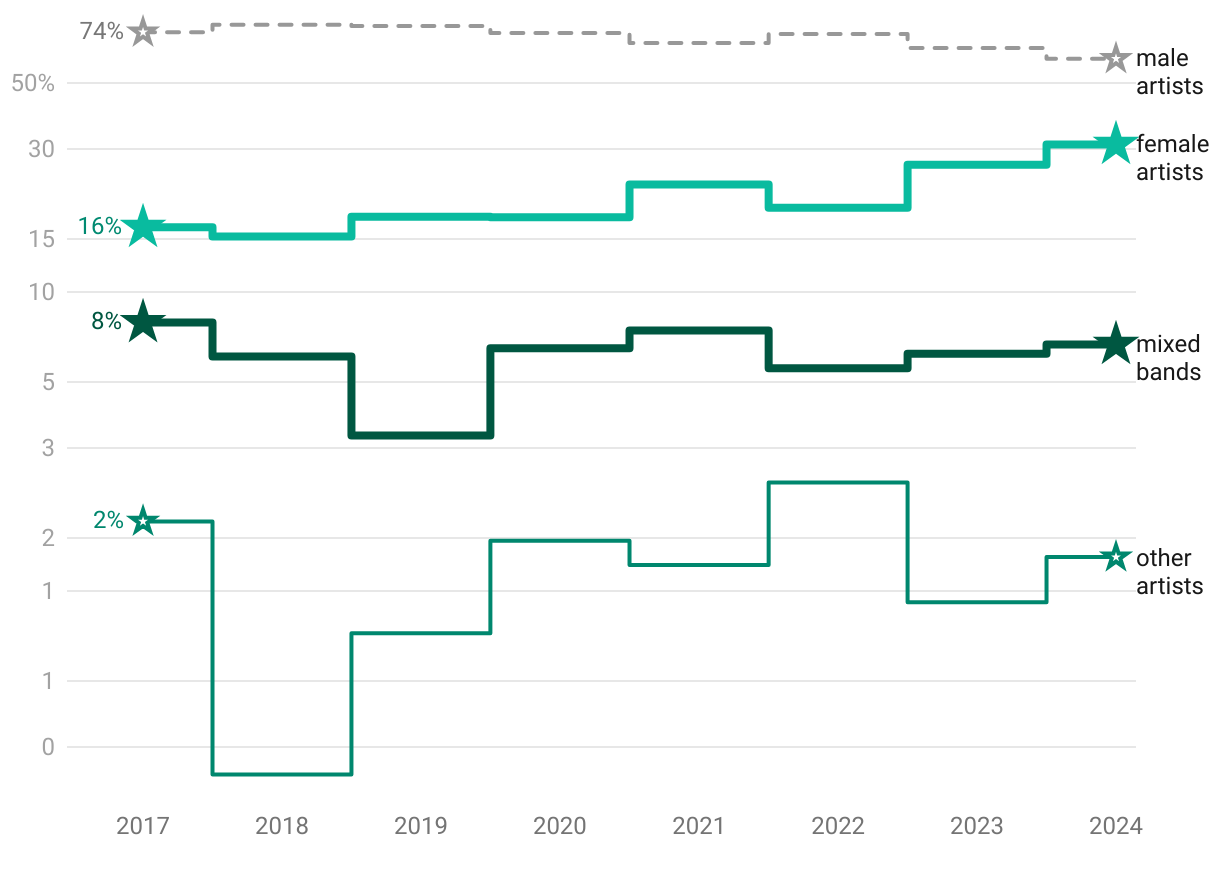
If I Were a Boy: Chart Performers by Gender – Apple Music, Global Streaming Charts. Make Music Equal, Chartmetric
Note: 2024 data is incomplete. Unique music tracks per year. Logarithmic scale (percentage).
Chart: Creative Industries Insights Series, WIPO (2025) – Technical Note – Get the data
This progress didn’t happen by accident. Streaming platforms have democratized access, allowing artists to bypass traditional gatekeepers. Advocacy campaigns like #WomenInMusic and gender-balanced festival lineups have amplified visibility. Audiences, too, are voting with their playlists, embracing voices once sidelined. While parity remains distant, the tempo of change is accelerating—a testament to what’s possible when an industry aligns action with intention.
Leading the melody of inclusion: celebrating women in music by genres
Certain genres are harmonizing equality faster than others. Latin and R&B usic now lead streaming charts not only in popularity but in female representation. Artists like Karol G, ROSALÍA, and SZA aren’t just breaking records—they’re reshaping norms. In Latin music, long dominated by male artists, women now command center stage, blending cultural pride with unapologetic artistry. Their rise reflects a powerful truth: when women thrive, audiences listen.
Gender Balanced Genres? – Women Superstars by Music Genre (Rate in Percent)
Creative Industries Insights Series, WIPO (2025), Primary Sources: Apple Music, Global Streaming Charts. Make Music Equal, Chartmetric. • Technical Note • Get the data
This isn’t just about supply meeting demand. It’s about stories resonating. Fans aren’t passively consuming music; they’re championing artists who mirror their lived experiences. The success of these genres shows that inclusion isn’t a compromise—it’s a catalyst for innovation and connection.
Composing a more inclusive future for most masculine music genres
Yet, the melody remains uneven. Rock, electronic, and classical genres still echo with disparities, while many artists from other underrepresented groups fight for mainstream recognition. These gaps remind us that progress must be universal, not piecemeal. To “accelerate action,” the industry must amplify mentorship programs, diversify behind-the-scenes roles (producers, executives), and challenge stereotypes that pigeonhole artists.
The road ahead isn’t simple. Deep-rooted biases and unequal access to resources linger. But the lessons from Latin and R&B are clear: representation fuels representation. Every woman who tops a chart, wins a Grammy, or produces a hit paves the way for others
A final refrain: tackling gender inequality in the music industry
As we mark International Women’s Day 2025, the music industry’s journey offers more than inspiration—it’s a call to action. Let’s invest in emerging voices, celebrate diversity in all genres, and ensure every artist has the tools to soar. The numbers show us what’s possible; the stories remind us why it matters. Together, we can turn today’s progress into tomorrow’s promise—a world where equality isn’t just heard, it's achieved.
The stage is set. Let’s amplify the rhythm of change.