Filipino inventors are restoring movement to paralyzed patients, transforming rural livelihoods, reimagining everyday tools. For ten years, the Inventor Assistance Program (IAP) has worked to make sure the support is there to see those ideas all the way through. The Intellectual Property Office of the Philippines (IPOPHL) and the World Intellectual Property Organization (WIPO) gathered in Manila, on June 10 and 11, 2026, to celebrate what a decade of commitment has made possible, and to chart the course for what comes next.
The two-day event brought together inventors, IP professionals, policymakers, and international partners in a shared mission to ensure Filipino innovation has the protection and backing to make its full mark on the world.
Ten Years, One Commitment
In his keynote address, Atty. Teodoro C. Pascua, Director General of IPOPHL, reflected on ten years of collaboration between IPOPHL and WIPO and on what that partnership has meant for Filipino inventors: “The IAP helps amplify Filipino innovation potential by ensuring that promising ideas are not left on the sidelines. By helping inventors secure and maximize the value of their IP, the Program opens pathways for commercialization, investment, technology transfer, and business growth. In doing so, it transforms innovation into an engine for economic development.”
Indeed, the true measure of the IAP’s success cannot be found solely in numbers, filings, or patents granted. Behind every application is a dream, behind every patent is a story, and behind every story is a Filipino innovator determined to solve a problem and improve lives.
Atty. Teodoro C. Pascua
Marking the occasion, Marco M. Alemán, WIPO’s Assistant Director General for the IP and Innovation Ecosystems Sector, made clear that the work ahead is as urgent as the work already done.
Every brilliant idea, regardless of financial circumstances, deserves a chance to become a protected, valuable asset, and every inventor deserves a chance to make a lasting impact. Together, we are working toward a future where Filipino innovation is recognized, celebrated, and shared with the world.
Marco M. Alemán
Inventors That Inspire
Four inventors made the Program's impact concrete. Mark K. Bantugon has developed sustainable resin compositions derived from Canarium Ovatum. Dr. Lizah Dorao-Pascual's nerve guidance conduit opens new options for patients living with nerve damage and paralysis. Mariam El-Estwani designed a device to help lift large dogs during medical procedures. Arniel M. Cunahap built a coconut sap extractor and collector designed to make sap harvesting more efficient. Each took the stage to share what they had built and the lessons that come with them.
These stories, of individual creativity meeting professional expertise and institutional support, capture precisely what the IAP was designed to make possible.

A Network Built for Inventors
Central to the Program's success are the volunteer patent attorneys and specialists whose expertise inventors rely on, and the network of partner organizations whose collaboration has helped connect inventors with the support they need across the country. These include the AIM-Dado Banatao Incubator, the Department of Economy, Planning, and Development (DEPDev), the Department of Information and Communications Technology (DICT), the Philippine Council for Agriculture, Aquatic and Natural Resources Research and Development (DOST-PCAARRD), the Technology Application and Promotion Institute (DOST-TAPI), and the Innovation and Technology Support Offices (ITSOs).
The volunteer patent attorneys and specialists who work with IAP inventors do so without charge, giving time and expertise that most inventors could not otherwise access. A recognition ceremony honored their contribution and that of the partner organizations who make the Program's reach possible. Without them, there is no guidance, no drafting support, no pathway to protection for the inventors who need it most.
How do you scale a program like the IAP? The first panel explored how national agencies and support organizations can work more closely together to extend the Program's reach across the Philippines. The second addressed the practicalities of protecting and commercializing inventions.
Where Inventors Meet Their Mentors
The second day opened with a practical session on how inventors can maximize the commercial value of their inventions. One-on-one consultations followed, where selected inventors, startups, and MSMEs received personalized guidance from the IPOPHL team, patent attorneys, and IP and technology transfer specialists on securing patent protection and bringing their inventions to market. For some, it was their first meeting with an IAP volunteer.
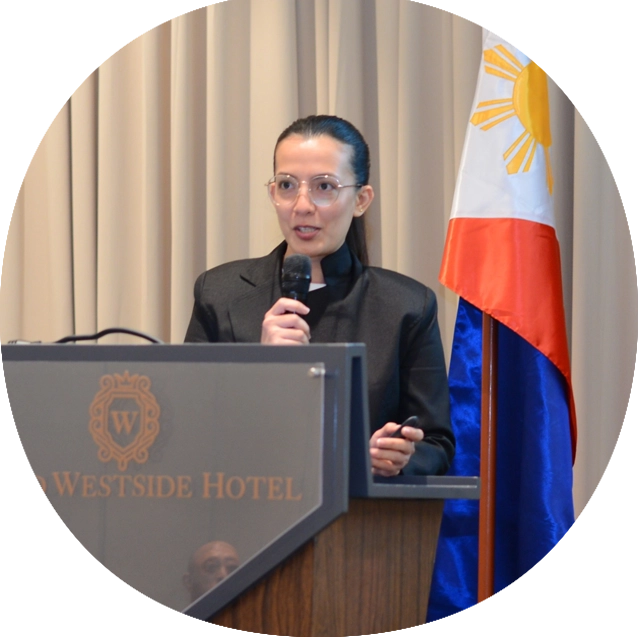
The IAP taught me that innovation does not end with an invention. It begins with identifying a real problem, protecting the solution through intellectual property, and pursuing opportunities that allow the innovation to create lasting impact.
Mariam El-Estwani, Inventor of the Dog Lifting Device

The IAP played a crucial role in transforming my invention from an idea into a protected innovation with real potential for impact. As an inventor, having access to patent professionals, IP expertise, and guidance throughout the patenting process gave me the confidence to move forward and pursue opportunities beyond invention itself. The Program showed me that innovation is not only about creating solutions – it is also about protecting them, developing them, and ensuring they can reach the people who need them most.
Arniel M. Cunahap, Inventor of the Coconut Sap Extractor and Collector
Filipino Innovation's Next Chapter
The event marked ten years, but its attention was clearly on what comes next. The IAP is expanding beyond patent drafting and prosecution toward broader commercialization support, deeper integration with national innovation programs, and greater geographical reach to help inventors protect their work in international markets. In the Philippines, that means a growing pipeline of inventors with the tools and protection to take their work to the world.
It also reinforced that the Program’s strength lies in the partnerships between WIPO, IPOPHL, national support organizations, volunteer professionals, and the inventors themselves, and that building on those partnerships will be what carries it forward.