Across the global IP community, collaboration is key to building systems that work for everyone. At the 2025 Women and IP Symposium for Intellectual Property (IP) and Innovation Offices, a standout session on public-private partnerships (PPPs) brought together voices from government, the private sector, and international organizations to talk about how partnerships can drive meaningful, lasting changes especially when it comes to supporting women in innovation and creativity.
Featuring panelists from the Philippines, Australia, The Republic of Korea, and the private sector, the discussion centered on how PPPs have huge potential to support women in the IP space.

From Mandates to Momentum: Lessons from the Philippines
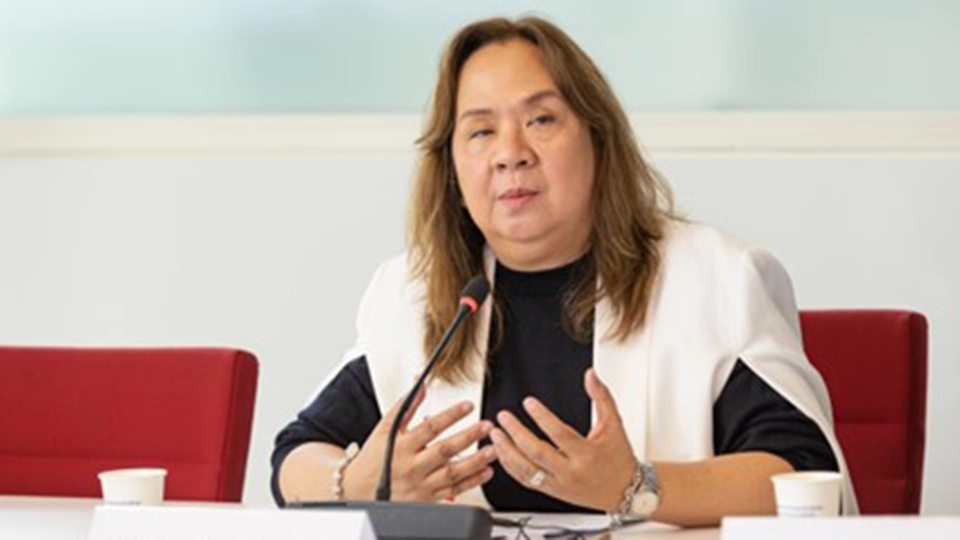
Anne Claire Cabochan, representing the Intellectual Property Office of the Philippines, explained how government operations through legislation such as the Gender and Development (GAD) budget policy under the General Appropriations Act (GAA) in 1995, supports women in IP. She noted that each agency is required to allocate at least 5% of its budget to gender and development initiatives.
However, Ms. Cabochan also emphasized that despite this policy framework, many programs are still in development. The real challenge is implementation. For her, PPPs are a practical solution to close the gap between intention and execution. By partnering with private actors, governments can leverage technical expertise, fresh perspectives, and new methods of delivery that are often missing in conventional approaches .
Partnerships in Practice: The Australian Example
Lisa Cohen from IP Australia and Danielle Lewis from SPARK presented a compelling example of a working PPP designed to support women entrepreneurs. SPARK, a women-led network, has collaborated with IP Australia to co-deliver quarterly masterclasses in IP considerations, develop tailored IP resources, and provide women with direct access to government experts.
Ms. Cohen described how collaboration is built on regular communication, responsiveness, and mutual respect. IP Australia’s leadership gave her team the autonomy to adapt programs in real-time, based on the feedback and needs of SPARK’s members. Ms. Lewis agreed, emphasizing that flexibility rather than bureaucracy was what made the partnership effective and credible to the women they served.
This model of working together: IP Australia offering resources and legitimacy, with SPARK Business bringing community access and practical insight, demonstrated the power of shared leadership in increasing women’s participation in IP.
Cross-Cultural Perspectives: Insights from The Republic of Korea
Lee Howon from the Korean Intellectual Property Office (KIPO) brought an international perspective to the discussion by presenting national initiatives aimed at increasing women’s participation in innovation and IP through collaborative, PPP-driven programs.
Mr. Lee highlighted efforts such as the “Women Idea in Everywhere” initiative, which supports women throughout the invention process, from idea submission to IP filing and business consulting. Another key program is the Korea International Women’s Invention Exposition, organized in collaboration with the Korea Women Inventors Association (KWIA), which serves as an international trade fair offering global visibility, product promotion, and commercialization support for women inventors.
Mr. Lee emphasized that successful partnerships must be adjusted to local contexts, as cultural, economic, and legal environments vary. Nonetheless, shared responsibility remains very important for PPPs to effectively support women’s contributions within innovative ecosystems.
Institutional and Strategic Alignment
David Derrier, representing Deloitte, brought a private-sector perspective to the conversation. In addition to moderating the discussion, Mr. Derrier spoke about how Deloitte is working with public-sector agencies and NGOs to develop scalable solutions for more equity in the gender dimension. He stressed that for PPPs to work, all parties must have a shared understanding of the outcomes and how success will be measured.
He noted that PPPs should not be seen as short-term contracts, but rather as an evolving relationship built on transparency, alignment, and accountability. “They need to be revisited, nurtured, and allowed to grow”, he said.

Building Trust, Sharing Ownership
Across all speakers, the message was clear: PPPs are not just operational tools. They are frameworks for shared ownership. Whether it's the Philippines’ legal mandates, Australia’s flexible partnership model, The Republic of Korea’s system-level policies, or Deloitte’s global consulting partnerships, encouraging more women in the IP space is a joint effort.
The power of PPPs lies in their ability to merge institutional power with real-world applications. Government agencies bring structure and funding, while private and community organizations offer hands-on experience, innovation, networks, and user-focused insights.
As the session concluded, panelists agreed that the success of PPPs depends on more than paperwork. What really matters is the willingness to show up, listen, adjust, and stay committed. From building trust to sharing responsibility, it’s the quality of the partnership that drives impact.
Ms. Cabochan summed it up best: “We already have the legal tools. What we need now are partnerships that bring them to life.”