WIPO China: Hangzhou – No. 13 in the 2026 GII Top 100 Clusters
According to the Global Innovation Index 2026 published by the World Intellectual Property Organization (WIPO), Hangzhou ranks 13th among the world's top 100 innovation clusters. Over the past five years, on a fractional-count basis, the cluster accounted for 11,309 international patent applications filed under the Patent Cooperation Treaty (PCT) and 92,832 scientific articles, and recorded 3,047 venture capital deals.
The data show that computer technology accounts for the largest share of the cluster's PCT applications (28%), its top three PCT applicants include a university, and about 72% of its scientific articles involve organizations outside the cluster.
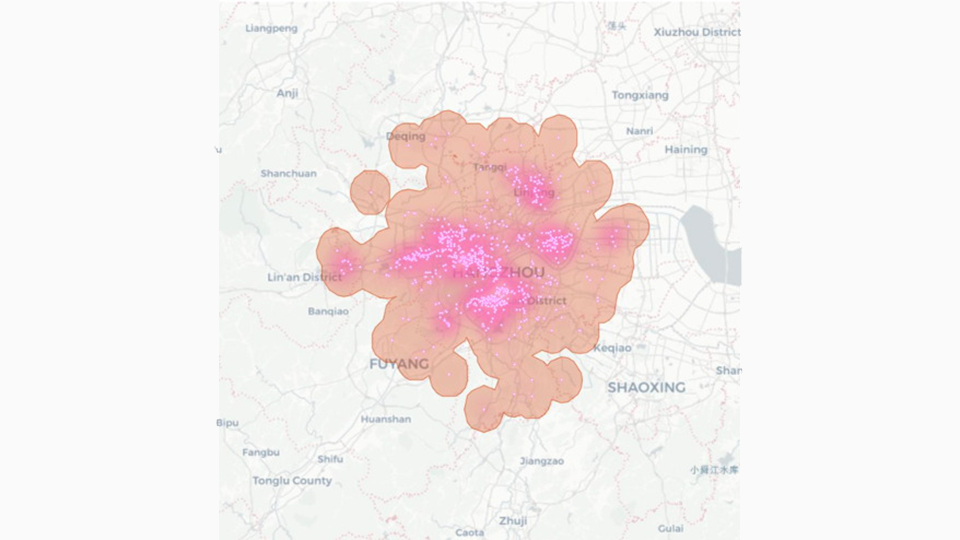
1. Ranking and scale
The Hangzhou cluster has an estimated population of about 7.17 million (7,166,556) and ranks ninth among the 25 Chinese clusters in the top 100. In the 2026 ranking of the world's top 100 innovation clusters, it ranks 13th on the strength of its combined performance across three indicators: PCT applications, scientific publications and venture capital deals.
|
指标(五年合计)/ Indicator (five-year total) |
唯一计数 / Unique count |
分数计数 / Fractional count |
每百万人口 / Per 1 million inhabitants |
|
PCT 国际专利申请(件)/ PCT applications |
12,172 |
11,309 |
1,578 |
|
科学出版物(篇)/ Scientific publications |
162,965 |
92,832 |
12,954 |
|
风险投资交易(笔)/ Venture capital deals |
3,047 |
— |
425 |
Unique counts include every patent or scientific article involving a local inventor or author. Fractional counts apportion each patent or scientific article according to the share of local contributors, which avoids double-counting across clusters.
2. An industry-driven patent landscape
By technology field, the cluster's PCT applications are concentrated mainly in ICT. Computer technology accounts for 28% of PCT applications and digital communication for 8%. Medical technology accounts for 6%, pharmaceuticals, measurement and IT methods for management for 5% each, and furniture and games for 4%.
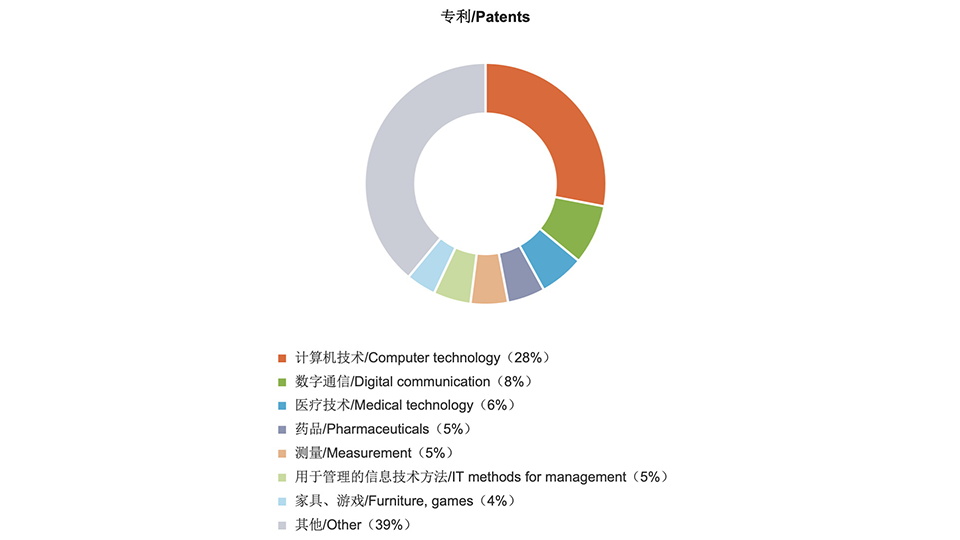
By applicant, Zhejiang University ranks first with 1,120 applications, or 10% of the cluster's PCT applications. Alipay (790) and NetEase (468) rank second and third with 7% and 4% respectively.
|
排名 / Rank |
PCT 申请人 / PCT applicant |
申请量(件)/ Applications |
占比 / Share |
|
1 |
浙江大学 / Zhejiang University |
1,120 |
10% |
|
2 |
支付宝 / Alipay |
790 |
7% |
|
3 |
网易 / NetEase |
468 |
4% |
3. A university-based research foundation
Compared with PCT applications, the cluster's scientific output is more evenly distributed across fields. Engineering (18%) ranks first, followed by chemistry (16%) and technology (14%); physics and mathematics accounts for 9%, biochemistry and biotechnology for 8%, and clinical medicine and earth sciences for 7% each.
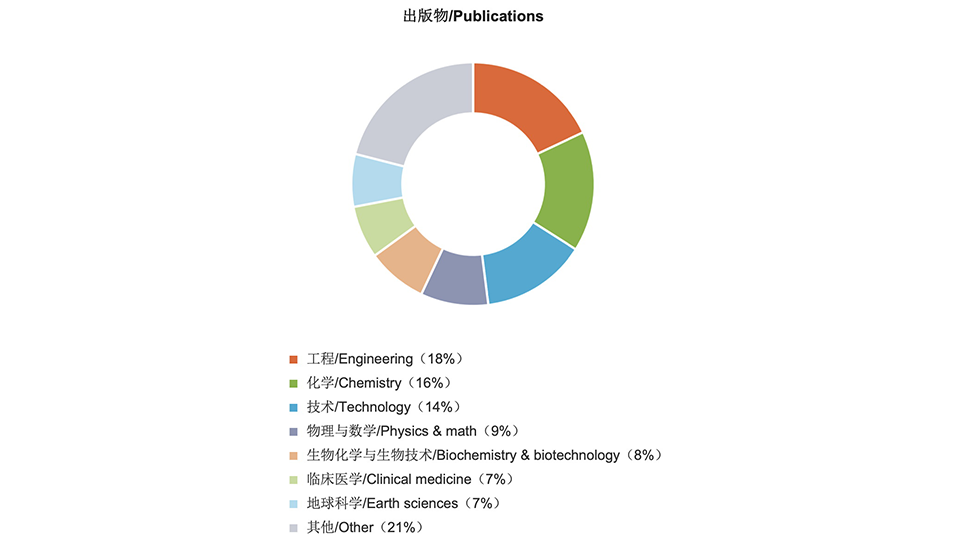
Zhejiang University ranks first with 28,786 articles (45%), followed by Zhejiang University of Technology (6,358, 10%) and Hangzhou Dianzi University (3,975, 6%).
|
排名 / Rank |
科学出版物发表机构 / Publishing organization |
论文数(篇)/ Articles |
占比 / Share |
|
1 |
浙江大学 / Zhejiang University |
28,786 |
45% |
|
2 |
浙江工业大学 / Zhejiang University of Technology |
6,358 |
10% |
|
3 |
杭州电子科技大学 / Hangzhou Dianzi University |
3,975 |
6% |
4. Two patterns of collaboration
Most PCT applications take place within the cluster. On a unique-count basis, over the five years, 9,969 of the cluster's PCT applications had multiple inventors, and 1,521 of these involved inventors outside the cluster, about 12% of all applications. The main collaborating locations are Beijing, Shanghai–Suzhou and Shenzhen–Hong Kong–Guangzhou.
Research, by contrast, is deeply embedded in external networks. On a unique-count basis, of 161,854 multi-author scientific publications, 117,263 were produced with organizations outside the cluster, about 72% of all scientific publications. The main collaborating locations are Beijing, Shanghai–Suzhou and Shenzhen–Hong Kong–Guangzhou.
5. Size and intensity
By total output, Hangzhou ranks 13th in the world; by innovation intensity, meaning innovation output relative to population, it ranks 20th.
Per million inhabitants, the cluster records 1,578 PCT applications, 12,954 scientific publications and 425 venture capital deals. Its ranking by size is higher than its ranking by intensity.
17 novembre 2026