WIPO China: Empowering the Digital Silk Road and Cultural Heritage Innovation through IP
On July 22, the 2026 World Internet Conference (WIC) Digital Silk Road Development Forum was held in Xi'an, Shaanxi province. Mr. Zhuang Rongwen, Minister of the Cyberspace Administration of China and Chair of the WIC, attended the opening ceremony and delivered a keynote speech. Mr. Zhao Yide, Secretary of the CPC Shaanxi Provincial Committee, delivered a welcome address. Ms. Wang Binying, Deputy Director General of the World Intellectual Property Organization (WIPO), attended the opening ceremony and delivered a speech.
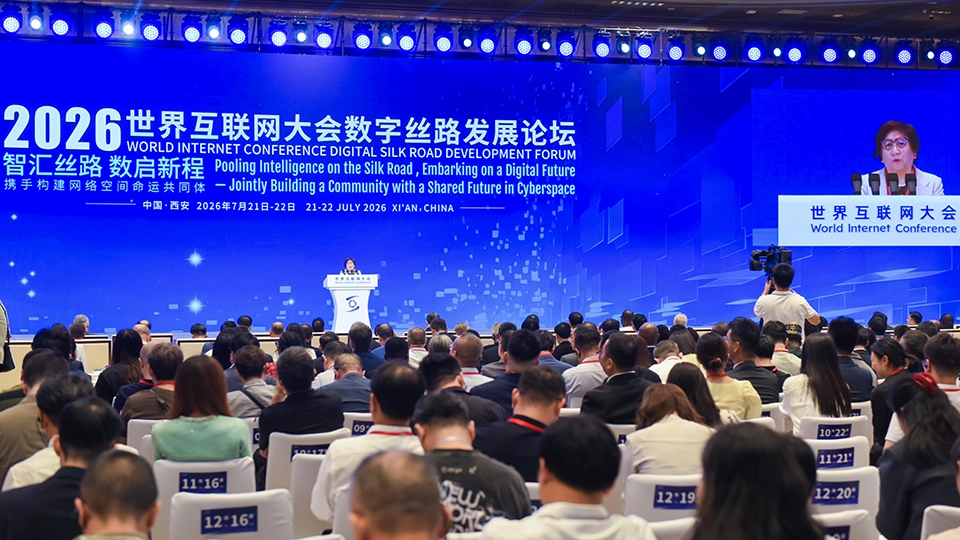
Ms. Wang noted that technology is crossing borders at an unprecedented pace, yet its dividends are not automatically shared. Citing the World Intellectual Property Report 2026, she illustrated the exponential acceleration of technology diffusion — from the roughly 40 years it took for telegraph and automotive technologies to spread across borders, to just a few years for 3G and 4G, and to mere days for generative AI applications to reach users in nearly all countries. She identified four critical factors determining the success of technology diffusion: the characteristics of the technology itself, the speed of information dissemination, local absorptive capacity, and the public policy and institutional environment, including the IP system.
Ms. Wang noted that China is transitioning from being a source of technology to a technology hub — both a producer and a re-user of knowledge — a shift of global significance. In response to AI-driven digital transformation, she outlined WIPO's "four wheels" strategy — policy dialogue, technical infrastructure, tool development, and capacity building — through which WIPO will support greater connectivity across the Digital Silk Road innovation ecosystem via standards coordination, global IP databases, the PCT, Madrid and Hague systems, and the TISC network. She emphasized that IP should serve as the anchor of trust, the bridge of innovation, and the vessel of prosperity for the Digital Silk Road, and reaffirmed WIPO's commitment to working with all partners to bridge digital divides and ensure that IP systems remain engines of economic growth and social development.
Participants concurred that with AI, big data, cloud computing and other next-generation information technologies rapidly evolving, all parties should uphold the Silk Road spirit of peace and cooperation, openness and inclusiveness, mutual learning and mutual benefit — deepening connectivity of digital infrastructure, promoting inclusive and equitable development of the digital economy, and narrowing digital divides, so that the fruits of digitalization, networking and smartization may better benefit the world and its people.
The forum, hosted by the WIC and organized by the People's Government of Shaanxi Province, was themed "Pooling Intelligence on the Silk Road, Embarking on a Digital Future — Jointly Building a Community with a Shared Future in Cyberspace." It brought together some 800 participants from more than 50 countries and regions and seven international organizations.
During the forum, the WIC Digital & AI Academy, the WIPO Office in China, and the Shaanxi Provincial Copyright Bureau co-hosted a thematic salon on "Copyright Empowerment in Cultural Heritage Digitalization." Mr. Sun Daguang, Member of the Standing Committee and Head of the Publicity Department of the CPC Shaanxi Provincial Committee; Ms. Wang Binying, Deputy Director General of WIPO; Mr. Liang Hao, Executive Deputy Secretary-General of the WIC and Executive Vice Dean of the WIC Digital & AI Academy; and Mr. Wang Zhicheng, Director General of the Copyright Administration of the Publicity Department of the CPC Central Committee, attended the salon and delivered remarks.
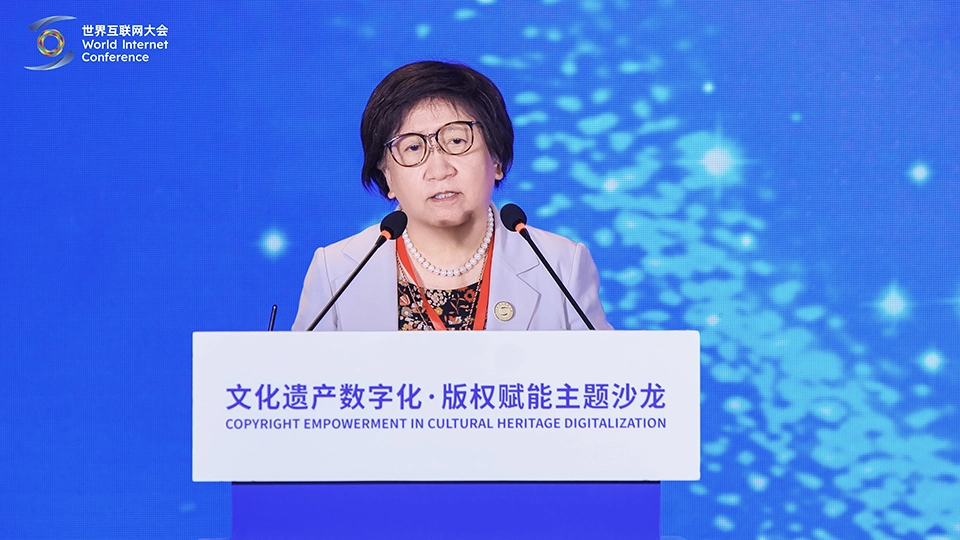
In her remarks, Ms. Wang noted that digital technologies are reshaping how cultural heritage is preserved, disseminated and recreated — with heritage assets evolving from "museum collections" into digital assets that can be documented, licensed and shared. She stressed that the digitalization of cultural heritage requires not only technological empowerment but also copyright protection, and that exploring this issue in the cyberspace context remains a frontier topic globally — one that promises fresh perspectives for protecting traditional culture and allocating rights and interests in creative industries.
Ms. Wang highlighted WIPO's efforts to adapt international copyright rules to the digital environment, including the conclusion of the WIPO Treaty on Intellectual Property, Genetic Resources and Associated Traditional Knowledge in 2024 and ongoing treaty negotiations on traditional knowledge and traditional cultural expressions within the Intergovernmental Committee. Citing the Dunhuang Academy and Xi'an-based KissFuture as examples, she noted that sound copyright mechanisms are critical enablers for the innovative transformation of cultural heritage. She also outlined three important shifts in copyright within the field of cultural heritage digitalization: from protecting existing works to incentivizing creation, from single-rights management to ecosystem synergy, and from regional dissemination to global exchange.
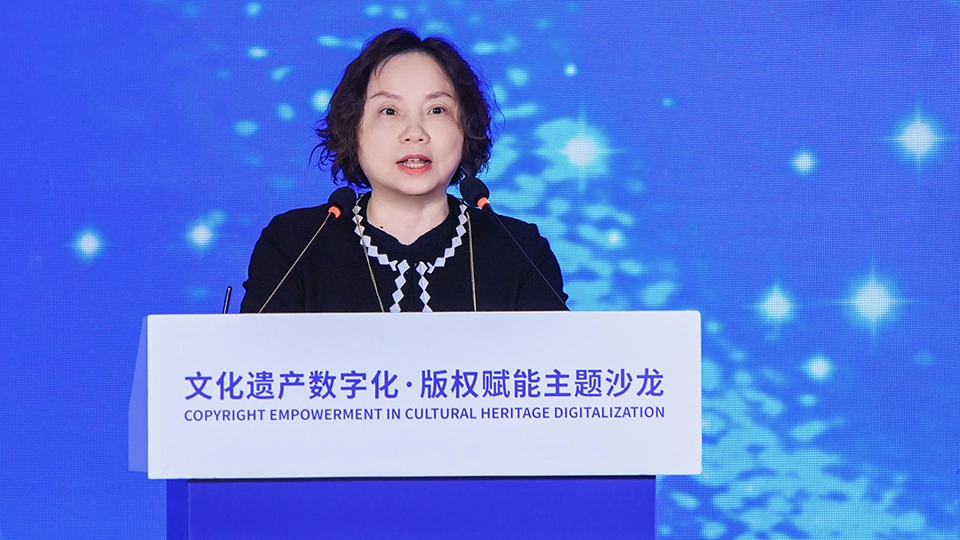
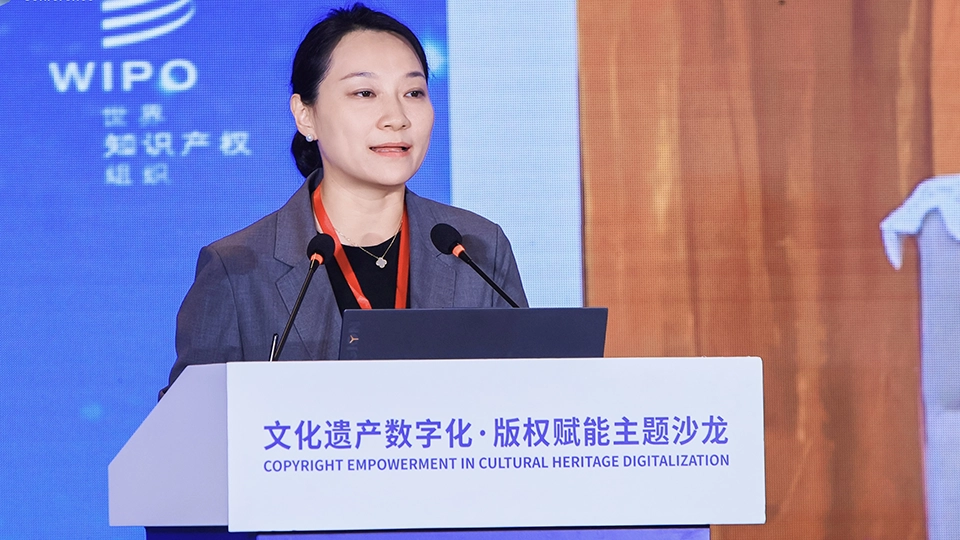
During the keynote session, Ms. Liu Hua, Director of the WIPO Office in China, drew on vivid cases including Xuanzang and Kucha Kingdom in The Tang Dynasty, Black Myth: Wukong, and Ne Zha 2 to illustrate the complete copyright chain and evolving trends in cultural heritage digitalization — from rule-making to practice. Ms. Diao Yunyun, Vice President of Legal Affairs at Tencent, shared practical insights and reflections on copyright-empowered digitalization of cultural heritage and the development of the cultural heritage and museum sector in the AI era, citing the hit drama Protagonist as an example.
During the roundtable session, experts from the WIC Specialized Committee on Cultural Heritage Digitalization and the Hainan Free Trade Port Intellectual Property Court, together with representatives from TMTPost, KissFuture, and Starbucks China, engaged in in-depth discussions on three core topics: leveraging technology to strengthen copyright protection for cultural heritage, promoting sustainable digitalization through copyright, and advancing the coordinated development of technology and copyright.
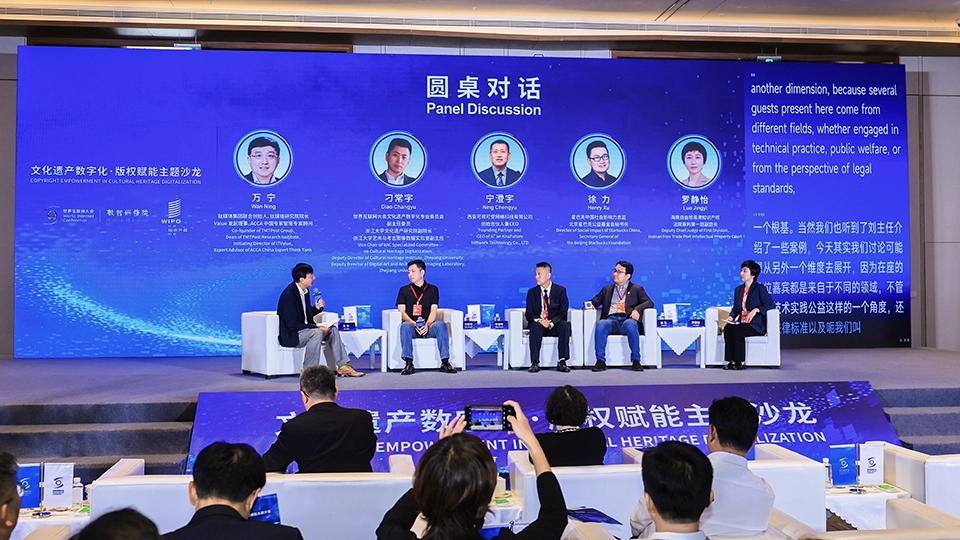
The salon brought together over 90 participants from 14 countries and regions, covering a wide range of sectors including international organizations, government agencies, cultural heritage and museum institutions, creative industries, academia, and the digital industry.
28 juillet 2026