
Aquaculture refers to the farming of fish, shellfish and other aquatic organisms under controlled conditions. In contrast, capture fisheries rely on harvesting wild populations from oceans, rivers and lakes. In 2022, Asia produced 167.1 million tonnes of fisheries and aquaculture products – accounting for 75% of global output – while Oceania’s production stood at 1.8 million tonnes
Global aquatic food needs are projected to grow by 15% by 2030
Both sectors are crucial to global food security and livelihoods, but they face different challenges. Capture fisheries are increasingly limited by overfishing and environmental degradation. Meanwhile, aquaculture is rapidly expanding to meet demand. Global aquatic food needs are projected to grow by 15% by 2030. Meeting this demand will require a 35–40% increase in aquaculture output
However, barriers remain. Small-scale farmers often lack access to quality feed, reliable inputs, knowledge, finance and insurance. The sector also faces energy challenges, as production and processing are energy intensive. This makes innovation and investment essential to build more efficient, inclusive and sustainable systems – particularly with a focus on energy use across the value chain.
Technological development and trends
Fuel-efficient fishing vessels
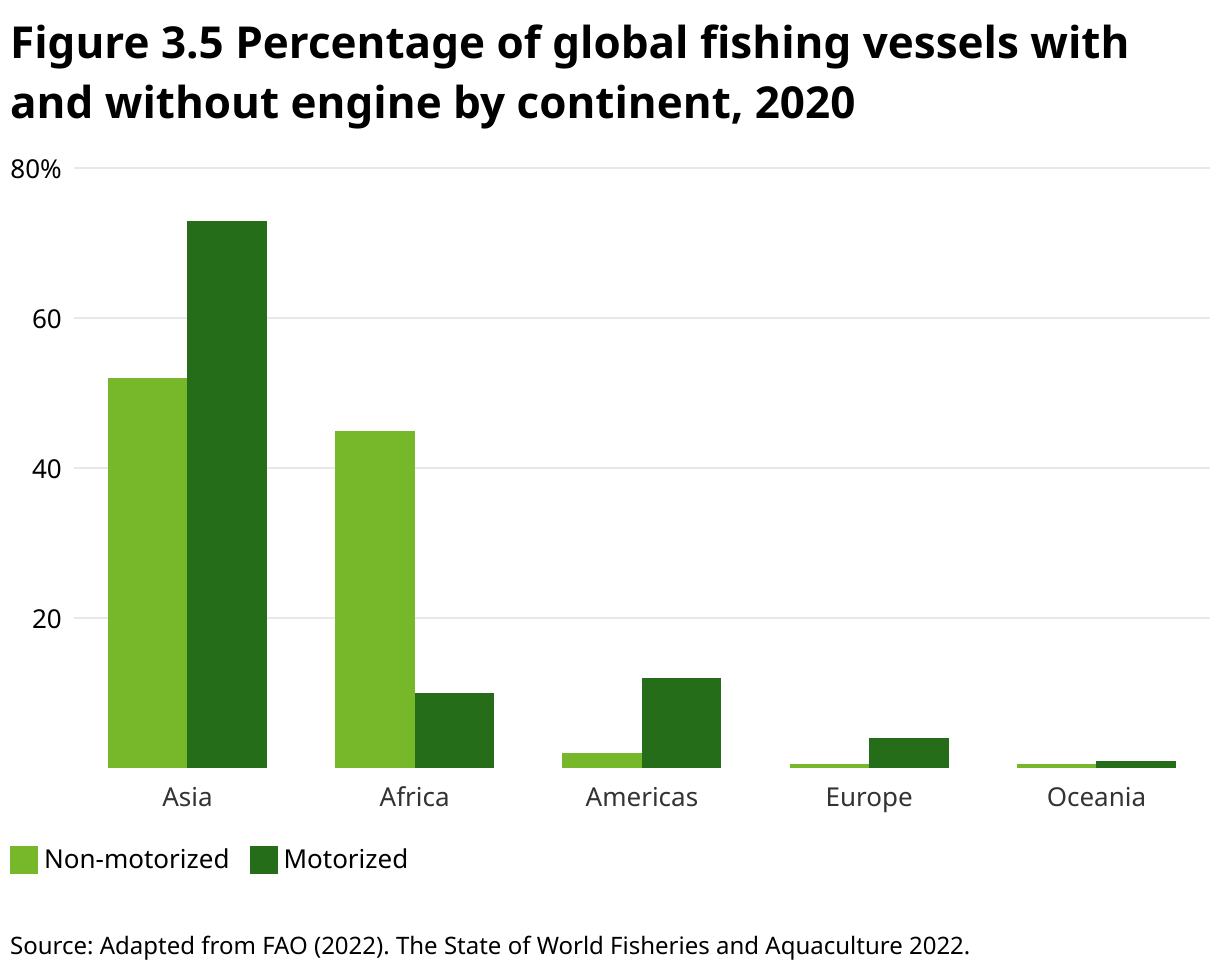
Motorized fishing vessels are the primary fuel consumers during fishing operations, powering engines, gears and onboard systems. However, significant energy use also occurs in post-harvest stages such as processing, refrigeration and transportation. Asia holds around 75% of the world’s motorized fishing vessels, totaling approximately 1.9 million vessels in 2020 (figure 3.5). China alone accounted for 564,000 of these vessels. The commercial fishing industry’s high fuel consumption is a major concern as it accounts for over 1% of global emissions
Fuel consumption in fishing vessels can be minimized by optimizing engine design and adjusting power and operational ranges. Energy-efficient technologies include modern, lightweight but powerful engines and improved rudder, propeller and hull designs. Small trawlers should limit engine size to 5 horsepower(hp)/ton displacement, operate at 3 hp/ton actual output and not exceed 80% revolutions per minute to conserve fuel
Shifting tides: hybrid and renewable energy innovations for fishing boats
The transition from diesel to renewable energy in fishing boats is gaining momentum. Solar-electric boats using solar panels to power electric motors is becoming common in countries such as China, India and Indonesia. Makeshift solar charging stations are being used in Bali, Indonesia, to charge the batteries for those who cannot afford solar panels on the fishing boats. However, challenges remain due to the weight of batteries that can slow down the boat, increasing travel time
Fuel consumption in fishing vessels can be minimized by optimizing engine design and adjusting power and operational ranges
In India, solar PV systems have been integrated into artisanal boats for lighting, communication and navigation. Solar electric lamps can replace traditional kerosene lamps for night fishing. Longer-term solutions include converting diesel engines to run on liquid biofuels like biodiesel or vegetable oils, which are already widely used in land transport
Advanced hull and propeller technologies for energy efficiency
Innovations in hull design focus on reducing drag, thereby increasing fuel efficiency. Bulbous bow is a type of hull design feature that protrudes from the front of the ship underwater and can be retrofitted on old vessels. The technology creates a wave pattern around the hull that helps reduce the energy required to push the vessel through the water. Although the weight of the boat is increased by the prolonged length, the overall effect on the hull resistance is beneficial (Chokesanguan, 2011). Energy savings are also achieved through multihull vessel designs such as catamarans.
Objects or layers gradually building up on the hull increase friction and hence drag. This can be prevented by applying an anti-fouling coating below the water line. Friction can also be reduced by generating a layer of air bubbles along the hull bottom, a so-called air lubrication system. The system uses air compressors to send compressed air through nozzles mounted along the hull bottom, forming a layer of microbubbles under the hull.
Highly detailed design options for fins and rudders can improve hydrodynamic efficiency
The propellers and other control surfaces have an important potential for energy efficiency. Examples include ductor propeller or nozzle, pre-swirl stator fin, rudder bulb and rudder fins. These are all highly detailed design options which can improve hydrodynamic efficiency by streamlining water flow around the propeller and hull, reducing drag and turbulence. This leads to better thrust and lower engine load, ultimately reducing fuel consumption. Small fishing vessels are incorporating sails for secondary propulsion, harnessing wind power to reduce fuel consumption, especially in coastal or offshore operations.
Optimizing energy use in fishing gear and techniques for commercial fishing
The energy consumption in commercial fishing relies on several factors including types of fishing gear and methods, distance to fishing grounds and target species and their migration routes
Acoustic gear surveillance technology allows crews to make on-the-fly adjustments for better efficiency
Fishing practices and gear types differ significantly in their environmental impact and fuel efficiency. Generally, passive fishing gear such as pots, traps, nets, hooks and lines are considered less harmful and more energy-efficient compared to towed gear like dredges and bottom trawls (
Acoustic gear surveillance technology, which uses underwater sensors to monitor the net’s shape and position in real time, allows the crew to make on-the-fly adjustments for better efficiency. Service speed also plays a crucial role; studies have shown that reducing speed from 7 to 6 knots can lower total energy costs by approximately 30%
Other types of gear like midwater trawls and purse seines (a type of net that hangs vertically with floats on top and weights at the bottom encircling fish) target dense fish schools, allowing large catches with minimal towing. However, an average tuna purse seiner operating in tropical waters consumes 381 tonnes of fuel, with 90% used for cruising
Energy-efficient aeration technologies in aquaculture
Land-based or near-shore aquaculture often involves ponds or pens, while offshore aquaculture takes place in deeper waters using floating cages or nets. Across these systems – especially in intensive land-based operations – aeration plays a critical role in maintaining water quality. Aeration, the process of adding oxygen to the water to maintain healthy conditions for aquatic organisms, is one of the most energy-intensive components in aquaculture, consuming 90% to 95% of the total energy
Aeration, the process of adding oxygen to the water to maintain healthy conditions for aquatic organisms, is one of the most energy-intensive components in aquaculture
A new low-cost and low-maintenance solar-thermal aeration technology has been piloted in Viet Nam which requires no electricity or fuel and is thus ideal for resource-constrained and off-grid settings

Other types of aerators emerging are solar-powered diffused aerators, which push compressed air through pipelines to diffusers releasing fine bubbles, and venturi aerators, which use water flow to draw in air, forming coarse bubbles.
Harnessing renewable energy for sustainable fisheries and aquaculture operations
The fisheries and aquaculture sector relies heavily on energy across its value chain, with the post-harvest processes including fish smoking, cold storage, distribution and trade being particularly energy intensive
Renewable energy sources such as solar, wind and bioenergy offer environment friendly solutions to expand decentralized cold storage and processing capabilities. For instance, small-scale fish farmers can benefit from technologies like solar-powered cold rooms, portable chillers or refrigerators for short- and long-term storage. On fishing boats, ice containers remain the simplest preservation method. Electric ice-making machines, powered by solar PV systems, can produce flakes, cubes or blocks of ice, each with varying cooling efficiency. Flake ice cools fastest, while block ice, common in rural areas, is broken down for fish cooling. The machines can be either standalone or supplied with batteries.
Solar PV systems can also power aquaculture equipment such as energy-demanding feeders, pumps, ponds and security lighting, and solar-powered pumps can be used for intensive shrimp farming systems that require frequent water exchange. Around 30% of the carbon footprint in shrimp farming is attributed to feed production and feeding practices
Renewable energy sources such as solar, wind and bioenergy offer environment friendly solutions to expand decentralized cold storage and processing capabilities
Solar energy can also be used for fish drying, which is traditionally performed via direct sun exposure. A simple technology is solar drying tunnels which use solar PV systems to power fans that facilitate air circulation inside the tunnel. Furthermore, cleaner fuels such as crop residue-based briquettes or pellets can replace traditional firewood or charcoal for fish smoking, when used in improved smoking kilns. Studies show that briquettes require around 55% less energy compared to firewood to smoke the same quantity of fish, while also improving food safety and nutritional quality
In the Philippines, ultraviolet (UV) nets, which reduce sunlight penetration, are being installed in tilapia hatcheries to avoid rising water temperatures during hot weather
The Mekong is one of the longest rivers in the world. The Mekong delta is situated in southern Viet Nam, one of the most productive and intensively cultivated areas in Asia
Aquavoltaics could be a win–win solution for a land-constrained region like Asia
In aquavoltaics, floating or elevated photovoltaic panels are installed over water bodies like fishponds or reservoirs, producing electricity for aquaculture operations and grid supply. The cooling effect of the water may also improve power generation efficiency of the panels. Furthermore, the panels may reduce evaporation and provide shade to regulate water temperature, creating an optimal environment for fish farming
In Taiwan Province of China, where aquaculture has a long history, the government is promoting aquavoltaics policies which is facilitating species of high economic value that are normally more difficult to raise, for example white leg shrimps (
Offshore aquaculture and renewable energy
Offshore aquaculture is expanding in Asia as countries like China, Japan, the Republic of Korea and Viet Nam seek to reduce pressure on near-shore ecosystems and boost sustainable seafood production. These systems, located in deeper and more dynamic waters, often require stronger infrastructure and higher energy inputs for anchoring, feeding and monitoring. To address this, several countries are integrating renewable energy and smart automation into their systems. China leads this trend with innovative projects like the “Mingyu-1,” developed by Mingyang Energy, which combines a wind turbine capable of generating 45 million kWh annually with an offshore fish farming system
Smart aquaculture
Smart aquaculture, also called digital aquaculture, deploys advanced technologies like sensors, AI and IoT to optimize aquaculture operations, including water quality, feeding, disease detection and farm management, and provide warning functions and faster response times. Key components include smart water quality sensors that track parameters like oxygen levels, temperature, salinity and pH, along with water levels and pressure sensors for feed silos, rearing tanks and transport vessels. By incorporating sensor data, operators can optimize the operation of pumps and aerators to match the actual oxygen demand of the aquatic life and thereby save energy through optimal equipment use. For instance, a rain sensor sends data to the control unit, which activates water pumps if rainfall is insufficient or turns them off to conserve pump energy when there is enough rainfall. In addition, they help optimize the heating and cooling system to maintain optimal water temperatures for aquatic species and to facilitate the processing operations by maintaining the required freezing temperature with minimum energy costs
In China, 234 aquavoltaic projects are already constructed and connected to the grid, which has the potential to cut almost 1000 tons of CO2 emissions per megawatt annually
Advanced LPWAN (Low-Power Wide Area Network) technologies like narrowband internet of things (Nb-IoT) provide further improved coverage and energy efficiency. Data is processed through cloud-based platforms to identify trends and anomalies. The system’s efficiency can be further enhanced with embedded logic that enables autonomous operation without constant reliance on central servers or cloud services, which is ideal for remote or critical applications with no network connectivity.
Shaping sustainable seafood: RAS technology for energy and water efficiency
Recirculating aquaculture system (RAS) is a technology which recycles and reuses water through filtration, reducing pumping energy requirements and enabling high-density fish farming with minimal land and water use. The basic principle is that water flows from the fish tanks to a mechanical filter and a biological filter before it is aerated and stripped of carbon dioxide and returned to the fish tanks (figure 3.7). Traditional fish farming requires 30,000 liters of water per kilogram of fish, while recirculating systems use just 300 liters, achieving a 100-fold water saving
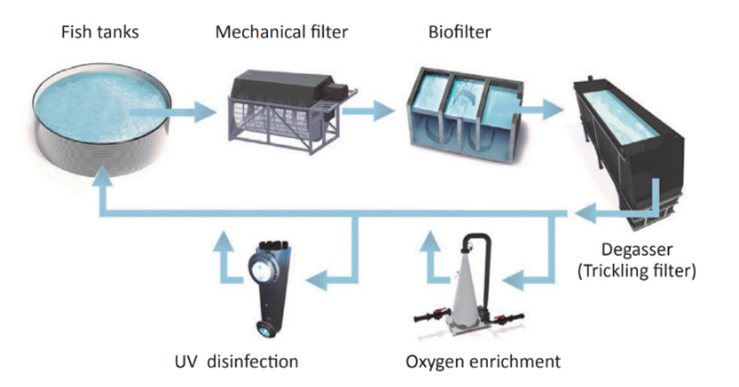
With global warming and climate change limiting water and energy resources in many regions, RAS can be considered as the most environmentally friendly method for commercial fish production (
RAS technology is rapidly growing in the Asia-Pacific region including China, Japan and Thailand, with Japan planning to build Asia’s largest RAS salmon farm, which will occupy 70,000 m² of building space producing 10,000 tonnes of Atlantic salmon annually
IMTA: a sustainable, energy-efficient solution with minimal environmental impact
Integrated multi-trophic aquaculture (IMTA) involves farming multiple aquatic species from different trophic levels together in an integrated system. IMTA mimics natural ecosystems. By using the waste of one species as a resource for another, this approach minimizes reliance on external feeds and fertilizers, lowering energy usage and ecological footprint
Integrated aquaculture has been widely practiced by small households in freshwater environments in Asia, such as rice-fish farming
Integrated aquaculture has been widely practiced by small households in freshwater environments in Asia, such as rice-fish farming, showcasing the co-evolution of agriculture and aquaculture (
Innovation examples
Aquavoltaics powers 550 MW solar farm in China

Chinese power equipment manufacturer CHINT Group has completed a 550 MW solar plant deployed on a fishpond in Wenzhou, Zhejiang province, China. This solar installation, spanning approximately 4.93 million square meters in the Oufei Enclosed Area, integrates photovoltaic (PV) power generation with aquaculture
Solar-powered freezers to support fishing community in the Solomon Islands

The Women’s Association of Rokotanikeni (WARA) in the Solomon Islands introduced solar-powered freezers to address the challenges faced by rural communities with limited access to electricity and cold storage facilities. In the Solomon Islands, centralized fish processing and distribution infrastructure remains out of reach for most, as 80% of the population lives in rural areas
The world’s first smart aquaculture vessel in the East China Sea

The world’s first smart aquaculture vessel, Guoxin-1, a floating fish farm now operating in the East China Sea, achieves an annual production capacity of 3.3 million fish
Offshore renewable-aquaculture hybrid in China

Shanghai Electric and Longyuan Power Group have developed a hybrid offshore platform near Nanri Island, Fujian Province. This integrated system showcases offshore wind, solar and marine farming for sustainable energy and food production. It combines a 4-MW wind turbine, flexible solar panels and a central fish farming area. Located in a national marine ranching zone, the semi-submersible platform generates up to 96,000 kWh of electricity daily – enough to power 42,500 people – while supporting aquaculture in 35-meter-deep waters.
Technology solutions
Proven technologies
Fishing vessel: eco-friendly boat with solar power
Cey-Nor Foundation Ltd.

Cey-Nor has introduced eco-friendly technologies to its boats, successfully completing a 13-foot solar boat pilot project in 2020. This solar-powered boat is equipped with a 1.5 kW solar panel, achieving an average speed of 10–15 km/h for 4–6 hours during the day and 2–3 hours at night, offering a cost-effective and energy-saving solution, Looking ahead, electric motor boats are expected to enable fishermen engaged in small-scale fishing to travel 100 kilometers on battery power at a daily operating cost of just $1.
Contracting type: For sale
Technology maturity: Proven
Technology level: Medium
Place of origin: Sri Lanka
Availability: Sri Lanka
Contact: WIPO GREEN Database
Fishing vessel: hybrid fishing boat
AKA Energy Systems

The hybrid fishing boat combines a diesel engine and an electric motor to power its propulsion system, offering flexible and efficient operation. The hybrid design allows the engine configuration to adapt to specific activities, such as fishing or sailing, optimizing performance at different load levels. In fishing mode, the boat operates on electric power, producing zero emissions. The electric motor acts as a generator to recharge the batteries during diesel operation. Additional charging options include shore power hookups and solar trickle charging. This innovative system reduces diesel engine running hours, lowering maintenance costs and extending engine life. The boat’s hydraulic systems function in all modes, ensuring operational reliability.
Contracting type: For sale
Technology maturity: Proven
Technology level: Medium
Place of origin: United States of America
Availability: China, Singapore, United States of America
Contact: WIPO GREEN Database
Fishing vessel: pre-swirl type energy-saving device
Fluid Techno Co. Ltd.

The “Eco-Stator” is a pre-swirl energy-saving device installed in front of a ship’s propeller. It features four or five stator fins arranged radially around the stern tube and above the propeller shaft. By rectifying water flow to the propeller, it improves thrust efficiency, so the propeller can push the ship better. This means the engine doesn’t need to work as hard, which saves fuel – about 3–4% less fuel is used at the same speed, or enabling higher speeds without increased fuel costs. Additionally, the rectified inflow reduces stern vibration. The main design features of the Eco-Stator include the span and chord length of the stator blades, their installation position and their angle settings. These are designed according to accumulated data base, tank test results and full-scale sea trial using the CFD (Computational Fluid Dynamics) tool.
Contracting type: For sale
Technology maturity: Proven
Technology level: Medium
Place of origin: Japan
Availability: Asia
Contact: WIPO GREEN Database
Aeration system: solar aerator with brushless direct current (DC) motor
Solair Group
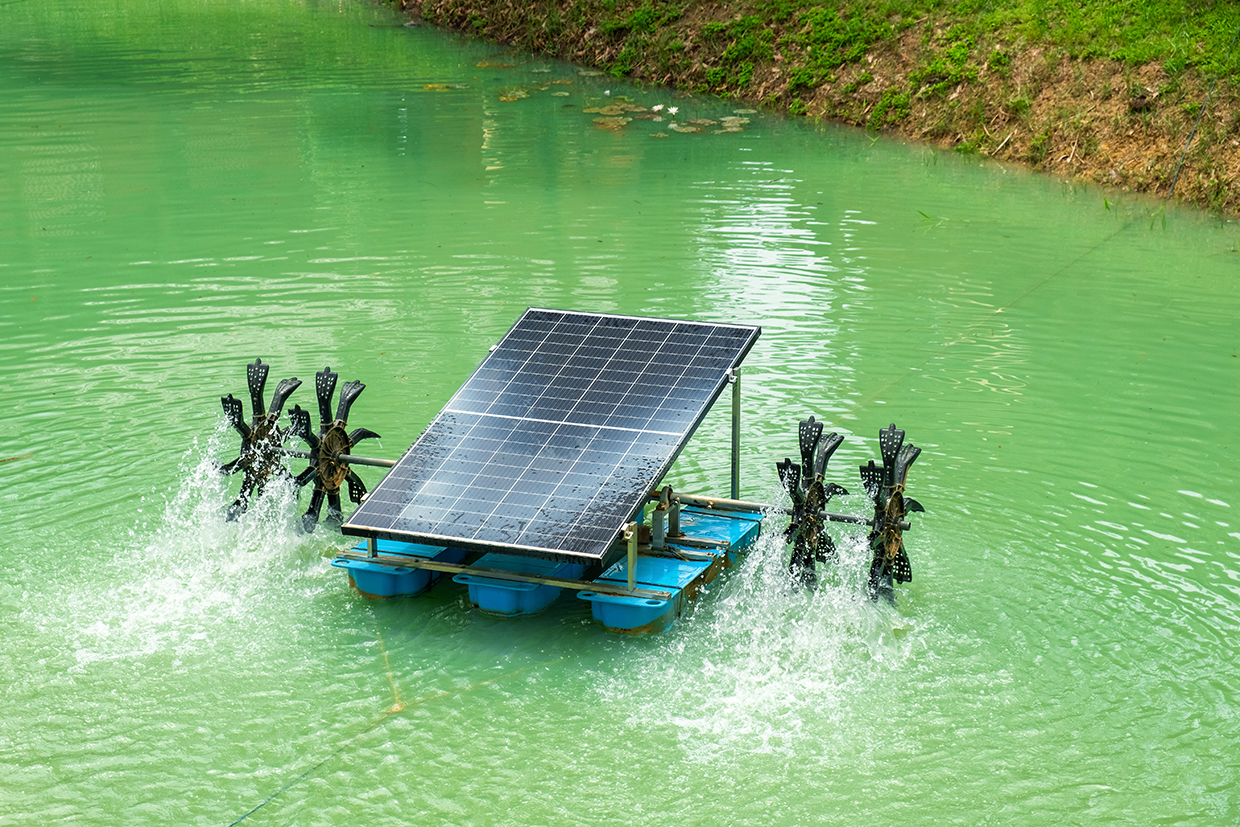
The TSG500B solar-powered aeration system uses solar energy to oxygenate fishponds, reducing electricity usage. Solar panels power an advanced brushless direct current (DC) motor. This latest motor technology features programmable gearing for optimal airflow at various depths and operates the compressor at a maximum pressure of 15 psi, enabling aeration at depths of up to 8 meters. Designed for continuous operation, the brushless motor requires minimal maintenance. The system also uses a specialized solar regulator that is designed to track the peak solar power from the panels, and efficiently distribute the power to the motor.
Contracting type: For sale
Technology maturity: Proven
Technology level: Medium
Place of origin: Australia
Availability: Australia, China
Contact: WIPO GREEN Database
Aquaculture: solar-powered automatic feeder
Fukushin
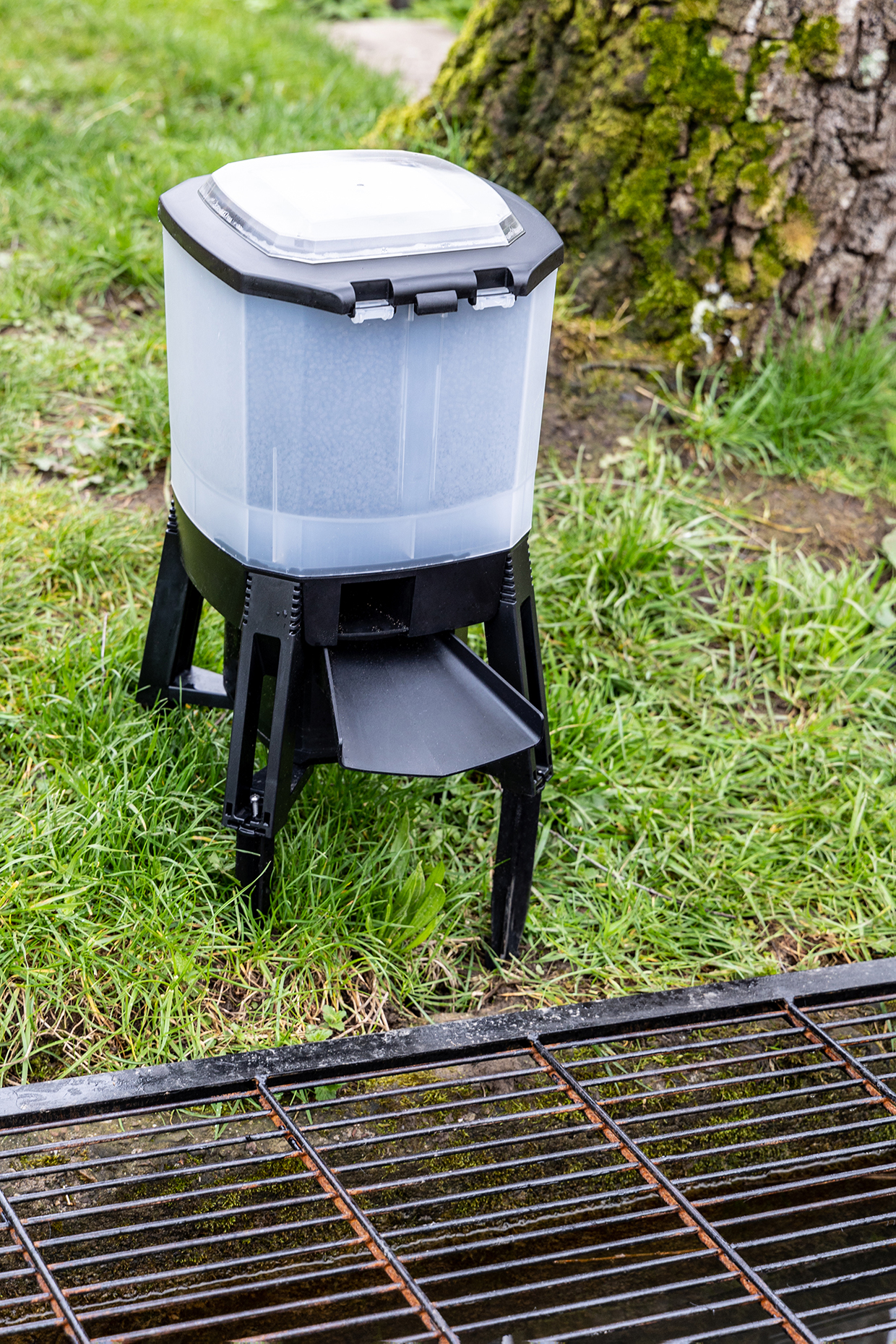
The solar-powered automatic feeder includes a patent-pending feeding schedule configuration function (e.g., daily, every other day) and a timer adjustable in 15-minute increments. The solar panel charges a built-in battery, which then powers the feeder system, including the timer. A reverse-connection protection circuit safeguards the battery, while a durable stainless steel dispersal impeller enhances longevity. The feeder supports a maximum feed output of up to 150 kg/hour. It also features a digital touch panel for easy operation.
Contracting type: For sale
Technology maturity: Proven
Technology level: Medium
Place of origin: Japan
Availability: Asia
Contact: WIPO GREEN Database
Aquavoltaics: floating solar PV on fish pond
Ciel & Terre International

The Hydrelio aiR Optim is a versatile floating solar system designed for building reliable power plants. An evolution of the original Hydrelio Classic, which was the first patented and industrialized floating solar solution introduced in 2010, the aiR Optim is engineered to withstand extreme conditions. It is capable of resisting winds of up to 210 km/h (130 mph) or a dynamic pressure of 1625 pascals and features UV-stabilized technology for up to 30 years. The system is customizable with anchoring and mooring solutions tailored to site-specific characteristics, making it suitable for harsh environmental conditions, including varying water levels, dry ponds and snow. It is also compatible with inshore and near-shore locations, handling waves of up to 1 meter depending on the wavelength. It can support PV modules up to 700 Wp.
Contracting type: For sale
Technology maturity: Proven
Technology level: High
Place of origin: France
Availability: Brazil, France, India, Japan, the Republic of Korea, Taiwan Province of China, United States of America
Contact: WIPO GREEN Database
Aquaculture: ecological recirculating aquaculture system (RAS)
Recirclnvest Biotech (RIB)
.png.jpg)
The company has developed a patented RAS using exclusively Chinese-made parts and equipment to enhance cost competitiveness for high-value species farming compared to traditional low-cost pond-based systems. The system’s main water circulation pump is energy-efficient, with daily water replenishment below 5% and a recycling speed of 200% per hour. The total system electricity requirement is just 40 kW/h. The fiberglass-reinforced plastic tanks support high-density feeding of multiple high-value fish species. The system employs biofilters and strong ultraviolet disinfection for water treatment. The RAS includes minimal water usage, green-labeled and local pellet feed.
Contracting type: For service
Technology maturity: Proven
Technology level: High
Place of origin: China
Availability: China
Contact: WIPO GREEN Database
Fishing equipment: LED fishing light
Delta

Utilizing patented active cooling fan technology, precise beam angles and energy-efficient LED, Delta’s 1.2-kW fishing lights are 70% energy saving compared to traditional high intensity discharge lighting. The anti-vibration, corrosion-resistant and integral driver design enables the product to withstand harsh marine environments while reliably maintaining an efficiency of up to 104 lumens per watt. Additionally, the light source spectrum is tailored to attract specific species of fish, improving catch rates.
Contracting type: For sale
Technology maturity: Proven
Technology level: Medium
Place of origin: Taiwan Province of China
Availability: Worldwide
Contact: WIPO GREEN Database
Frontier technologies
Aeration system: aeration tube and diffuser grid
AirOxi
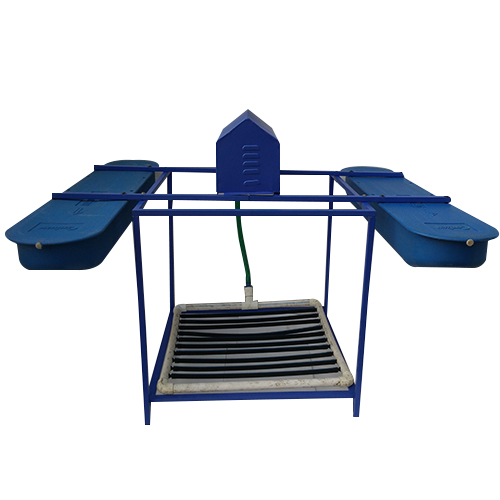
AirOxi™ is an advanced aeration technology specifically designed for commercial aquaculture. It is efficient in both freshwater and saltwater environments. AirOxi aeration tubes are made from durable elastomeric compounds, and these flexible and long-lasting tubes are perforated with tiny holes. When connected to a blower, they release fine bubbles, maximizing air-water contact and efficiently transferring oxygen into water. The AirOxi Diffuser Grid is a standalone aeration system that eliminates the need for expensive piping or external blowers. With a built-in blower, it requires only a single electrical connection, making it simple to operate: similar to turning on a paddle aerator but significantly more energy-efficient. This system consumes just 0.5 hp of power compared to the 2–3 hp needed by paddle aerators, offering substantial energy savings. The floating design ensures ease of maintenance, and users can choose between single-phase or three-phase blower options.
Contracting type: For sale
Technology maturity: Frontier
Technology level: Medium
Place of origin: India
Availability: Africa, India, Israel
Contact: WIPO GREEN Database
Aquaculture: solar and wind power water circulation system
Mirae E&I

This advanced water circulation system uses renewable energy sources, combining high-efficiency solar panels and wind turbines to drive water pumps for continuous movement and aeration of water bodies. By utilizing a dual-energy approach, it reduces the reliance on traditional energy sources and minimizes environmental impact. The system can operate 24/7 in varying weather conditions, providing a reliable and sustainable solution for aeration. It is specifically designed to prevent algal blooms by maintaining balanced water flow, disrupting algae growth conditions and improving water quality to support a healthy aquatic ecosystem. It is scalable for diverse applications, from small ponds to large lakes, and features remote control allowing operators to monitor and control the system from a distance without requiring on-site supervision.
Contracting type: For sale
Technology maturity: Frontier
Technology level: High
Place of origin: Republic of Korea
Availability: Asia-Pacific
Contact: WIPO GREEN Database
Fishing vessel: plug and charge solar fishing boat with advanced fish-finding technology
Navalt Solar & Electric Boats Pvt. Ltd

The SRAV solar electric fishing boat, developed by Navalt, is a cutting-edge solution designed to provide fishermen with a sustainable, cost-effective and environmentally friendly alternative to traditional fishing boats. It operates on solar power combined with battery storage with plug and charge system. The boat also features advanced navigation and fish-finding technology, and a reinforced hull for improved stability and maneuverability, making it a suitable vessel for both inshore and offshore fishing. It can navigate in rough seas with waves reaching up to 2 meters in height, and minimizes water drag, maximizing operational efficiency. SRAV’s eco-friendly design is also applicable for ecotourism and research as it has silent, zero-emission propulsion, which helps protect marine ecosystems.
Contracting type: For sale
Technology maturity: Frontier
Technology level: Medium
Place of origin: India
Availability: Canada, India, Israel, Maldives
Contact: WIPO GREEN Database
Aquaculture: smart water quality analyzer
SenTec
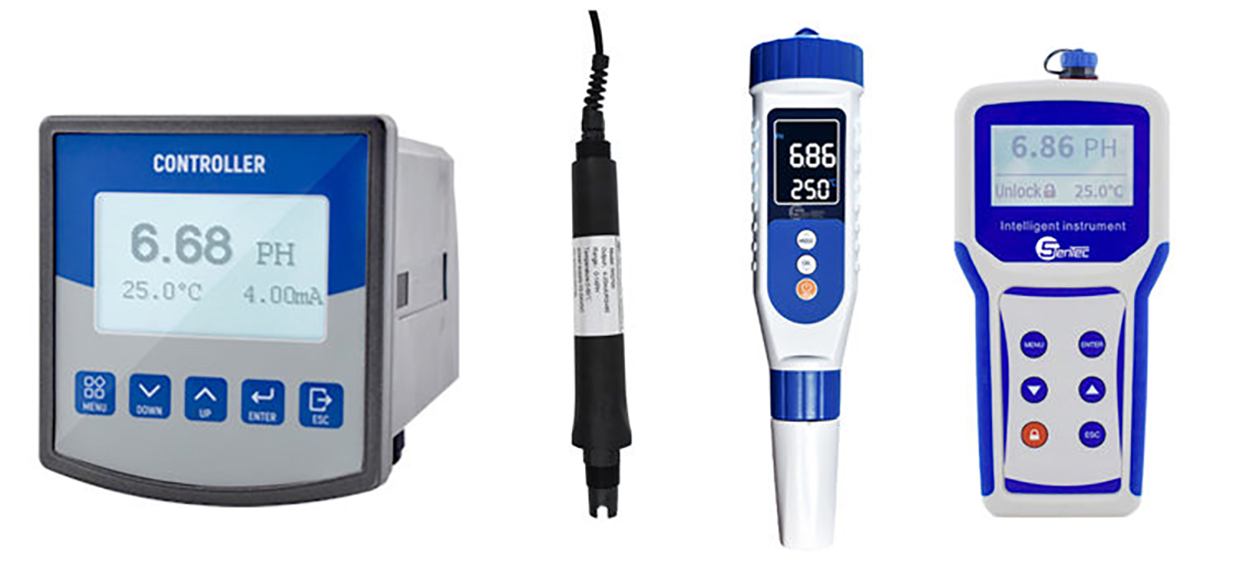
The smart water quality online analyzer, also known as a water quality sensor, is suitable for industrialization aquaculture and other fields. The digital optical dissolved oxygen sensor is widely used in monitoring dissolved oxygen levels in aquaculture. The main features include 24 hours online monitoring, auto temperature compensation function and high accuracy and stability. It works independently without a controller or transmitter and supports an intelligent control aerator or feeder to save energy. It is directly connected to a computer, PLC or IoT system.
Contracting type: For sale
Technology maturity: Frontier
Technology level: High
Place of origin: China
Availability: Worldwide
Contact: WIPO GREEN Database
Aeration: energy-efficient and intelligent aeration
Sprintex
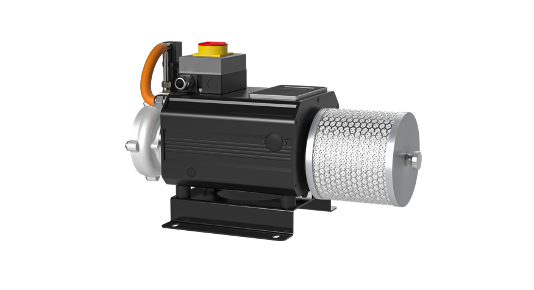
The G15 jet blower is a compact and IoT-enabled solution claiming to deliver more than 50% in energy savings compared to conventional industry blowers. Trials in an aquaculture setting during 2024 showed that one G15 unit could replace up to three of the existing side channel blowers, enabling a projected 70% energy saving. Featuring a patented electric motor, the need for separate variable speed drives is eliminated. Energy consumption is further limited due to Sprintex’s Smart Pulse Aeration (SPA™) Technology, which utilizes variable speed and flow control to deliver intermittent bursts of fine bubbles, enhancing possible oxygen transfer rates. Sensors for monitoring and managing factors such as flow, pressure, temperature and energy consumption are furthermore included, with possibilities to cloud-store captured data and receive automated alerts.
Contracting type: For sale
Technology maturity: Frontier
Technology level: High
Place of origin: Australia
Availability: Australia, India, Türkiye
Contact: WIPO GREEN Database
NB-IoT wireless intelligent data collection controller in fishery
AKR

The Nb-IoT wireless intelligent data-collection system operates on LTE (long-term evolution) networks using licensed spectrum, offering low power consumption, low cost, extensive connectivity and enhanced indoor coverage. It supports a variety of power sources, including batteries, external AC power and solar energy, based on application needs. The system includes an intelligent data collection controller with features like power monitoring, a wireless smart temperature sensor and communication software. It allows on-site configuration via a mobile device, ensuring automatic data collection and preservation during communication outages. Once connectivity is restored, the system retransmits stored data and provides instant alerts for power failures or low battery levels.
Contracting type: For sale
Technology maturity: Frontier
Technology level: High
Place of origin: Taiwan Province of China
Availability: Asia
Contact: WIPO GREEN Database
Fishing vessel: electric engine for small-scale fishermen
Azura Indonesia

In an effort to bridge the gap between new technology and the traditional livelihoods of small-scale fishermen in Indonesia and beyond, Azura Indonesia introduced the MantaOne, a fully electric engine for fishing boats. The engine is largely distributed through a community outreach program, and solar charging stations are provided. MantaOne is a 2-kW power engine that fully charges within 1.5 hours, giving it a 3.5-hour runtime at a maximum speed of 4–5 knots. Replacing traditional fuels and being low maintenance, the engine is claimed to lower monthly operating costs by up to 60% while avoiding up to 4 tons of greenhouse gas emissions annually. The MantaOne propulsion system is designed for smaller fishing boats of less than 3 gross tonnage.
Contracting type: For sale
Technology maturity: Frontier
Technology level: High
Place of origin: Indonesia
Availability: Fiji, Indonesia
Contact: WIPO GREEN Database
Horizon technologies
Fishing vessel: boosting efficiency with fuel-saving bulbous bow technology
Cey-Nor Foundation Ltd.
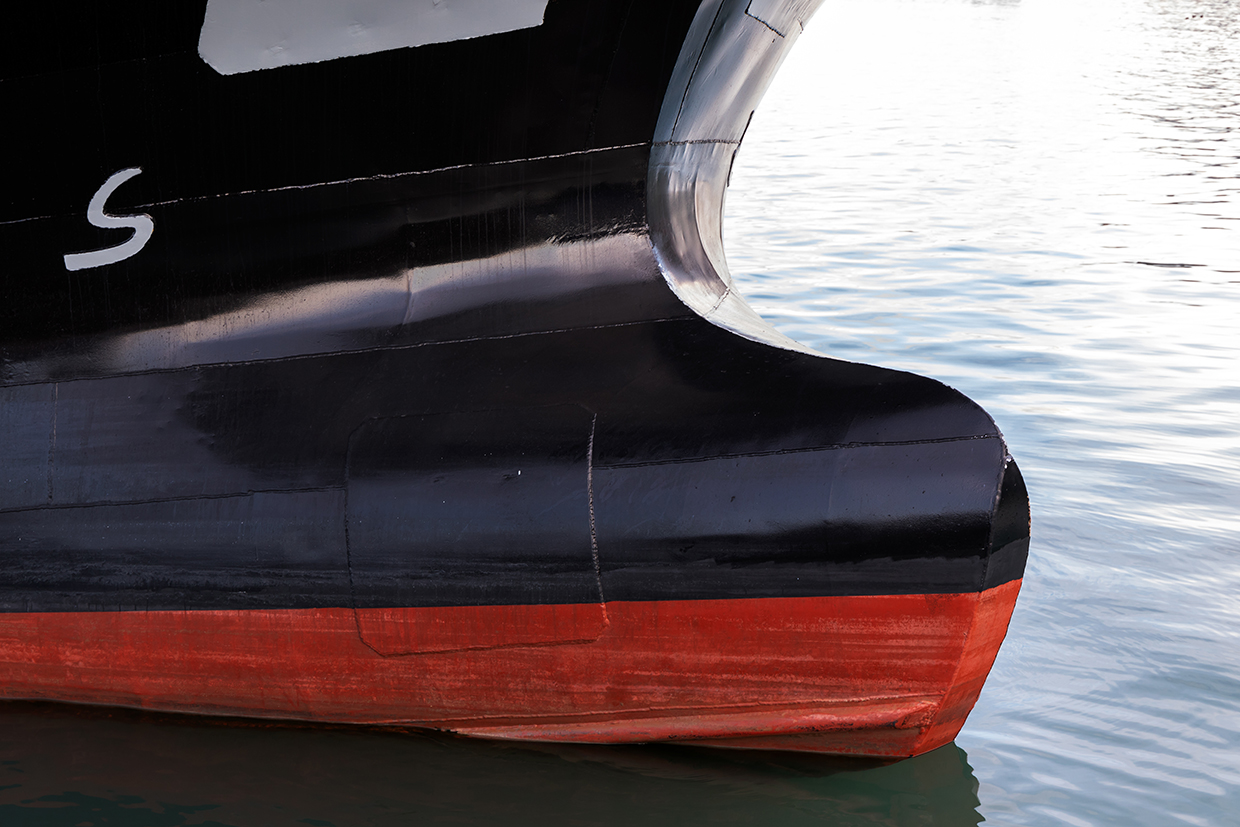
A prototype bulbous bow, designed to improve fuel efficiency in longline fisheries, was installed on a vessel in the Chilaw fisheries district of Sri Lanka. The design was developed by FAO, tested in a water tank at the Polytechnic University of Madrid in Spain, and constructed at the Cey-Nor Foundation shipyard in Colombo. Initial sea trials demonstrated fuel savings of 11% to 13%, with even greater efficiency at speeds between 7 and 8 knots. For an average longline fishing vessel in Sri Lanka, this innovation could result in annual savings of 1,150 liters of fuel per fishing trip.
Contracting type: For collaboration
Technology maturity: Horizon
Technology level: Medium
Place of origin: Sri Lanka
Availability: Sri Lanka
Contact: WIPO GREEN Database
Aquaculture: next-generation AI-integrated RAS technology
AquaMaof
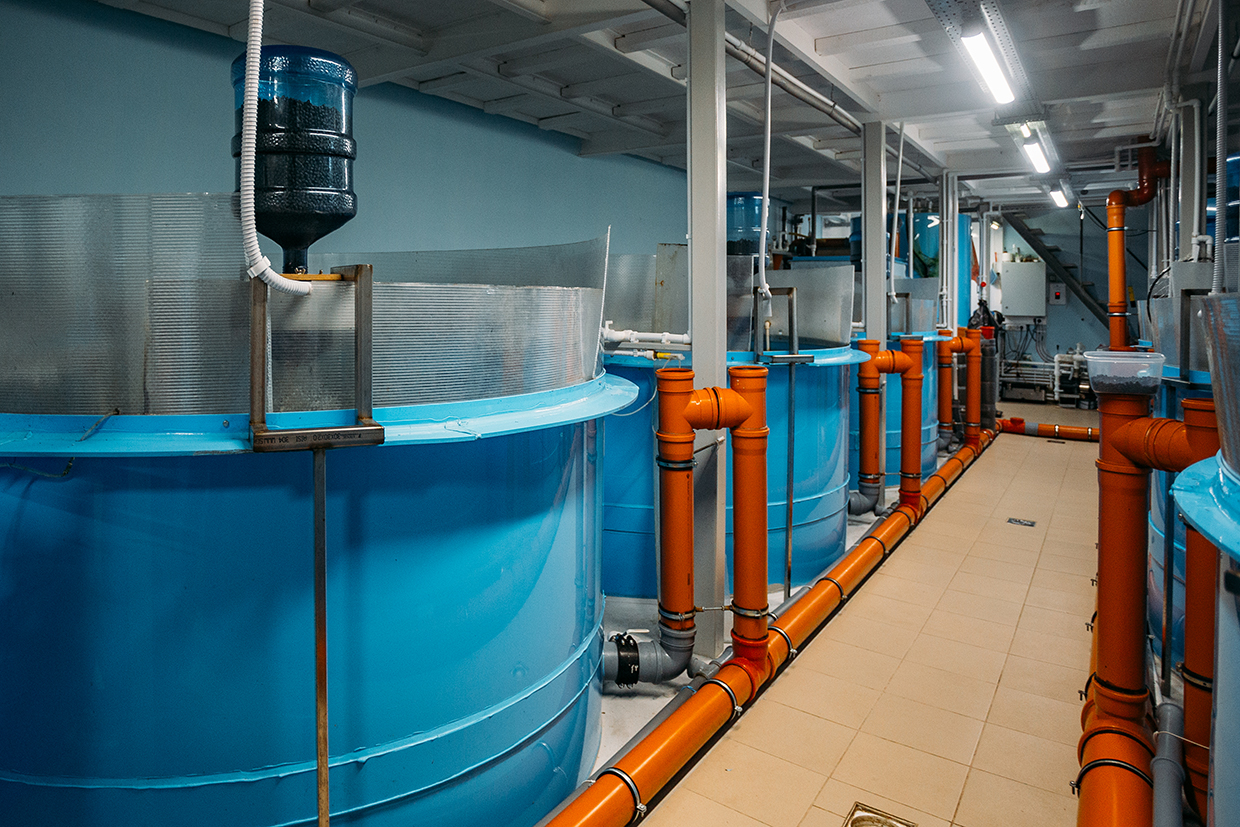
AquaMaof’s integrated RAS technology prioritizes efficient power management, significantly reducing energy costs. Utilizing patented water-treatment and filtration techniques, it minimizes water consumption in fish production. Its low-maintenance design and advanced feeding management optimizes feeding. The system generates oxygen on-site, recovers waste heat and maximizes oxygen production with minimal energy. With 24/7 monitoring of critical components, it provides real-time alerts and automatically activates emergency backups, including power generation and oxygen supply. AquaMaof is advancing AI development through data mining and analytics, with systems for real-time monitoring, troubleshooting and inventory management. Future facilities will automate technical tasks like maintenance, harvesting, grading and counting, dissolved-gas control, temperature control and more, enhancing biosecurity and minimizing human error.
Contracting type: For collaboration
Technology maturity: Horizon
Technology level: Medium
Place of origin: Israel
Availability: Worldwide
Contact: WIPO GREEN Database
Solar appliance: solar ice maker for small-scale fisheries
AIREF
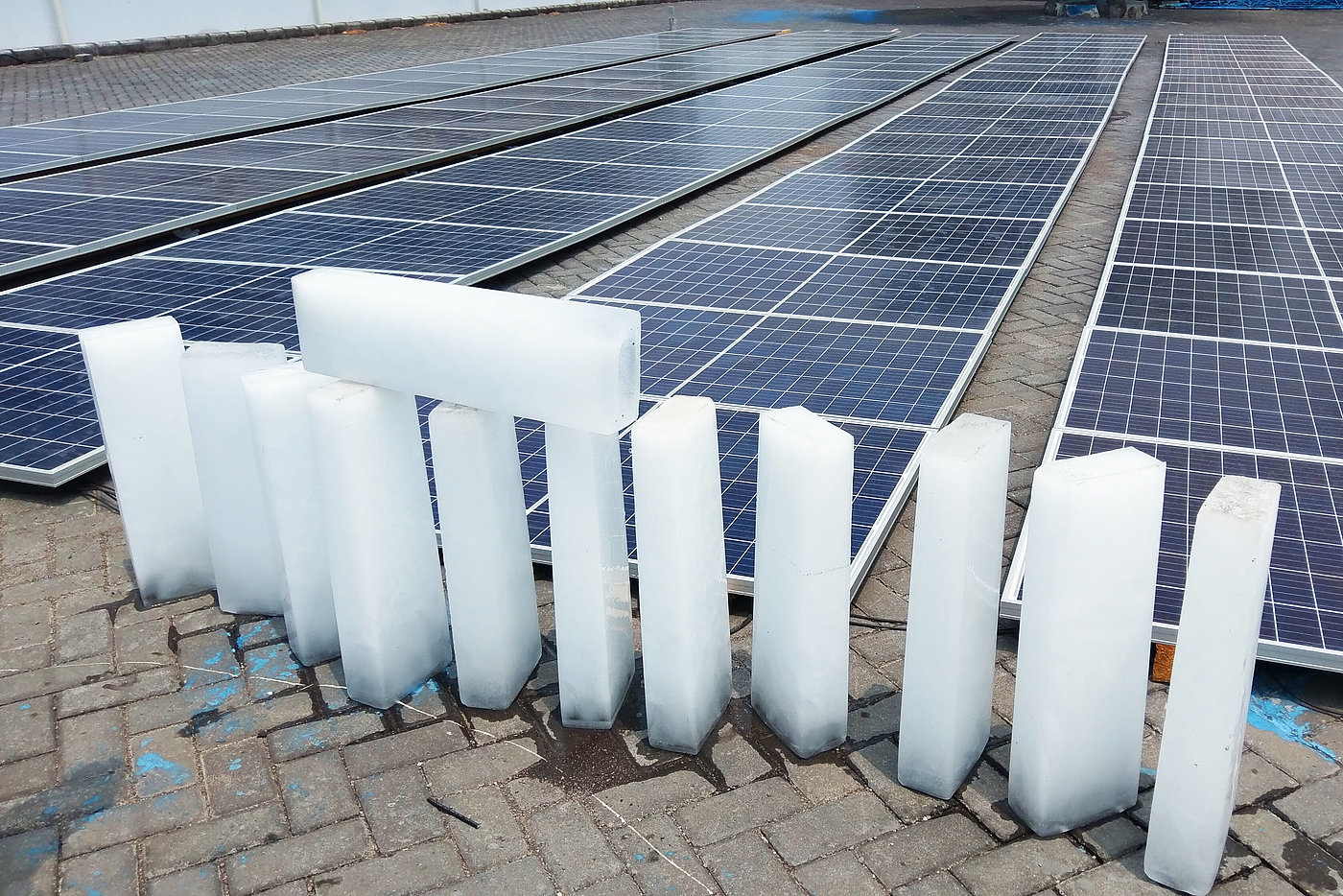
The solar ice maker dynamically and automatically adapts to available solar energy, operating completely carbon-free. Developed by AIREF with support from GIZ Indonesia and PT ASTB, the system uses thermal energy storage instead of batteries, producing up to one ton of ice per day entirely off-grid. It is powered by a 25-kWp solar photovoltaic system and delivers a cooling capacity of approximately 100 kWh per ton. Unlike conventional systems, it requires no grid electricity, propellants or costly large battery storage, enabling ice production even in remote areas. This ensures locally caught fish can be refrigerated, preserving freshness. The ice maker employs eco-friendly R290 refrigerant and is equipped with smart control systems. This scalable and replicable solution is well-suited for coastal regions facing similar logistical challenges.
Contracting type: N/A
Technology maturity: Horizon
Technology level: High
Place of origin: Indonesia
Availability: N/A
Contact: WIPO GREEN Database
Fishing vessel: wind assisted propulsion system
Eco Marine Power

The EnergySail is a wind assisted propulsion system that can be integrated with onboard energy storage devices. These rigid sails can be fitted with flexible solar panels to offer a reliable and hybrid renewable source of supplementary or auxiliary propulsion. In larger ships, the sails have proved to enable fuel savings of more than 30%, and a variation suitable for fishing vessels is currently in development as of 2025. The sails can be used as a standalone device or as part of a sail array, with positioning automatically managed by a computer control system. When not in use, the sails can be lowered and stored, and at anchor or in port, the sails can remain up to continuously harness and store renewable energy.
Contracting type: For collaboration
Technology maturity: Horizon
Technology level: High
Place of origin: Japan
Availability: Japan
Contact: WIPO GREEN Database