تحذير من عمليات الاحتيال - المكالمات المزيفة، ورسائل البريد الإلكتروني التصيدية، وطلبات الدفع الاحتيالية
يرجى توخي الحذر من محاولات الاحتيال عبر الهاتف أو البريد الإلكتروني أو الرسائل النصية.
يستهدف المحتالون مالكي حقوق الملكية الفكرية والشركات بشكل متزايد، في محاولة لسرقة أموالكم أو معلوماتكم الشخصية (أو معلومات شركتكم). ويحاولون خداعكم ليقنعوكم بأن الاتصال صادر عنا، أو عن شخص أو منظمة لها علاقة بنا. قد تبدو طلبات المحتالين مشروعة. على سبيل المثال، يمكن أن يقوموا بتزييف أرقام هواتفنا أو عناوين بريدنا الإلكتروني، و/أو قد يستخدمون شعارات وأوراقاً رسمية تبدو وكأنها تابعة للويبو.
- This email address has no connection to WIPO or any official IP Office
- WIPO's official email addresses exclusively use the "wipo.int" domain
- You should not respond to any communication coming from this address
- You should not make any payment requested through this or any similar fraudulent email address
If you think you’ve been scammed contact us.
إذا اعتقدت أنك تعرضت لعملية احتيال، فيرجى الاتصال بنا.
If you think you’ve been scammed contact us.
ساعد(ي)نا في حماية مجتمع الملكية الفكرية
عمليات الاحتيال في مجال الملكية الفكرية تستهدف الشركات والمبتكرين في جميع أنحاء العالم. يمكن لموادنا التوعوية المجانية والقابلة للتكييف أن تساعدك في نشر الوعي عبر شبكتك.

-
كيف يمكنني التعرف على رسالة بريد إلكتروني احتيالية؟
-
كيف يمكنني التعرف على مكالمة مزيفة؟
-
ماذا أفعل إذا شككت في تعرضي لعملية احتيال؟
-
تعرف(ي) على المزيد عن كيفية تحديد عمليات الاحتيال من خلال الأمثلة
-
آخر عمليات الاحتيال
كيف يمكنني التعرف على رسالة بريد إلكتروني احتيالية؟
1. تحقق(ي) من المرسل
تأكد من أن عنوان البريد الإلكتروني للمرسل يحتوي على نطاق wipo.int. يرجى الانتباه، مع ذلك، إلى أن عناوين البريد الإلكتروني يمكن تزويرها أو انتحالها.
يتم تزوير عنوان البريد الإلكتروني للمرسل من الناحية التقنية ليظهر كعنوان شرعي (على سبيل المثال، يظهر على أنه noreply@wipo.int) في حين أن المصدر الفعلي للبريد الإلكتروني مختلف تمامًا. يمكنك اكتشاف ذلك عن طريق تمرير مؤشر فأرة الكمبيوتر فوق عنوان البريد الإلكتروني للمرسل، مما سيكشف عن العنوان الحقيقي وراءه.
يتم تصميم عنوان البريد الإلكتروني ليشبه إلى حد كبير عنوانًا شرعيًا، ولكنه يحتوي على اختلافات دقيقة يسهل تجاهلها (على سبيل المثال، wlpo.int بدلاً من wipo.int).
2. تحليل المحتوى
لا نستخدم في رسائلنا عبارات تستدعي الاستعجال أو التخويف. لن نطلب منك تقديم معلومات شخصية إلا عبر منصاتنا الرسمية (لإنشاء حساب الويبو). توخ(ي) الحذر من أي بريد إلكتروني يحثك على التصرف فوراً. وتذكر(ي) أننا لن نطلب منك أبداً سداد أي مدفوعات من دون سابق طلب، مع إرشادات عن كيفية القيام بذلك، في مراسلاتنا المكتوبة.
3. تحقق(ي) من الروابط
قبل النقر على أي رابط، مرر(ي) مؤشر الفأرة فوقه لمعاينة عنوان URL والتحقق مما إذا كان يحتوي على ملحق wipo.int (أو upov.int).
4. تحقق(ي) من المرفقات
توخ(ي) الحذر عند تلقي مرفقات غير متوقعة. لن نطلب منك أبدًا تنزيل ملفات أو برامج بدون طلب مسبق منك.
5. انظر(ي) إلى الجودة العامة
انتبه إلى الأخطاء النحوية أو الإملائية أو التنسيق غير المعتاد، فهذه مؤشرات شائعة تدل على رسائل البريد الإلكتروني الاحتيالية.
6. إذا ساورك الشك، فتحقق(ي)
إذا كنت غير متأكد من شرعية رسالة بريد إلكتروني تدعي أنها من الويبو، فلا ترد عليها ولا تنقر على أي روابط. اتصل(ي) بنا مباشرةً للتأكد من صحتها.
كيف يمكنني التعرف على مكالمة مزيفة؟
1. انتبه(ي) للأسئلة المطروحة
لن يطلب منك موظفونا أبداً معلومات شخصية أو متعلقة بالدفع عبر الهاتف. إذا ادعى المتصل أنه من الويبو وطلب مثل هذه المعلومات، فهذا مؤشر قوي على أن المكالمة احتيالية. لا تقدم(ي) هذه البيانات لأي كان.
2. توخ(ي) الحذر بشأن طلبات الدفع
يجب دفع الرسوم المفروضة على خدمات الويبو مباشرة إلى المكتب الدولي أو، عند الاقتضاء، إلى مكتب الملكية الفكرية الوطني/الإقليمي. لا ينبغي أبداً إجراء الدفعات إلى خدمات أو منظمات تابعة لأطراف ثالثة.
3. لا تتصرف(ي) تحت الضغط
غالباً ما يخلق المحتالون شعوراً بالاستعجال أو يهددون بعواقب لدفعك إلى اتخاذ قرارات سريعة.
4. تحقق(ي) من هوية المتصل
إذا تلقيت مكالمة غير متوقعة من شخص يدعي أنه من الويبو، فلا تتردد(ي) في إنهاء المكالمة والاتصال بنا.
Latest active scams
Scammers are currently using the fraudulent email address admin@wipo-office.com to impersonate WIPO and other IP Offices, including the EPO and EUIPO. These fraudulent emails falsely demand payments for Trademark or Patent services. See the examples below.

EPO
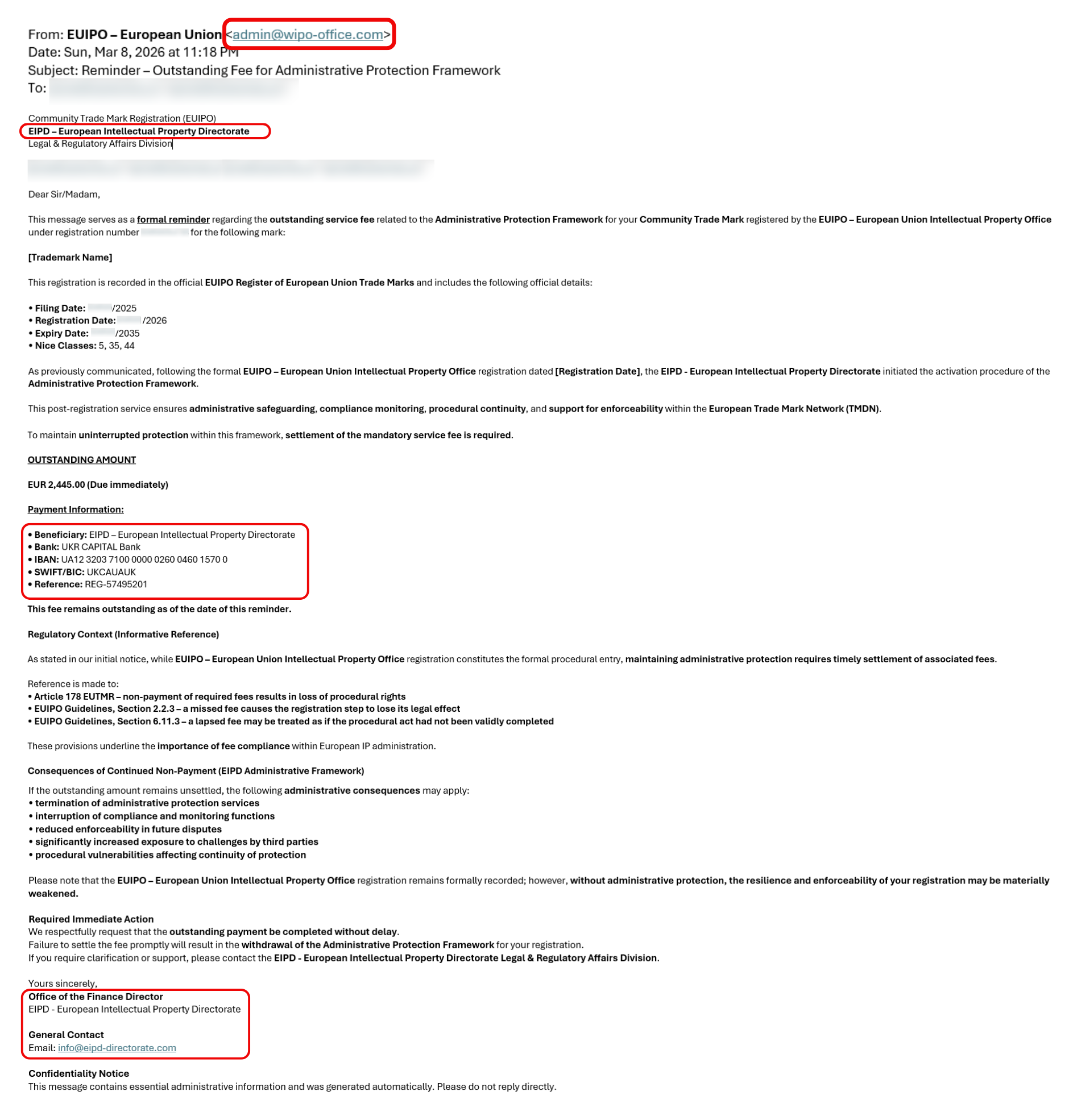
EUIPO - European Union
Please be aware that:
- This email address has no connection to WIPO or any official IP Office
- WIPO's official email addresses exclusively use the "wipo.int" domain
- You should not respond to any communication coming from this address
- You should not make any payment requested through this or any similar fraudulent email address
If you have received an email from this or other suspicious email address, please report it immediately using steps described immediately above.
How can I spot a fraudulent email?
-
Step 1
Check the sender
Verify that the sender's email address contains the "wipo.int" domain. Be aware, however, that email addresses can be:
- Spoofed: the sender's email address is technically forged to display as a legitimate address (e.g., appearing as "noreply@wipo.int") while the actual origin of the email is entirely different. You can detect this by hovering over the sender's email address, which will reveal the real address behind it.
- Impersonated: the email address is designed to closely resemble a legitimate one but contains subtle differences that are easy to miss (e.g., "wlpo.int" instead of "wipo.int").
-
Step 2
Analyze the content
Our language excludes urgencies and threats. We will only request personal information through our official platforms (for the creation of a WIPO Account). Be cautious of any email creating pressure to act immediately. And remember that we will never ask you to make an unsolicited payment, with instructions on how to do so, in our written communications.
-
Step 3
Verify the links
Before clicking any link, hover over it to preview the URL and check whether it contains the "wipo.int" (or "upov.int") extension.
-
Step 4
Check for attachments
Be cautious of unexpected attachments. We will never ask you to download unsolicited files or software.
-
Step 5
Look at the overall quality
Watch for poor grammar, spelling mistakes, or unusual formatting, as these are common indicators of fraudulent emails.
-
Step 6
When in doubt, verify
If you are unsure about the legitimacy of an email claiming to be from WIPO, do not respond or click any links. Contact us directly to confirm its authenticity.
How can I spot a spoofed call?
-
Step 1
Pay attention to the questions asked
Our employees will never ask you for personal or payment information over the phone. If a caller claims to be from WIPO and requests such information, this is a strong indicator of a fraudulent call. Do not provide this data to anyone.
-
Step 2
Be cautious about payment requests
Fees charged for WIPO services are to be paid directly to the International Bureau or, where applicable, to the national/regional IP Office. Payments should never be made to third-party services or organizations.
-
Step 3
Do not act under pressure
Scammers often create a sense of urgency or threaten consequences to push you into making quick decisions.
-
Step 4
Verify the caller's identity
If you receive an unexpected call from someone claiming to be from WIPO, do not hesitate to hang up and contact us.
How can I spot a fraudulent email?
-
Step 1
Check the sender
Verify that the sender's email address contains the "wipo.int" domain. Be aware, however, that email addresses can be:
- Spoofed: the sender's email address is technically forged to display as a legitimate address (e.g., appearing as "noreply@wipo.int") while the actual origin of the email is entirely different. You can detect this by hovering over the sender's email address, which will reveal the real address behind it.
- Impersonated: the email address is designed to closely resemble a legitimate one but contains subtle differences that are easy to miss (e.g., "wlpo.int" instead of "wipo.int").
-
Step 2
Analyze the content
Our language excludes urgencies and threats. We will only request personal information through our official platforms (for the creation of a WIPO Account). Be cautious of any email creating pressure to act immediately. And remember that we will never ask you to make an unsolicited payment, with instructions on how to do so, in our written communications.
-
Step 3
Verify the links
Before clicking any link, hover over it to preview the URL and check whether it contains the "wipo.int" (or "upov.int") extension.
-
Step 4
Check for attachments
Be cautious of unexpected attachments. We will never ask you to download unsolicited files or software.
-
Step 5
Look at the overall quality
Watch for poor grammar, spelling mistakes, or unusual formatting, as these are common indicators of fraudulent emails.
-
Step 6
When in doubt, verify
If you are unsure about the legitimacy of an email claiming to be from WIPO, do not respond or click any links. Contact us directly to confirm its authenticity.
How can I spot a spoofed call?
-
Step 1
Pay attention to the questions asked
Our employees will never ask you for personal or payment information over the phone. If a caller claims to be from WIPO and requests such information, this is a strong indicator of a fraudulent call. Do not provide this data to anyone.
-
Step 2
Be cautious about payment requests
Fees charged for WIPO services are to be paid directly to the International Bureau or, where applicable, to the national/regional IP Office. Payments should never be made to third-party services or organizations.
-
Step 3
Do not act under pressure
Scammers often create a sense of urgency or threaten consequences to push you into making quick decisions.
-
Step 4
Verify the caller's identity
If you receive an unexpected call from someone claiming to be from WIPO, do not hesitate to hang up and contact us.
ماذا أفعل إذا شككت في تعرضي لعملية احتيال؟
إذا تلقيت أي شيء لم تكن تتوقعه منا ولديك شكوك حول شرعيته، فلا تقدم(ي) أي معلومات أو تسدد(ي) أي مدفوعات أو تنقر(ي) على أي رابط. بدلاً من ذلك، اتبع(ي) الخطوات التالية:
-
الخطوة 1
اتصل(ي) بنا مباشرة
اتصل(ي) بمركز الاتصال لدينا لمناقشة الأمر.
-
الخطوة 2
اطلب(ي) الدعم الداخلي
اتصل(ي) بفريق أمن المعلومات أو المحامي الخاص بك حسب الاقتضاء للإبلاغ عن الاتصال المشبوه وطلب التوجيه.
-
الخطوة 3
تحقق(ي) من موقعنا الإلكتروني
تحقق(ي) مما إذا تم الإبلاغ عن رسائل احتيالية مماثلة. يمكنك القيام بذلك على هذا الموقع الإلكتروني بالتوجه إلى القسمين التاليين أدناه. يمكنك أيضًا التحقق من موقع مكتب البراءات الوطني أو الإقليمي الخاص بك، حيث عادةً ما يكون لديهم قسم مخصص للإشعارات الاحتيالية.
-
الخطوة 4
تنبيه زملائك
أبلغ جميع الزملاء الذين قد يتلقون إشعارات مماثلة حتى يكونوا على علم ويمكنهم اتخاذ الاحتياطات اللازمة.
-
الخطوة 5
إبلاغ السلطات
قدم(ي) شكوى إلى السلطات الحكومية المختصة و/أو مجموعات حماية المستهلك في بلدك للمساعدة في اتخاذ إجراءات ضد المحتالين.

يمكنك تنزيل رسم بياني حول ما يجب فعله في حالة الاشتباه في تعرضك لعملية احتيال

تعرف(ي) على المزيد عن كيفية تحديد عمليات الاحتيال من خلال الأمثلة
أفضل طريقة لحماية نفسك هي معرفة الشكل الذي تبدو عليه رسائل البريد الإلكتروني التصيدية. ألقِ(ي) نظرة على الأمثلة أدناه وتعرّف(ي) على العلامات التحذيرية الرئيسية لمساعدتك في تحديد الاتصالات الاحتيالية وتجنبها.
More examples of fraudulent messages
يستخدم المحتالون عنوان بريد إلكتروني مزيفًا وهو admin@wipo-office.com لانتحال صفة الويبو ومكاتب الملكية الفكرية الأخرى مثل المكتب الأوروبي للبراءات (EPO) والمكتب الأوروبي للملكية الفكرية (EUIPO)، ويطالبون بدفع مبالغ مالية مقابل خدمات العلامات التجارية أو البراءات:

IPC – استشارات الملكية الفكرية / مكتب الويبو
كلمات البحث عن الاحتيال: admin@ipc-consultants.com، IPC، Intellectual Property Consulting
يطلب الرسالة دفع رسوم قدرها 2,445 يورو خلال 5 أيام عن طريق التحويل المصرفي إلى حساب مصرفي في مولدوفا (Victoriabank، IBAN MD40VI022512 ...)، مع إدراج المستفيد باسم IPC – Intellectual Property Consulting. يستخدم البريد الإلكتروني لغة تهديدية مثل إشعار نهائي وملزم وغير قابل للتفاوض وعواقب الإنفاذ لا رجعة فيها للضغط على المستلمين لدفع المبلغ.

EIPD – المديرية الأوروبية للملكية الفكرية / طلب رسوم الحماية الإدارية المزيف من مكتب الاتحاد الأوروبي للملكية الفكرية
تُعلم هذه الرسالة الإلكترونية المستلمين زوراً بأن تسجيل علامتهم التجارية الجماعية المسجلة لدى مكتب الاتحاد الأوروبي للملكية الفكرية (EUIPO) يتطلب دفع رسوم إطار الحماية الإدارية على الفور.

إشعار مزيف بتسجيل علامة تجارية من الويبو يروج لخدمات قانونية غير ضرورية
تُعلم هذه الرسالة الاحتيالية المستلمين زوراً بأن طلبهم الدولي لتسجيل العلامة التجارية قد تم قبوله من قبل الويبو ويجري الآن بموجب بروتوكول مدريد.
على عكس عمليات الاحتيال التقليدية التي تطالب بدفع رسوم، تتبع هذه الرسالة نهجًا أكثر دقة: فبدلاً من طلب الدفع مباشرةً، تضغط على مالكي العلامات التجارية لتعيين ممثلين محليين في جميع البلدان المعينة ودفع أتعابهم، وذلك من خلال اختلاق متطلب قانوني عاجل للقيام بذلك. وهي تحرف المراجع التنظيمية الحقيقية وقوانين العلامات التجارية الوطنية لإضفاء مظهر من الشرعية، كما تستخدم العنوان الفعلي للويبو في جنيف وعلامتها التجارية الرسمية لتبدو ذات مصداقية.
لا ترسل الويبو إخطارات تسجيل علامات تجارية غير مطلوبة توجه المتقدمين إلى تعيين ممثلين محليين من خلال جهات اتصال خارجية.

رسالة تصيد احتيالية مزيفة بشأن تسوية الحسابات من الويبو
تنتحل هذه الرسالة الإلكترونية صفة قسم المحاسبة في الويبو زوراً، مدعيةً أنها تجري تدقيقاً سنوياً للتسوية المصرفية للأرصدة المستحقة.
وهي تحاول شن هجوم ذي شقين: أولاً، تطلب من المستلمين مشاركة معلومات مالية سرية — بما في ذلك قائمة بالفواتير المفتوحة والمدفوعات المستحقة — من خلال النقر على رابط مشبوه يؤدي إلى ملف مشترك بعنوان Access Solvay-WIPO Folder Now، والذي من المرجح أنه مصمم لجمع بيانات الاعتماد أو البيانات المالية الحساسة. ثانياً، يوجه الرسالة المستلمين إلى تأجيل أي مدفوعات حتى إشعار آخر، وهي تكتيك كلاسيكي للاختراق عبر البريد الإلكتروني التجاري (BEC) يُستخدم لإعادة توجيه المدفوعات لاحقاً إلى حسابات احتيالية. يأتي البريد الإلكتروني من Accounting.WIPO@encrypt-email.org، وهو عنوان غير رسمي لا علاقة له على الإطلاق بالويبو، بينما يستخدم شعار الويبو الرسمي وعنوانها في جنيف ليبدو شرعيًا.
لا تتواصل الويبو أبدًا عبر نطاقات بريد إلكتروني مشفرة تابعة لأطراف ثالثة، وتصدر جميع المراسلات الرسمية حصريًا من عناوين بريد إلكتروني @wipo.int.

طلب مزيف لدفع رسوم تجديد العلامة الدولية للويبو باستخدام البيتكوين
يُعلم هذا البريد الإلكتروني المستلمين زوراً بأن تسجيل علامتهم الدولية المسجلة لدى الويبو يتطلب دفع رسوم تجديد فورية قدرها 1,970.00 يورو.
في طلب غريب للغاية، يزعم أن وفقًا للمادة 8(7) من قرار بروتوكول مدريد، فإن طريقة الدفع الوحيدة المقبولة هي عملة البيتكوين المشفرة، مع توفير عنوان محفظة بيتكوين للتحويل وطلب الدفع في غضون 10 أيام. يهدد البريد الإلكتروني بأن عدم دفع الرسوم قد يؤدي إلى فقدان موافقة العلامة الدولية والحقوق المرتبطة بها الممنوحة من قبل الويبو. وقد تم توقيعها من قبل مدير الشؤون المالية في الويبو وهمي لإضفاء مصداقية زائفة.
Lorem ipsum dolor sit amet
آخر عمليات الاحتيال
IPC – Intellectual Property Consulting / WIPO Office
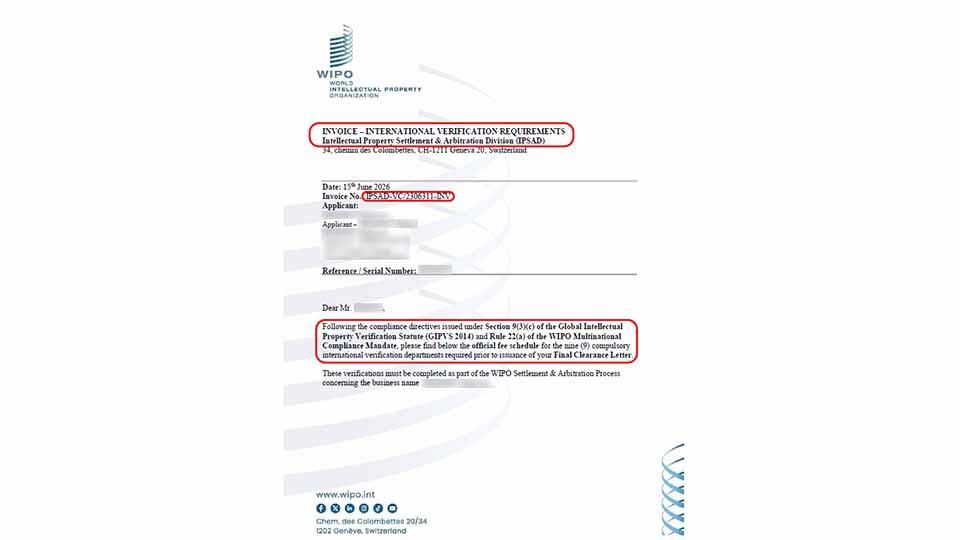
IPSAD – Intellectual Property Settlement & Arbitration Division
This fraudulent invoice, mimicking official WIPO correspondence by misusing WIPO's real Geneva address and logo, falsely claims to originate from a non-existent body called the "Intellectual Property Settlement & Arbitration Division (IPSAD)."
It falsely informs recipients that their intellectual property registration is subject to fees for "nine (9) compulsory international verification departments," required prior to the issuance of a so-called "Final Clearance Letter."
The document invents entirely fictitious legal frameworks, including "Section 9(3)(c) of the Global Intellectual Property Verification Statute (GIPVS 2014)" and "Rule 22(a) of the WIPO Multinational Compliance Mandate" — neither of which exist — to create an appearance of legal legitimacy and urgency.
Learn more about Patent scams (PCT)
Learn more about Trademark scams (Madrid Registry)
تعرف(ي) على المزيد بشأن عمليات الاحتيال المتعلقة بمعاهدة التعاون بشأن البراءات
تعرف(ي) على المزيد حول عمليات الاحتيال المتعلقة بالعلامات التجارية (سجل مدريد)
Learn more about spotting scams through examples
The best way to protect yourself is to know what a phishing email looks like. Take a look at the two examples below and familiarize yourself with the key warning signs to help you identify and avoid fraudulent communications.
More examples of fraudulent messages
يستخدم المحتالون عنوان بريد إلكتروني مزيفًا وهو admin@wipo-office.com لانتحال صفة الويبو ومكاتب الملكية الفكرية الأخرى مثل المكتب الأوروبي للبراءات (EPO) والمكتب الأوروبي للملكية الفكرية (EUIPO)، ويطالبون بدفع مبالغ مالية مقابل خدمات العلامات التجارية أو البراءات:
Example 1. Fraudulent Trademark Registration Notice impersonating WIPO Madrid

Trademark registration notice
This email fraudulently claims the recipient's trademark faces a competing claim, falsely stating that WIPO handles trademark opposition or infringement disputes. It urgently demands a response to "protect" the trademark and deceptively uses an alleged WIPO colleague's name to lend credibility to this fake legal notice.
Example 2. Fraudulent email impersonating WIPO's Accounting Department coming from Accounting.WIPO@encrypt-email.org

Trademark registration notice
This email fraudulently claims the recipient's trademark faces a competing claim, falsely stating that WIPO handles trademark opposition or infringement disputes. It urgently demands a response to "protect" the trademark and deceptively uses an alleged WIPO colleague's name to lend credibility to this fake legal notice.
هل لا تزال لديك أسئلة أو تلقيت رسالة مشبوهة؟
فريقنا جاهز لمساعدتك. لا تتردد(ي) في الاتصال بنا إذا كانت لديك أي شكوك أو مخاوف.