Femmes chefs d’entreprise issues de peuples autochtones et de communautés locales
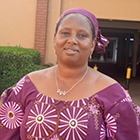
Aii Shatu Ali
Aii Shatu est une éleveuse autochtone Mbororo du Cameroun. Elle est vétérinaire de profession, conseillère en agriculture et en élevage et étudiante en master dans le domaine du développement rural et de l’administration. Entre autres obligations, elle travaille avec la Mbororo Social, Cultural and Development Association (MBOSCUDA) au Cameroun en tant que coordinatrice pour les questions relatives au genre et aux femmes.
Les femmes autochtones Mbororo ont une longue tradition de production et de création d’objets artisanaux à partir de matériaux naturels locaux, tels que des calebasses, des couvertures et des sacs utilisés à des fins domestiques et pour la décoration de la maison. La communauté possède également une riche tradition musicale et des techniques uniques de tressage des cheveux.

Judith Bakirya
Judith est membre de la Jinja Women Agribusiness Cooperative (JiWAE-C), une communauté locale de femmes qui travaillent ensemble pour partager leurs connaissances, leurs savoirs et leur accès au marché et pour préserver leurs aliments et plantes médicinales indigènes. La coopérative met en œuvre différents projets, notamment sur le traitement artisanal des produits de bien-être à base de plantes, la préservation des herbes autochtones grâce à des jardins de plantes aromatiques, et la production de remèdes médicinaux à base de graines de fruits, de farine et d’herbes.

Appolia Dabe
Appolia est une dirigeante de la communauté San du clan Naro, dans l’est de la Namibie. Elle est très active au sein de sa communauté, qu’elle a servie dès son plus jeune âge.
Face à la perte progressive des terres ancestrales, des savoirs traditionnels et des expressions culturelles traditionnelles, Appolia a cofondé Tèèmààseé San Youth Development, qui s’efforce de favoriser l’échange intergénérationnel des savoirs traditionnels. Actuellement, l’initiative inclut la création, par les membres âgés et jeunes de la communauté, de bijoux en perles qui sont ensuite vendus localement.

Satitia Gomis

Charlotte Kazoora

Eunice Nabebek Koin
Eunice est originaire de la communauté des Massaï Loita de Narok, une communauté essentiellement composée d’éleveurs et très attachée à son patrimoine culturel, avec des vêtements, des bijoux et un mode de vie traditionnel qui lui sont propres.
Commerciale de profession et passionnée de stylisme, Eunice a fondé Entito Creations Ltd, afin d’intégrer les articles brodés de perles et les motifs traditionnels massaïs à des créations de mode modernes.
Eunice travaille avec un groupe de femmes de son village et, ensemble, elles réalisent des ouvrages de perles, qui constituent une source de revenus pour les familles du groupe. Elles fournissent une aide et enseignent la broderie de perles afin de préserver leur culture et de donner à la communauté les moyens d’agir, ce qui permet aux filles de s’inscrire à l’école.

Diana Lemboko
Diana appartient à la communauté autochtone massaï de Tanzanie. Depuis 2005, elle travaille avec la Maasai Women Development Organization (MWEDO) sur des projets de développement social et économique. MWEDO a été fondé par des femmes pour lutter contre les injustices auxquelles les femmes et les filles sont confrontées et pour atteindre l’égalité des sexes grâce à l’autonomisation économique, à l’accès à l’éducation et aux soins de santé communautaires.سيليستين هي مؤسسة شركة "HABIBA NATURAL CARE" ومديرتها، وهي شركة تنتج منتجات تجميل طبيعية مصنوعة من أوراق الأشجار ولحائها ومن الزيوت النباتية عملاً بالمعارف التقليدية لشعب موندانغ.
L’un des projets phares de MWEDO est la création du Fair Trade Centre, qui vise à renforcer les capacités des femmes Massaï dans le secteur de l’artisanat et à leur fournir un accès au marché. Grâce à ce projet, les femmes sont en mesure de créer des ouvrages de perles compétitifs et commercialisables, de percevoir des revenus et de réduire la pauvreté au sein de leur foyer.

Tsitsi Machingauta
Tsitsi a fondé le Women’s Farming Syndicate Trust, une organisation qui se concentre sur l’autonomisation des femmes dans la communauté rurale de Domboshava. Elle participe activement à l’utilisation des systèmes de savoirs traditionnels pour créer des produits viables à partir des forêts, à la promotion de la durabilité environnementale et aux efforts de reboisement.
Consciente de l’immense potentiel des femmes de la communauté, Tsitsi s’efforce de leur donner une autonomie économique grâce à des pratiques durables. En utilisant les systèmes de savoirs traditionnels, elle les aide à développer des produits viables tels que des thés, des herbes et des paniers, créant ainsi des opportunités économiques pour eux-mêmes et leur communauté.

Celestine Habiba Magouo Epse Djallo

Elizabeth Mbau

Nyasha Clesby Nhutsve

Shivani Ragavoodoo Canee
Shivani est créatrice et fondatrice de Cahaya, une marque qui valorise l’artisanat local et l’utilisation de matériaux d’origine locale, tout en s’efforçant d’innover en permanence. Opérant principalement par l’intermédiaire du commerce électronique et des marchés saisonniers, Cahaya propose également des services tels que des ateliers créatifs aux habitants, aux écoles, aux entreprises et aux touristes.
En 2023, Cahaya a lancé son premier programme de formation intitulé Weave, Wove, Woven, qui a permis à un groupe de femmes bénéficiaires de se perfectionner dans le tissage des feuilles de vaquois. Les produits créés pendant la formation ont été exposés au niveau local et international.

Laima Abeid Sinare

Cynthia Suyianka

Cherina Zerbo

Naeema Al Maimani

Loreta Alsa

Lucille Anak Awen Jon

Sana Askari
Sana est née en Afghanistan et a grandi au Pakistan au sein de la communauté hazara. Elle a fondé le projet communautaire Esheel Stitching Circle (ESC) pour former et informer la communauté sur sa culture et pour offrir des possibilités d’emploi aux femmes et aux jeunes filles, en leur permettant de travailler à domicile.
L’ESC travaille avec et pour les femmes qui possèdent des compétences culturelles en matière de broderie, en leur offrant des possibilités de formation ainsi que des ressources pour créer leurs produits qui seront vendus par l’ESC et pour financer leur éducation. Le projet encourage la préservation et la diffusion des connaissances culturelles de la communauté par la production de créations culturelles Hazaragi.

Elene Bulashvili

Gulnara Derbisheva

Laxmi Gurung
Laxmi appartient à la communauté autochtone Gurung du Népal, pour laquelle les activités d’élevage font partie du mode de vie traditionnel.
Elle est présidente de la Ligue des femmes autochtones du Népal. Elle travaille au profit des femmes de la communauté en les aidant à protéger et à promouvoir leurs savoirs traditionnels liés à l’agriculture, ainsi que leurs compétences et leurs traditions grâce à des activités visant à renforcer leur autonomie économique.

Nenita Kinan
Nenita appartient à la tribu des T’boli et travaille en tant que coordonnatrice de la culture et des arts locaux pour la municipalité de Lake Sebu, dans le sud de Cotabato (Philippines). Elle contribue, avec d’autres membres de sa communauté, à la promotion, à la protection, à la préservation et à la conservation de la culture T’boli.
En tant que responsable des organisations de la société civile, Nenita aide quelque 80 ONG et organisations de la société civile locales à participer activement à la gouvernance locale.
En outre, Nenita est actuellement présidente de la Cooperative of Women in Health and Development (COWHED), qui vise à donner aux femmes T’boli les moyens de devenir des entrepreneuses et à promouvoir le tourisme culturel.

Symbat Sagynbek Kyzy
Youth Fund Stimul, Kirghizistan
Symbat vit dans la région de Batken (Kirghizistan). Ces cinq dernières années, elle a travaillé comme coordonnatrice de projets sociaux au sein du Youth Fund Stimul (incitation). L’organisation met en œuvre des projets socio-économiques visant à autonomiser les femmes vulnérables de la communauté, y compris les femmes handicapées et celles vivant dans les zones rurales.
L’équipe de Stimul souhaite ouvrir un atelier de couture pour confectionner la coiffe nationale des femmes, Kep-takiya. Elle prévoit d’employer des femmes handicapées de la communauté et de leur offrir des possibilités de revenus, tout en faisant revivre les vêtements traditionnels et en les popularisant auprès de la jeune génération.

Elamae Membrere

Ly Mai Niekdam
Ly Mai est membre de l’ethnie Ede, qui vit sur les hauts plateaux du centre du Viet Nam. Son activité, axée sur la communauté, est centrée sur le tourisme communautaire durable et la renaissance des techniques de tissage autochtones traditionnelles.
Ly Mai a fondé l’Adventure & Eco Tour Agency en 2017 et défend le modèle du tourisme communautaire, qui met l’accent sur la propriété locale, le partage des bénéfices et la préservation de l’environnement, tout en protégeant le riche patrimoine culturel de la communauté.
Fermement décidée à favoriser un changement positif, Ly Mai s’efforce de préserver le patrimoine culturel unique des communautés et de promouvoir des pratiques touristiques responsables, notamment en apportant son soutien à des groupes d’enfants qui jouent de la musique folklorique traditionnelle.

Mansura Shams
Mansura est une entrepreneuse sociale et la directrice de l’entreprise à but non lucratif Kho & Kalashi.
Au cours des huit dernières années, elle a travaillé au profit des communautés locales vulnérables dans le district de Chitral, Khyber Pakhtunkhwa, avec l’objectif d’autonomiser les femmes de la communauté locale en leur offrant un espace sûr pour se lancer dans la création d’entreprise dans le domaine des arts créatifs.
Son organisation travaille avec 500 artisans de toute la région de Chitral et compte 40 entreprises dirigées par des femmes. Son entreprise est un centre communautaire qui a un impact social important dans la région où elle est implantée. Mansura vise à renforcer cet impact et à créer davantage d’opportunités pour les communautés locales.

Ana Shanshiashvili

Aishath (Shiru) Shirhan
Shiru est la fondatrice de Haajara Feminine Designs, une entreprise traditionnelle qui existe depuis plus de 30 ans et qui exerce ses activités en ligne depuis 2017. Avec d’autres artisanes locales, elle souhaite faire revivre et populariser les vêtements traditionnels des Maldives, tels que les Libaas et les Rumaafalhi, ainsi que les bijoux Kinaari. Elle sensibilise également les écoliers et leur apprend à tisser selon la tradition Kasabu.
Shiru commercialise ses bijoux et ses souvenirs dans les stations balnéaires, ainsi que dans le cadre d’une initiative gouvernementale appelée Authentic Maldives qui vise à promouvoir et vendre des produits d’artistes locaux à Malé et à l’aéroport.

Rajita Shrestha

Naw Su Wah

Nurzat Zheenbek Kyzy

Armida Alikaj

Anastasiia Arhunova

Fruzsina Arkhely

Radoslava Balabanova

Solveig Ballo

Tatyana Batova

Cristina Dan

Liubov Drohomyretska

Metka Fortuna

Enikő Gerencsér

Lavinia Ghimbășan

Anna Halíková
Slavica Hristova

Leniie Ibrahimova

Vesna Jakić

Silvija Juozelskytė

Lucyna Ligocka-Kohut

Slađana Milojević

Diana Roșca

Ana Šakić

Soňa Stančíková
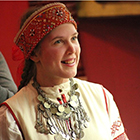
Elena Variksoo
Flutura Xhabija

Ani Yoveva

Sandra Karina Aduviri Chambi
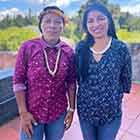
Aurelia Ahua Paa (à gauche) et Romelia Papue Mayancha (à droite)

Enma Alvarado Huatatoca (à gauche) et Clemencia Alvarado Huatatoca (à droite)
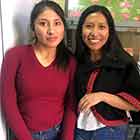
Jimena Aranibar Blanco (à gauche) et Dayana Blanco Quiroga (à droite)

Angela Chiquin Chitay
Angela est une fervente défenseuse de l’autonomisation socioéconomique des femmes et des filles autochtones. Elle appartient à la communauté autochtone Q’eqchi', connue pour ses liens étroits et ses racines culturelles profondes. Cette communauté cultive une riche tradition artisanale, en particulier l’art complexe du tissage sur métier à bras, un savoir-faire transmis de génération en génération.
Encouragée par les talents exceptionnels des femmes de sa communauté, Angela a fondé KEMOK, un projet communautaire qui redynamise et autonomise les femmes et les filles autochtones grâce au tissage sur métier à bras. L’organisation récente du premier festival du tissage artisanal a permis aux femmes de présenter leurs remarquables créations de huipil, ce qui a renforcé leur identité et leurs perspectives économiques.

María Auxiliadora Corral Hidalgo (à gauche) et Dexcy Zambrano Fernández (à droite)

Juana Griselda Couch Cab

Soguiguili Díaz

Anastasha Elliott
Sugar Town Organics, Saint-Kitts-et-Nevis
Anastasha est originaire de Basseterre, dans les îles Saint-Kitts-et-Nevis Elle est à l’origine de l’entreprise sociale Sugar Town Organics, qui crée des produits de santé et de bien-être caribéens respectueux de l’environnement grâce à des pratiques agricoles intelligentes.
Sugar Town Organics est né de l’expérience de la famille d’Anastasha, qui remonte à quatre générations. La fabrication des produits est née du besoin croissant d’options saines malgré les faibles ressources disponibles et les problèmes sociaux existants. Anastasha et sa mère se sont associées pour fabriquer ces articles en utilisant des recettes transmises par les femmes de leur famille.
Sugar Town Organics attache une grande importance au fait de rendre à la communauté ce qu’elle lui a donné. Leur projet “Each One Teach One” se concentre sur la formation et les compétences, en particulier pour les jeunes de sa communauté.

Celeste Mariana Escobar
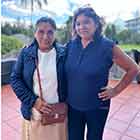
Clorinda Flores Chero (à gauche) et Juana Ruiz Nima (à droite)

Verónica Guatatuca Santi (à gauche) et Mireya Santi Santi (à droite)

Maria Yolanda Hernández Gómez

Angelica Huanca Iquisi (à gauche) et Felipa Marca Choque (à droite)

Aurea Eulalia Mendoza Capcha

Lorcia Moore

Chevauné Moore-Minott
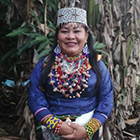
Diana Mori Gonzales

Ruby Ponare Rodriguez (à gauche) et Milena Rincón Lara (à droite)
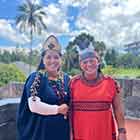
Judith Blanca Reymundo Ruiz (à gauche) et Marisol Shariva Pérez (à droite)
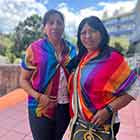
María Rosero Trejo (à gauche) et Nury Ruano Chapues (à droite)

Judith Marina Torres Solís

Nancy Clara Vásquez Garcia

Fanny Vergara Ibarra

Lourdes Frasser Rojas
Boruca, Costa Rica
Lourdes is dedicated to sustainable organic agriculture and the conservation of the natural environment, with a special commitment to protecting freshwater springs. She is a devoted guardian of ancestral culture and spirituality, and a trained educator by profession.
Since 2000, she has been actively engaged in cultural and community-based art tourism, specializing in the carving and decoration of traditional Boruca masks.
She currently serves as President of the SóCagrú Asociación Ecológica de Arte y Turismo Indígena, where she continues to promote environmental conservation, cultural heritage, and sustainable development within her community.
SóCagrú is an organization of fifteen women who provide tourism services, including lodging, meals, workshops, and guided tours. They also produce traditional handicrafts such as Boruca masks, jícaro-based crafts, and handwoven textiles made on traditional looms. In addition, they engage in agricultural production both in open fields and greenhouses, where they cultivate ceremonial seeds, ancestral seeds, and staple crops for everyday consumption.
All of these activities are closely connected to reforestation campaigns aimed at protecting and restoring areas of vital importance to their community.

Paola Morales Najera
Paola is dedicated to the creation of handicrafts and painting, and she also has knowledge of natural medicine.
She is also a member of SóCagrú.
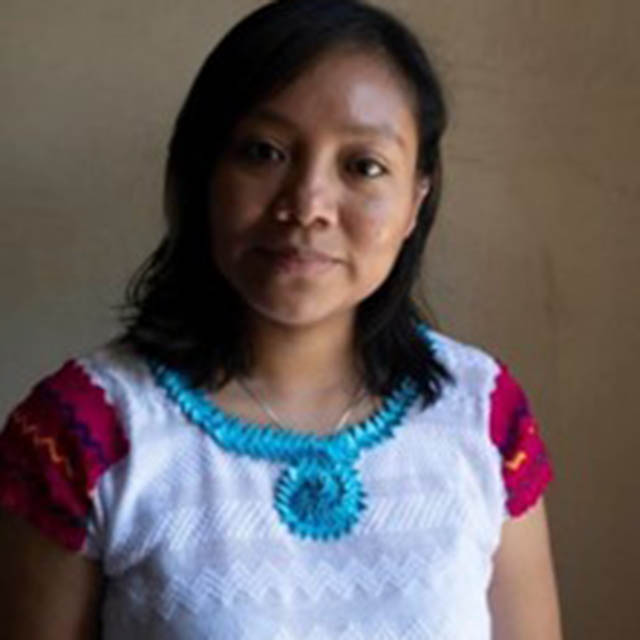
Dalia Ramírez Martínez
Her main focus is to protect her designs and traditional iconography, while achieving greater recognition and appreciation for her artisanal work, which requires months of dedication, as each piece is carefully handwoven.
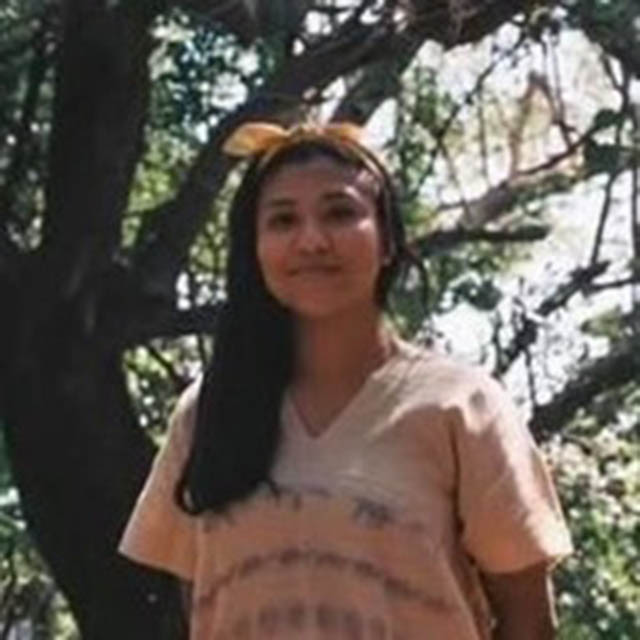
Ana Palacios Cepeda
Ana is from San Mateo del Mar, an Ikoots community where life is deeply connected to the sea and its traditions. She coordinates the project “Manos del Mar” / “Textiles Ikoots,” a community initiative of ten members dedicated to valuing, preserving, and promoting Ikoots textile art, ensuring fair compensation for artisans and recognizing their work as a form of cultural resistance.
The project encourages the revitalization of the Ikoots language, pride in cultural identity, and the participation of children and youth through workshops that strengthen a sense of belonging and intergenerational connections. It also generates a sustainable source of income for women, contributing to their economic autonomy, while fostering solidarity and cooperation by building networks of support among artisans, conscious buyers, and cultural allies.
Ana’s commitment is to protect and promote the traditional knowledge of weaving and embroidery, living expressions of the Ikoots worldview and their connection to the sea, the territory, and community memory.

Karola Castro Brown
Karola is a Garífuna leader and a representative of the Garífuna and Creole peoples of the northern coast of Honduras. Through various development platforms, she promotes Women’s Networks, supporting them in their training processes, entrepreneurship initiatives, and access to markets. As a representative of REMBLAH, through the School for Equality and Empowerment of Rural Women, she works directly in Garífuna communities, strengthening women’s leadership.
Karola is the founder and current President of the Association Jardín de Mujeres Emprendedoras (JAME), an organization that promotes equality, leadership, and cultural preservation among diverse women, with a special emphasis on Indigenous women from different cultures who enrich their collective identity through their own worldviews.
She is also the founder of the enterprise “Mama Plucxi,” a line of natural and packaged food products inspired by ancestral recipes.

Josefina Pascual Cayetano
Josefina has led a group of six women artisans specializing in textiles for the past 20 years. During this time, they have conducted numerous workshops on the creation and embroidery of dolls in different states across the country, proudly representing their community through the DonxÜ doll.
Her primary goal is to protect the identity and cultural legacy embodied by the DonxÜ doll, promoting its recognition both in Querétaro and nationwide, as it is a fundamental part of her community’s cultural heritage.
This effort seeks to increase the visibility of the DonxÜ doll, create employment opportunities for women in the community, and help reduce migration among its members.

Vitalina Díaz Cuj
Vitalina is a Kaqchikel Maya woman, a community leader, and a defender of Indigenous women’s human rights, advocating from the needs and realities of her community. In recent years, she has worked actively in the creation of traditional textiles using the backstrap loom, crafting güipiles, belts, table runners, and napkins in collaboration with other women from her locality.
Through the enterprise of which she is a member—currently composed of twenty participants—she seeks to preserve and revitalize the ancestral knowledge connected to textile arts in the face of the challenges posed by industrialization. Her work aims to safeguard the cultural and symbolic value, as well as the collective knowledge embodied in the use of the backstrap loom, preventing its devaluation and loss.
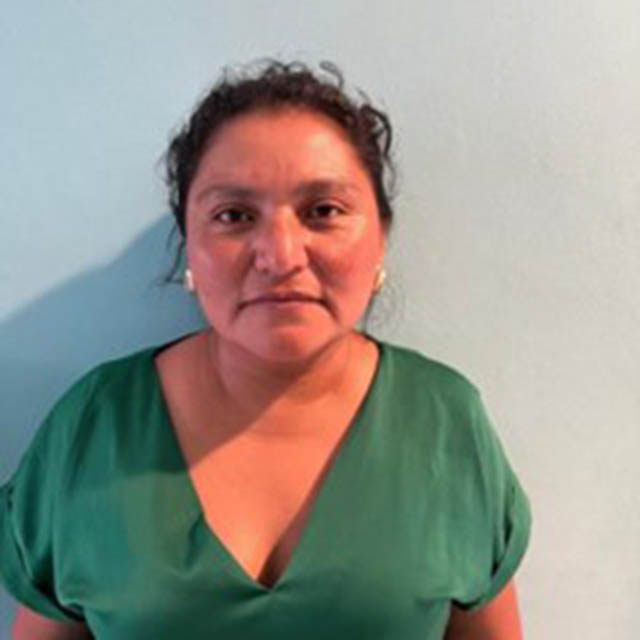
Aracely Martínez Gómez
Aracely is originally from Tres Cruces, a Lenca Indigenous community located in Erandique, Lempira, at more than 1,800 meters above sea level. She has taken an active role in defending her culture and strengthening the local economy. She serves as President of the Multiple Services Enterprise Tierra Lenca, an organization of ten members made up primarily of women coffee producers.
Since its founding, she has driven the organization’s development. She currently coordinates coffee production, collection, and lot traceability, ensuring quality standards and access to better markets.
Her commitment is focused on creating opportunities for other women, strengthening the local economy, and preserving the roots of the Lenca people through sustainable coffee production practices. Tierra Lenca not only cultivates high-quality coffee, but also nurtures dignity, identity, and a future for the community.

Iris Sactic
Iris is from Santiago Sacatepéquez, a Kaqchikel Maya community located in the central region of the country. She is a member of her community’s Council of Weavers which is part of the Movimiento Nacional de Tejedoras (MNT).
Through the MNT, they have advanced strategic litigation efforts, including a legislative proposal aimed at protecting and recognizing collective intellectual property rights over traditional textiles and dress.
The enterprise in which Iris participates as a weaver is called “Job’ Kem” (“Rain of Weavings” in Kaqchikel). It was created by the MNT’s Councils of Weavers and brings together two hundred members. The initiative promotes the direct commercialization of textiles, traditional dress, ancestral medicine, and publications, ensuring that weavers receive fair compensation for their work.
This space also serves as a platform to make visible and confront plagiarism, unfair competition, and the commodification of their work, while fostering economic autonomy and empowering women of different ages and communities.

Natalia Ajcalon Xalix
Natalia previously served on the Community Development Council and is currently one of the Community Leaders, where she promotes the active participation of women and youth in decision-making spaces, with the goal of achieving equal rights and opportunities.
She manages an entrepreneurial initiative that currently involves twenty participants and is also responsible for promoting sales. The enterprise focuses on the revitalization of textiles woven on the traditional backstrap loom, including güipiles, table runners, napkins, jackets, and other handcrafted products. Each piece is created with careful attention to preserving and honoring the meaning of every figure and detail woven into the fabric.
These products have experienced growing demand at the local level, contributing to the strengthening of both cultural heritage and the community’s economy through textile tradition.
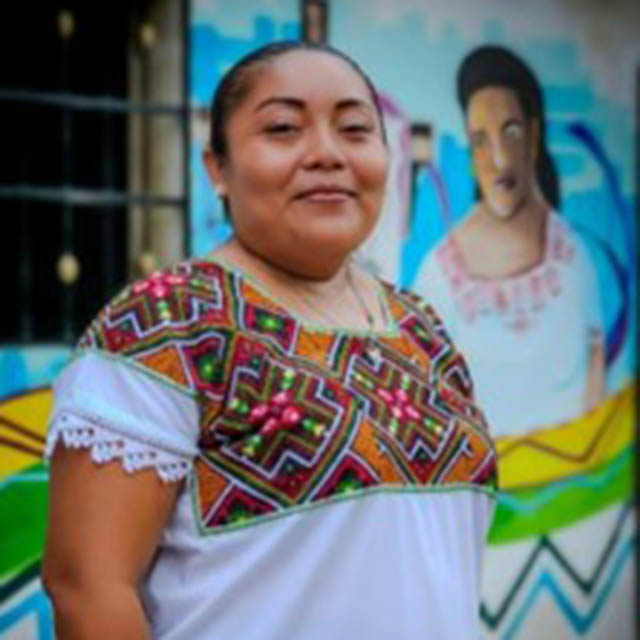
Amanda Tah Arana
X-pichil is a Maya Indigenous community in central Quintana Roo, recognized for its extensive forests and rich cultural heritage. Women in Xpichil have found in Maya embroidery cooperatives a way to preserve their cultural identity while generating economic opportunities. Born in this community, Amanda maintains a deep connection to its traditions, especially embroidery, a legacy passed down by her ancestors and shared with new generations.
“Lool Pich” is a collective of twenty-three traditional artisans, of which Amanda is President. Since 2011, the collective has worked to preserve and promote ancestral Maya embroidery techniques. They sell embroidered garments nationally and internationally, collaborate with designers and researchers, and contributed to the declaration by the Congress of Quintana Roo recognizing Maya motifs and symbols as intangible cultural heritage.
The collective has also created a cultural “seedbed” to teach these traditions to children and participates in Indigenous tourism and social solidarity economy networks that support sustainable development across more than ten Maya communities. Their work not only strengthens cultural identity but also creates fair economic opportunities, promoting women’s autonomy and community well-being.

Magali Pech
Magali is from the X-Pichil community, recognized as an Artisan Town known for the beauty of its traditions, particularly embroidery, a practice primarily carried out by women. Within this community, a diverse collective—including men, women, elders, children, and youth—works diligently to preserve and share Maya cultural heritage with new generations.
Magali actively promotes cultural identity through talks and workshops in schools and community spaces, strengthening practices such as embroidery, traditional cuisine, and the use of the Maya language.
She is President of the textile collective “Lool Chuy,” which specializes in creating unique pieces that combine ancestral techniques, vibrant colors, and Maya symbols—such as geometric figures and serpent motifs—handcrafted using high-quality, sustainable materials.
Currently, the project directly benefits eighteen families in the community and generates both direct and indirect employment. It also offers cultural experiences to the public, including embroidery workshops, ancestral cooking, and Maya storytelling, fostering pride in Maya identity and worldview among younger generations.
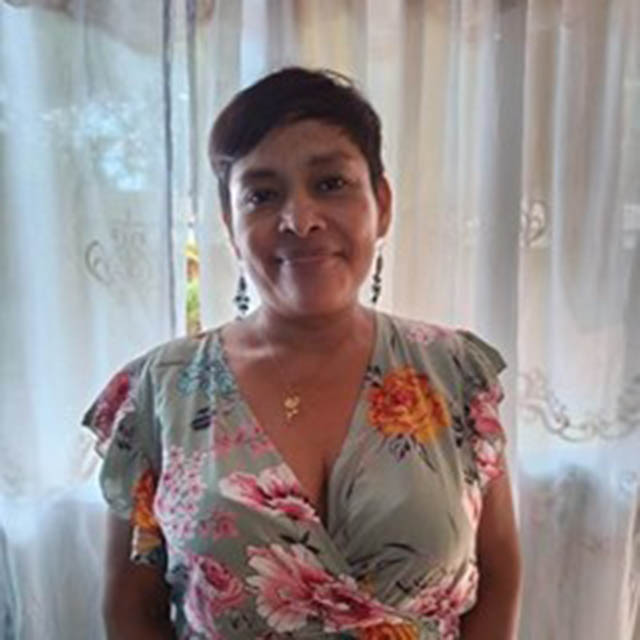
Leidy Leiva Morales
Boruca, Costa Rica
Leidy developed a deep passion for art, particularly painting and the preservation of traditional Boruca art. This passion led her to become an artisan, specializing in hand-carved wooden masks and cotton handwoven textiles.
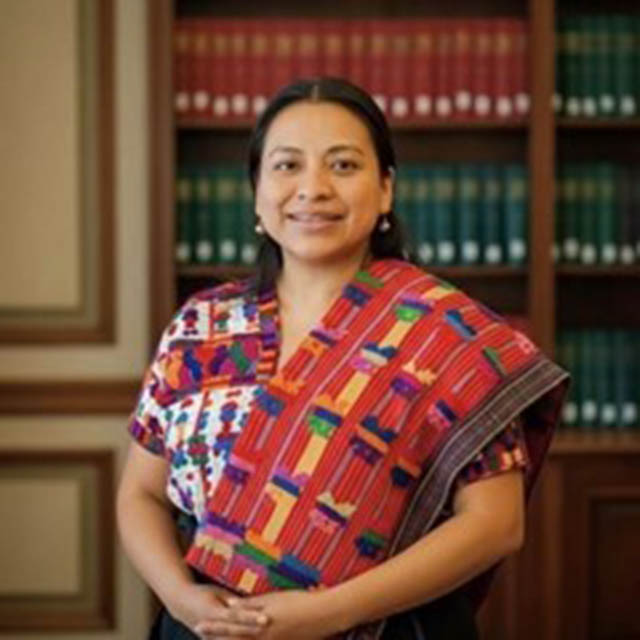
Milvian Aspuac Cón
Milvian belongs to the Kaqchikel People of Santiago Sacatepéquez and is a member of the Council of Indigenous Authorities, which safeguards the territory. She is also part of the community’s Council of Weavers, made up of twenty-four members, and of the Movimiento Nacional de Tejedoras (MNT), where she serves as National Coordinator.
Through the MNT, she works to protect collective intellectual property and to safeguard the ancestral knowledge associated with textile traditions, guided by their own forms of organization and governance.
She is dedicated to the creation of Maya textiles, which are marketed through an online store. These woven pieces reflect and express the traditional knowledge intrinsic to Maya culture.
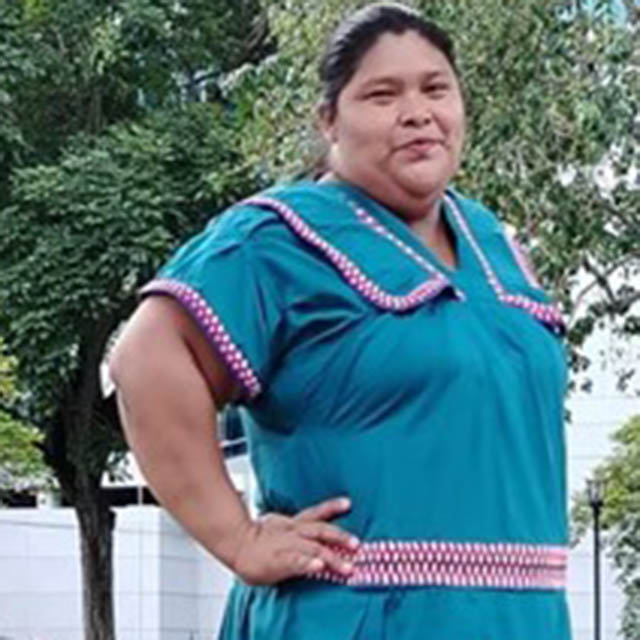
Yorivel Pinto
She proudly represents the Comarca Ngäbe, working with dedication to preserve and transmit her people’s ancestral heritage. Her work seeks to inspire more women to raise their voices and participate actively in defending and promoting their culture.
She is President of “ASMUAN” (Asociación de Mujeres Artesanas Ngäbe), an organization of twenty-five members dedicated to creating traditional Ngäbe clothing, including the nägua (näon), chacara (krä), and chaquira.
The nägua is a traditional garment passed down through generations, a living symbol of cultural identity and pride. Through her artisanal work, she not only keeps this tradition alive but also shares it with other women to strengthen collective knowledge.
Her commitment is to preserve these cultural expressions as a fundamental part of the Comarca Ngäbe legacy, promoting their recognition and continuity for future generations.

Tania Moreno Montezuma
Tania is also a member of “ASMUAN” (Asociación de Mujeres Artesanas Ngäbe), which has twenty-five members. In addition to being an artisan, she serves as the organization’s legal advisor. The collective is dedicated to creating and selling the nägua—the traditional clothing of Ngäbe women—as well as shirts, earrings, necklaces, and other crafts intrinsic to their culture.
As an Indigenous community and organization, they are committed to promoting, protecting, and transmitting the value of the Ngäbe language, traditional clothing, and cultural identity, especially among young people.
Their goal is to strengthen pride in their roots and inspire the community—particularly women—through this collective enterprise, which not only generates economic opportunities but also reaffirms the importance of their traditions.
Through her artisanal and community work, Tania seeks to keep Ngäbe culture alive and ensure its transmission to future generations.

Virginia Tathum Massias
Virginia is from Bilwi, in the North Caribbean Coast Autonomous Region of Nicaragua, land of the Miskitu and Mayangna Indigenous peoples as well as Afro-descendant Creole communities. She has developed her work as a cultural leader and founder of the collective “Yapti Prana,” an initiative that empowers Indigenous women through art, education, and sustainable artisanal production.
In her community role, she teaches jewelry-making and sustainable sewing techniques, promoting economic autonomy and cultural appreciation. Through Yapti Prana, she fosters the transmission of ancestral knowledge in dialogue with contemporary practices.
Virginia is also the creator of “Virginia Tathum,” a sustainable fashion brand that repurposes second-hand clothing to design unique, avant-garde pieces, incorporating artisanal details and cultural elements of the Nicaraguan Caribbean.
Her enterprise, which involves twenty participants, combines sustainability, identity, and women’s empowerment, making each piece a living expression of Indigenous and Afro-descendant roots. It seeks to preserve and disseminate textile knowledge, iconography, and traditional techniques from the Caribbean, strengthening cultural pride among new generations.

Rosamelia Agustin Yalia
She hosts spiritual and family retreats, offering visitors an authentic experience of connection with nature, culture, and spirituality. Together with her community, she cooks with firewood, carries water by hand, and keeps mountain life traditions alive.
Her work is part of the family and community project “Caofé Rodríguez,” which involves ten members and is dedicated to transforming ancestral knowledge into products and experiences that honor rural life. She collaborates in the harvest, processing, and transport of coffee, cocoa, honey, gofio and other traditional products.
Through her role, Rosamelia defends the cultural legacy of Las Cidras as an act of love and resistance, with the hope that these practices will continue to thrive, be recognized, and valued by future generations.

Daniela Juárez Villa
Daniela is from Cuetzalan, a municipality recognized for its rich natural and cultural heritage, as well as its active social and environmental organizations. Within this context, a local Indigenous women’s organization works actively to defend the territory and strengthen community autonomy.
Daniela is part of this local organization, serving as a facilitator for training programs, coordinating a community-based tourism project, and participating in the Comité de Ordenamiento Territorial Integral de Cuetzalan (COTIC).
The enterprise, which involves twenty-five members, combines community tourism with traditional herbalism. Since 2015, the organization has hosted the Community Tourism Gathering “Tikijkiti Tonemilis” (“Weaving Our Lives”), where visitors spend five days living with cooperative members of “Masehual Siuamej Mosenyolchicauani” (Indigenous Women Supporting Each Other), sharing knowledge, customs, and ways of life.
At both family and collective level, Daniela produces herbal products as a natural approach to health care, preserving ancestral knowledge. She currently focuses on strengthening the identity of the community tourism project, building capacities for collective ownership among the organization’s members, and improving the commercialization of local medicinal products.
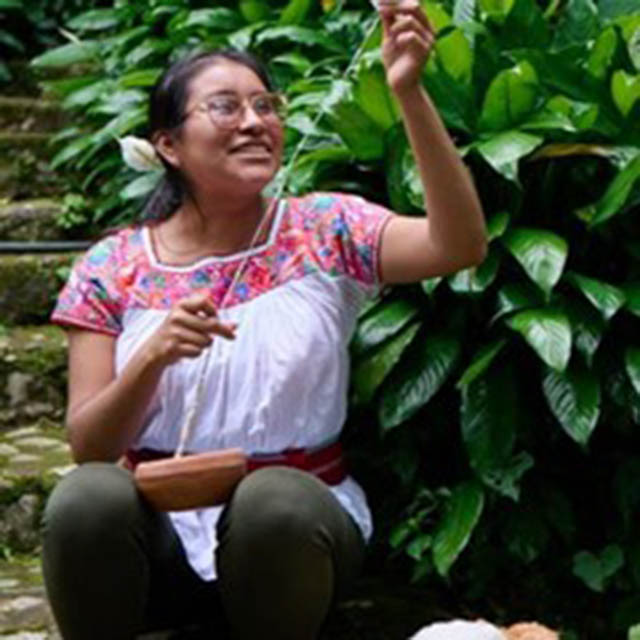
Acitlali Ávila Francisco
Within this context, “Masehual Siuat Xochitajkitinij” was founded in 1985, a cooperative of fifteen Indigenous women artisans concerned about the decline of the traditional kexkemil woven on the backstrap loom. They began by offering free classes, overcoming barriers such as machismo and limited opportunities.
Today, the organization operates a traditional food restaurant, an artisan shop, lodging services, and workshops on cotton spinning, embroidery, backstrap loom weaving, and traditional cooking.
Their goal is to preserve and transmit ancestral knowledge, strengthening cultural identity and ensuring its continuity for future generations.

Ashley Minner

Shannon Monk

Malia Nobrega-Olivera

Sage Paul
Sage est une Dénésuline urbaine. Née et élevée à Toronto, sa famille est originaire de Patuanak et elle est membre de la Première Nation English River. Elle a également des ancestres en Europe. Sage Paul est une artiste et une créatrice dont le travail est axé sur la famille, la liberté et la recherche de l’équilibre.
Elle a cofondé le festival artistique et culturel Indigenous Fashion Arts (IFA), dont elle est aujourd’hui la directrice exécutive et artistique. Cette organisation artistique à but non lucratif est créée par et pour des artistes et des créateurs autochtones; elle propose des initiatives axées sur les artistes, des programmes publics et des innovations sectorielles. L’initiative la plus importante de l’IFA est le festival biennal Indigenous Fashion Arts Festival (Toronto), qui présente plus d’une centaine de créateurs autochtones internationaux.

Sylvia Plain
Sylvia est une Anishinaabe de la Première Nation Aamjiwnaang, composée des Nations Ojibwe, Odawa et Potawatomi, également connue sous le nom de Confédération des Trois Feux, l’une des plus anciennes confédérations politiques du bassin des Grands Lacs. Les habitants des Grands Lacs sont connus pour leur embarcation, le wiigwaas ciimaan, un canoë fabriqué en écorce de bouleau.
Sylvia est une spécialiste et une formatrice en matière de savoirs traditionnels, notamment en ce qui concerne la construction de canoës, la vannerie et le tissage. En 2014, Sylvia a lancé le programme éducatif Great Lakes Canoe Journey pour enseigner aux membres des communautés autochtones comment construire des canoës en écorce de bouleau, la technologie associée et l’histoire des innovations et des contributions autochtones dans le bassin des Grands Lacs.

Theresa Secord

Delsie Betty Bosi

Esita Nadakai Karanavatu

Florence Jaukae

Sisimoka Laufoli

Tusiata Lemuelu

Subama Mapou

Bonnie Moi Naua

Jae-Dee Ngirdimau

Barbra Pagasa

Adi Meretui Ratunabuabua

Alana Fiafia Richmond-Rex

Amanda Riniu

Diana Rojumana

Fenella Sam
Serah Linore Tari
artisans' products effectively. As a trainer, she intends to share this expertise, empowering others to innovate while safeguarding their cultural and creative heritage.

Tia Taurere-Clearsky

Tereeao Teingiia

Merewalesi Vakarewa

Feresi Waqaisavou Veisa

Emily Waqalevu
Na I Soqosoqo Vakamarama I Taukei Cakaudrove (SVTC), Fidji
Emily vit dans le village de Soqulu, dans les îles Fidji. Elle est membre enthousiaste du Na I Soqosoqo Vakamarama I Taukei Cakaudrove (SVTC), une ONG déclarée qui se consacre à l’autonomisation des femmes autochtones des zones rurales et à la promotion du savoir traditionnel I-taukei grâce à des pratiques culturelles.
Emily est connue pour avoir été la première personne aux Fidji à recréer la fleur emblématique de tagimoucia, en utilisant de l’écorce de mûrier appelée “tapa” et de la peinture acrylique. Cette magnifique orchidée rouge et blanche, qui pousse dans les îles Fidji, a inspiré la création d’une entreprise florissante après avoir suscité l’intérêt du plus grand nombre. Emily a développé ses créations pour inclure divers produits tels que des boucles d’oreilles, des colliers, des postiches, des guirlandes et bien d’autres articles.