PCT Newsletter November 2026 | No. 11/2026
[Download in [PDF] format]
Meeting of International Authorities – key outcomes from 33rd session
International Searching and Preliminary Examining Authorities have approved significant changes to the technical information that must be considered in prior art searches under the Patent Cooperation Treaty (PCT).
The 33rd session of the Meeting of International Authorities under the PCT, held online from Geneva on 28 and 29 October 2026, brought together all 26 International Authorities to review the quality, efficiency and accessibility of international patent search and examination services.
Documents for the session and the Summary by the Chair are available online.
The Meeting agreed to comprehensively update the list of non-patent literature in the PCT minimum documentation. Seven new journals were added, while many discontinued or rarely cited journals were deleted from the list.
Full details of the changes are set out in document PCT/MIA/33/10, which also includes a status report on the activities of the new permanent Task Force on PCT Minimum Documentation led by the United States Patent and Trademark Office.
International Authorities also expressed their support for the idea of abolishing supplementary international search (document PCT/MIA/33/4). They noted that patent search has advanced since its inception, with broader access to patent databases and more effective machine translation tools, while user demand for supplementary international search is low and maintaining the infrastructure required to support the system involves administrative costs.
- the results of a meeting of the Quality Subgroup that was held virtually on 26 and 27 October 2026 (document PCT/MIA/33/11, Annex II): among other things, the Subgroup recommended further developing a web tool to enhance public information on practices of Authorities where the International Search and Preliminary Examination (ISPE) Guidelines provide for alternatives;
- the citation of non-written disclosures, which have been included in the definition of relevant prior art in the PCT since 1 January 2026 (document PCT/MIA/33/8);
- a proposal to introduce a single common time limit under PCT Rule 42 of three months from the date of receipt of the search copy for establishing the international search report, deleting the current alternative possible time limit of nine months from the priority date if this expires later (document PCT/MIA/33/6);
- a planned pilot project by the Canadian Intellectual Property Office (CIPO) to promote the PCT-Patent Prosecution Highway (PCT-PPH) in the international phase among applicants with PPH eligible international applications where CIPO is acting as the ISA/IPEA (document PCT/MIA/33/5);
- sequence listings, including a report on the work of the Task Force on Sequence Listings and an update on recent developments, challenges and possible improvements in current practices for processing sequence listings (documents PCT/MIA/33/3 and PCT/MIA/33/7);
- a review of the use of the PCT third party observation system, which found that no fundamental changes to the system were needed (document PCT/MIA/33/2); and
- the development of PCT online services by the International Bureau, including recent improvements and future possible priorities such as AI (document PCT/MIA/33/9).
World Intellectual Property Indicators 2026 show record patent filings
Patent filings reached a record high of more than 3.9 million in 2025, according to newly released analysis from WIPO.
The World Intellectual Property Indicators 2026 provides an authoritative picture of activity across multiple forms of intellectual property, based on filing, registration and renewal statistics from national and regional IP offices as well as the International Bureau of WIPO.
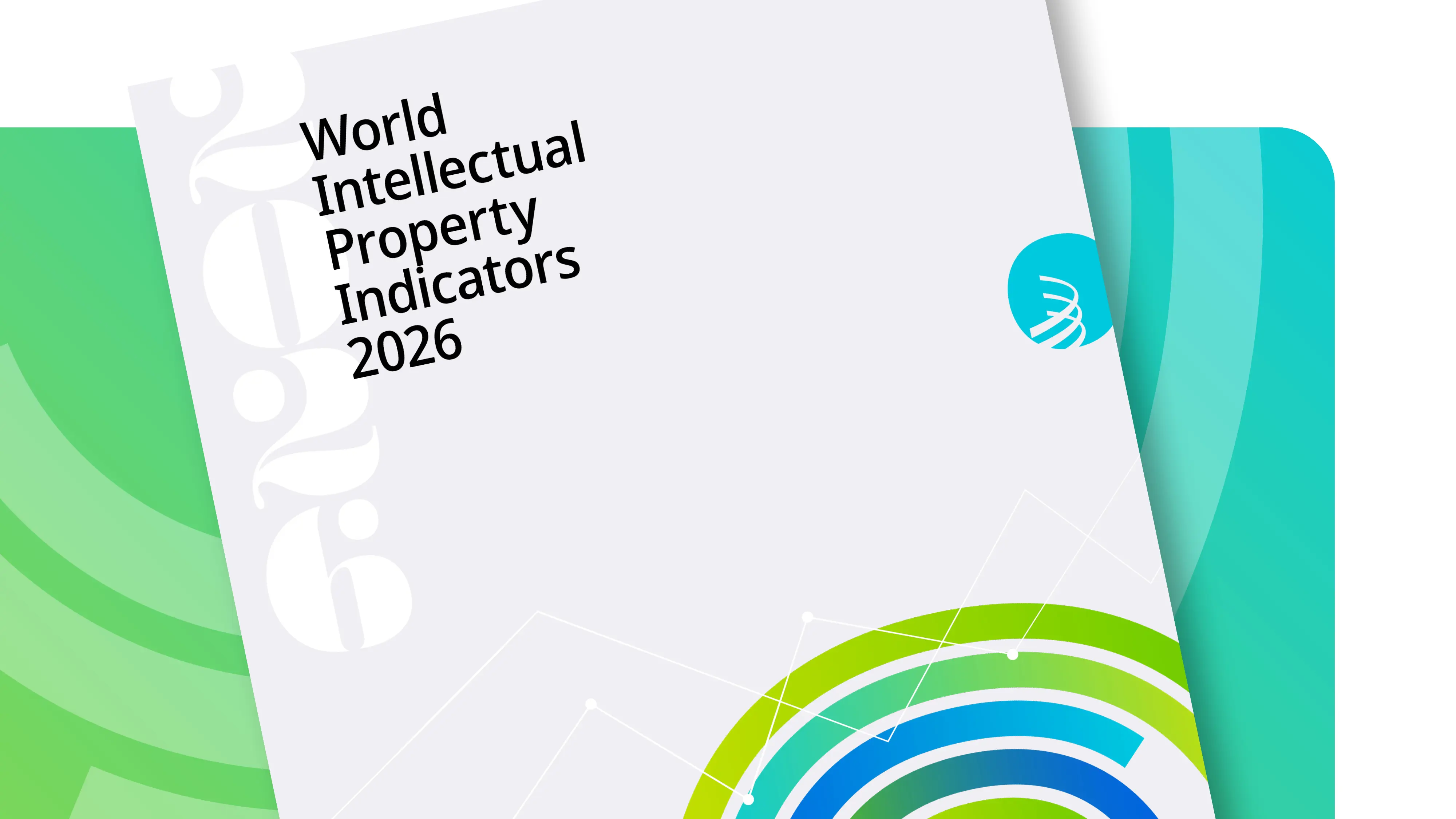
The report confirms that global patenting activity has recovered from the pandemic-era slowdown and surpassed its pre-pandemic momentum. Innovators filed 3,948,900 patent applications last year – up 6.0% from 2024. Total filings grew for the sixth year in a row, and at the fastest rate of growth since 2016.
Growth was led by Asia, with just four origins – China (+113,693 filings), Japan (+45,310), India (+28,690) and the Republic of Korea (+23,169) – accounting for around 94% of the total global net increase.
Computer technology was the top technical field, with 13.6% (472,011) of all patent filings, while green technology applications rose by 8.8% to reach about 613,000.
The report is available to download, and you can also download the underlying data.
Non-working days at the International Bureau and publication schedule for the end of the year
Non-working days at the International Bureau during the end-of-year period will include
(in addition to weekends):
- Friday, 25 December 2026
- Thursday, 31 December 2026, and
- Friday, 1 January 2027.
PCT eServices and Operations Services will be closed on these non-working days, but will be open as usual from 9:00 to 18:00 Central European Time (CET) on Monday, 28 December, Tuesday, 29 December, and Wednesday, 30 December 2026.
The PCT Information Service will be closed from Wednesday, 23 December 2026 to Sunday, 3 January 2027, inclusive. It will reopen on Monday, 4 January 2027. However, you can call the service (telephone number: +41-22 338 83 38) during the holiday period to access a recorded message providing a telephone number for cases requiring urgent attention.
PCT applications will be published as usual on Thursday, 24 December 2026, but the following week they will be published one day earlier, on Wednesday, 30 December 2026. The deadlines for receipt of changes that should be taken into account for the purposes of international publication of those applications will be midnight (CET) on Tuesday, 8 December 2026 and Tuesday, 15 December 2026, respectively.
EPO expands scope for refunds of its international search fees
The European Patent Office (EPO) has expanded the scope for refunds of international search fees when it acts as International Search Authority.
Under EPO rules, PCT applicants may be able to recover some or all of the fee for an international search where the EPO bases that search on an earlier search report that it produced. The earlier search must be for an application whose priority is claimed for the international application, and the level of the refund will depend on whether the EPO is able to make full or partial use of the previous report and whether that report includes a written opinion.
The latest changes in the rules have expanded the categories of earlier searches that can qualify and added Ireland, Montenegro and Switzerland to the list of countries for which an EPO search made on behalf of a national Office on a national application may qualify for a refund. Some other eligibility conditions have also been simplified.
More details of fee refunds are available in Annex D of the PCT Applicant’s Guide. For full details of the latest changes, refer to Decision of the President of the European Patent Office dated 2 November 2026 concerning the refund of the international search fee by the EPO acting as International Searching Authority. The Decision took effect from 2 November.
A parallel Decision on the same date expanded the scope for reductions in EPO search fees relating to European patent applications, including where the EPO draws on an earlier international search report for a PCT application that relates to the European patent application.
Please note that, at time of writing, both linked Decision texts above are advance copies only, pending final authoritative publication in the EPO’s Official Journal.
Electronic filing and processing of international applications
Filing international applications in Canada is about to become even more straightforward. From 18 January 2027, applicants will be able to file PCT applications with the Canadian Intellectual Property Office (CIPO) as receiving Office directly through WIPO’s online ePCT service.
Currently, applicants in Canada can file PCT applications with CIPO using ePCT-Filing, but the file package needs to be downloaded from ePCT and then uploaded to CIPO’s website. The new approach will allow the entire filing process, from preparation to submission, to be completed within ePCT.
CIPO remains the receiving Office. Fees will continue to be paid to CIPO using its accepted payment methods, and filing requirements are unchanged.
WIPO and CIPO are offering a series of webinars to help users file and manage applications in ePCT. Webinars will be available in English and French, with sessions in December and January – check the seminar calendar [PDF] for details.
PCT information update
The Bahamas Intellectual Property Office (BAHIPO) has specified the Intellectual Property Office of Singapore as a competent International Searching and Preliminary Examining Authority for international applications filed by nationals and residents of the Bahamas, with effect from 1 November 2026. As previously notified, BAHIPO has delegated its functions as receiving Office to the International Bureau of WIPO under PCT Rule 19.1(b).
Other International Searching and Preliminary Examining Authorities that BAHIPO has specified as competent include the Canadian Intellectual Property Office, the European Patent Office (EPO), the National Institute of Industrial Property (Brazil) and the National Institute of Industrial Property (Chile).
(Updating of PCT Applicant’s Guide, Annex C (IB))
From 1 January 2027, the amount of the transmittal fee (PCT Rule 14) in Canadian dollars (CAD) payable to the Canadian Intellectual Property Office in its capacity as receiving Office will change to CAD 453.61.
(Updating of PCT Applicant’s Guide, Annex C (CA))
Please note that changes to certain fees relating to international search and international preliminary examination are published under those categories below.
From 1 January 2027, there will be a change in the equivalent amount in won (KRW) of the handling fee payable to the Ministry of Intellectual Property of the Republic of Korea (MOIP), as indicated in the PCT Fee Tables [PDF].
(Updating of PCT Applicant’s Guide, Annex E (KR))
The name of the patent Office of Latvia has changed and is now:
Name of Office: Latvian Intellectual Property Office
(Updating of PCT Applicant’s Guide, Annex B (LV))
The State Service for Intellectual Property of the Ministry of Finance and Economy of Turkmenistan has notified the International Bureau that it applies the “unintentional” criterion to requests for restoration of the right of priority, whether it is acting as receiving Office or as designated Office.
Since 5 July 2018, the amount of the fee for requesting restoration of the right of priority payable to the Office in its capacity as receiving Office (PCT Rule 26bis.3(d)) has been USD 70.
Since the same date, the amount of the fee for requesting restoration of the right of priority payable to the Office in its capacity as designated (or elected) Office (PCT Rule 49ter.2(d)
From 1 December 2026, there will be changes in the equivalent amounts payable in the currencies specified below for international searches carried out by the following Offices:
European Patent Office (EPO).............................................................................. SEK
Ministry of Intellectual Property of the Republic of Korea (MOIP).................. NZD
Nordic Patent Institute......................................................................................... SEK
Swedish Intellectual Property Office (PRV)......................................................... SEK
From 1 January 2027, there will be changes in the equivalent amounts payable in the currencies specified below for international searches carried out by the following Offices:
Australian Patent Office................................................................................ KRW
Austrian Patent Office................................................................................... USD
European Patent Office (EPO)...................................................................... ISK, USD
Finnish Patent and Registration Office (PRH)............................................ USD
Israel Patent Office....................................................................................... USD
Ministry of Intellectual Property of the Republic of Korea (MOIP)......... AUD, CHF, EUR
Nordic Patent Institute................................................................................ ISK, USD
Spanish Patent and Trademark Office....................................................... USD
Swedish Intellectual Property Office (PRV)................................................ ISK, USD
Turkish Patent and Trademark Office (TÜRKPATENT)............................... USD
Visegrad Patent Institute (VPI)..................................................................... USD
The new amounts are indicated in Filing international applications in Canada is about to become even more straightforward. From 18 January 2027, applicants will be able to file PCT applications with the Canadian Intellectual Property Office (CIPO) as receiving Office directly through WIPO’s online .
From 1 January 2027, there will be a change in the amount of the search fee and the additional search fee payable to the Canadian Intellectual Property Office in its capacity as International Searching Authority, as follows:
Search fee (PCT Rule 16.1(a)).......................... CAD 2,420.72
Additional search fee (PCT Rule 40.2(a))....... CAD 2,420.72
Preliminary examination fee and other fees relating to international preliminary examination (Canadian Intellectual Property Office)
From 1 January 2027, there will be a change in the amount of the following fees payable CAD to the Canadian Intellectual Property Office in its capacity as International Preliminary Examining Authority, as follows:
Preliminary examination fee (PCT Rule 58.1(b))............................... CAD 1,210.36
Additional preliminary examination fee (PCT Rule 68.3(a))............ CAD 1,210.36
(Updating of PCT Applicant’s Guide, Annex E (CA))
New/updated user resources
WIPO has launched a free-to-use online database providing information on national and regional patent laws.
The new database draws on information provided by Members of the Standing Committee on the Law of Patents (SCP) – member states of WIPO and/or the Paris Union – as well as regional patent offices.
Users can filter the available information by jurisdiction and topic, with four topics covered so far: prior art, novelty, inventive step and non-prejudicial disclosure mechanisms.
Data coverage will be expanded in due course to include information on other aspects of law solicited by the SCP: sufficiency of disclosure, exclusions from patentable subject matter, and exceptions and limitations of rights. In the meantime, you can access this information through a separate webpage.
The latest version of the PCT International Search and Preliminary Examination (ISPE) Guidelines is now available in Chinese. The latest version reflects amendments to the PCT Regulations that entered into force on 1 January 2026. The Guidelines are also available in English, French, Russian and Spanish, and a provisional translation is available in Japanese.
A video of the first of WIPO’s new PCT Basics webinars in Russian is now available along with the accompanying PDF presentation.
The video is the first in a seven-episode series that will cover the complete PCT process – from patent basics to multinational patent protection.
Several videos are also already available in Chinese, English, Korean and Japanese, with more episodes to come.
A special edition of the PCT Applicant’s Guide is now available online for candidates preparing for the European Qualifying Examination (EQE) for prospective European patent attorneys or the European Patent Administration Certification (EPAC) for patent administrators.
The PCT Applicant’s Guide provides a comprehensive collection of practical, step-by-step information on using the PCT system. The EQE edition contains individual annexes as well as the introductions to the international phase and the national phase in a searchable digital format. All official information is included as of 31 October 2026, but will not be further updated, meaning candidates can familiarize themselves with content in the coming months as part of their exam preparations.
The special edition of the Guide is being made available with the agreement of the Examination Board for the EQE and the EPAC Board.
Upcoming events and trainings
Episode 6 in the PCT Basics webinar series – titled “Receiving substantive feedback on your PCT application” – will take place on 10 December 2026 from 15:00 to 16:00 Central European Time. Mr. Matthias Reischle-Park, Deputy Director of the PCT Legal and User Relations Division, will discuss key components of the search and preliminary examination reports you receive during the international phase of the PCT, and explain how this feedback can help guide your national phase entry strategy.
The webinar is free of charge and you do not need to have participated in previous webinars in the series to benefit from it. Register here to secure your spot.
Mr. Kenji Kamata, Director and General Manager of the Operations Division at Panasonic IP Management Co., Ltd, will discuss some key practical issues, including considerations when choosing between the PCT and the Paris Convention routes, national phase entry, and effective use of International Search Reports (ISRs) and ePCT.
The event takes place on Thursday, 26 November, from 14:00 to 15:30 Japan Standard Time. Register here to take part.
Practical Advice
Q: Our company is headquartered in the Netherlands. Our main markets are located in various countries in Asia, where we usually enter the national phase. A patent firm located in Singapore drafts our applications and manages our portfolio. Is there any way for us to have the patent firm file and manage our PCT applications in the international phase, with a view to optimizing international applications for subsequent national phases? We have no subsidiaries in any country in Asia that could be the applicant or a co-applicant.
A: If your company is indicated as the sole applicant in an international application with both nationality and residence in the Netherlands, the competent receiving Offices will be the Netherlands Patent Office, the European Patent Office (EPO), or the International Bureau acting as receiving Office (RO/IB). The EPO will be the only competent International Searching Authority you can choose to perform the international search. Any agent you wish to appoint must be an agent entitled to practice before the Netherlands Patent Office or the EPO, as the right to practice is tied to the competent receiving Office (PCT Rule 90.1), and in the case of RO/IB to the nationality or residence of the applicant (PCT Rule 83.1bis).
Most receiving Offices do not require that applicants be represented by an agent, and that is the case for all three Offices mentioned above. As it may be beneficial to have the application drafted and managed by the counsel of the patent firm who usually drafts your priority applications, manages your patent portfolio and is familiar with patent drafting in the designated countries where you market your inventions, you may consider indicating that agent or firm as an address for correspondence (PCT Rule 4.4(d)). In that capacity the person concerned would receive all correspondence, including the international search results, but could not sign on your behalf.
The counsel who acts as an address for correspondence may submit the application without a signature in case you are not available to sign, and you may sign subsequently; the signature is not a requirement for obtaining an international filing date. You would, however, need to sign any correspondence drafted by counsel who acts as an address for correspondence. In ePCT or any alternative electronic filing and management system, you would need to have the relevant kind of access rights or use an external signature function. [1]
Please also note that if you indicate a person who is not entitled to practice before the receiving Office as an “agent”, the receiving Office will ex officio change the indication to an address for correspondence.
Alternatively, you could agree with the patent firm that one of its members will act as an authorized officer of your company. While an authorized officer is often a staff member or in-house counsel of the corporate applicant, that is not a requirement. In the PCT Request form, do not mark the box relating to agents and common representatives, and do not select the option “agent” in ePCT or any corresponding electronic filing system. The person who signs for the corporate applicant must make it clear under their signature that they are signing on behalf of the company and indicate their capacity as authorized signatory in the signature field. As distinct from appointing an agent, no power is required and under ordinary circumstances no evidence is required of the person’s right to sign for the applicant.
For further details on signature requirements, refer to the PCT Receiving Office Guidelines, paragraphs 122A–127.
The person who acts as an authorized signatory may, in addition, be indicated as an address for correspondence so that an authorized signatory who is located at an address different from the applicant’s address receives all correspondence directly.
- 03/2025: Acting as an authorized signatory for a corporate applicant
- 07-08/2025: Indicating that the agent is entitled to represent the applicant before the International Bureau as a receiving Office
[1] The external signature feature in ePCT allows an authorized signatory to apply a signature to draft documents that are held in ePCT without requiring access to the system. For more information, refer to the ePCT User Guide.
Back to Contents page