WIPO China: GII 2026 Roundtable in Beijing Explores Innovation Ecosystems and the Future of IP
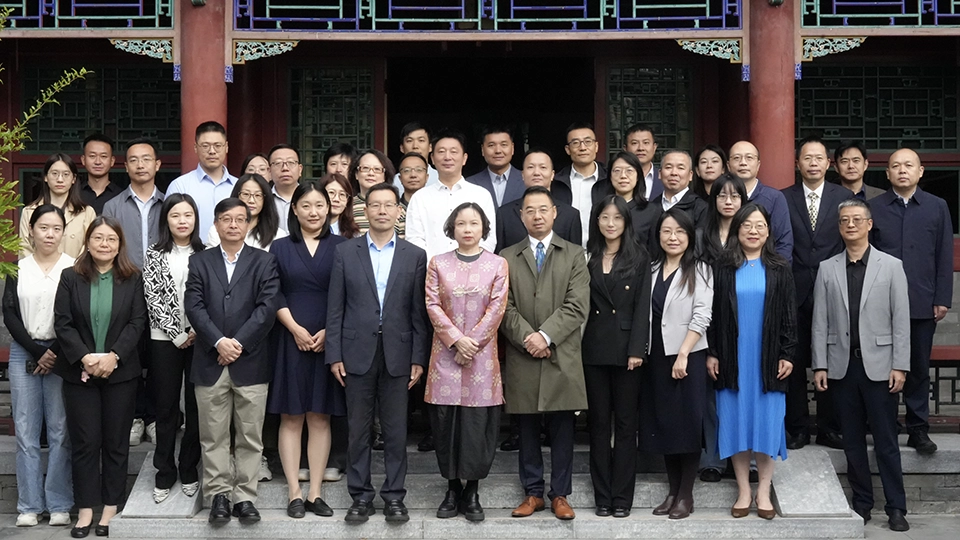
Beijing, September 30 - The WIPO Office in China (WOC) held the Roundtable on the Global Innovation Index (GII) 2026, focusing on the innovation trends highlighted in WIPO's GII 2026 report. The event brought together representatives from government agencies, research institutions and innovative enterprises. Participants exchanged views on the GII, shared their innovation practices and explored new ways to integrate IP protection with scientific and technological innovation.
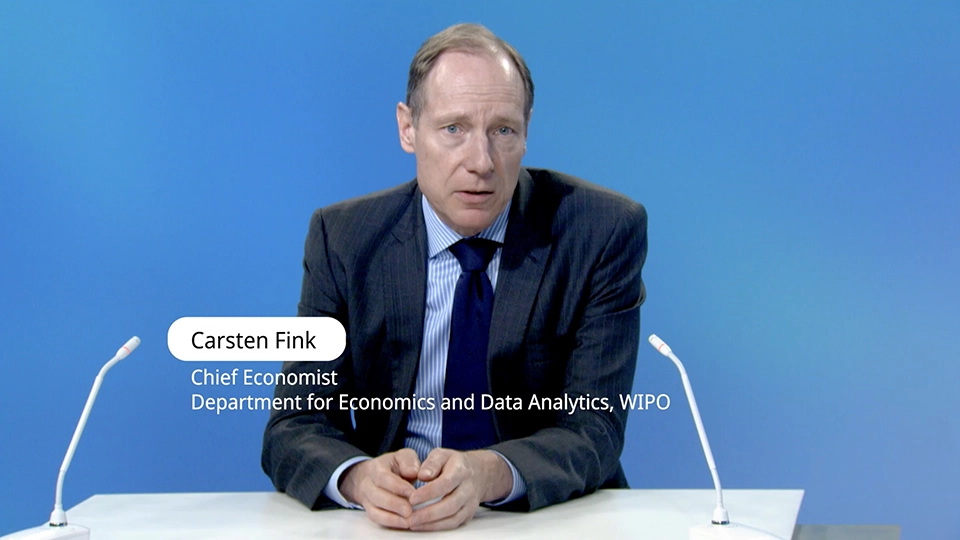
Mr. Carsten FINK, Chief Economist of WIPO, delivered a keynote speech via video, presenting the main findings of GII 2026. He noted that global innovation continues to move in a positive direction, though progress has slowed. In 2025, the value of venture capital deals rose by about 28 percent. However, the number of deals fell for the fourth year running, and funding is increasingly concentrated in AI. This year's special theme, "Powering entrepreneurs at the frontier of science", focuses on deep science startups. He urged policymakers to finance the whole development journey, connect science with business, and help promising technologies to find their first customers.
In the economy rankings, Switzerland, Sweden and the United States remain in the top three. China remains in 10th place, holding the top-ten position it first reached last year. It is still the only middle-income economy in the top 30, and it ranks first in the world in the Knowledge and Technology Outputs pillar. In 2024, China moved slightly ahead of the United States to become the world's largest R&D spender at purchasing power parity. China hosts 25 of the top 100 clusters, up from 24, which is the largest number of any economy. The Shenzhen-Hong Kong-Guangzhou cluster ranks first for the second consecutive year. Beijing ranks 4th and Shanghai-Suzhou 6th, while Hangzhou and Nanjing rank 13th and 15th. He said China's sustained commitment to science, technology and innovation gives good reason for optimism.
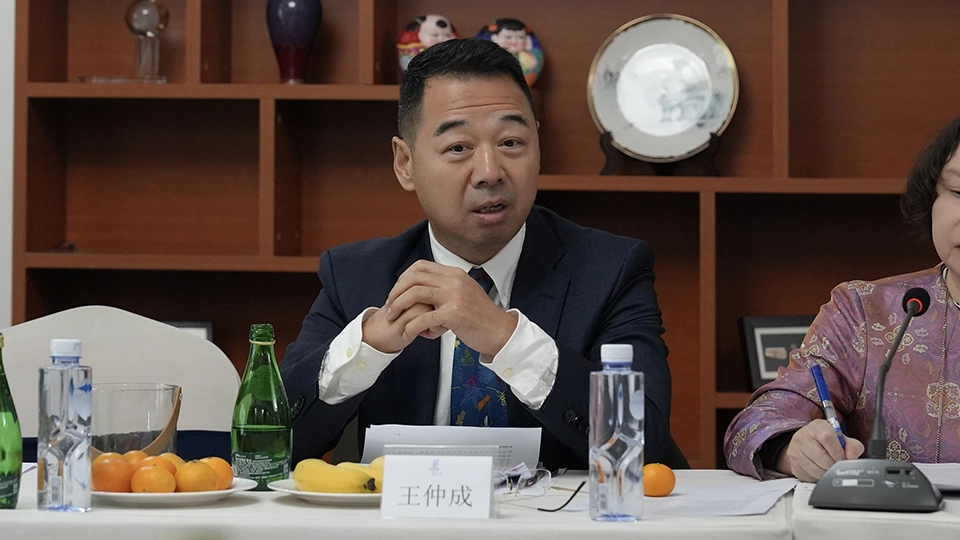
Mr. WANG Zhongcheng, DDG-level official of the Department of International Cooperation, Ministry of Science and Technology (MOST), noted that the GII is an important window for observing the evolving global innovation landscape and a valuable reference for improving China's innovation policies. China has maintained its 10th place overall, with continued improvement in indicators such as infrastructure and knowledge and technology outputs, reflecting China's sustained implementation of its innovation-driven development strategy. He then outlined the results of China's international science and technology cooperation. He made three proposals: make full use of the GII evaluation framework, strengthen coordination among relevant departments, and continue fostering an open innovation environment.
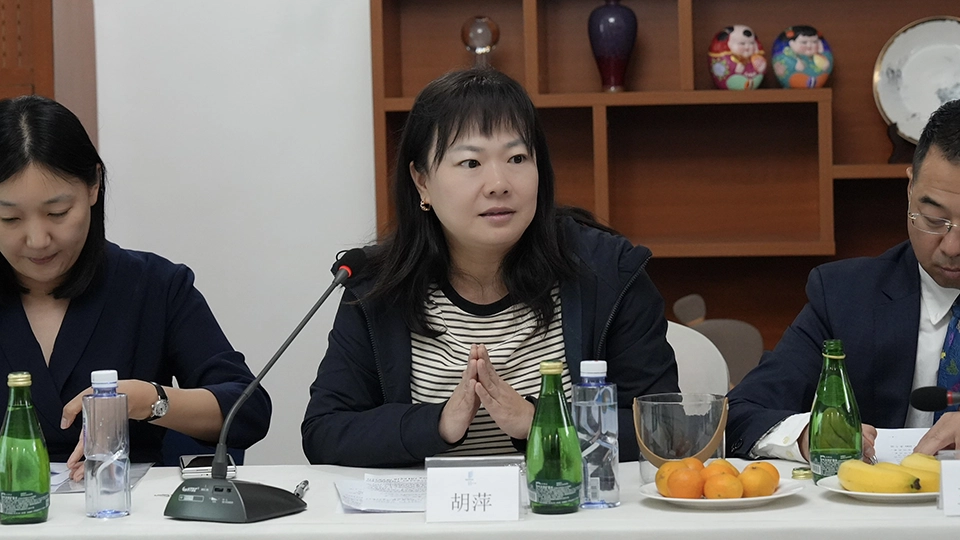
Ms. HU Ping, DDG-level official of the National Copyright Administration of China (NCAC), noted that China's continued place in the GII top 10 reflects the joint efforts of all parties. She said that protecting IP means protecting innovation, and NCAC has for years made strengthening copyright protection and promoting innovation its core goals. On the new challenges posed by AI, NCAC will embrace technology and conduct forward-looking research. At the same time, it will treat the protection of human creators' rights as a bottom line: it will neither hinder innovation nor tolerate infringement. As an indispensable part of the innovation system, NCAC will further cooperation with WIPO in the field of copyright.
Experience Sharing from Innovation Cities
Mr. ZHANG Zhansheng, Deputy Director-General of the Department of Science and Technology of Guangdong Province, said that the Shenzhen-Hong Kong-Guangzhou cluster is performing steadily, and the Macau-Zhuhai cluster has been in the top 100 for three consecutive years. The Greater Bay Area now has 10 major national S&T infrastructure facilities, and enterprises account for 90% of Guangdong's R&D spending and invention patents. Guangdong will promote the cross-border flow of innovation resources among Guangdong, Hong Kong and Macau.
Mr. SHI Yongfeng, President of the Hangzhou Institute of Science and Technology Information, said that the Hangzhou cluster performs in a balanced way across all indicators. The city has launched a high-value patent cultivation program, piloting a model in which patents are first licensed to companies and later priced as agreed. It has adopted regulations on IP protection. Two companies from Hangzhou have won the WIPO Global Awards in 2025 and 2026 respectively.
Mr. HU Yuan, Director of the Wuhan Science and Technology Development Promotion Center, said that the Wuhan cluster has risen to 17th globally. It is a science-driven cluster that is relatively weaker in PCT application and venture capital. Wuhan hosts 41 national key laboratories and is building proof-of-concept centers and pilot-scale platforms.
Ms. ZHANG Wenli, Deputy Director of External Cooperation Division, Nanjing Municipal Bureau of Science and Technology, said that Nanjing is rich in science and education resources, but commercializing research results has long been a challenge. The city has set up technology transfer service teams stationed at universities and research institutes. It has also established research institutes with the Hong Kong Polytechnic University and the Macau University of Science and Technology, using Hong Kong and Macau as a bridgehead for going global.
Mr. CHEN Jianrong, Deputy-Director-level official at the Coordination Division for the Building of STI Center, Beijing Municipal Science & Technology Commission and Administrative Commission of Zhongguancun Science Park, said that the Beijing International Science and Technology Innovation Center has been expanded to cover the Beijing-Tianjin-Hebei region, forming a "one platform, two corridors, three pivots" layout. Beijing will play a leading role in driving coordinated innovation across the region.
Experience Sharing from Universities and Research Institutes
Mr. SONG Hefa, Professor and Research Fellow at the Institutes of Science and Development of the Chinese Academy of Sciences, described the GII as an important reference for innovation and IP policymaking. He called for stronger IP management and professional technology-transfer mechanisms, alongside more robust international IP portfolios and standard-essential patents.
Ms. HONG Yan, Secretary-General of the Center for Intellectual Property Law Studies at the School of Law of Tsinghua University, introduced the university's work in IP talent development and frontier research. She described IP as essential infrastructure for innovation and technology collaboration, with interdisciplinary research supporting institutional development amid technological change.
Mr. HU Kaizhong, Professor of the KoGuan School of Law at Shanghai Jiao Tong University, introduced the university's approach to commercialization through research organization, institutional reform, professional services and financial support. Diversified rights arrangements, dedicated services, technology-transfer talent and industry funds are helping results move from laboratories to industry.
Ms. LI Xiaoying, Vice Dean of the Institute of Guangdong, Hong Kong and Macao Development Studies at Sun Yat-sen University, described how to integrate research and talent resources across Guangdong, Hong Kong and Macao, and link basic research with industrial development. She emphasized the need for commercialization mechanisms, IP services and capital support that create a full chain from scientific discovery to industrial application.
Ms. ZHU Chunxia, Party Secretary of the Kenneth Wang School of Law at Soochow University, described the university's practice in supporting local innovation and enterprise development. Joint university-enterprise innovation, proof-of-concept support, commercialization mechanisms and cross-border IP services help early-stage results to reach industry.
Ms. LIN Qiong, Vice Dean of the Institute of Global Development at Fuyao University of Science and Technology, shared the perspective of a new research university responding to industrial upgrading and enterprises' international needs. The university aims to build distinctive strengths in frontier fields and support enterprises in enhancing global IP capabilities and identifying overseas risks.
Experience Sharing from Innovative Companies
Mr. SU Jing, IP Director of BOE Technology Group Co., Ltd., described the company's effort to balance short-, medium- and long-term R&D in technologies. IP strategy must evolve with long-term technology roadmaps and global market development, while addressing risks from changing competitive landscapes.
Ms. ZHENG Juanjuan, Legal Director of Xiaomi Corporation, noted that innovation assessment increasingly recognizes the full chain from research and technology to patents, capital and commercialization. She said that the value of innovation clusters lies in the systematic aggregation of R&D, manufacturing, supply chains, talent, capital and services, and noted Xiaomi's use of the PCT, Hague and Madrid Systems in its international strategy.
Mr. YU Bo, Director of the Foreign Affairs Office of Alibaba Group's Public Affairs Department, shared observations on AI through the lens of Hangzhou's innovation cluster and Alibaba's practice. As AI infrastructure, models and applications evolve rapidly, Alibaba is pursuing open-source development and full-stack capabilities to serve SMEs, developers and a broader innovation community.
Mr. BAI Zhiyun, Head of the IP Department of CXMT Group Co., Ltd., introduced the company's long-term investment and global-competition strategy in the semiconductor sector. He noted that technology-intensive enterprises need high-quality international patent portfolios from an early stage and should make effective use of international IP services and professional support.
Ms. WANG Chunhui, Director of the IP Center at Sungrow Power Supply Co., Ltd., shared how the company embedded IP into R&D and product processes. In the changing markets, enterprises also need to review overseas IP strategies, licensing and risk-response arrangements dynamically.
Mr. YAO Yuanda, Head of the Intellectual Property Center at Contemporary Amperex Technology Co., Limited (CATL), outlined the company's approach to advancing battery innovation through the sustained R&D investment, the strong pool of talent and the integrated technological capabilities. Facing global competition, CATL seeks to balance energy density, fast-charging performance, service life, safety and cost, while building a high-quality IP portfolio to protect its innovations.
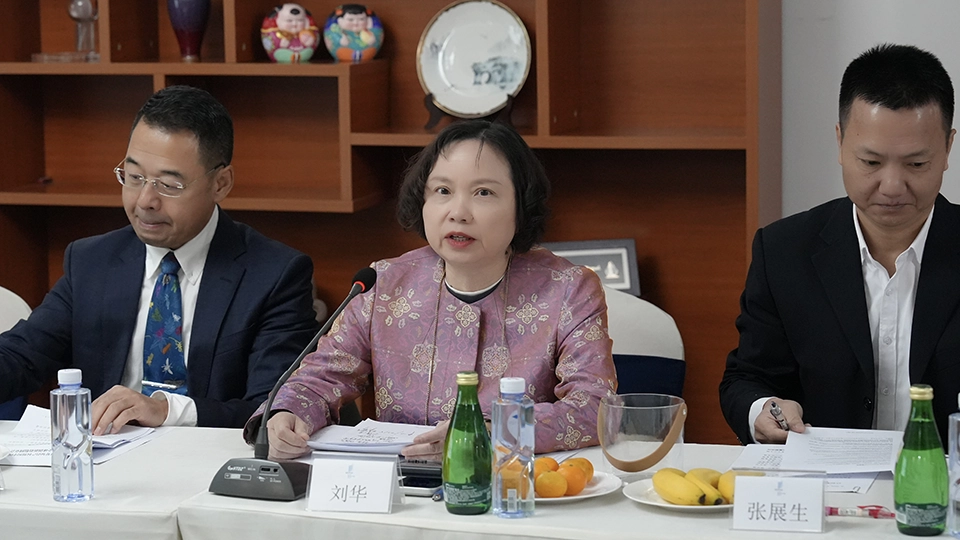
In her closing remarks, Ms. LIU Hua, Director of the WOC, said that the key findings of the GII 2026 reveal that global innovation is undergoing a profound shift from "input-driven" to "frontier-driven". Innovation capital, talent, and industry are concentrating at an unprecedented pace in frontier fields such as AI, quantum, life sciences, and semiconductors, as well as in a small number of innovation clusters - innovation capacity increasingly depends on the ability to translate scientific breakthroughs into enterprises and industries, not merely on the scale of R&D.
For China, ranking 10th globally for the second consecutive year is merely a coordinate; more importantly, it reveals China's unique position in the global innovation landscape: it ranks 22nd in innovation input but 5th in innovation output, with seven specific indicators ranking first globally, 25 of the world's top 100 innovation clusters (the most globally), and the second-largest scale of deep-science startups. This shows that China has moved beyond the input expansion stage and is becoming an important engine for moving global frontier innovation from the lab to industrialization.
LIU Hua also presented the four "dreams" set out by WIPO Director General Daren TANG: IP becomes truly mainstream; to build one global IP movement; to ensure that the global IP ecosystem is future ready; and to continue building WIPO itself into an organization worthy of the confidence that Member States place in us.
LIU Hua said that the WIPO Office in China will continue to build bridges for dialogue and cooperation between China and the world, enabling global IP resources to support Chinese innovation and bringing China's innovation experience to a wider global stage.
Representatives from the China National Intellectual Property Administration (CNIPA), the Ministry of Industry and Information Technology (MIIT), the Chinese Academy of Science and Technology for Development (CASTED), the Xi'an Municipal Bureau of Science and Technology, Xinhua News Agency, Science and Technology Daily, and China IP News also attended the Roundtable.
6 أكتوبر 2026