A Malaysian Start-up Is Reducing Human-Wildlife Conflicts With AI/IoT Solutions
The expansion of human presence is encroaching on wild areas where protected animals roam freely, leading to conflicts. In Malaysia, a start-up is using an innovative, AI-powered digital solution to mitigate this issue, helping farmers and wildlife alike. Satok Bridge Digital first addressed wild elephants and is now considering several other applications.
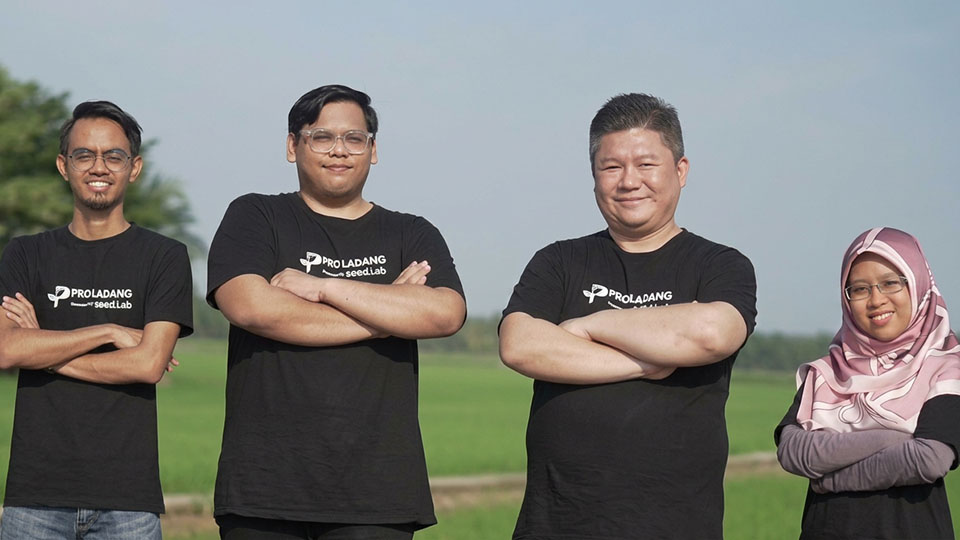
Satok Bridge Digital, based in Kuching, was founded in 2021 by three co-founders passionate about technology and electronics: Lavindar Singh, Director, leading the AI/IoT integration; Tham Tat Wai, CEO; and Ahmad Rizal Rooney. They were joined by Syafiq Fauzi Kamarulzaman, an assistant professor at the Faculty of Computing, University of Malaysia, acting as the company’s technical researcher.
In 2022, Satok Bridge Digital entered MYHackathon, the Malaysian national-scale hackathon focused on digital solutions to improve the delivery of key government services. The company had the most convincing technology to address the Ministry of Agriculture and Food Security’s request: a solution to human-wildlife conflict in the agro-food sector. They won the grant, which allowed them to commercialize the technology.
Syafiq, who studied in Japan and earned a PhD in philosophy, focusing on intelligent interactive technologies in robotics and mechatronics at the University of Tsukuba, explained that Satok Bridge initially focused on wild elephants.
Solving human-elephant conflict with Gadjasafe
In Kluang, Johar State, the company conducted its initial research and development on cattle feed ground. Cattle feed on Napier grass, which happens to be a delicacy for elephants. They intrude into farmlands to take their share, posing a biosecurity risk to grazing animals, said Syafiq. Farmers have tried harvesting the grass and taking it to paddocks to feed cattle, but that sometimes did not stop wild elephants from coming to the paddock and breaking in. One company, he said, estimated some US$ 500,000 a year in damages from wild elephants’ intrusions.
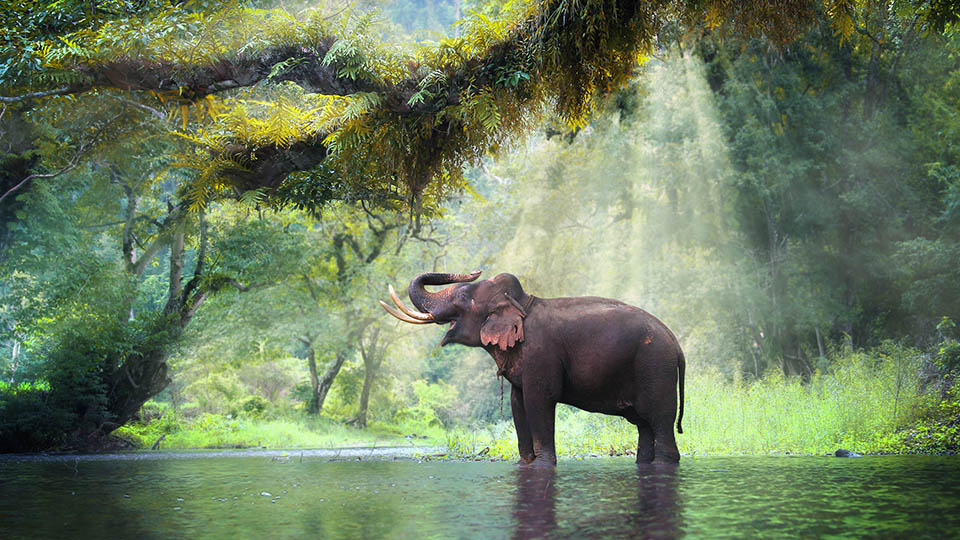
Kluang borders a national park where wild elephants roam freely in herds, ranging from 4 to 60 individuals. Johor State is also closest to Singapore and one of Malaysia's most developed areas, where development sometimes crosses the “elephants’ migration path.”
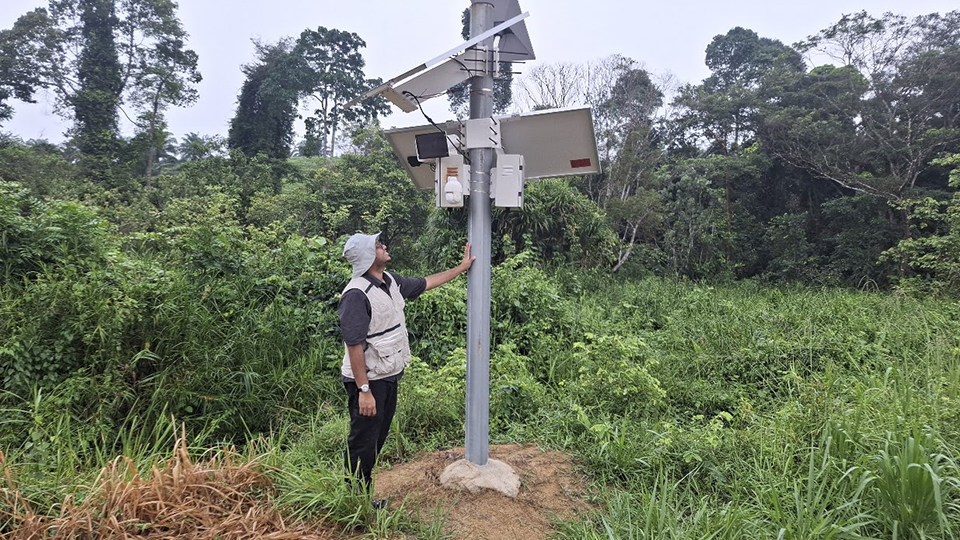
Gadjasafe, after “gadja” which means elephant in Malay, is an AI-based detection system that detects, deters, and warns of any elephant intrusions in a certain perimeter. The system is part of a geofencing mechanism that uses powerful multi-system speakers to play sounds as a deterrent, tricking elephants into believing a large group of humans is approaching. At the same time, Gajasafe alerts farm managers so they can send people to help control the situation. The system avoids constant surveillance patrols around the fields, Safiq explained.
An AI-powered ultrasonic animal repeller
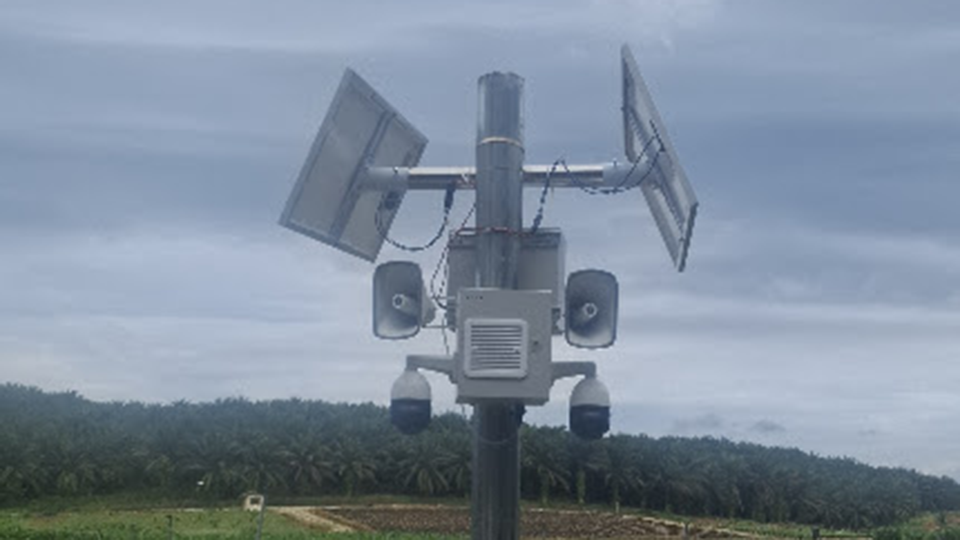
The system uses state-of-the-art, AI-based edge-computing cameras to constantly monitor the surroundings and feed data into a database, allowing the company to assess how many elephants are roaming in the area. According to Syafiq, before Gadjasafe, the number and size of elephants were based only on hearsay or estimated from the damage they left behind. Clear data on the wild elephant population in a specific area helps the government allocate resources for prevention measures.
The company rents its Gadjasafe units for a monthly fee that includes insurance, maintenance, network, and hardware, and offers discounted rates for multiple units. Customers receive a study of their area and the best locations for installing the units.
Solar panels are deployed where there is no power supply, and Starlink is used in the absence of network coverage, he explained.
Gadjasafe 2.0: efficient animal deterrent system
The company is currently working on the upgraded version of Gadjasafe. While the first iteration had to be serviced monthly, even in very remote places, and checked for wiring or solar panel issues, Gadjasafe 2.0 is more robust and uses the latest electronics. The company had to cope with the high humidity typical of the tropical climate, which affected the electronics; storms that damaged solar panels; and ants or wasps nesting in the equipment, destroying it or causing overheating by blocking the ventilation holes. Elephants also retaliated against the camera poles when the first deterrent sounds were of roaring tigers, or just played with the poles, Syafiq said.
The power supply was also a challenge. During monsoon season, for example, solar panel efficiency drops to 30-40%, he explained. AI also consumes a lot of computing power and generates a lot of heat. The solar panels’ power supply had to be carefully distributed so that the data collection and the deterrence mechanism keep working. Network communication is also key to the system, and the company has sometimes used Starlink in very remote places.
Gadjasafe 2.0, which builds on four years’ worth of experience and seeks to address most of the issues encountered in the first iteration, is expected to be deployed in the second half of this year.
HutanSafe: a deforestation monitoring & wild animal detection system
The company is expanding its animal detection technology to other applications. With HutanSafe, after “hutan”, forest in Malay, the company is seeking to address other animal threats such as tigers and panthers killing cattle and sometimes people in villages, and crocodiles entering residential areas.
Because of Malaysia's strict animal protection legislation, the company cannot disclose the detection of these endangered species to the public for fear of alerting poachers, but it can inform the relevant local authorities. The company is trying to commercialize this new application.
Hutansafe can also fight illegal deforestation by detecting activities or vehicle sounds.
Protecting farmland against animals in remote wild areas
In the Kluang region, about 30,000 hectares of palm oil plantations could benefit from Gadjasafe, as well as several areas in central Peninsular Malaysia, Syafiq said. However, most of the forest in this remote area is “uncharted territory.” “We don’t know what kind of animals there are and how many.”
“One of our clients asked us to put [our system] over there after one of their plantation managers was killed, trampled by the elephants.” Wild elephants in remote areas are not used to human presence and are more aggressive and intimidating, he explained.
Scouting the region can be dangerous in a human-hostile environment with snakes, dangerous insects, and the ever-present risk of sickness. “We have to be very prepared before we enter any location.”
With two teams, one in Sarawak and one in Kuantan City, totalling 13 people, the company also benefits from research conducted by several undergraduate and postgraduate students from the university. In the next five years, Satok Bridge wants to diversify its solutions into several areas. After HutanSafe, the company is working on BoyaSafe, a crocodile-detection system. “We are doing a lot of things to make sure that the human-wildlife conflict is manageable, and we can coexist with the animals.”
IP strategy for human-wildlife conflict mitigation technologies
According to Syafiq, the invention is protected by copyright, and they are currently filing patents, including international patents, to prepare to export their system.
Through a collaboration with the University of Malaysia, the company obtained a research grant from the Zoological Society of London to implement several units in Thailand by the end of 2026.
Satok Bridge participated in WIPO’s IP Management Clinic, supporting SMEs in the area of Agriculture 4.0 in ASEAN. The clinic “was very useful in helping us structure our documents for our patent application,” Syafiq said, adding that it also prompted discussions in the company about patent ownership distribution, since most of the research is conducted at the University of Malaysia.