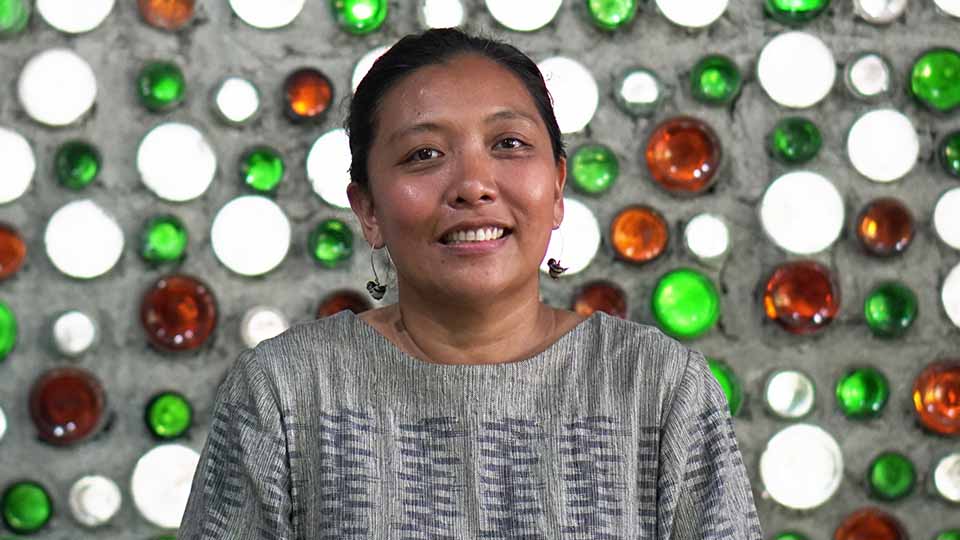
How a Filipino architect combined agriculture and architecture to create a new field: agritekture.
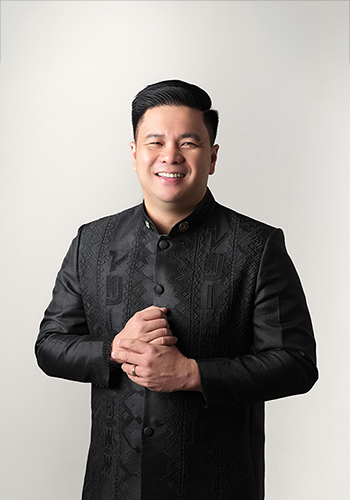
Francis Neil Quijano, who goes by Ran, is a Filipino architect passionate about innovation and agriculture. While most architects build structures, his company, AGRITEKTURA, develops smart systems that empower farming communities, cut costs, and boost yields.
Ran was raised on a farm in Mindoro, the seventh-largest island of the Philippines, by his parents and grandmother. On the farm, Ran, who has always had a taste for a simple, sustainable life, explained, “From the early stages of my life, I was exposed to the organic, sustainable way of farming.” “So, I always had a soft spot in my heart for agriculture.”
He later moved to Manila, and he studied architecture at Far Eastern University. “As a kid,” he said, “I really wanted to be an architect, but the good thing is that I had the opportunity to use that profession in connection with agriculture and food production; I call it agritecture.”
After college, Ran worked on building smart houses, “high-end houses in the high-end developments of the Philippines.” Meanwhile, Mindoro tugged at his heart, and he decided to apply his architectural expertise and smart-building experience to help agriculture.
Ran founded AGRITEKTURA in January 2014. The last two syllables of the company name “tura” refer to “culture”. Ran meant to introduce a new culture and mindset in the community and revolutionize agriculture towards a sustainable food system.
Scalable aquaculture technologies for a sustainable impact
Ran's first step was to identify the causes of the challenges facing the agricultural and aquacultural systems. He found a chain of interconnected issues: limited access to appropriate technology, climate vulnerability, skills mismatch, inadequate infrastructure and logistics, fragmented development programs, and limited access to capital and production support. These factors converge to produce poor yields, production losses, and, ultimately, food insecurity and economic inequality in rural communities, he said.
This realization became the foundation of AGRITEKTURA: “If the problem is systemic, the solution must also be systemic,” he reasoned. Rather than addressing the different challenges separately, AGRITEKTURA seeks to connect them, he said.
The company develops scalable systems designed to create sustainable impact, from compact aquaculture technologies for small producers to larger smart-farm developments, training platforms, shared innovation facilities, and community-based enterprises, he explained.
Educating the community on smart aqua farming
After launching AGRITEKTURA, Ran developed short training programs to introduce farmers and aspiring aquaculture practitioners to smart aquaculture technologies and more efficient production systems.
In 2026, he launched the Smart Aquaculture Operations, Maintenance and Management Micro-Credential Course, a program accredited and supported by the Technical Education and Skills Development Authority. The course gives participants practical skills in operating, maintaining, and managing technology-enabled aquaculture systems.
Through its training programs, the company has trained and produced around 300 graduates, including members of the Mangyan indigenous communities in Mindoro. Beyond technical knowledge transfer, “the trainings create pathways toward livelihood, entrepreneurship, and employment,” Ran said.
Investing in R&D to develop smart aqua farming
AGRITEKTURA has 10 professional multidisciplinary staff members and works with a group of consultants, including architects, civil engineers, technologist, agricultural engineers, finance specialists, and entrepreneurs, “so that their solutions can work as one system,” Ran said.
He described the company as a consultant, designer, systems integrator, technology developer, and builder of smart farms and aquaculture facilities.
The CRIB HUB in Oriental Mindoro serves as AGRITEKTURA’s demonstration, training, research, and innovation facility. “Rather than functioning simply as a production site, the hub operates as a living laboratory where technologies and systems are developed, tested, demonstrated, and continuously improved.”
It allows farmers, government agencies, students, entrepreneurs, investors, and partner institutions to experience how AGRITEKTURA™ solutions work in an actual operating environment, Ran said.
The company uses B2B and B2G business models. Under its B2B model, the company works with farmers, agripreneurs, startups, restaurants, educational institutions, farm tourism enterprises, and investors seeking to establish or upgrade agriculture and aquaculture ventures.
Under the B2G model, AGRITEKTURA partners with national and local government agencies that support communities through technology adoption, livelihood development, training, and enterprise programs, he said.
From aquaculture to farm tourism
Along the way, Ran learned to see farms not only as production actors, but as destinations for learning, recreation, culture, wellness, and enterprise, he said. For example, “farm tourism provides farmers with additional sources of income while allowing visitors to understand where food comes from and experience agricultural innovation firsthand.” This initiative is in support of Department of Tourism (DOT) Farm Tourism Act.
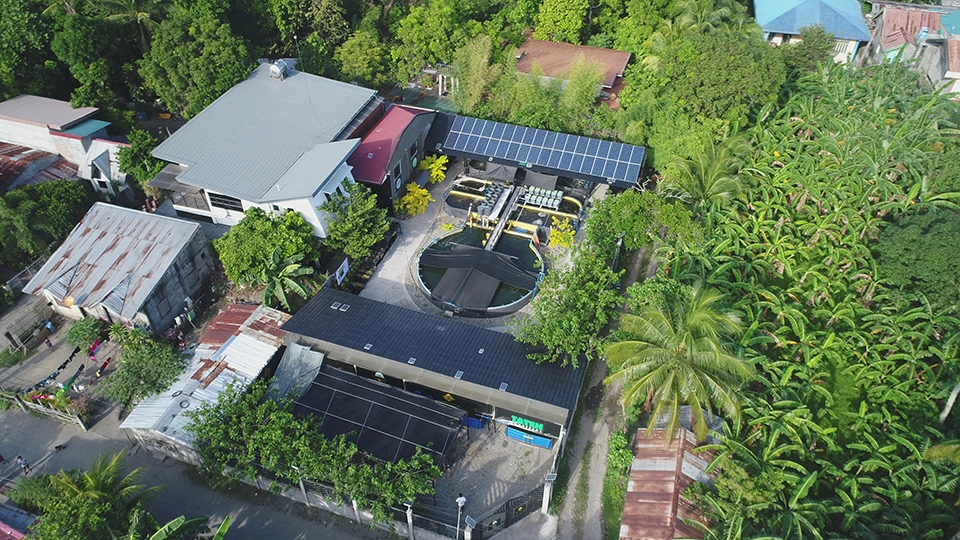
“This helped shape the CRIB HUB into more than a demonstration farm: it became a living environment where production, education, innovation, tourism, entrepreneurship, and community engagement intersect,” Ran explained.
Collaboration key in transferring knowledge in aquaculture
Ran said that working with the Department of Agritecture - Agricultural Training Institute (DA-ATI) and Bureau of Fisheries and Aquatic Resources (BFAR) helped him to gain technical knowledge in aquaculture production, while through the Agricultural Training Institute of the Department of Agriculture, the company further developed its understanding of farm-based learning and the role of farms as platforms for transferring knowledge to communities.
As Ran began introducing his integrated solutions to the community, he realized technology alone would not transform communities lacking skills. He started working with the Technical Education and Skills Development Authority (TESDA) to help users operate, maintain, and manage AGRITEKTURA’s technology.
He added that government institutions may serve as funders, program partners, technology adopters, or facilitators that connect AGRITEKTURA with farmer groups, cooperatives, schools, and identified communities.
PortaSHIP recirculating aquaculture system
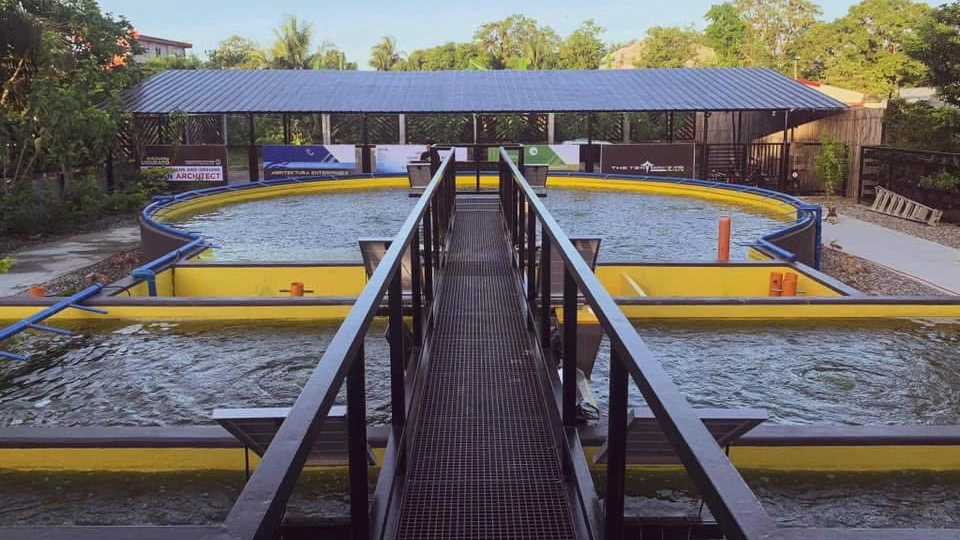
One of AGRITEKTURA’s products is portaSHIP, which stands for Portable, Sustainable, Smart, Holistic, Human-centered, Integrated & Interactive Product. It is a plug-and-play solution for aqua-farming. The circular device provides continuous water flow, simulating river-like currents, and is particularly well-suited for cooperatives and community-based farms. The technology was developed and improve thru the assistance of Deparment of Science and Technology (DOST).
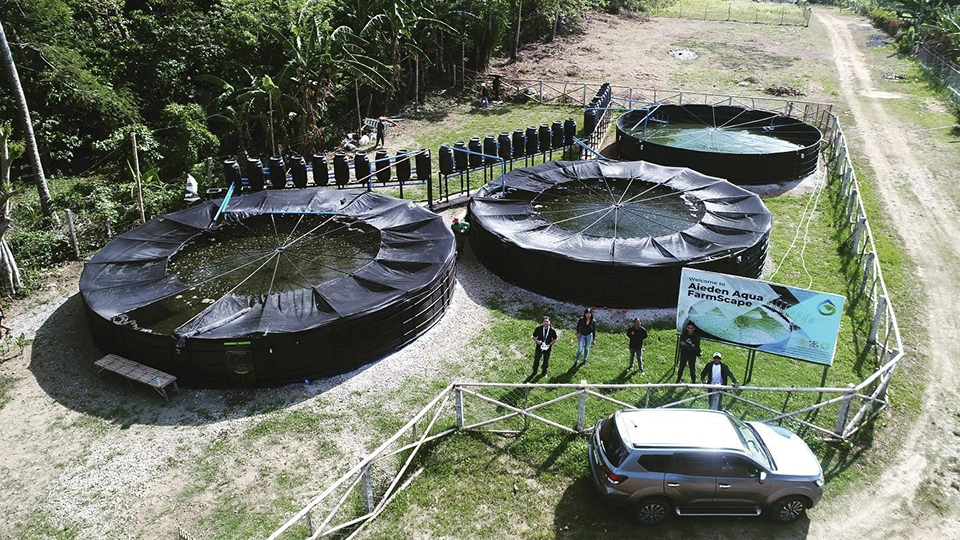
The technology recycles water and requires a full water change only every four months. The company is applying for a utility model for this technology, which relies on AI and IoT and is powered by solar energy.
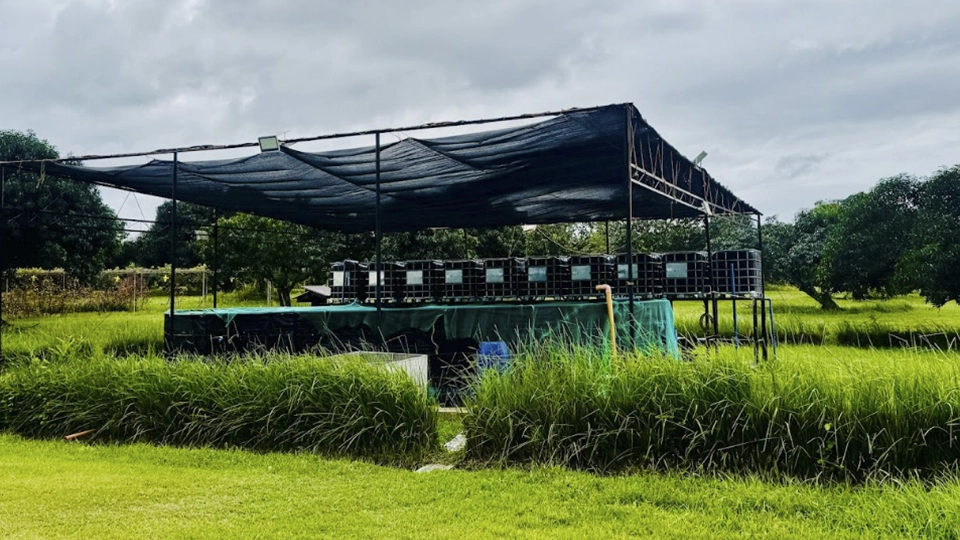
The company has an identical portable system for agriculture that can connect to the aquaculture system and attach to a smart aquaponic system, where wastewater from the aquaculture can be used as a nutrient supply for vegetables.
Innovation Hub for Technology-Educated Farmers
In the near future, Ran expects to launch a Creative and Innovation Hub in Mindoro through the Department of Trade and Industry (DTI) Shared Service Facilities Program. He envisions the hub as a shared platform for innovation, prototyping, and creative collaboration, providing access to 3D printing and scanning, drone documentation, immersive visualization, multimedia production, and high-performance design tools.
Once the hub is operational, Ran hopes to replicate the model in other parts of the Philippines. Within the next five years, he envisions smart, sustainable farms with technology-educated farmers. He said the Philippines’ agriculture produces high-value products that could benefit from integrated systems, appropriate technology, and stronger innovation support. This is where his heart remains. “I really want to help the community and focus on food production.”
Ran participated in WIPO’s IP Management Clinic supporting SMEs in the area of Agriculture 4.0 in ASEAN. Although he had just finished his Masters in Innovation and Business and was no stranger to IP, he said that the WIPO Clinic allowed him to dig deeper into IP questions. “After talking with the WIPO consultants, I found it very easy to understand previously unclear questions,” he said. “It was very useful, especially for me as I am just a startup.”
AGRITEKTURA is a trademark with its logo, name, and tagline protected.