¿Qué son las tecnologías de vanguardia?
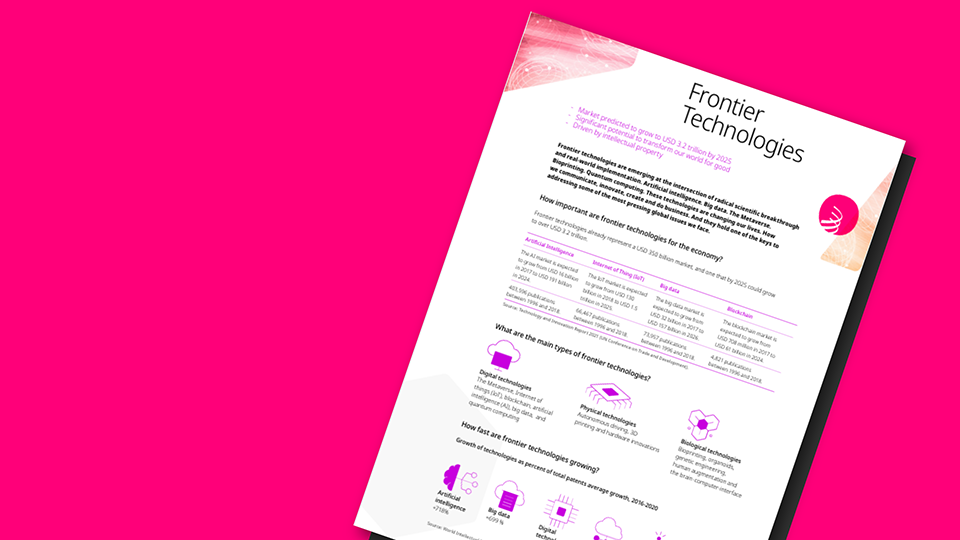
Las tecnologías de vanguardia están transformando la economía mundial. Se prevé que los avances en las tecnologías digitales, la biotecnología, la mejora de las capacidades humanas, la computación cuántica y las energías limpias generen varios billones de dólares.
Para que esos beneficios se distribuyan ampliamente, el sistema de propiedad intelectual (PI) debe seguir fomentando la innovación y la creatividad y adaptarse a la rapidez y la complejidad de las tecnologías emergentes. Los debates sobre políticas y la creación de herramientas que permitan administrar la propiedad intelectual de manera moderna y eficiente son esenciales para respaldar a quienes innovan y crean e impulsar un crecimiento económico inclusivo. Una de las tecnologías de vanguardia que más interés suscita es la inteligencia artificial.
En las dos últimas décadas han surgido numerosas tecnologías que están transformando nuestra forma de trabajar y de vivir en un mundo digital cada vez más interconectado. La aparición y convergencia de tecnologías de vanguardia constituye el núcleo de lo que a veces se denomina la cuarta revolución industrial o la Industria 4.0. Las tecnologías de vanguardia están transformando nuestra forma de hacer negocios, innovar y crear, y el ritmo de cambio se acelera exponencialmente.
El ámbito de las tecnologías de vanguardia evoluciona rápidamente y, aunque no existe una definición consensuada del concepto, estas tecnologías presentan algunas características comunes. Todas ellas se sitúan en la confluencia de avances científicos radicales y aplicaciones prácticas. Además, están transformando la forma en que nos comunicamos, resolvemos problemas, suministramos bienes y servicios, creamos y hacemos negocios. Las tecnologías de vanguardia pueden describirse como tecnologías avanzadas capaces de afrontar problemas de alcance mundial.
Ejemplos de tecnologías de vanguardia
Entre las tecnologías de vanguardia, cabe citar:
-
las tecnologías digitales, como el Internet de las cosas (IdC), la cadena de bloques, el metaverso, la inteligencia artificial (IA), incluida la IA generativa, los macrodatos y la computación en la nube
-
las tecnologías físicas, como la conducción autónoma, la impresión 3D y las innovaciones en componentes físicos, y
-
las tecnologías biológicas, como la ingeniería genética, la mejora de las capacidades humanas y la interfaz cerebro-computadora.
Los datos y los activos intangibles son la base de nuestro nuevo mundo digital. La PI cobra cada vez más importancia frente a los activos físicos.
El sistema de PI actual se concibió prestando atención a la creación e innovación humanas, con el fin de fomentar el desarrollo de tecnologías que facilitaran los procesos de producción y el comercio de productos físicos. El sistema de PI se diseñó además en una época en la que el ritmo de innovación y creación era mucho más lento que en la actualidad.
Uno de los principales retos actuales es garantizar que el sistema de PI siga promoviendo la innovación y la creatividad centradas en el ser humano en la era de las tecnologías de vanguardia.
En la nueva era digital, la innovación y la creación avanzan mucho más deprisa. El número de solicitudes de PI crece aceleradamente, aunque también experimenta fluctuaciones más marcadas. Los mercados adquieren una dimensión cada vez más mundial y los activos intangibles atraviesan las fronteras con mucha más facilidad.
Las tecnologías de vanguardia pueden hacer que la PI y el sistema de PI sean más accesibles, eficientes y comprensibles.
En la OMPI, la División de Propiedad Intelectual y Tecnologías de Vanguardia, en estrecha colaboración con la Sección de Prospectiva de la Propiedad Intelectual y Gestión de los Conocimientos, facilita el debate y la generación de conocimientos entre los Estados miembros y las partes interesadas sobre la interacción entre las tecnologías de vanguardia y la PI, con el fin de respaldar decisiones de política pública bien fundadas. Cada año, la OMPI organiza un acto dedicado a examinar en profundidad una tecnología de vanguardia concreta, su relación con la PI y sus repercusiones en este ámbito.

Propiedad intelectual y computación cuántica
15 de octubre de 2026 (en línea)
To receive regular updates about our events and projects, subscribe to our newsletter.
Propiedad intelectual y tecnologías de vanguardia

Propiedad intelectual e inteligencia artificial
El crecimiento de la IA en diversos ámbitos técnicos plantea varias cuestiones de política en materia de PI. Esas cuestiones abarcan desde la patentabilidad hasta la titularidad de las creaciones e innovaciones asistidas por IA y el alcance de las excepciones y limitaciones al derecho de autor en el contexto de los datos utilizados para entrenar sistemas de IA. Descubra la labor de la OMPI en materia de PI e IA.

IMAGEn: evgeniyShkolenko / iSTock / Getty Images
Propiedad intelectual y computación cuántica
La computación cuántica ofrece una gran oportunidad para impulsar la innovación y el crecimiento económico. A medida que avance la tecnología, la PI desempeñará un papel esencial para fomentar la innovación, proteger los avances importantes, posibilitar la comercialización de tecnologías cuánticas en distintos sectores y facilitar el acceso a esta tecnología innovadora.

IMAGEn: Gremlin /E+ / GeTTY Images
Propiedad intelectual y metaverso
Aunque la visión del metaverso como un único mundo virtual compartido no se ha materializado hasta la fecha, muchas de las tecnologías en que se sustenta —la realidad virtual, la realidad aumentada, la computación espacial, los gemelos digitales y la colaboración inmersiva— siguen siendo relevantes para la aparición de nuevas oportunidades económicas. La PI es uno de los principales motores de la innovación en los videojuegos, las aplicaciones empresariales, la formación y la simulación industrial.

Propiedad intelectual y cadena de bloques
La cadena de bloques está transformando los ecosistemas empresariales y creativos, por lo que la comunidad de la PI debe evaluar sus repercusiones y definir formas prácticas de aplicarla al sistema de PI. El Comité de Normas Técnicas de la OMPI (CWS) creó en 2018 un Equipo Técnico sobre la Cadena de Bloques para estudiar su uso en la administración de la PI, recopilar información sobre las iniciativas de las oficinas de PI y elaborar una propuesta de nueva norma técnica de la OMPI.

IMAGEn: Jacob Wackerhausen / iStock / Getty IMages
Propiedad intelectual y datos
Todas las tecnologías de vanguardia se ven impulsadas por la aceleración de la digitalización, se basan en datos y, con frecuencia, también los generan. Descubra por qué este activo intangible cobra cada vez más importancia y está transformando nuestra forma de hacer negocios, innovar y crear.

IMAGEn: Pixels Effect / E+ / Getty Images
Uso de tecnologías de vanguardia en la administración de la PI
Las tecnologías de vanguardia, como la IA, el análisis de macrodatos y la cadena de bloques, pueden contribuir a afrontar los crecientes retos que se plantean a las oficinas de PI y a hacer que el sistema sea eficiente y accesible para todas las personas, estén donde estén. Descubra los servicios y herramientas de la OMPI que utilizan inteligencia artificial.
News
-
WIPO Launches Artificial Intelligence Infrastructure Interchange
27 de marzo de 2026
Recursos

Diálogo de la OMPI sobre Propiedad Intelectual y Tecnologías de Vanguardia
Puesto en marcha en 2019, el Diálogo de la OMPI sobre Propiedad Intelectual y Tecnologías de Vanguardia se convirtió en el principal foro mundial para que responsables de la formulación de políticas y representantes de la industria, el mundo académico y la sociedad civil debatieran las repercusiones de las tecnologías emergentes en el sistema de PI. Los Diálogos se apoyaron en la larga trayectoria de la OMPI en materia de tecnología e innovación y propiciaron el intercambio de ideas para velar por que el sistema internacional de PI siguiera respondiendo a las necesidades de la era digital. A lo largo de seis años y doce sesiones, los Diálogos de la OMPI reunieron a cerca de 17 000 participantes de 172 países.
En adelante, los debates sobre PI e IA se celebrarán en el Foro Mundial de la OMPI sobre PI e IA, cuya primera edición tendrá lugar en noviembre de 2026.
Las tecnologías de vanguardia distintas de la IA seguirán siendo un ámbito prioritario para la OMPI, pues continúan transformando los procesos de innovación y creación, así como la actividad económica, al tiempo que plantean nuevas cuestiones para el sistema de PI. Dado que muchas de estas tecnologías tienen un horizonte de desarrollo más largo, la División de Propiedad Intelectual y Tecnologías de Vanguardia, en colaboración con la Sección de Prospectiva de la Propiedad Intelectual y Gestión de los Conocimientos de la OMPI, organizará cada año un acto público para examinar sus repercusiones a largo plazo en el sistema de PI.