Making a living in the creative industries means many different things to different people. For some it represents an ideal of creative freedom, for others a business strategy for economic performance. Individual motivations and roles are as varied as the activities that make up the creative industries – a sector that includes a range of activities from architecture to production of video games.
Whatever creative industry role interests you, and whatever your motivation, intellectual property (IP) is crucial.
How to Make a Living in the Music Industry
Building a successful career in music involves abilities to manage IP rights. WIPO supports authors and performers in enhancing their knowledge of the intellectual property aspects involved in their professional work. Copyright and related rights can help musical authors and performers to generate additional income from their talent.
In this area of work WIPO is assisting music professionals in identifying their income streams, based on their IP. It provides practical information to authors and performers who are in the process of establishing themselves in the market and clarifies the interface between talent and creativity on the one hand and management skills and entrepreneurship, on the other hand. An important factor for success is the existence of an enabling infrastructure involving copyright management structures and appropriate compensations schemes.

How to Make a Living in the Film Industry
Films are considered an important art form with social, cultural and economic impact. They are essentially collaborative works, fusing the creativity and effort of a multitude of collaborators: scriptwriters, actors, directors, costume and set designers, music composers, to name a few.
Copyright is present in all stages in the making of the film (development, financing, marketing and distribution) and it is important that key players in the industry know what and how the various rights can be protected. It is necessary that contractual agreements defining copyright ownership and its use be put in place, not only to protect the interests of all concerned, but also to facilitate financing and distribution, avoid costly disputes and reduce the risk of illegal reproduction.
To build awareness about the importance of copyright in the making of films, WIPO collaborated with public and private partners in the film industry and implemented technical cooperation projects in the field of creative industries in coordination with other relevant entities. An important development in this area is the recent adoption of the Beijing Treaty on Audiovisual Performances, which formally recognizes and strengthens the economic and moral rights of performers.
The WIPO Academy offers an advanced distance learning course in copyright and related rights, including the collective management of rights.
How to Make a Living in the Video Game Industry
People working in different creative industries, such as music, film, publishing, and now interactive entertainment software – or video games – have specific information needs regarding different intellectual property (IP) issues. WIPO’s “How to Make a Living” publications address those needs.
The video game industry - where cutting edge creativity meets the latest technology - is the fastest growing content sector in the world. Yet its entrepreneurs and creators, especially in small and medium-sized enterprises, may be unaware of the legal and business implications of IP when they create and distribute content. Video game developers may, for example, have little knowledge of the importance of copyright in negotiating contracts that will determine ownership of the creative content in their video games.
Mastering the Game: Business and Legal issues for Video Game Developers explains key business and legal issues to help video game developers promote and protect their copyright works.
How to Make a Living in the Publishing Industry
Copyright is perhaps the most significant intellectual property (IP) right in relation to the publishing industry. Publishers, at the outset, need to acquire from authors the exclusive rights of reproduction and distribution, which are recognized by the WIPO-administered Berne Convention for the Protection of Literary and Artistic Works (the Berne Convention) and the WIPO Copyright Treaty (WCT).
Publishers play a key role in making literary works known and available to the reading public. They are responsible for acquiring, preparing, managing, marketing, selling and distributing such works. They are also the creators, managers, acquirers and custodians of numerous IP rights, possessing certain rights in the books that they produce and sell, and holding rights on behalf of third parties.
To a large extent, the relationships in the publishing industry are traditionally managed on an individual, or rather on a one-to-one basis. Yet the increasingly widespread use of the photocopying technology has led to an explosion of the reproduction of printed works. Copying takes place everywhere and by everybody. Consequently, rights holders mandate organizations to manage their rights collectively. Such organizations issue licenses for the reproduction of literary and artistic works. They collect the fees, and channel them back to the authors and publishers. In the case of literary works, such collecting societies are known as Reproduction Rights Organizations (RROs).
Distance Learning
The WIPO Academy offers a distance learning course on managing IP in the book publishing industry, which serves as a basic guide to publishers who wish to increase their understanding of how to manage IP rights in a business context.
How to Make a Living in the Advertising Industry
The advertising industry plays a key role in marketing strategies of enterprises. Advertising has become an important strategic tool for enterprises wanting to stand out or position themselves in the market place. The importance of advertising is increasingly appreciated by enterprises given the intensification of competition among producers/providers of goods and services.
Technological advances have enhanced the capacity of enterprises to reach out to potential customers in distant markets. At the same time, customers continue to be faced with multitude of products and services in the market place from which they have to choose in order to have optimal satisfaction and value for their money. This reality has lead to the growth of the Advertising industry and advertisements are the main products of the industry. However, for an advertisement to be released to a potential market, it requires inputs from a combination of creative works, most of which are protected by intellectual property (IP).
WIPO’s publication “Managing Intellectual Property in Advertising Industry” provides details of the value chain in the preparation of an advertisement, the types of IP that are associated with a particular creative work contributing to the advertisement, important issues in managing IP in the advertizing industry and some best practice case studies.
How to Make a Living in Creative Enterprises
A growing number of studies have recently demonstrated the impressive contribution of creative enterprises to economic growth, jobs and wealth creation.
These enterprises which are professionally involved in the creation, production and distribution of creative goods and services have established themselves as an integral component of the vibrant creative economy. They often rely on various forms of intellectual property (IP) to boost their income streams.
WIPO supports creative businesses entrepreneurs in enhancing their IP knowledge, management skills and ability to grow their businesses. In its capacity building activities in this specific area it focuses on understanding the specifics of the creative markets, their funding, marketing and managing IP assets in the process of setting up and running viable creative businesses.
Intellectual Property Rights for Mobile Applications
Mobile apps are protected by various IP rights including but not limited to copyright, trademark and patent. Protecting your mobile app reviews. This publication examines the mobile application value chain and provides a legal checklist for determining applicable intellectual property rights, protective measures, and strategic approaches.
Как зарабатывать в творческих отраслях
Возможность зарабатывать на жизнь в творческих отраслях каждый понимает по-своему. Для одних это идеал творческой свободы, для других — бизнес-стратегия, нацеленная на финансовый успех. Личные мотивы и роли авторов так же разнообразны, как и сами направления креативной индустрии — сектора, который охватывает множество сфер деятельности, от архитектуры до разработки видеоигр.
Какая бы роль в этой индустрии вас ни привлекала и что бы вас ни мотивировало, интеллектуальная собственность (ИС) неизменно будет играть ключевую роль.

Как зарабатывать в творческих отраслях
ГОД ВЫПУСКА ИЗДАНИЯ: 2017
Какая бы роль в этой индустрии вас ни привлекала и что бы вас ни мотивировало, интеллектуальная собственность (ИС) неизменно будет играть ключевую роль.
Стремясь подчеркнуть значимость авторского права в кинопроизводстве, ВОИС в партнерстве с государственными и частными структурами этой сферы и другими профильными организациями реализует проекты технического сотрудничества в сфере креативных индустрий. Важным шагом в этом направлении стало недавнее принятие Пекинского договора по аудиовизуальным исполнениям, который официально закрепляет и расширяет имущественные и личные неимущественные права исполнителей.

Права, камера, мотор! Права интеллектуальной собственности и кинопроизводство
ГОД ВЫПУСКА ИЗДАНИЯ: 2022
Стремясь подчеркнуть значимость авторского права в кинопроизводстве, ВОИС в партнерстве с государственными и частными структурами этой сферы и другими профильными организациями реализует проекты технического сотрудничества в сфере креативных индустрий. Важным шагом в этом направлении стало недавнее принятие Пекинского договора по аудиовизуальным исполнениям, который официально закрепляет и расширяет имущественные и личные неимущественные права исполнителей.
[IK1]Please note that this paragraph is a repetition of a previous one as per the original page.
Академия ВОИС предлагает курс дистанционного обучения продвинутого уровня по авторскому праву и смежным правам, который в том числе охватывает вопросы коллективного управления правами.
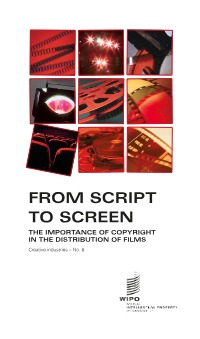
От сценария до премьеры: значимость авторского права в распространении фильмов
ГОД ВЫПУСКА ИЗДАНИЯ: 2011
Люди, работающие в различных творческих отраслях — будь то музыка, кинематограф, книгоиздание или такое современное направление, как разработка интерактивного развлекательного программного обеспечения (видеоигр), — нуждаются в специализированной информации по вопросам ИС. Серия публикаций ВОИС «Как зарабатывать в...» призвана ответить на эти запросы.
Индустрия видеоигр, где передовые творческие идеи пересекаются с новейшими технологиями, сегодня является самым быстрорастущим сектором по производству контента в мире. Однако многие авторы и компании-разработчики (особенно в сегменте малого и среднего бизнеса) при создании и распространении контента даже не подозревают о юридических и коммерческих нюансах, связанных с ИС. Например, разработчики часто недооценивают значимость авторского права на этапе переговоров с партнерами, хотя именно от этих контрактов зависит, кому в итоге будут принадлежать права на созданную игру.
В публикации «Как стать мастером игры. Коммерческие и правовые аспекты разработки видеоигр» детально разбираются эти аспекты. Данное руководство призвано помочь создателям игр успешно вывести свои произведения на рынок и обеспечить их правовую охрану.

Как стать мастером игры. Коммерческие и правовые аспекты разработки видеоигр
ГОД ВЫПУСКА ИЗДАНИЯ: 2022
В издательском деле авторское право — это, пожалуй, важнейший вид интеллектуальной собственности. На самом старте работы издателям необходимо получить от авторов исключительные права на воспроизведение и распространение их произведений. Эти права закреплены в Бернской конвенции по охране литературных и художественных произведений и Договоре ВОИС по авторскому праву (ДАП), реализация которых осуществляется под эгидой ВОИС.
Издатель — ключевое лицо для знакомства читателя с литературными произведениями. Они отвечают за приобретение прав на такие произведения, их подготовку к печати, управление портфелем изданий, маркетинг, продажу и распространение. Кроме того, издатели выступают в качестве создателей, управляющих и хранителей множества прав на ИС: им принадлежат определенные права на выпускаемые и тиражируемые ими книги, а также они распоряжаются подобными правами от имени третьих лиц.

Управление ИС в издательском деле
ГОД ВЫПУСКА ИЗДАНИЯ: 2007
Традиционно отношения в книгоиздательской индустрии выстраиваются в индивидуальном порядке, на основе прямых договоренностей между сторонами в каждом конкретном случае. Однако повсеместное распространение технологий копирования привело к взрывному росту незаконного воспроизведения печатных работ: сегодня тексты копируют все и везде. Чтобы справиться с этой проблемой, правообладатели поручают управление своими правами специализированным организациям коллективного управления. Эти организации выдают лицензии на воспроизведение литературных и художественных произведений, взимают авторские отчисления и распределяют их между авторами и издателями. В сфере литературы такие сообщества по коллективному управлению правами известны как организации управления правами на репрографическое воспроизведение (ОУПРВ).
Дистанционное обучение
Академия ВОИС предлагает курс дистанционного обучения по вопросам управления ИС в книгоиздательской индустрии. Этот курс послужит отличным базовым руководством для тех издателей, которые хотят лучше разобраться в механизмах управления правами ИС для развития бизнеса.
Реклама — важнейший элемент маркетинговой стратегии любого бизнеса. Сегодня это ценный стратегический инструмент для компаний, которые хотят выделиться на фоне конкурентов и прочно закрепиться на рынке. В условиях жесткой конкуренции между производителями товаров и услуг значимость рекламы для бизнеса только возрастает.
Благодаря развитию технологий бизнес получил возможность привлекать клиентов даже на самых отдаленных рынках. В то же время сами потребители ежедневно сталкиваются с колоссальным выбором товаров и услуг, пытаясь найти оптимальное соотношение цены и качества. Именно поэтому рекламная индустрия стремительно растет, а ее главным продуктом становится рекламный контент. Однако для того чтобы запустить рекламную кампанию на потенциальном рынке, необходимо объединить множество творческих произведений, большинство из которых охраняются правом ИС.
Публикация ВОИС «Управление интеллектуальной собственностью в рекламной индустрии» детально описывает весь процесс создания рекламного продукта. В ней разъясняется, какие именно виды ИС связаны с теми или иными элементами рекламы, разбираются ключевые вопросы управления правами в этой сфере, а также приводятся реальные примеры из практики.

Управление ИС в рекламной индустрии
ГОД ВЫПУСКА ИЗДАНИЯ: 2011
Все больше недавних исследований подтверждают впечатляющий вклад креативного бизнеса в экономический рост, создание новых рабочих мест и повышение уровня благосостояния.
Компании, профессионально занимающиеся созданием, производством и распространением творческих товаров и услуг, стали неотъемлемой частью динамично развивающейся креативной экономики. Для увеличения своих доходов они активно используют самые разные формы ИС.

Управление ИС в предприятиях творческого профиля
ГОД ВЫПУСКА ИЗДАНИЯ: 2006
ВОИС помогает предпринимателям в творческих отраслях углублять знания в области ИС, совершенствовать управленческие навыки и масштабировать свой бизнес. Образовательные программы ВОИС в этой области ориентированы на глубокое понимание специфики креативных рынков, механизмов привлечения финансирования, маркетинга и управления активами ИС в процессе создания и развития успешных предприятий творческой отрасли.

Монетизация авторско-правовых активов предприятиями творческих отраслей
ГОД ВЫПУСКА ИЗДАНИЯ: 2014
Мобильные приложения охраняются различными правами ИС, включая, помимо прочего, авторское право, товарные знаки и патенты. Была подготовлена публикация, в которой рассматривается процесс создания мобильных приложений, а также приводится юридический чек-лист, помогающий определить применимые права ИС, меры правовой охраны и стратегию защиты вашего продукта.

Охрана мобильных приложений
ГОД ВЫПУСКА ИЗДАНИЯ: 2021