What's in a name? Meet “Jaikla”, Thailand's fearless insect-based dog food brand
"Jaikla". In Thai, it means "fearless" — and it is a name that suits both the brand and its co-founder, Ittikorn “Dhong” Thepmani. In 2018, Dhong left a career in financial analysis to become an insect farmer, with a mission to transform the global pet food industry.

Based in Bangkok, Orgafeed Limited Company ("Orgafeed") develops sustainable dry dog food made from insect-based protein and is on the cusp of launching a complete and balanced dog food range. Its team may be small – just eight people – but ambition is high. To help steer its success, Orgafeed registered the name "Jaikla" across nearly 40 markets worldwide through WIPO’s Madrid System, paving the way for global growth.
Developing sustainable insect-based protein for dogs
Dhong did not just stumble into the pet food business. He got there through research. While working as a financial analyst for a securities firm, where his job was to build investment theses and pitch ideas to fund managers, he came across a report published by the United Nation's Food and Agriculture Organization (FAO) on the future of global food supplies.
The concept of a food crisis in Thailand seemed almost absurd to him at first. "Food is available everywhere you go in Thailand, 24-7. I took a closer look at the numbers behind the FAO report; they added up. But, when a crisis is foreseen and there is time to develop a solution, you can generate a strong return on investment."
The FAO’s report offered two potential solutions to this global problem: plant-based protein and insect-based protein.
“There was clearly strong potential for insect-based protein here in Thailand. Any country can produce plant-based protein, but Thailand sits in the tropical zone, giving it a natural and enduring cost advantage in insect farming that temperate-climate countries cannot replicate. You cannot take that advantage away from us,” says Dhong.
The data pointed him toward an idea. The tropical sun gave him an advantage. His inherent love of dogs brought the deal home.
He left his job and became, as he puts it with a laugh, an insect farmer.
Insect farming and circular dog food production
What Orgafeed has built is not just a pet food brand; it’s a circular economy.

- The company farms black soldier fly larvae, a species that can be raised on food surplus — the unsold or near-expiry produce discarded by supermarkets. Orgafeed collects the surplus (which would otherwise go to landfill) from two major supermarket chains and transports it back to the farm using its own fleet of vehicles.
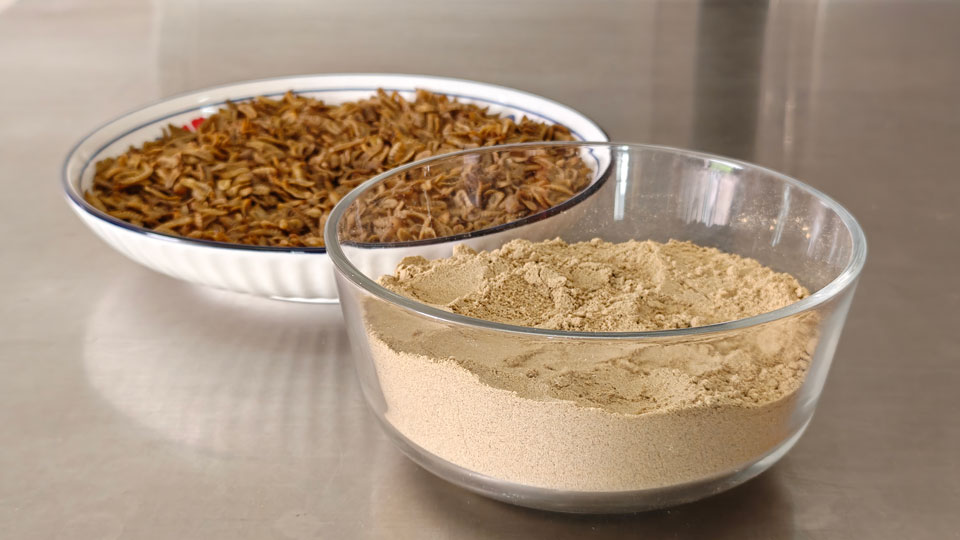
- The larvae consume the surplus, absorbing its protein, fat, carbohydrates, minerals, and vitamins. They are then processed into insect powder, the primary ingredient in Jaikla dog food products.
- The remaining organic matter from the larvae becomes fertilizer, which is distributed to local farmers who, in turn, supply fresh produce back to the same supermarkets.
Orgafeed collaborates with established pet food manufacturers in Thailand to produce its finished products — a practical decision for a small company wanting to move fast and get a firm foothold in a growing market.
Changing dog food brand name from Laika to Jaikla
Jaikla was not always called Jaikla.
The company – founded seven years ago – spent its first two years in research and development, working closely with pet nutritionists. “We were introducing a new protein source to the market; we needed to make sure that our product would meet standards – clean, safe, and good for our pets.” After two years, they were ready to launch their brand, “Laika” – a nod to the Soviet dog who became the first animal to orbit the Earth.
It was a clever name, but as Dhong was to discover, it was also a problem.
“We wanted to export our products to Europe, for example, but the name “Laika” was already a registered trademark in several European countries.” Dhong and his team faced two options: buy the rights to use the trademark or rebrand. For a young company with limited capital, the answer was clear. They rebranded… as “Jaikla”.
The experience was not without its costs – in time, legal discussions, and the upheaval of changing brand identity. “It was a rookie mistake,” Dhong says plainly. “If I had known about the trademark issue before, we could have avoided a lot of trouble. We could have come up with a stronger trademark from the start.”
In the end, the name “Jaikla” has served them well, ensuring the brand stands out on a very competitive market. “The pet food market is fiercely competitive here in Thailand with new brands appearing every year. We know that the competition will be even stronger on international markets. But we're confident. The pet food industry is growing steadily, we have the funding we need, and now we have strong global trademark protection.”
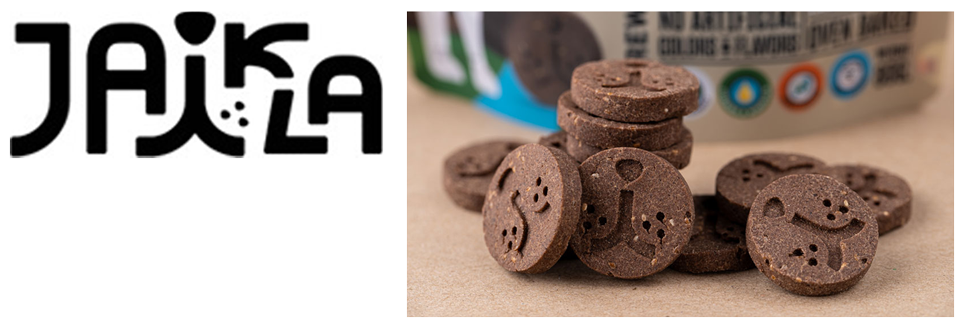
Discovering WIPO's international trademark system
In navigating the rebranding, Orgafeed consulted Thailand's Department of Intellectual Property (DIP). It was there that the company first discovered the Madrid System — WIPO's international trademark registration mechanism. It would enable Orgafeed to protect Jaikla across multiple export markets through a single application.
What really sealed it for Dhong was the economics. As someone trained to evaluate investments, he ran the numbers. Filing trademark applications through legal firms, country by country, he calculated, would cost at least three to four times more than filing through the Madrid System.
“As a financial analyst, I needed to come up with the highest return on investment. The Madrid System proved more competitive in terms of expense, and it's a one-stop solution.”
There was a language dimension too. Filing through the Madrid System meant working in just one language (English) — a significant practical advantage when managing registrations across dozens of markets with different legal systems and languages.
One international trademark registration for protection in almost 40 markets
Guided by DIP staff, Orgafeed filed its international trademark application with ambition, immediately designating close to 40 markets, spanning Australia, Canada, China, the European Union, Japan, Malaysia, New Zealand, Republic of Korea, Singapore, the United Kingdom and the United States of America.
The choice of markets was strategic, covering some of the world's most established pet markets (Europe and the US), as well as fast-growing emerging markets.
Notably, protection has been granted in every single designated market.
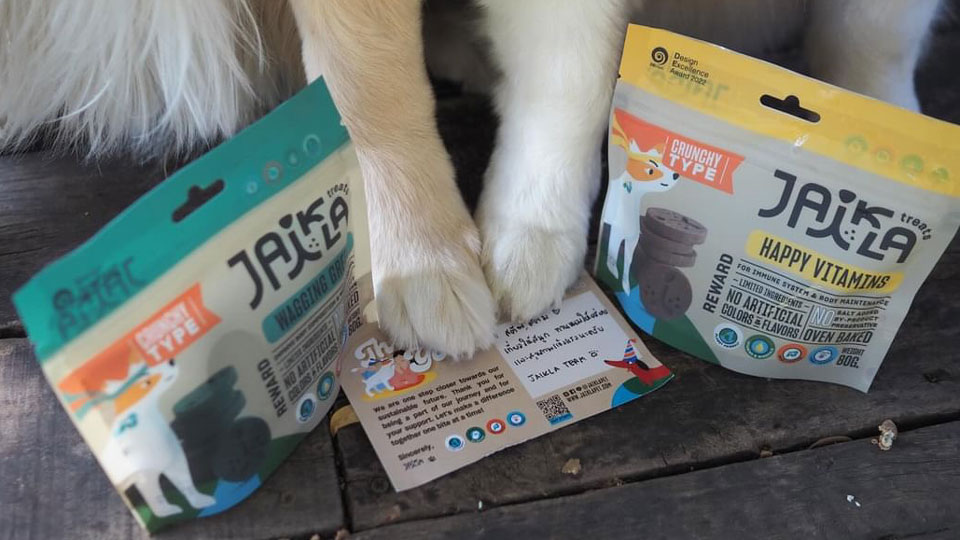
Dhong credits the outcome in part to the lessons learned from the Laika experience. “Having been through the ordeal of discovering a conflicted name mid-expansion, we spent a lot of time with the DIP team to make sure that the name Jaikla was unique enough, and strong enough to stand up in global export markets.”
How international trademark protection is driving Jaikla’s success
With protection now secured across continents, Jaikla is actively exporting, and repeat orders are coming in.
The business now operates across two distinct channels:
- Domestic (Thailand): 80% – mainly direct-to-consumer (D2C) sales via e-commerce, plus some 10% B2B sales (including pet shops, pet hospitals, and wholesale)
- International: 20% of total revenue comes from international markets, all through B2B partnerships.
The relationship between trademark security and commercial confidence is direct.
“International trademark protection has helped us to build confidence with overseas partners, which in turn leads to more business. It gives us more professionalism, even though we are such a new and small team in the pet industry.”
Dhong, Jaikla Team
There are early signs of interest from further afield — some orders from Canada — but Dhong is clear-eyed about the challenge of Western markets. “We’re going to have to do a lot of homework to build brand recognition in Europe, the UK and the US, and find local partners who share our values and vision.”
What's next for the leading insect-based pet food brand
In the near term, Orgafeed’s focus remains largely on South-East Asia. The company sees significant untapped potential in its home region, where pet ownership is growing rapidly and cultural affinity gives it a natural edge.
To protect the company’s horizons further afield, Dhong plans to investigate expanding the geographical scope of its international trademark registration to include other key export markets in the region, including the Philippines and Viet Nam.
The Jaikla product range is also expanding, with the launch of a full portfolio of complete and balanced dog food planned for later in the year. A cat food range is also part of the company's longer-term projects.
Lessons from Jaikla’s global trademark journey
Dhong's advice to other small business owners in Thailand and beyond is straightforward. "Choose a strong name and protect it internationally to help you build business in other export markets."
He is open about the path that led Jaikla to success — the mistakes as much as the successes. The Laika chapter was painful, but it produced something valuable: a company that understands, from direct experience, why choosing a strong brand name and protecting it internationally is not a bureaucratic afterthought but a commercial foundation.
Jaikla’s global foundations were built through WIPO’s Madrid System. A single international trademark application, filed with support from Thailand's DIP, secured trademark protection in close to 40 markets — at a fraction of the cost of going country by country. For a team of eight operating on limited resources, that efficiency was not just convenient; it was what made international expansion possible.
“Thanks to the Madrid System, we are exporting our products and living our dream of bringing sustainability to the global pet food sector.”
Dhong, Jaikla Team
Find out more about Orgafeed’s international trademark registration.
More about the Madrid System
The Madrid System is a convenient and cost-effective solution for registering trademarks across 130+ countries by filing one application in one language and paying one set of fees in one currency.