Conventional plastics were designed to last for centuries. The bioplastics that Italian company Novamont has been developing since 1989 were designed to do the opposite: biodegrade once their job is done. Three decades on, the company's Mater-Bi family of biodegradable, compostable bioplastics is used worldwide in everything from compostable bin liners and food packaging to mulch films for farmers — and the Novara-based research pioneer is now part of Versalis, the chemicals arm of Italian energy major Eni.
The case for renewable bioplastics
Petroleum-based plastics, the convenience materials of the twentieth century, have left a lasting environmental mark. Their defining feature — durability — is also their environmental curse: they degrade far too slowly, clogging drains, canals and rivers, contaminating soils and oceans, and accumulating in landfills for centuries. Tackling that legacy has become one of the defining innovation challenges of our time.
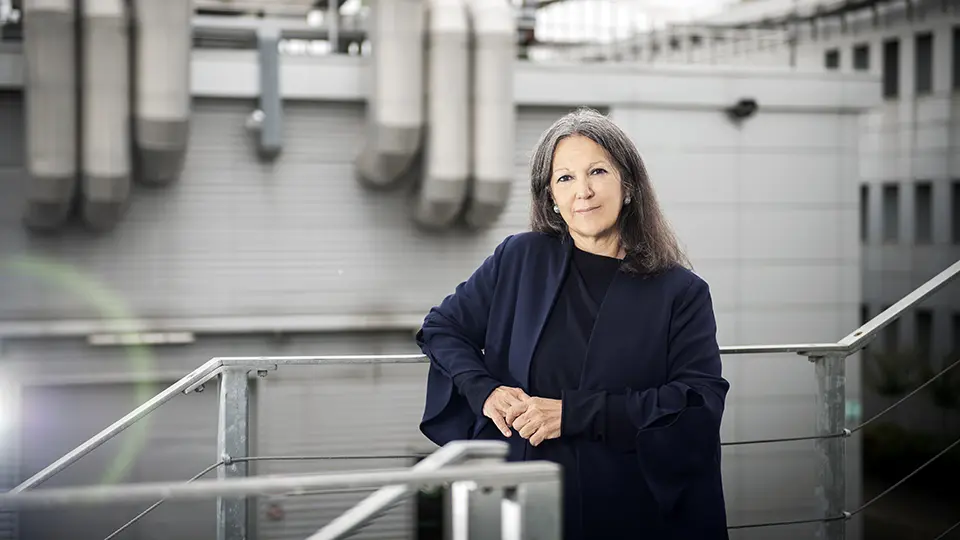
One of the earliest, and most enduring, industrial responses came from northern Italy. Novamont S.p.A., founded in 1989 in Novara and led by chemist, researcher and entrepreneur Dr. Catia Bastioli, was built around a simple conviction: scientific research should benefit humankind. The company's flagship project, "Living Chemistry for Quality of Life," focuses on the research and development (R&D) of plastic-like materials made from renewable, plant-based sources. These so-called bioplastics offer the versatility of conventional plastics with one decisive difference: many are biodegradable and compostable, helping resolve the environmental damage caused during the use, post-consumption and disposal phases of conventional plastics.
The conviction Bastioli set out in a 2010 interview with WIPO still drives the company today: "If we look at the problems of waste, climate change and pollution of the air, water and soil… then unless industry takes responsibility for what it is doing in a very short time we will destroy the planet. We need to meet the needs of the present generation without sacrificing the lives of future generations."
Three decades of R&D behind a renewable-chemistry platform
Novamont's business is built on deep R&D. Decades of research in materials science have allowed the company to open new frontiers in renewable chemistry and develop a string of original proprietary technologies — thirteen of which have been industrialised. R&D is not a side activity at Novamont: roughly one in five staff work in research, and in 2021 the company invested around €50 million in innovation alone.
Today, the Novamont Group operates five production sites (four in Italy and one in Estonia), three research centres including the Matrìca Research Centre (a joint venture with Versalis), and three technology hubs spanning everything from laboratory experimentation to advanced pilot plants. Commercial offices in Germany, France, Spain and the United States, and a distribution network across more than 40 countries, anchor the group's international reach. The R&D effort concentrates on two intertwined priorities: developing new bio-based products and applications drawn from agricultural raw materials, and rigorously assessing their environmental performance throughout the lifecycle.
Mater-Bi: a biodegradable, compostable bioplastic with industrial reach
Through this sustained research, Novamont's material scientists invented Mater-Bi®, a family of biodegradable and compostable bioplastics made wholly or partly from renewable plant-based raw materials, including starches, vegetable oils and their derivatives. One of the leading biodegradable and compostable bioplastics, with the versatility of conventional polymers, Mater-Bi today underpins applications across multiple sectors: retail and food service (carrier bags, food packaging, disposable plates), organic waste management (compostable bin liners that allow food waste to be collected and treated in a single, contamination-free stream), agriculture (biodegradable mulch films, twines and clips that can be ploughed back into the soil at the end of a crop cycle, reducing the need for pesticides, accelerating cultivation and cutting water consumption), and consumer goods (circular foam materials and other components developed in partnership with global brands).
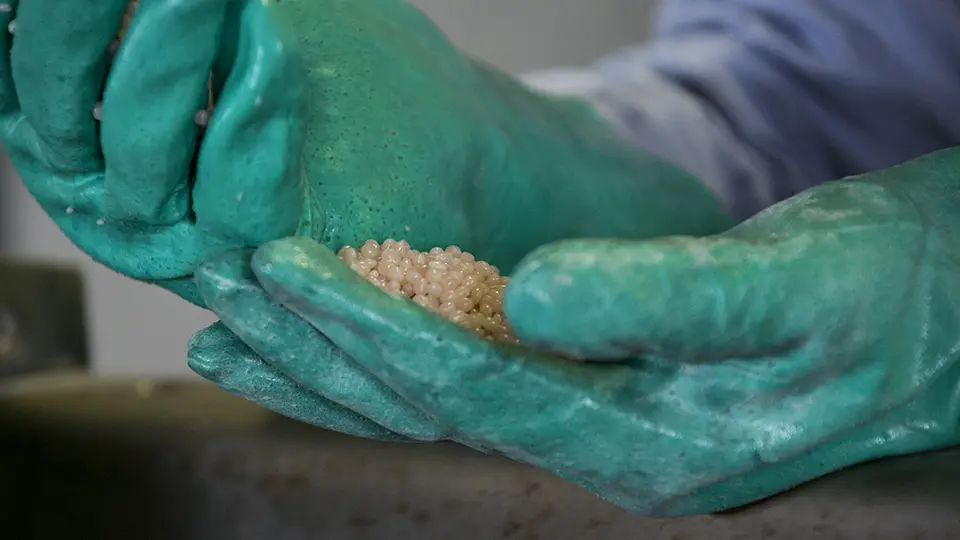
All Mater-Bi grades are certified OK COMPOST under the European EN 13432 standard, the key technical benchmark for compostable materials. Novamont also became the first company in the plastics sector to establish a third-party-verified method for calculating the carbon footprint of all its products under ISO 14067 — turning environmental performance into measurable, audited data for customers. In November 2025, Mater-Bi mulch film became one of the first compostable agricultural films to obtain a certificate of conformity with EU Fertilizer Regulation 2019/1009.
Protecting bioplastics innovation through patents
Because Novamont's business is built on research and innovation, intellectual property (IP) sits at the heart of its strategy. The company has built a substantial patent portfolio of more than 1,500 patents and patent applications according to 2023 data.
The earliest patent in the company's portfolio, "Shaped articles made from pre-processed starch" (EP0304401), was filed with the European Patent Office in 1988 and covers a process for forming objects from starch. Others followed almost immediately, including "Biodegradable articles based on starch and process for producing them" (WO1990010671), filed internationally in 1990 through WIPO's Patent Cooperation Treaty (PCT) System.
Filing has continued at pace ever since. As of 2026, more than 160 PCT applications from Novamont are listed on WIPO's PATENTSCOPE database, on top of the company's national and regional filings. Some of the latest patents filed by Novamont include “Process for utilising secondary products from the agri-food industry” (EP4727375, published in April 2026) and “Improved process for the synthesis and purification of HMF” (WO2026013041, filed through the PCT System and published in January 2026).
Many of those inventions carry Catia Bastioli's name. The longtime Novamont CEO is credited as the prime inventor of around 80 patent families in synthetic and natural polymers and in transformation processes for renewable raw materials.
That body of work earned Bastioli the 2007 European Inventor of the Year Award in the SMEs/Research category, presented jointly by the European Patent Office and the European Commission for her starch-based bioplastics inventions developed between 1991 and 2001.
Building a global bioplastics brand
Novamont consistently protects both its corporate identity and its product brands through a layered trademark strategy. Over the years, the company has registered over 250 trademarks, with around 150 active as of 2026.
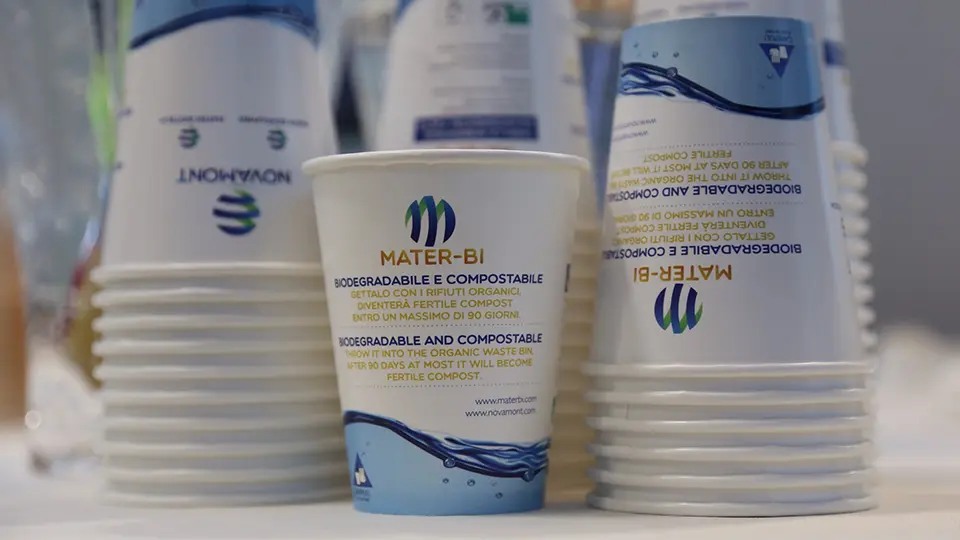
Both the Novamont name and its logo are protectede at national and regional levels in multiple jurisdictions, as well as internationally through WIPO's Madrid System, with the name registration designating 11 countries (WO500000001117622) and the logo designating 10 (WO500000001299270). The Mater-Bi name and logo are likewise registered as national and EU trade marks and through the Madrid System (WO500000000558794 and WO500000001299418 respectively), ensuring consistent brand recognition in major markets worldwide. Several other product names and logos are internationally protected, too, including ORIGO-BI (WO500000000903035), CELUS-BI (WO500000001331769) and AGER-BI (WO500000001817012).
Alongside the patent portfolio, those marks give Novamont a second layer of legal protection — covering not just how Mater-Bi is made, but how customers, distributors and certifying bodies recognise it on the shelf.
From start-up to global bioplastics leader
From its origins as a research-driven start-up, Novamont has grown into a global player in bio-based and compostable materials. By 2021, the group reported a turnover of approximately €414 million and roughly 650 employees. The company is a certified B Corporation — one of the first in the chemicals sector to attain that status — and a Benefit Company under Italian law, embedding social and environmental purpose into its corporate governance. In 2021 and again in 2022, the group was recognised by B Lab as "Best for the World" in the Environment impact category, ranking among the top 5% of certified B Corps globally.
That growth has been built in part through long-running partnerships and acquisitions. Matrìca, the joint venture with Versalis launched in 2011 in Porto Torres (Sardinia), built integrated biorefineries on a decommissioned petrochemical site — the prototype of the territorial-regeneration model Bastioli has championed throughout her career. And in 2021, Novamont fully acquired the BioBag Group, a leading producer of compostable consumer products, broadening the group's distribution reach across Europe, North America and Asia.
In October 2023, Versalis — the chemicals arm of Italian energy major Eni and previously a 36% shareholder in Novamont — completed the acquisition of the remaining 64% of the company's shares. Novamont became wholly owned by Versalis and a central asset in its biochemistry strategy, with Catia Bastioli confirmed as CEO and additionally appointed Chairwoman, ensuring continuity of the company's R&D-led, IP-rich approach within a much larger industrial group.
Research at the service of quality of life
Novamont's research priorities remain anchored where they began in 1989: in the practical needs of society, and in the kinds of breakthrough chemistry that turn waste streams into resources. By systematically pairing world-class R&D with an IP strategy built on a deep, internationally protected portfolio of patents and trademarks, the company has shown how a research-driven firm can become a global benchmark for sustainable innovation. More than three decades on, Mater-Bi continues to do exactly what its inventor set out to make it do: let the planet breathe.