
Nicholas Hoekstra, ABC Program Management Consultant, writes of the importance of braille to his life on the occasion of World Braille Day and the launch of the ICEVI – WBU Global Braille Literacy Campaign.
Braille, for me, is more than just a reading system. It is a symbol of a life of independence. It is the labels on the spice jars that make the difference between food my family wants to eat… and food my family may not want to eat. It allows me to read books to my three year old daughter.
I lost my sight in 1992, at the age of eight-years-old. Unfortunately, the school near my home in Comstock Park, Michigan, did not have any instructors who could teach me braille. So I began the third grade that fall at Ken-o-Sha Park elementary school, an inclusive school about thirty minutes from my home.
At eight-years-old, I had literally just spent my entire life learning to painstakingly write. Now, I was going to have to begin that process all over again, this time using the raised system of dots known as braille. I will never forget my teacher, Mrs. Claysmith, reminding me again and again to capitalize my name in braille. She taught me much more than braille. She instilled in me the importance of education.
We capitalize important words, and you are important too. As a person with a disability, the world will underestimate you. Your biggest tool to overcome that is education.
Mrs. Claysmith, braille teacher.
I was placed in what was called the “VIP room,” along with three other blind or visually impaired students. The idea was that I could intensively learn braille during that first year, while doing lessons orally with the teachers so as not to fall behind in other subjects. In the second year, I would remain at Ken-o-Sha, but move to a regular classroom where I would learn alongside sighted students while still receiving braille support for math when needed. After three years, I would return home to Comstock Park to attend my local middle school, integrated and on track for academic success.
Mrs. Claysmith’s words stayed with me for decades. I remembered her voice when I walked into the Harvard Graduate School of Education to begin my master’s degree in international education policy. I still hear it now as I complete my doctoral degree in special education at the University of Kansas.
For years, I thought the “VIP” room at Ken-o-Sha Park elementary stood for the “very important persons” room. In fact, I still believe it. The teachers who taught me braille were very important, and they felt the same of each and every one of their students.

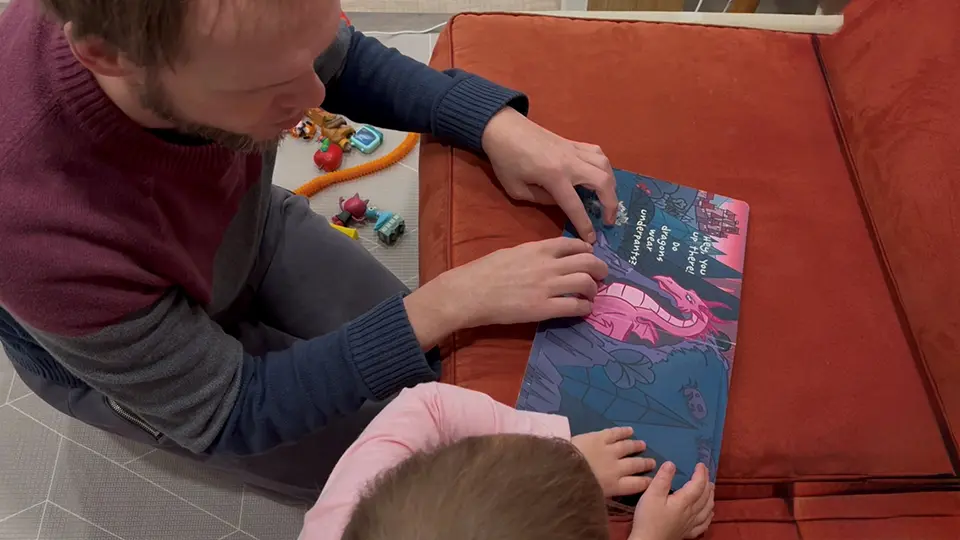
Whereas braille was once about my own education, now it also plays a role in how I educate my family. Braille allows me to share stories, laughter, and memories. Nothing could ever replace the personal impact of reading a book to my daughter: making up silly voices or changing the names to match hers.
As we mark the anniversary of Louis Braille’s birth on World Braille Day, I am grateful to have been encouraged to learn braille as a child. I am equally grateful to now contribute to the work of the Accessible Books Consortium. Through ABC’s Training and Technical Assistance (TTA) projects, I have the privilege of helping organizations around the world produce accessible books and strengthen their capacity to serve blind and visually impaired learners. In many ways, it is a continuation of what my teachers gave me: the belief that with the right tools, every child can learn, participate, and imagine a future filled with possibility.
ICEVI – WBU Global Braille Literacy Campaign
On World Braille Day, the International Council for Education of People with Visual Impairment (ICEVI) and the World Blind Union (WBU) launched the Global Braille Literacy Campaign, highlighting braille as the foundation of literacy, independence, and full participation in society. The campaign seeks to strengthen global commitment to braille by:
- Highlighting its continuing relevance in the digital era;
- Encouraging collaboration across countries and regions;
- Amplifying the voices of braille users worldwide, encouraging educators to learn and teach braille.
How ABC supports Braille Literacy
ABC promotes braille in all three of its primary activities:
- Capacity Building – ABC provides training and funding to organizations in low income countries for the publication of books in embossed braille or in digitally accessible formats that can be read with the use of refreshable braille displays.
- ABC Global Book Service – this global library catalogue of over one million accessible format titles is available for cross-border exchange under the framework of the Marrakesh Treaty. The Service contains over 118,000 braille titles, including 17,000 braille music scores.
- Accessible Publishing – ABC encourages publishers to adopt “born accessible” practices, including the production of books in the accessible Epub3 format, so that their publications can be read by persons who are blind or visually impaired using assistive technology, including refreshable braille displays.
About WIPO
The World Intellectual Property Organization (WIPO) is the global forum for intellectual property policy, services, information and cooperation. A specialized agency of the United Nations, WIPO assists its 193 member states in developing a balanced international IP legal framework to meet society's evolving needs. It provides business services for obtaining IP rights in multiple countries and resolving disputes. It delivers capacity-building programs to help developing countries benefit from using IP. And it provides free access to unique knowledge banks of IP information.