
As TISC networks expand and provide more services to local innovators, WIPO continues to support them with knowledge and learning resources as well as effective management resources.
WIPO has developed a range of initiatives and resources to empower TISCs. These include public–private partnerships to facilitate access to technological information; the WIPO INSPIRE open digital knowledge center, which provides researchers and innovators with access to a unique blend of information and knowledge in the area of IP and innovation, in particular on patent databases, patent registers, patent analytics, technology transfer and institutional IP policies; and dedicated training activities and publications in these areas.
To support TISCs in building their capacities to meet the evolving demands of the innovators they serve, additional resources are gradually being offered to TISCs on patent drafting, IP commercialization, IP valuation and IP financing.
Digital platforms and tools for accessing information and knowledge and effective TISC management
Access to Specialized Patent Information (ASPI)
The ASPI program supports academic and research institutions in developing countries by offering free or affordable access to premium patent databases. This initiative, facilitated through a unique public–private partnership with leading commercial database providers, allows researchers to access and analyze patent data using advanced tools.
Participation of academic and research institutions in the ASPI program further fosters innovation and sustainable development. By bridging the knowledge gap in developing countries, ASPI encourages the use of high-quality technical information contained in patent databases to support the development of innovation ecosystems.
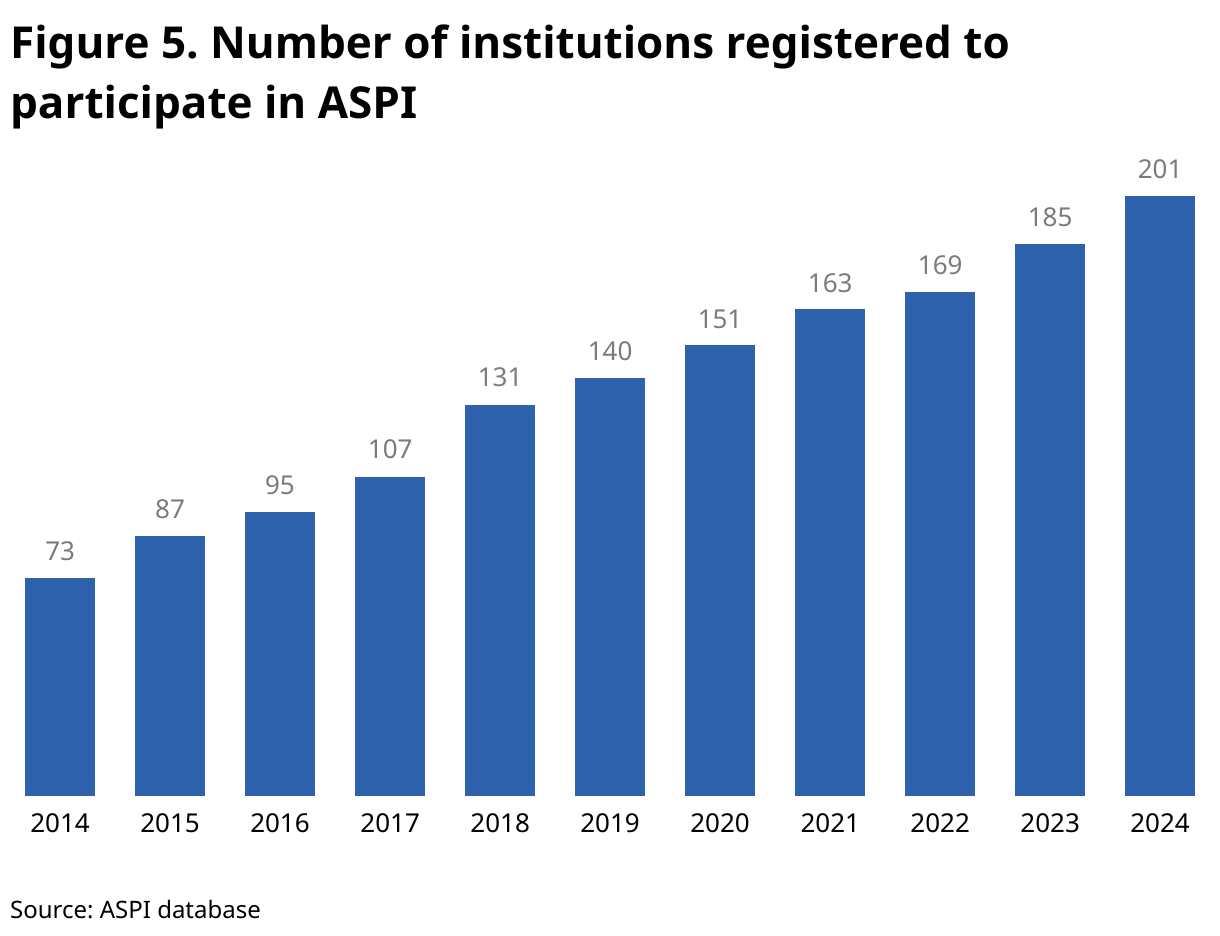
A significant portion of the institutions currently registered with ASPI includes universities and national patent offices in eligible countries. Following steady growth in interest in the program, there has been a notable increase in the registration rate in recent years.
Access to Research for Development and Innovation (ARDI)
Coordinated by WIPO in partnership with the publishing industry, the ARDI program enhances access to scientific and technical research in developing countries. By offering free or low-cost access to up to 30,000 peer-reviewed journals, books and publications, ARDI enables researchers to access the latest scientific and technical knowledge, develop solutions to technical challenges and drive innovation.
ARDI is a key partner of Research4Life, a collaborative initiative involving five United Nations agencies (World Health Organization, Food and Agriculture Organization, UN Environment Programme, WIPO and the International Labour Organization), leading academic institutions such as Cornell and Yale universities, and over 200 publishing partners. Through Research4Life, nearly 12,000 institutions across 120 countries have access to over 234,000 resources in areas like health, food and agriculture, applied and environmental sciences, law and social sciences. ARDI provides access for institutions to scientific and technical content resources that strengthens developing countries’ participation in the global knowledge economy, equipping researchers to create impactful solutions for local and global challenges.

“Without Research4Life, many would be unable to access the critical information needed to advance their work and remain relevant in academia. The Research4Life program has been a game-changer for Malawian researchers.”
– Felix Chisoni, Librarian, Kamuzu University of Health Sciences, Malawi
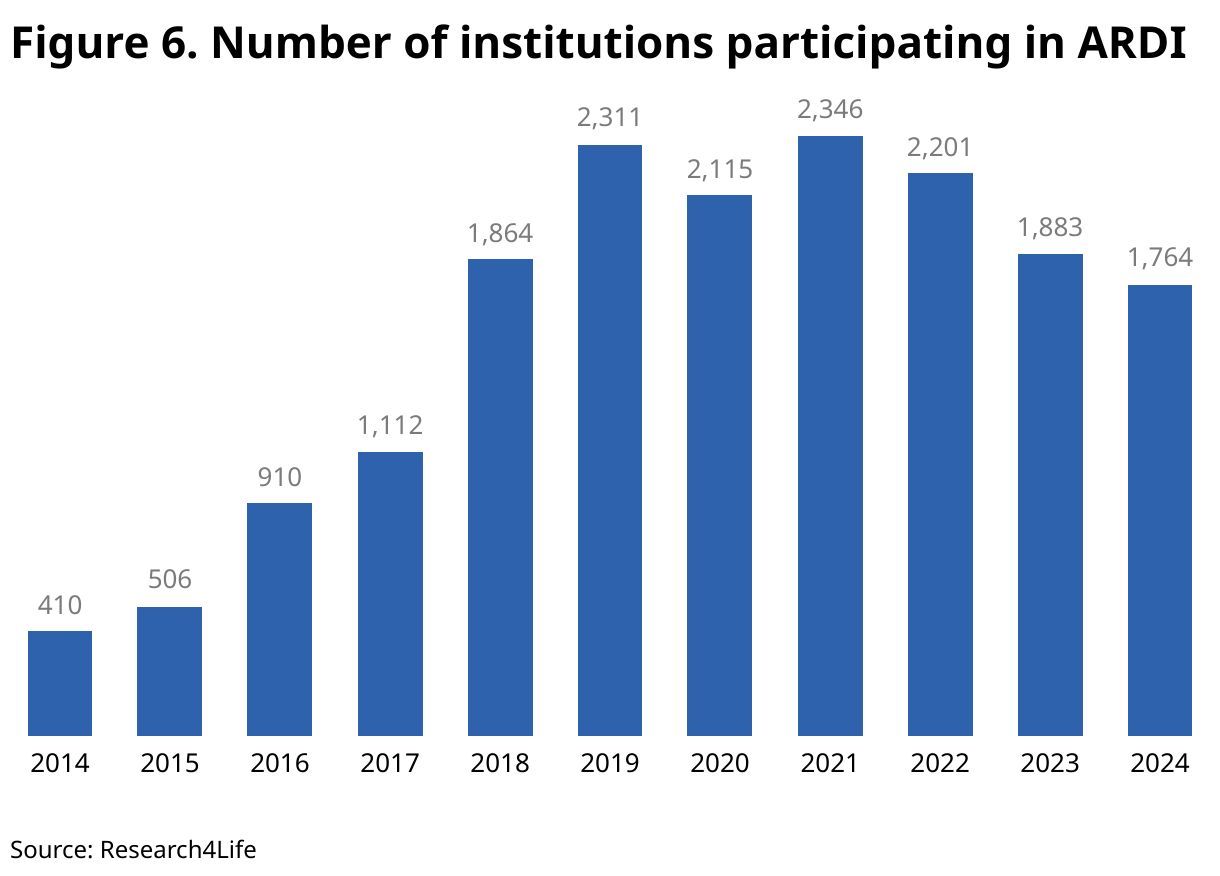
The increasing availability of open-access publications across various sources and platforms has coincided with a significant rise in ARDI logins in recent years, reflecting a growing demand for access. However, while there was a consistent growth in the availability of open-access publications through different sources and platforms, this has resulted in a noticeable fluctuation in the number of institutions participating in ARDI in recent years.
WIPO INSPIRE
WIPO INSPIRE assists innovators, entrepreneurs, patent professionals, and TISCs in their innovation support activities. It is a global knowledge source, an all-in-one platform, designed to support every stage of the innovation journey. The platform provides a range of resources, training materials, and opportunities to stay updated on the latest IP and innovation trends and best practices.
As a comprehensive hub for IP and innovation data, it seamlessly integrates insights on patent databases, registers, analytics, technology transfer and institutional IP policies. With analytics tools, users can track trends, uncover opportunities and make informed, data-driven decisions. Whether conducting research or staying ahead of industry developments, WIPO INSPIRE empowers innovators with the knowledge and tools they need to succeed.
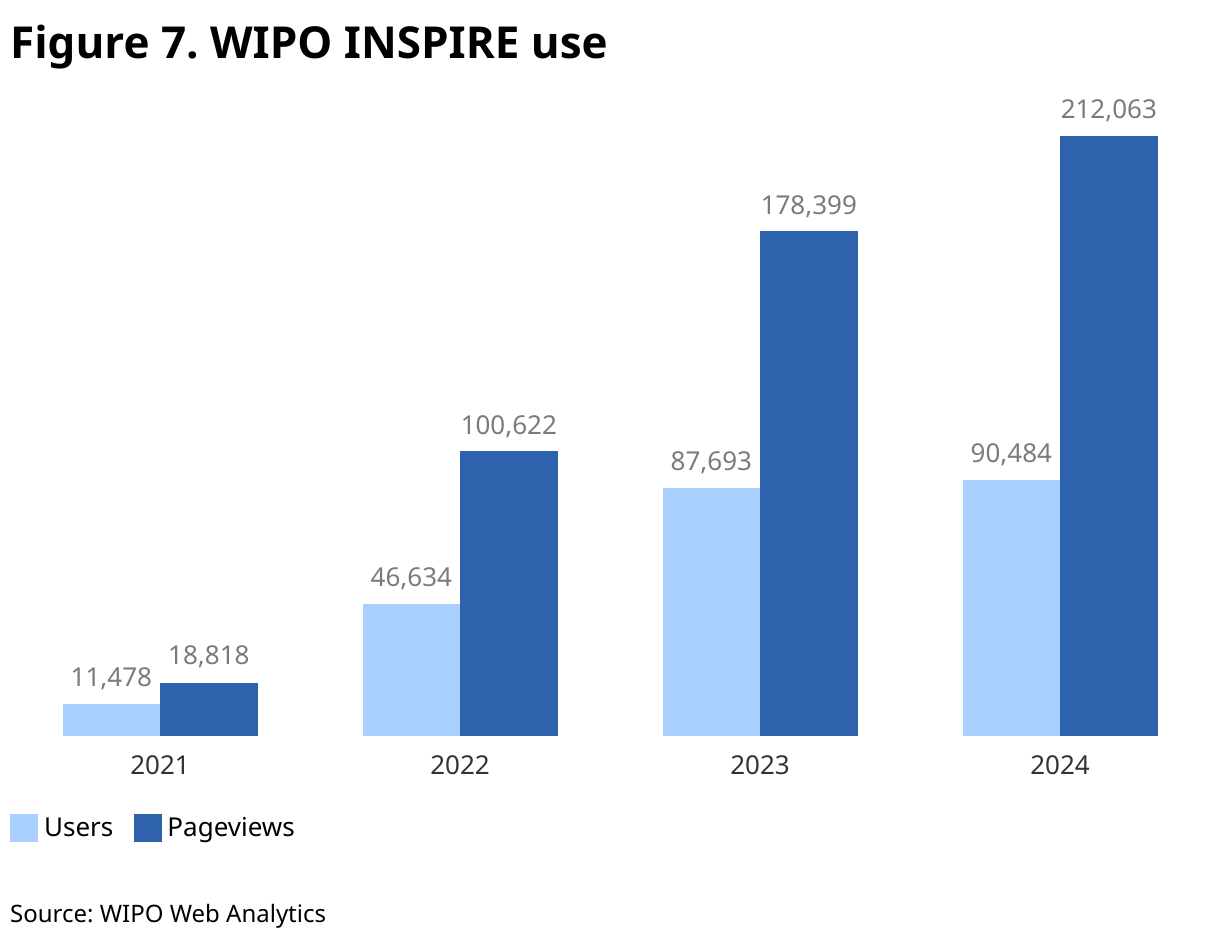
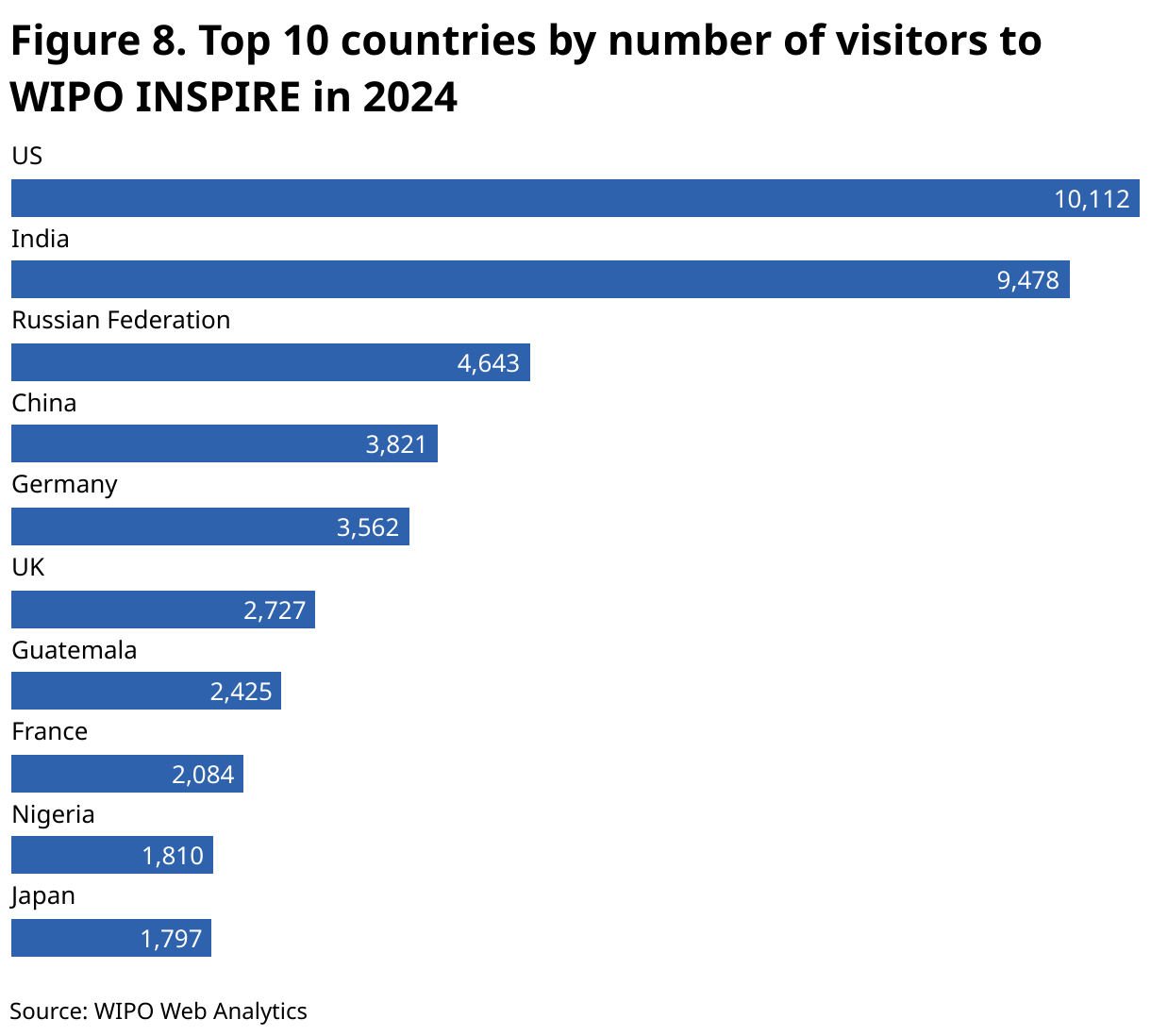
In 2024, over 90,000 users accessed WIPO INSPIRE, demonstrating its growing role as an essential resource for turning ideas into reality and making a meaningful impact.
Patent database reports
The Patent Database Reports Portal within WIPO INSPIRE is the ultimate guide to navigating the world of patent databases. This powerful resource delivers clear, unbiased insights to help users choose the most appropriate database for specific needs. With 50 in-depth reports covering national and commercial databases, the portal attracted almost 44,000 users in 2024, each leveraging its expert analysis to sharpen their patent strategies and stay ahead of the competition.
Patent registers
The Patent Register Portal in WIPO INSPIRE is a dynamic gateway to global patent legal status information, connecting users to key online registers and gazettes across more than 200 jurisdictions. Designed for patent professionals, businesses, and researchers, it features an interactive search and in-depth jurisdiction files with information on where and how to access legal status data, as well as search tips. In 2024 alone, over 10,000 users accessed the portal to acquire this information.
IP analytics
WIPO INSPIRE also offers a reference point for access to IP analytics resources, in particular PLRs and WIPO Technology Trends reports, which track the development of technologies through the analysis of IP data on innovation activities that help inform policy discussions, strategic research planning and technology transfer.
Through the platform, users can access 21 PLRs prepared by WIPO and over 270 PLRs prepared by other organizations, as well as the Technology Trends reports on AI and assistive technology, which were downloaded more than 326,000 times between 2019 and the end of December 2024.
Technology transfer and institutional IP policies
The Knowledge and Technology Transfer webpage, accessible via WIPO INSPIRE, serves as a central resource for information on knowledge and technology transfer and institutional IP policies. It provides access to WIPO’s Institutional IP Policies Database, with links to existing IP and related policies from universities and research institutions worldwide, such as policies on consulting, copyright, conflicts of interest, software, open access and spin-offs.
In 2024, the Institutional IP Policies Database underwent a major upgrade, including migration to a modern content management system to improve stability and scalability. The search function is now faster and more intuitive, and the content has been extensively reviewed and refined. One thousand five hundred policy documents from 718 institutions were updated to ensure accuracy and relevance. The database also features expanded content, making it a more comprehensive resource. These enhancements have led to notable improvements in user engagement: downloads surged by 321percent to 121,238, unique visitors increased by 118 percent to 97,242, and total pageviews reached 126,552 in 2024.

“This database is indispensable for developing IP policies. It’s an excellent resource, offering contract templates, confidentiality agreements and other key information for effective IP management. I frequently use it to identify emerging IP trends in academia and promote IP policy importance.
–José Luis Solleiro, National Autonomous University of Mexico
eTISC
Through WIPO INSPIRE, users can access eTISC, a virtual knowledge-sharing platform designed to provide a dedicated space for the TISC community and IP professionals to collaborate and exchange knowledge and ideas.
Key features of the platform include:
“Ask the Expert” sessions, offering the chance to interact with specialists in areas such as patent information and technology transfer;
Group and forum discussions for sharing knowledge and experiences; and
News and events that keep users informed on the latest developments in IP.
The thematic webinar series and “Ask the Expert” sessions continued in 2024, focusing on the theme of IP financing and how IP assets can be used to secure loans. Spanning over eight months, the sessions covered the following topics:
What attracts investors and financial institutions to invest in IP assets;
IP financing policies;
Risks associated with IP financing; and
The future of IP financing for economic growth.
These webinars attracted a wide range of participants, including IP professionals, researchers, students and entrepreneurs.
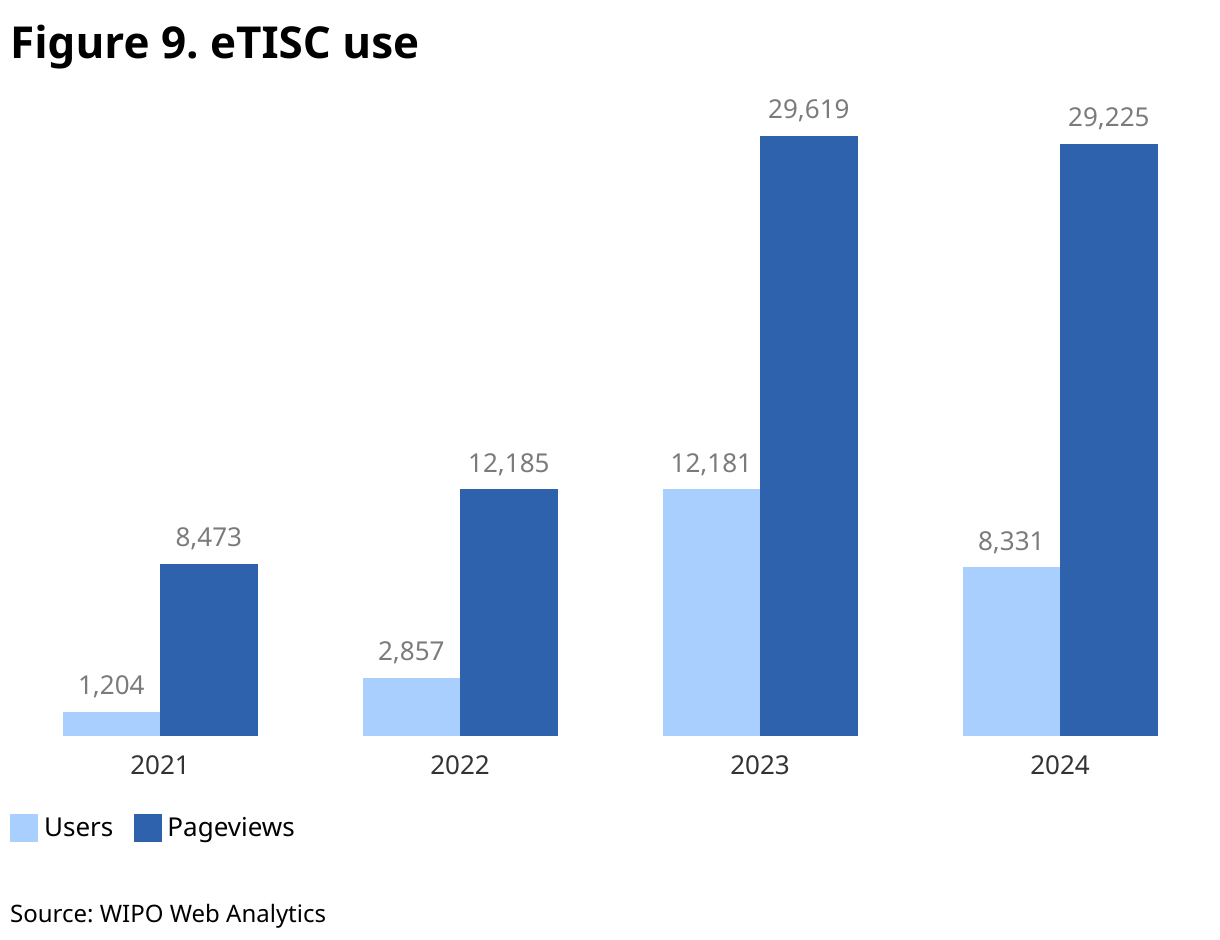
In 2024, the eTISC platform received 8,331 unique visitors, who continue to gain from its latest updates on TISC-related activities, news and articles.
Inventor Assistance Program (IAP)
The IAP helps inventors and small businesses with limited resources turn their innovations into commercial assets by matching selected beneficiaries with volunteer patent specialists who guide them through the patent system at no cost. The program supports IAP beneficiaries in securing patent protection both domestically and in selected jurisdictions.
Local TISCs play a key role in promoting the IAP and in providing additional services in many participating countries. For example, in Colombia, the IP office collaborates closely with TISCs to promote the program in the country’s regions. In Morocco, TISC focal points volunteer their patent drafting services for IAP beneficiaries. In the Philippines, TISCs are considered part of the IAP, offering legal advice, prior art searches, and patent drafting services to inventors.
IP and innovation collaboration
Preliminary activities to create a compilation of effective institutional policy frameworks and good practices for innovation collaboration and to develop associated reference and training materials were launched within the framework of the Development Agenda Project on IP and Innovation Collaboration as a Foundation for Technology Transfer and Bringing Research Output to Market. Four pilot countries were selected to participate in these activities, namely Colombia, Philippines, Rwanda, and Saudi Arabia.
Arbitration and mediation
The WIPO Arbitration and Mediation Center provides time- and cost-efficient alternative dispute resolution options, including mediation, arbitration, expedited arbitration, and expert determination, to help private parties settle domestic or cross-border commercial disputes. TISCs receive a 50 percent reduction in registration and administration fees for the Center’s alternative dispute resolution services, offering a cost-effective alternative to court litigation for resolving IP and technology disputes.
TISC Project and Performance Management Platform (TPPM)
TPPM is designed to reinforce the global TISC network by gathering and analyzing performance data to effectively monitor and manage national projects. The platform helps national TISC coordinators follow up on their projects efficiently while simplifying coordination, evaluation and reporting processes.
The platform fosters greater collaboration between countries and WIPO, facilitating seamless tracking of TISC initiatives globally. By offering real-time insights, it ensures timely support, capacity-building and targeted assistance, enabling TISC networks to operate more effectively and maximize their impact.
TPPM has undergone a comprehensive review and optimization in 2024 and is now available for all TISC networks. WIPO provides guidance to national TISC coordinators in the development of their projects in TPPM and trains them in the use of the platform.
Training to expand knowledge and skills
To increase the capacities, knowledge and skills within TISCs, WIPO provides training through onsite and online workshops, WIPO Academy distance learning courses and specialized learning resources on patent searches, including state-of-the-art, novelty and freedom-to-operate searches, patent analytics and technology transfer.
In the area of technology transfer, IP management and IP commercialization, training programs focus on the development of human capital regarding pillars of the innovation ecosystem, such as institutional IP policies, the establishment and management of technology transfer structures, and capacity building in IP marketing, licensing and valuation.
TISC Staff Certification Program
To increase the standardization of TISC operations, raise the quality of services across TISCs and improve career development pathways for TISC staff, a WIPO TISC Staff Certification Program, which aims to establish a curriculum-based professional certification for TISC staff, was developed by the IP for Innovators Department (IPID) in collaboration with the WIPO Academy. The first pilot session of the TISC Foundation Certificate Course course was launched with 48 participants from six countries (China, Kenya, Madagascar, Peru, Philippines and Saudi Arabia).
This course includes two phases: a distance learning phase, which focuses on the fundamentals of IP and an introduction to TISC services, and a series of instructor-led training seminars that focus on developing the foundational skills for building TISC core competencies, such as patent searching and the use of patent search databases.
At the end of the pilot run, with a passing rate of 75 percent, 36 TISC staff members successfully completed the Foundation Certification course and are now officially recognized as “Certified TISC Staff.”
National and regional training for TISCs
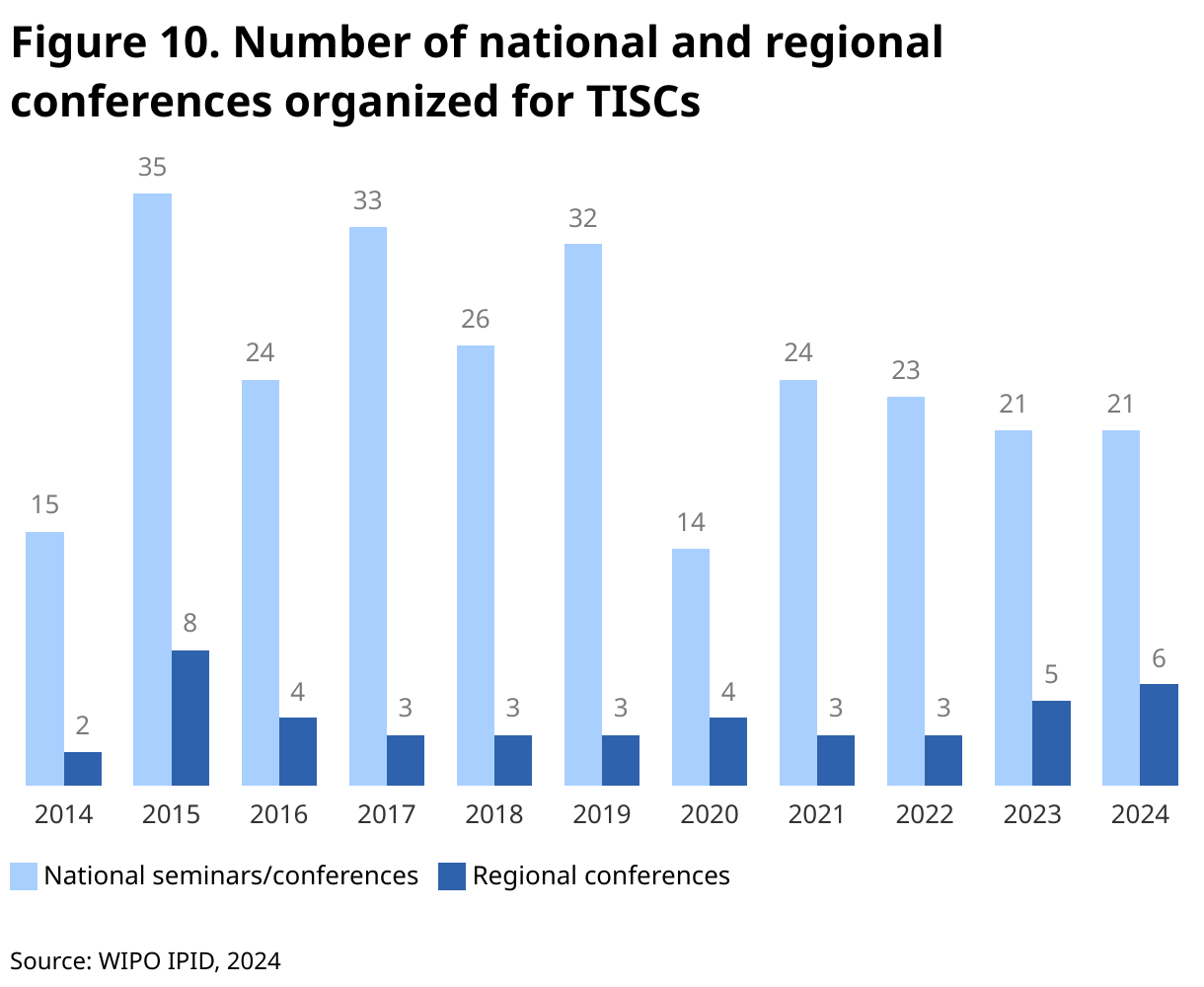
In 2024, 21 workshops were held for national TISC networks to help develop the technical skills needed to provide high-quality innovation support services to local innovators. Additionally, six regional meetings were organized for TISC networks in ARIPO member states, ASEAN member states, select networks in the Arab region, CATI-CARD and the Central Asian Republics.
IP analytics training
To help TISCs enhance their patent analytics skills, several dedicated training programs were held. These included a seminar for TISCs in Latin America, held in Rio de Janeiro, Brazil; a seminar on IP analytics and innovation in the ASEAN region, held in Bangkok, Thailand; and a dedicated session on patent analytics as part of the online TISC Regional Meeting for the Arab Region.
More broadly, as IP continues to shape global innovation landscapes, it is important that WIPO stays ahead of evolving educational trends and modernizes the way in which it delivers training. Traditional training methods, while effective, often struggle to fully engage participants, particularly when explaining complex subjects such as patent analytics. To bridge this gap, there is a growing need for more interactive, experiential learning approaches that enhance knowledge retention and practical application.
Recognizing this, WIPO took an innovative step forward by incorporating game-based learning into its patent analytics training programs. The first-ever game-based learning on patent analytics, “Patent Quest: Navigating Innovation Horizons", was launched in 2024. This was developed in partnership with a Norwegian company, House of Knowledge, as a serious game for training in patent analytics.
Serious games are educational or training games that are designed with a primary purpose other than pure entertainment. They are created to teach specific concepts skills, or knowledge while maintaining the intrinsic motivation and engagement that games often provide, and make learning more enjoyable, interactive and effective.
The new WIPO “Patent Quest: Navigating Innovation Horizons” board game introduces patent analytics and the development of patent landscape reports in a fun and accessible way. Following its launch in Africa, this new approach to learning and training in patent analytics has been successfully rolled out as part of training events in Latin America and Asia. A representative of a Chilean TISC commented “Patent analytics is a complex topic, but with the Patent Quest game, learning about it becomes fun, in an engaging and immersive experience”.
 "Patent Quest: Navigating Innovation Horizons” board game in Pretoria, South Africa, January 23–25, 2024
New trademark and industrial design searches training materials
WIPO has established a partnership with the International Trademark Association to develop reference guides and training materials on trademark and industrial design search, enabling TISCs to expand their service offering into these areas and support entrepreneurs and designers to build trusted brands and gain value from their designs.
Patent drafting training
Transforming inventions into well-crafted patent applications requires a combination of knowledge and skills that can only be acquired through a comprehensive hands-on experience. Learning from experienced practitioners, the International Patent Drafting Training Program enhances patent drafting skills to secure the best available protection for inventions.
The program, now in its fourth year, has been developed by WIPO in cooperation with the International Federation of Intellectual Property Attorneys. More than 100 participants from over 50 countries have benefited from the course (including several TISC staff, who are among the program's targeted audience) and other WIPO drafting training offers. The program is currently conducted in English and will also be offered in Spanish as of 2026.
Countries can officially recognize the program, integrating it within their local qualification and training for patent professions, through a Memorandum of Understanding. This gives local participants an extra benefit for joining the program.
Technology transfer and IP commercialization training
To help TISCs strengthen their ability to meet the evolving needs of innovators, additional training on knowledge and technology transfer and IP commercialization is being gradually introduced. This includes training on IP management, IP marketing and commercialization strategies, technology licensing, IP valuation and IP financing, as well as institutional IP policies.
In the ASEAN region, three national training seminars based on the new ASEAN IP Valuation Toolkit were organized to improve the valuation capacity in the region: one each in Indonesia, Malaysia and the Philippines, reaching a total of 450 professionals. The seminars offered an opportunity to gain insights and knowledge on IP valuation from both local and international experts. Participants engaged in hands-on exercises, group discussions and case study analyses. This practical approach provided participants with concrete and actionable skills.
To enhance IP commercialization capacities in Central Asia and the wider Eurasian region and strengthen synergies between TISCs and techno-parks, a joint regional training was organized with the Eurasian Patent Organization in Astana, Kazakhstan, in December. As the fourth in a series of trainings aimed at enhancing the capacity of techno-parks and promoting effective IP commercialization and technology transfer, the meeting opened new avenues for collaboration and highlighted the significant potential for better integrating TISC services into techno-park activities and for creating a unique integrated innovation ecosystem in the region capable of addressing critical development needs.
In Latin America, TISCs in Argentina received training on IP management and commercialization, which included the following topics: patent drafting, structure and negotiation of technology licenses, proof of concept methodologies, and institutional IP policies. TISCs in Guatemala also benefited from virtual introductory training on key concepts in technology transfer.
In response to the challenges posed by the COVID-19 pandemic, specific resources and training initiatives were also developed to enhance awareness and comprehension of the intricate interplay between global health, access to medical technologies, innovation, technology transfer and trade. The focus on life sciences has been a direct result of WIPO’s continuous efforts to deliver customized, targeted and impact-driven support to address country-specific needs and priorities during the post-pandemic period, to harness the potential of IP as a tool that not only addresses the consequences of such a pandemic but also meets the most urgent healthcare needs worldwide.
In this context, TISC staff and other representatives from institutions involved in IP and technology transfer from four Eastern African countries (Ethiopia, Kenya, Rwanda and the United Republic of Tanzania) attended a WIPO East African Regional Conference in June 2024 in Kampala, Uganda, on skills development and capacity building in support of life sciences innovation.
The conference provided a platform for knowledge sharing, networking and capacity-building, and addressed the unique challenges and opportunities faced by the East African region in the context of life sciences innovation and IP management and technology transfer in this field. The following topics were explored:
Fundamental knowledge and abilities related to IP and technology transfer within the life sciences field;
Databases and strategies for performing searches for chemical compounds and biological sequences;
Patent disclouse requirements in the life sciences field;
Management and licensing strategies for genetic-resources-based IP; and
IP policies relevant to the life sciences.
 WIPO African Regional Conference in Support of Accelerated Life Sciences Innovation – Skills Development and Capacity-Building, Kampala, Uganda, June 11–12, 2024 Photo: Courtesy of the Uganda Registration Services Bureau
In 2024, a new flexible program aimed at deep-tech innovators and ventures looking to bring early-stage technologies from laboratory to market was also launched. The program, entitled “Scale Up Your IP” and currently in its pilot phase, is delivered in collaboration with university incubators and techno-parks, providing a set of IP commercialization modules, handouts and exercises that can complement services offered to their resident ventures and spin-offs.
The objective is to equip them with the ability to embed IP strategies into their commercialization plan at an early stage, facilitating cost-effective decisions that will accelerate their growth. When synergies in objectives align, the program will be offered to a selected number of TISCs whose organizations have similar audiences from research-and-development intensive innovation ecosystems.
Training on institutional IP policies
For more than 10 years, WIPO has provided dedicated support to universities and research institutions in developing institutional policies for effective IP management and knowledge and technology transfer. The IP Policies for Universities and Research Institutions initiative has three main components:
The WIPO Policy Toolkit;
National and regional customized versions of the toolkit; and
Project-based coaching and technical assistance to individual institutions for developing tailored IP policies.
WIPO IP Policy Toolkit
The toolkit serves as a starting point to help academic and research institutions address key issues such as ownership of IP and rights of use of IP, IP disclosure, management, commercialization, incentives for researchers, record-keeping, accounting and conflicts of interest. The toolkit includes an IP Policy Writer’s Checklist, an IP Policy Template for Academic and Research Institutions, and Guidelines for Customizing the Template.
National and regional models
National and regional institutional IP policy models integrate local laws, regulations and practices, and are tailored to the country or region’s socioeconomic context. They aim to facilitate policy adoption at the institutional level and promote harmonization across institutions at the national or regional level to enable more effective academic–industry collaboration.
National IP policy models have been developed for 11 countries so far, with more in progress. At the regional level, an ASEAN Institutional IP Policy Model was developed in 2023 through a WIPO project in collaboration with the ASEAN Secretariat and supported by the Japan Industrial Property Global Funds-In-Trust. Building on this, in 2024, WIPO provided mentorship-based support to eight institutions from Brunei Darussalam, Cambodia, the Lao People’s Democratic Republic and Thailand to help implement the model at the institutional level.
A third regional model is currently under development for Latin America and the Caribbean. In May 2024, universities and research institutions from the Central America and the Dominican Republic (CATI-CARD) regional TISC network convened in San José, Costa Rica, to begin drafting a model regional institutional IP policy.
 WIPO Regional Meeting of Experts on the Development of a Regional Model IP Institutional Policy for Universities and R&D Institutions for the Countries of the Regional CATI-CARD TISC network, San José, Cosa Rica, May 29–30, 2024 Photo: Courtesy of the National Registry of Costa Rica
Support to individual institutions
Tailored assistance is also provided to individual institutions. In 2024, WIPO supported the development of customized institutional IP policies for universities and research institutions in El Salvador and Rwanda.
WIPO Academy distance learning courses for TISCs
To strengthen the capacities of TISCs, WIPO offers distance learning courses through the WIPO Academy, providing accessible training in areas such as patent searches, patent analytics and technology transfer.
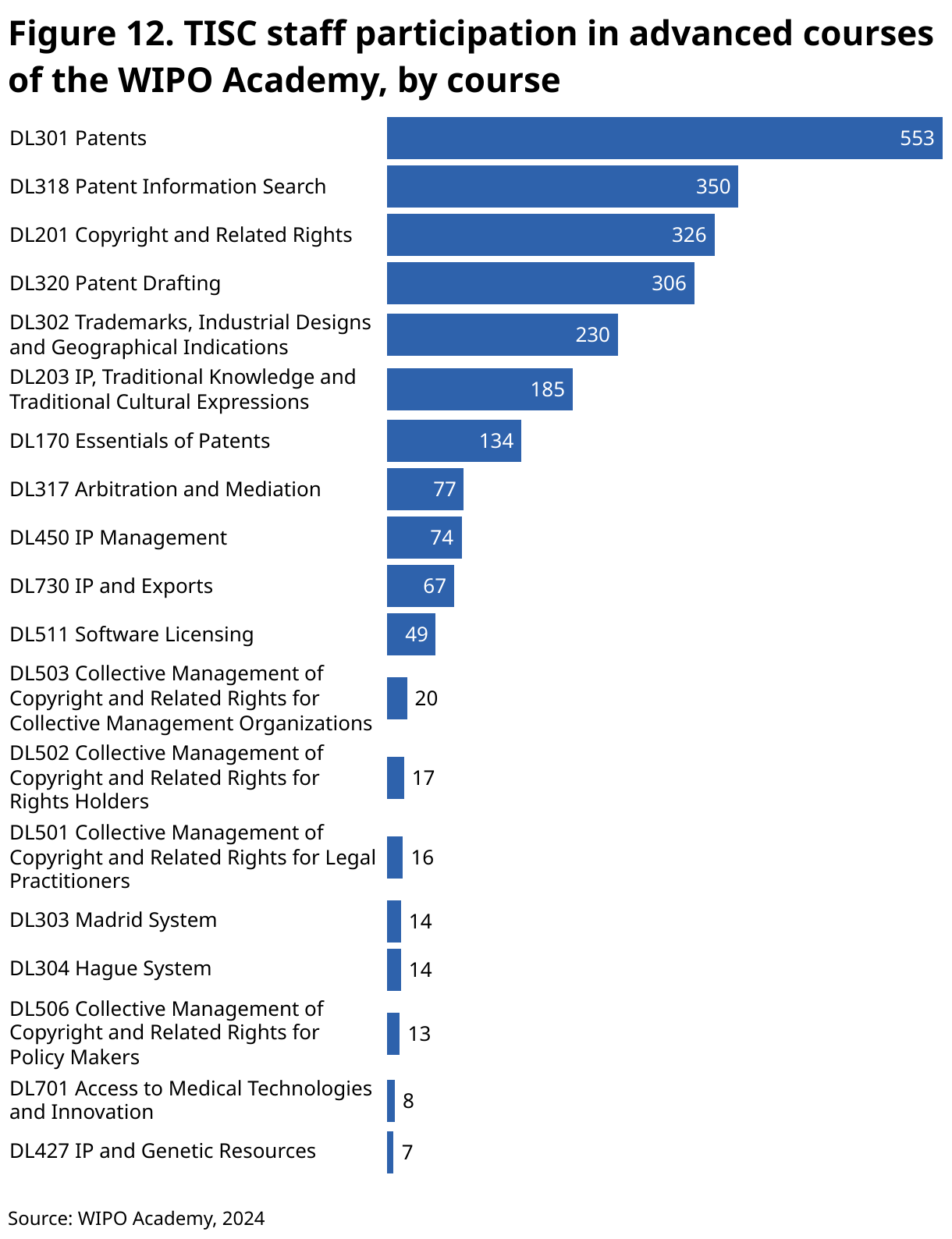
The e-Tutorial on Using Patent Information, which was launched in 2020 as a distance learning course (DL-177) through the WIPO Academy platform, is a self-paced course specifically developed for TISCs comprising three learning modules: patent basics, patent search and retrieval, and patent analysis. It is currently available on the WIPO Academy platform in English, French, Russian and Spanish.
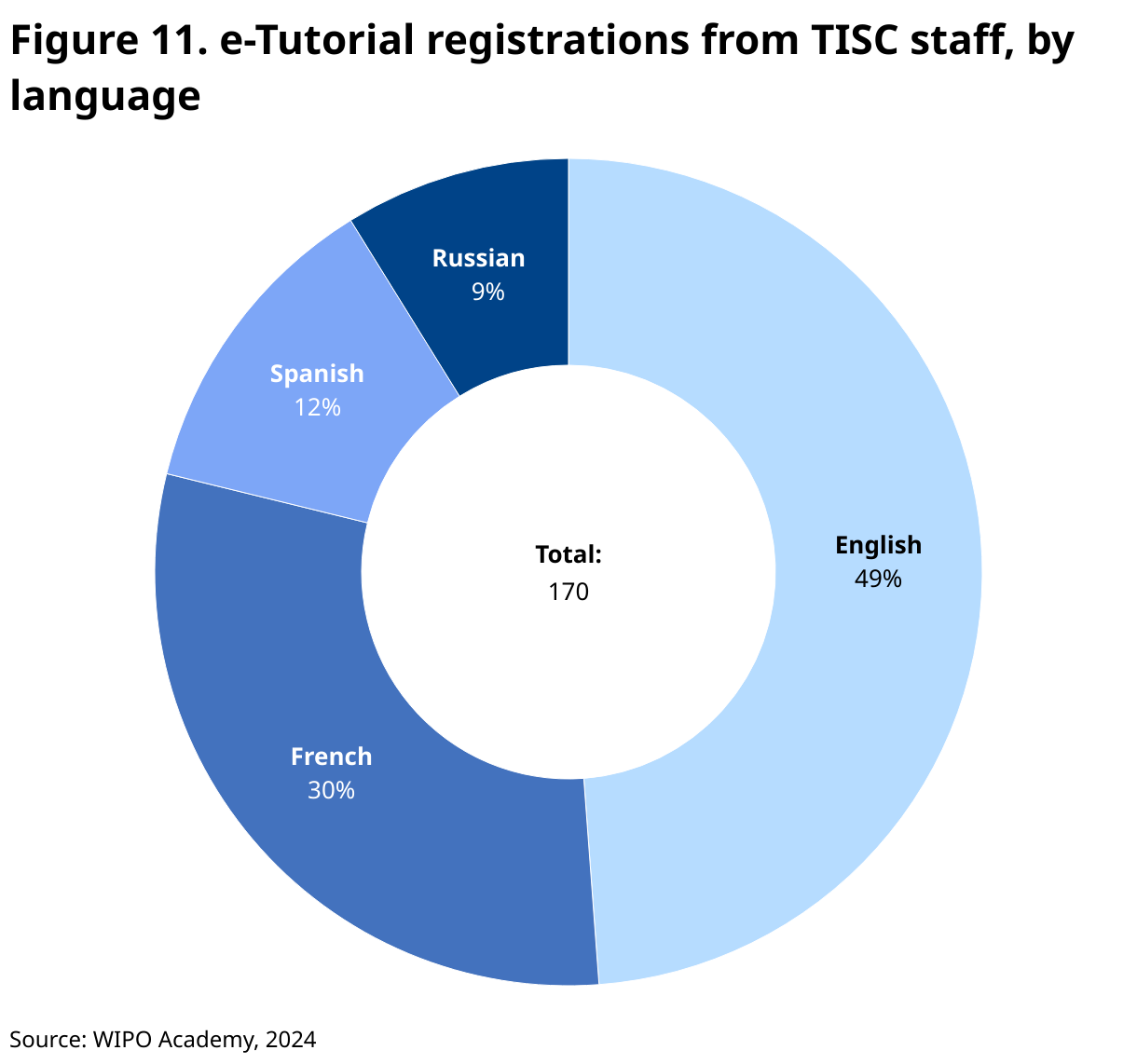
In 2024, a total of 3,661 TISC staff enhanced their expertise through distance learning courses offered by the WIPO Academy, including those in advanced specialized fields, as shown in Figure 12.
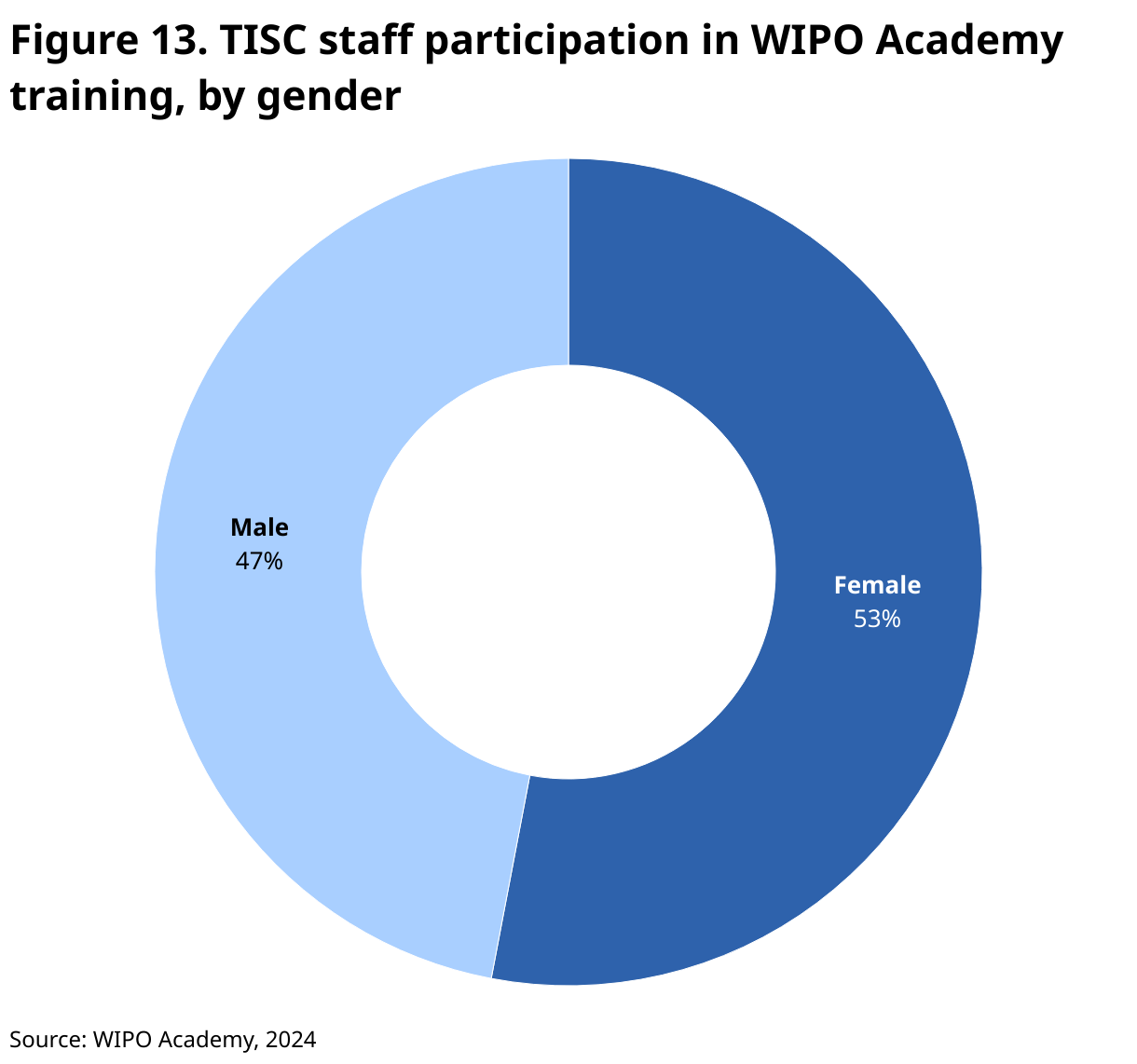
A significant share of participation continued to focus on patent-related courses, reflecting the ongoing need for TISC staff to provide high-level support to local researchers, inventors and entrepreneurs navigating the patent system. But there was also strong engagement in advanced training on trademarks, industrial designs, copyright and related rights, and IP management, indicating a growing demand for broader IP knowledge. Overall, 68 percent of TISC participation was in advanced courses, while 32 percent was in general courses. The gender distribution among participants was 53 percent female and 47 percent male (see Figure 13).
Publications to support training and reinforce learning
Training is supported by publications developed for TISCs to reinforce learning. These publications are key reference sources on a range of subject areas such as patent documentation and databases, patent searches, patent analytics, patent drafting, technology transfer, IP management and commercialization. They are available in multiple languages.
The WIPO Guide to Using Patent Information (re-published in 2022) and the Understanding Industrial Property booklet are essential reference materials for TISCs, helping them reinforce their knowledge and supporting them in providing services, such as assisting with using patent databases and conducting patent searches.
In 2024, the Toolkit on New Product Development and Inventions in the Public Domain was published. Complementing the WIPO guides Identifying Inventions in the Public Domain and Using Inventions in the Public Domain, the toolkit supports systematic decision-making in the development of new products and services based on inventions in the public domain. It includes a set of practical tools to help researchers, inventors and entrepreneurs make informed decisions during each stage in the new product development process and successfully bring their products and services to the market. To support self-learning, the toolkit builds on a mix of digital materials including videos, step-by-step instructions and examples with completed datasets.

“These tools are crucial for effectively managing and commercializing technologies. They will not only help streamline the commercialization process but also ensure that the innovations generated within the region align with market demands and provide tangible benefits.”
– Ms. Angeline Baldapan-Elegio, Director, Innovation and Technology Support Office, Bohol Island State University, Bohol, Philippines
IP analytics publications
The WIPO Technology Trends reports are flagship publications that track technology trends through the analysis of patent and other data to provide empirical evidence on innovation in specific fields. The resulting knowledge helps business leaders, researchers and policymakers in their decision-making. The first report in the series was published in 2019 and focuses on trends in AI. The second report, published in 2021, was the first large-scale overview and analysis of patenting and technology trends in the field of assistive technology, and provides information about the state of play in technologies that assist people living with physical or cognitive impairments. The WIPO Technology Trends reports on AI and assistive technologies were together downloaded more than 326,000 times between 2019 and the end of December 2024.
The third report in the WIPO Technology Trends series, developed and prepared throughout 2024 and published at the start of 2025, focused on the Future of Transportation. By investigating the latest transportation patenting trends, the report identifies the most innovative countries, companies and institutions using a data-driven approach, combining traditional patent searches with AI-powered topic extraction.
Patent Landscape Reports (PLRs) prepared by WIPO over the years have covered topics of particular relevance to developing countries such as public health, food security, climate change and the environment. In 2024, three new PLRs were published – on Sustainable Development Goal-related patents, generative AI and agrifood technologies.
The PLR mapping global patents to the United Nations Sustainable Development Goals (SDGs), published in April 2024, provides invaluable insights into patent trends aligned with the SDGs and the state of technology development across these goals.
The PLR on generative AI, published in July 2024, looks at this cutting-edge technology, which is poised to disrupt various economic, social and cultural sectors, and which extends far beyond simple human-like text generation using chatbots.
Finally, published in September 2024, the PLR on agrifood provides a comprehensive and up-to-date look at the latest patent trends in agritech and foodtech, including patents relating to the innovation and technological advancements in a number of case studies across the sector.
In addition to these WIPO reports, WIPO also maintains a database providing access to over 270 PLRs prepared by other organizations.
Several learning resources and tools to help build capacity and develop the patent analytics skills of researchers and innovators in developing countries have also been developed by WIPO over the years. Methodological guidelines for preparing PLRs have been formalized in the WIPO Guidelines for Preparing Patent Landscape Reports, WIPO Manual on Open Source Tools for Patent Analytics and the WIPO Patent Analytics Handbook, with the latter two being revised and updated in recent years.
Technology transfer and IP commercialization publications
Several publications are available to support learning about knowledge and technology transfer and IP commercialization, including the Successful Technology Licensing manual and Incentives in Technology Transfer: A guide to encourage, recognize and reward researchers and professionals. The latter was launched to help universities develop innovative incentive programs for academic researchers, encouraging their participation in technology transfer and knowledge exchange activities.
To further support training on IP in life sciences and enhance understanding of the complex interplay between global health, access to medical technologies, innovation, technology transfer and trade, new practical guides are in development. These include resources on patent searches in biotechnology, disclosure requirements and the protection of pharmaceutical and biotechnology-related inventions. Practical guides and booklets on technology transfer and IP valuation in biotechnology and pharmaceuticals are also in the pipeline.
The WIPO Patent Drafting Manual helps inventors and their advisors acquire the technical skills needed to prepare and file well-drafted patent applications. Covering both theory and practice, the manual takes the user through the process of preparing, drafting, filing, amending and prosecuting patent applications. The drafting of both claims and descriptions are explained in detail, with tips and illustrations. In 2024, the manual was published in Arabic, in addition to English, French and Spanish.
The "Hands-on IP Finance" series of guides are another resource to help creators, innovators and businesses unlock the full potential of their IP assets for finance. By focusing on key IP assets such as software, technology, brands and creative works, these guides empower IP owners to articulate their value to potential lenders, financiers and investors. The series provides both strategic insights and practical templates, equipping IP owners with the tools they need to leverage their assets for securing finance and raising capital.
The first guide, Securing Loans with Your IP Assets, was launched in December 2024. It facilitates discussions between IP owners and lenders, providing insights into the lending process. The guide includes practical checklists and templates to help businesses and IP owners negotiate financing arrangements, maximize the value of their intangible assets and facilitate favorable financing terms.