
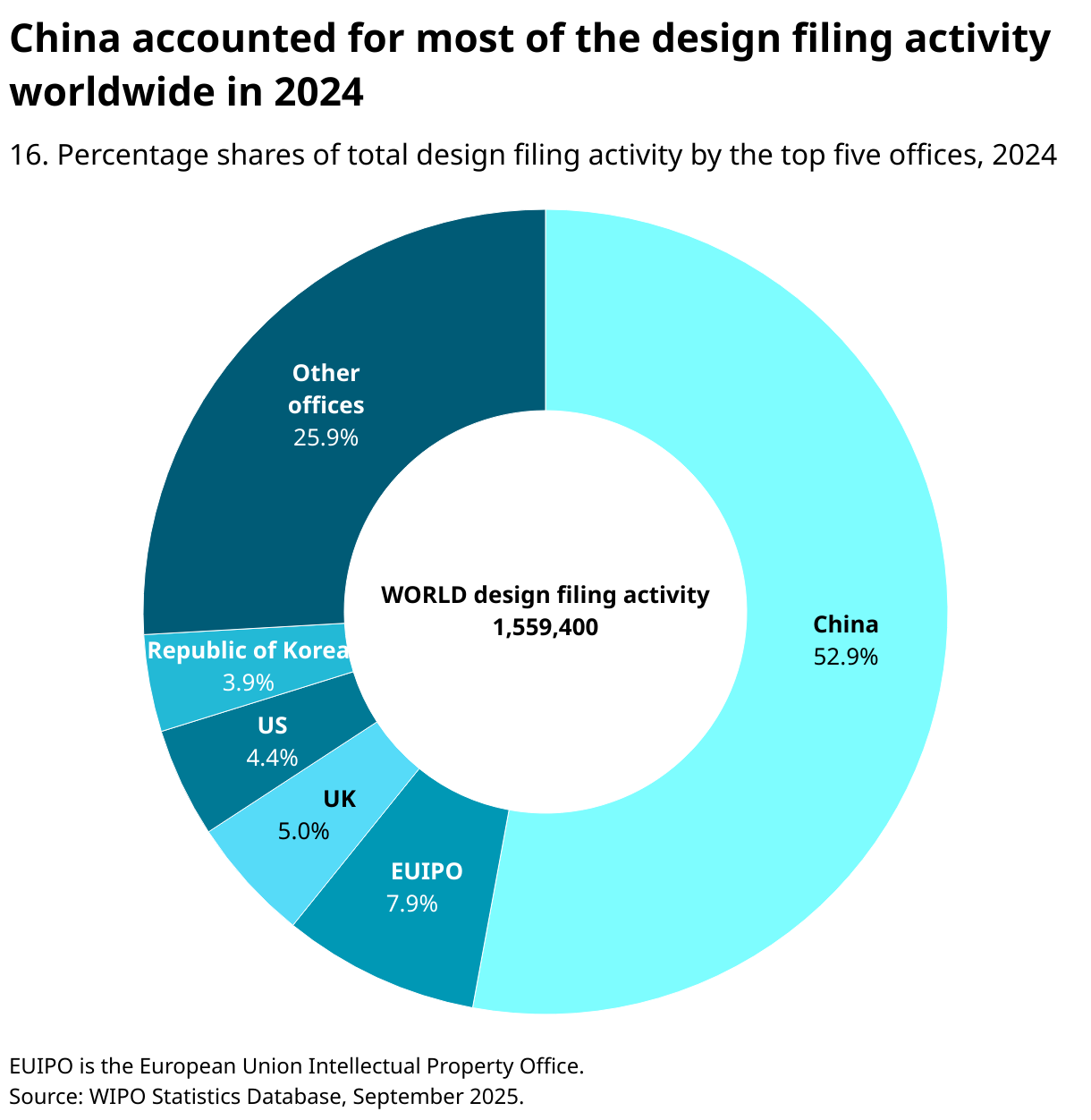
WIPO uses the application design count to measure filing activity for designs; that is to say, it counts not only the number of applications, but also the number of designs contained in applications. Design count is a better way of comparing filing activity across IP offices, because some offices allow several designs to be contained within a single application and others allow only one.
Worldwide design activity continued to grow in 2024, with an estimated 1.2 million applications filed. These applications contained about 1.6 million designs – an increase of 2.2% over the previous year.
In 2024, the top five offices accounted for nearly three-quarters (74%) of global design filing – as measured by design count. China's office alone received over half (52.9%) of the world total, predominantly originating from resident applicants. The European Union Intellectual Property Office (EUIPO) ranked second with 7.9%, followed by the United Kingdom (UK) office at 5%. The US and the Republic of Korea completed the top five, accounting for 4.4% and 3.9%, respectively.
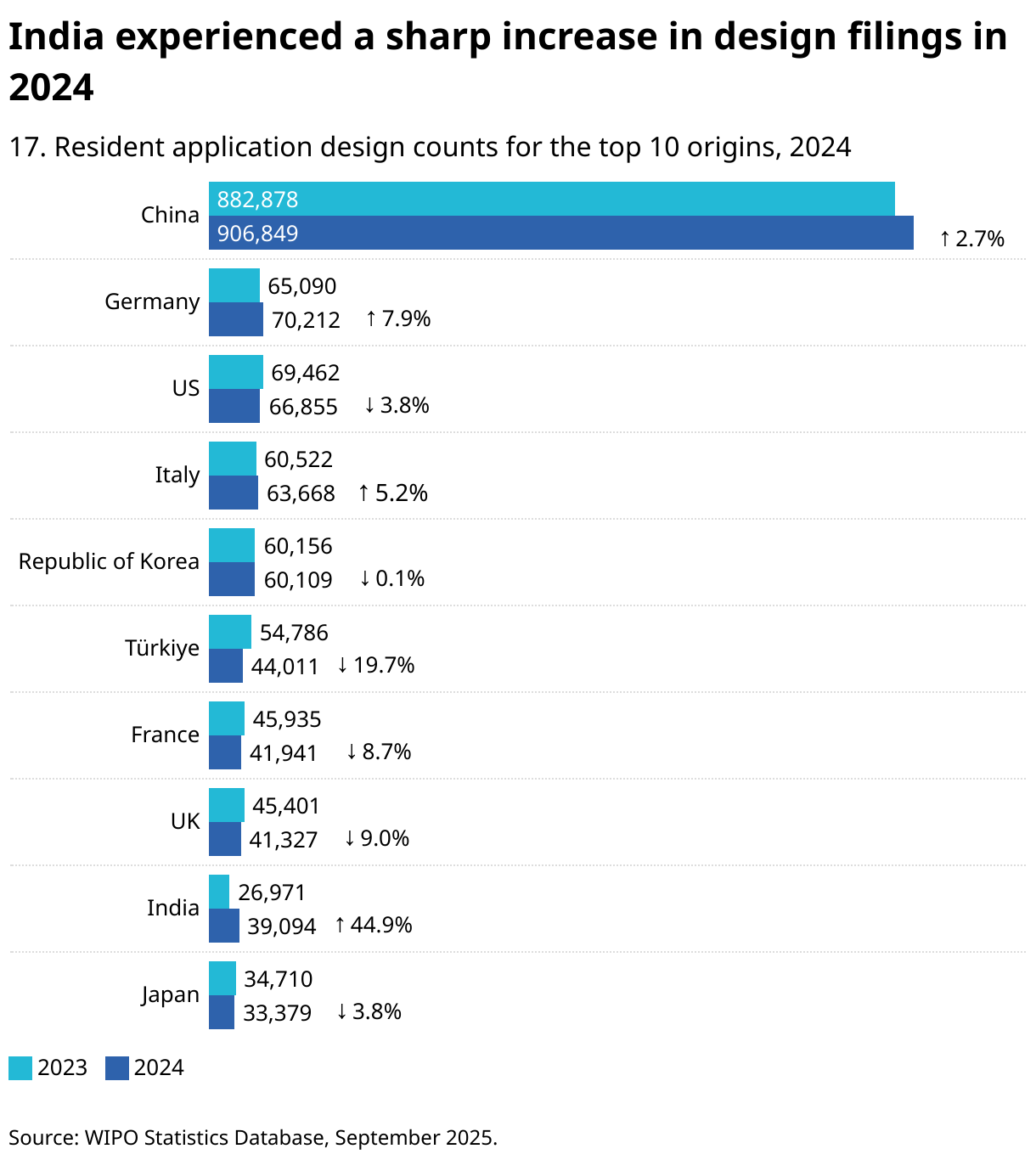
Applicants residing in China led global design activity in 2024, filing applications that contained 906,849 designs. Applicants located in Germany ranked second with 70,212 designs, followed by those in the US (66,855), Italy (63,668) and the Republic of Korea (60,109). These five countries of origin collectively represented three-quarters (74.9%) of worldwide design filing. Over the past decade, the combined share of the top five countries has increased by 5.6 percentage points, driven primarily by a surge in filing by China-based applicants.
Filing growth among the top five origins in 2024 was led by Germany (+7.9%), followed by Italy (+5.2%) and China (+2.7%). In contrast, the US (−3.8%) and the Republic of Korea (−0.1%) saw declines. Among the top 10 origins, India achieved exceptional growth of 44.9%, fueled by a substantial 47.9% increase in domestic filing combined with a 16.5% rise in filing abroad.
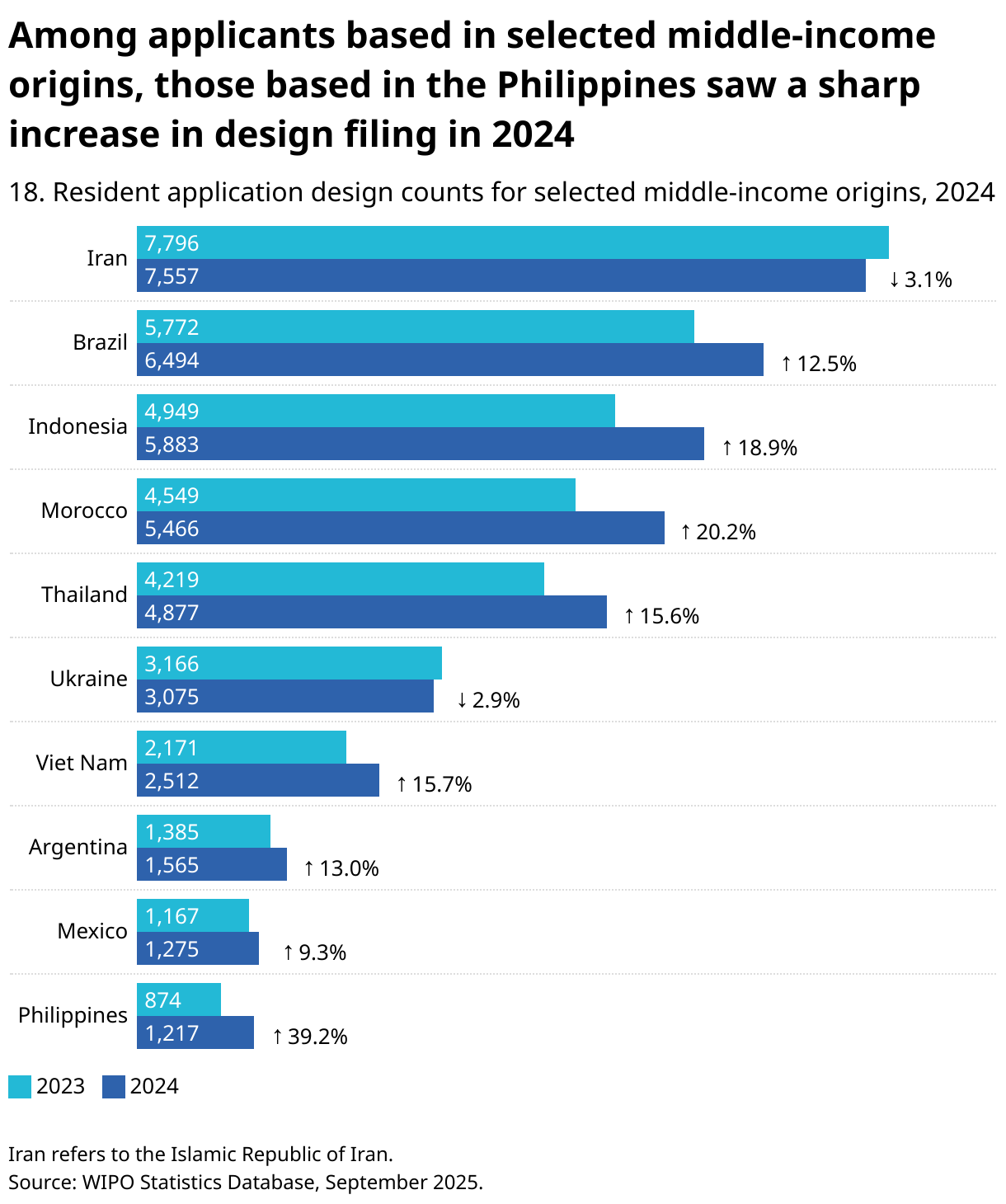
Figure 18 presents the total number of designs contained in applications filed worldwide by applicants domiciled in a selection of middle-income origins in 2024. Applicants based in the Islamic Republic of Iran (7,557), Brazil (6,494), Indonesia (5,883), Morocco (5,466) and Thailand (4,877) had relatively high volumes of design filing. Within the selected middle-income origins, notable growth occurred in the Philippines (+39.2%), Morrocco (+20.2%) and Indonesia (+18.9%). For the application design counts for all origins (where available), see statistical table 1.
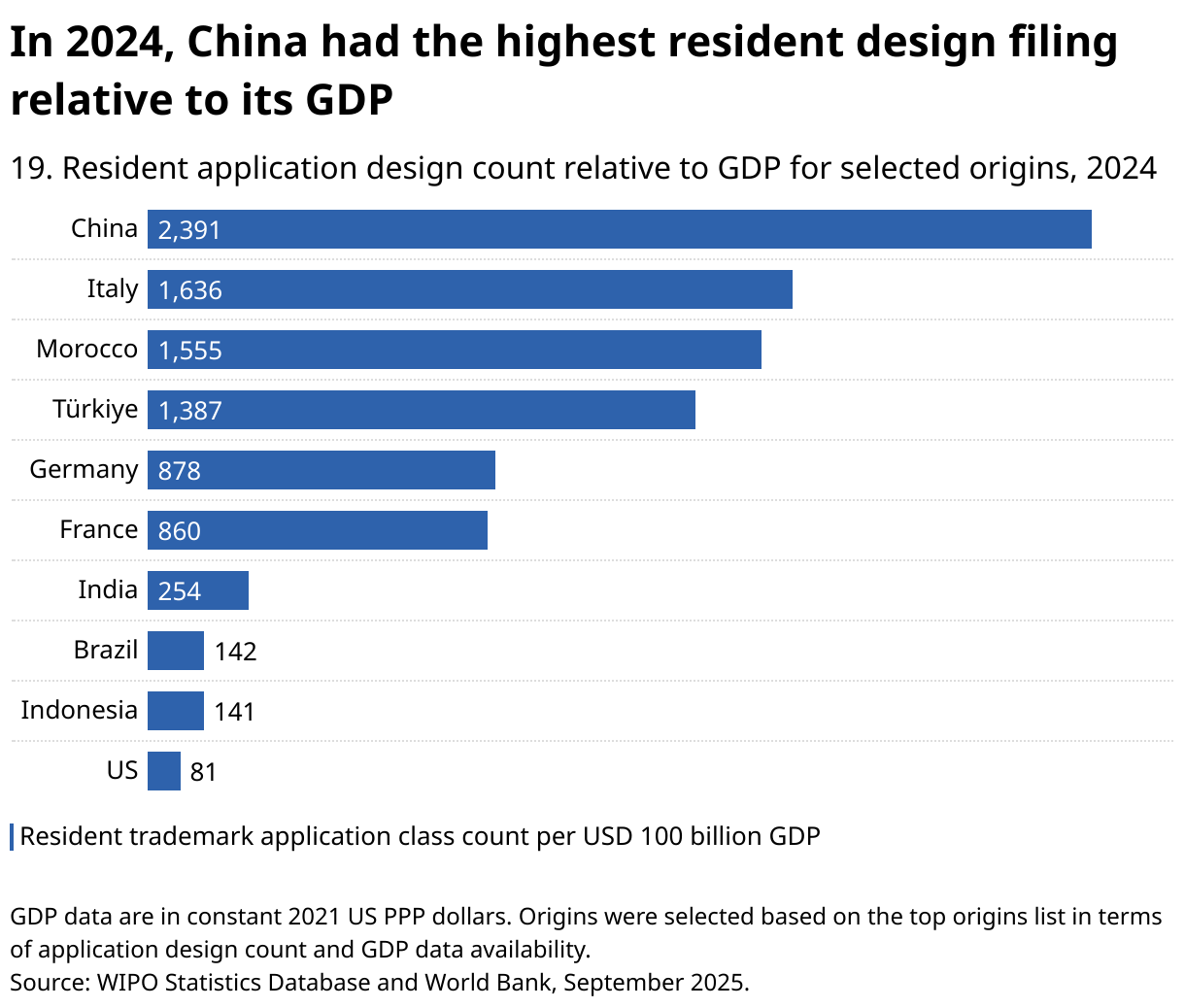
Calculating design counts per unit of USD 100 billion GDP enables a comparison to be made between the design filing activity of residents of countries whose filing systems are different (single-design versus multi-design) and whose economies vary in size. In 2024, China continued to have the highest resident design count per USD 100 billion of GDP, with a ratio of 2,391. China was followed by Italy (1,636), Morocco (1,555) and Türkiye (1,387). In contrast, the US (81), Indonesia (141) and Brazil (142) had notably lower ratios.
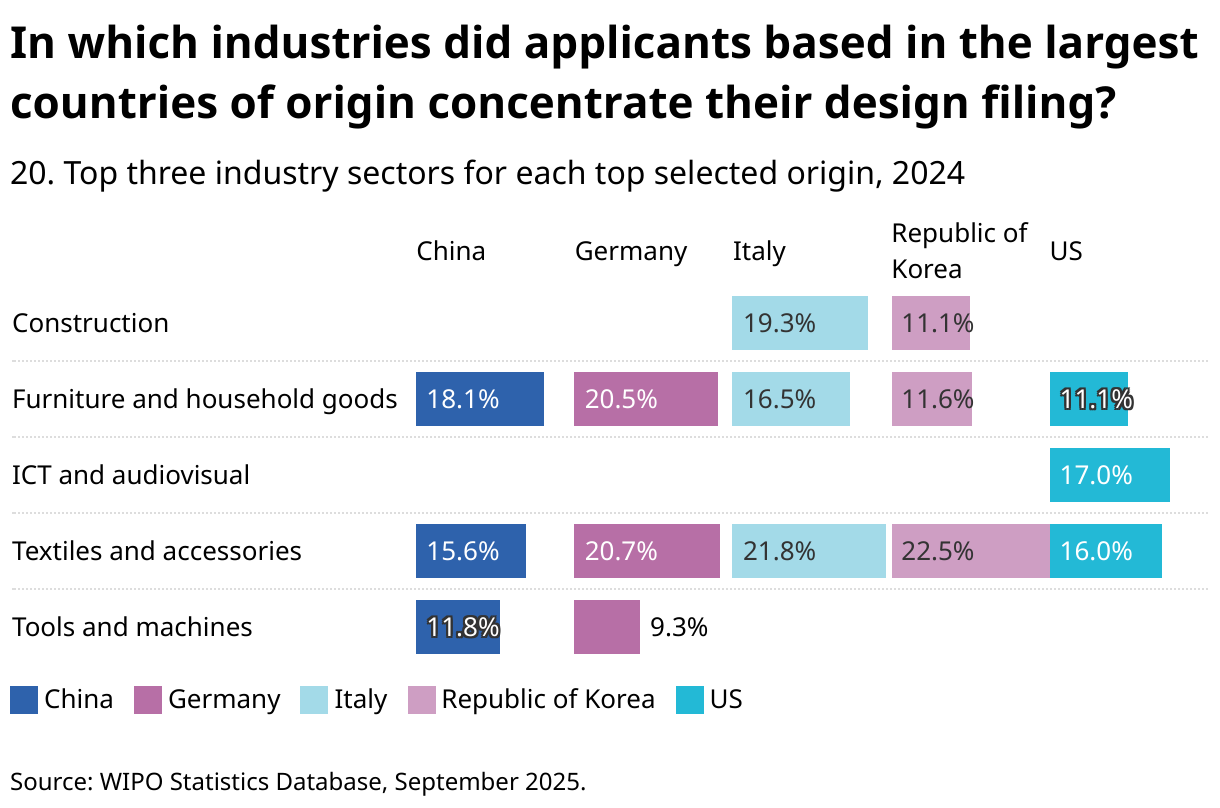
Grouping the 32 Locarno classes into 12 industry sectors serves to highlight the most important industry sectors for designs contained within design applications filed. In 2024, furniture and household goods and textiles and accessories were the two leading sectors, each accounting for 16.7% of global filing. They were followed by tools and machines (11.3%), ICT and audiovisual (9.2%) and electricity and lighting (8.9%).
Furniture and household goods and textiles and accessories featured among the top three sectors for design counts for all top five origins in 2024. Textiles and accessories ranked first for applicants based in Germany, Italy and the Republic of Korea. Furniture and household goods was the largest sector for China, while information and communications technology (ICT) and audiovisual was the top sector for applicants based in the US.