
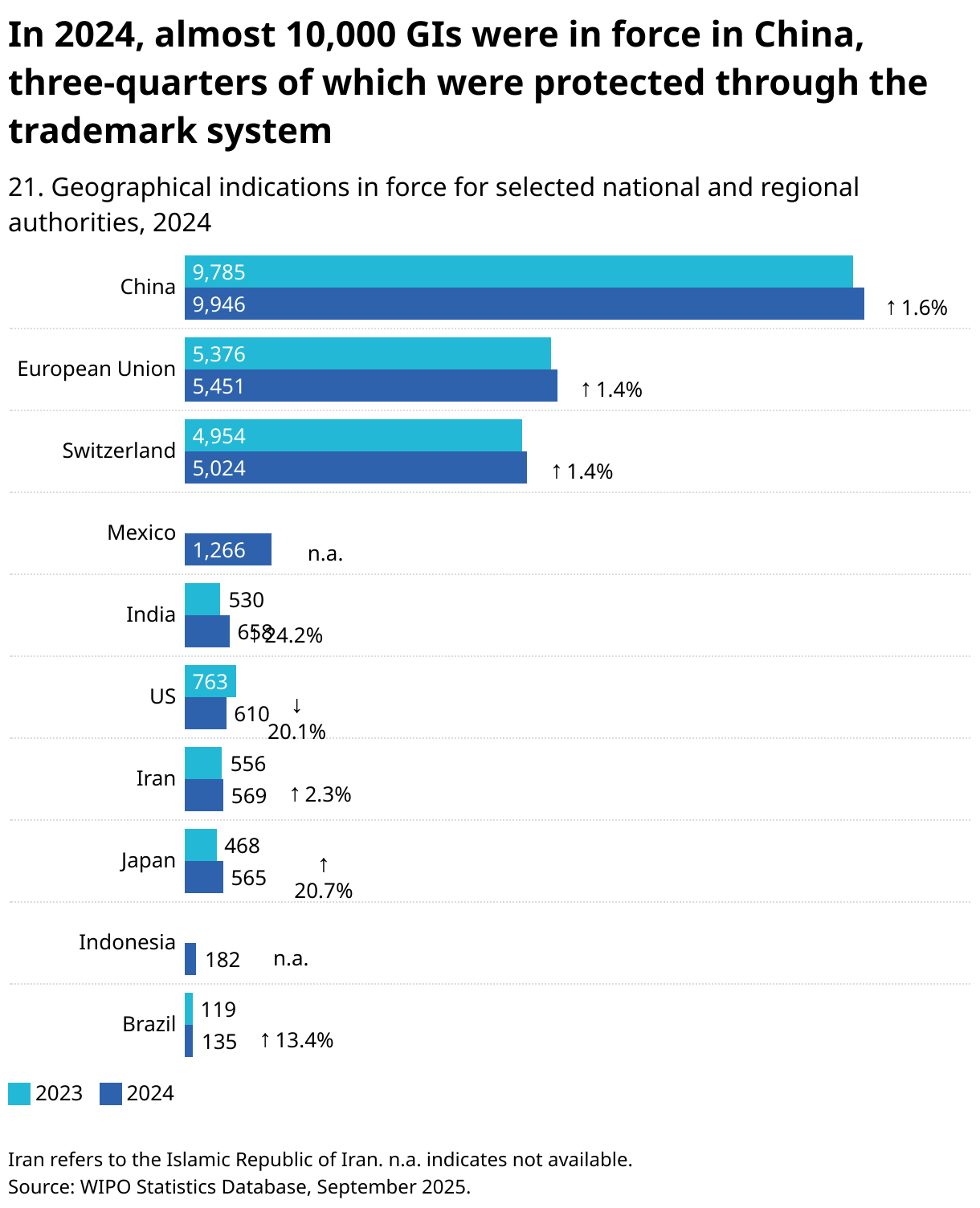
In 2024, China (9,946) had the most GIs in force within its territory, followed by followed by GIs in force via the European Union’s (EU) regional system (5,451) and Switzerland (5,024). Germany (7,661), Hungary (7,365), the Czech Republic (6,782) and Portugal (6,466) (see statistical table 2) also have a large number of GIs in force within their respective territories. However, the high rankings achieved by EU countries is explained by the fact that the 5,451 GIs in force throughout the EU regional system are in force in every member state. In addition, some EU member states, such as Hungary and Portugal, are party to the Lisbon System; therefore, GIs in force via the Lisbon System (1,106 appellations of origin and geographical indications, excluding domestic and refusals) are also included in the total.
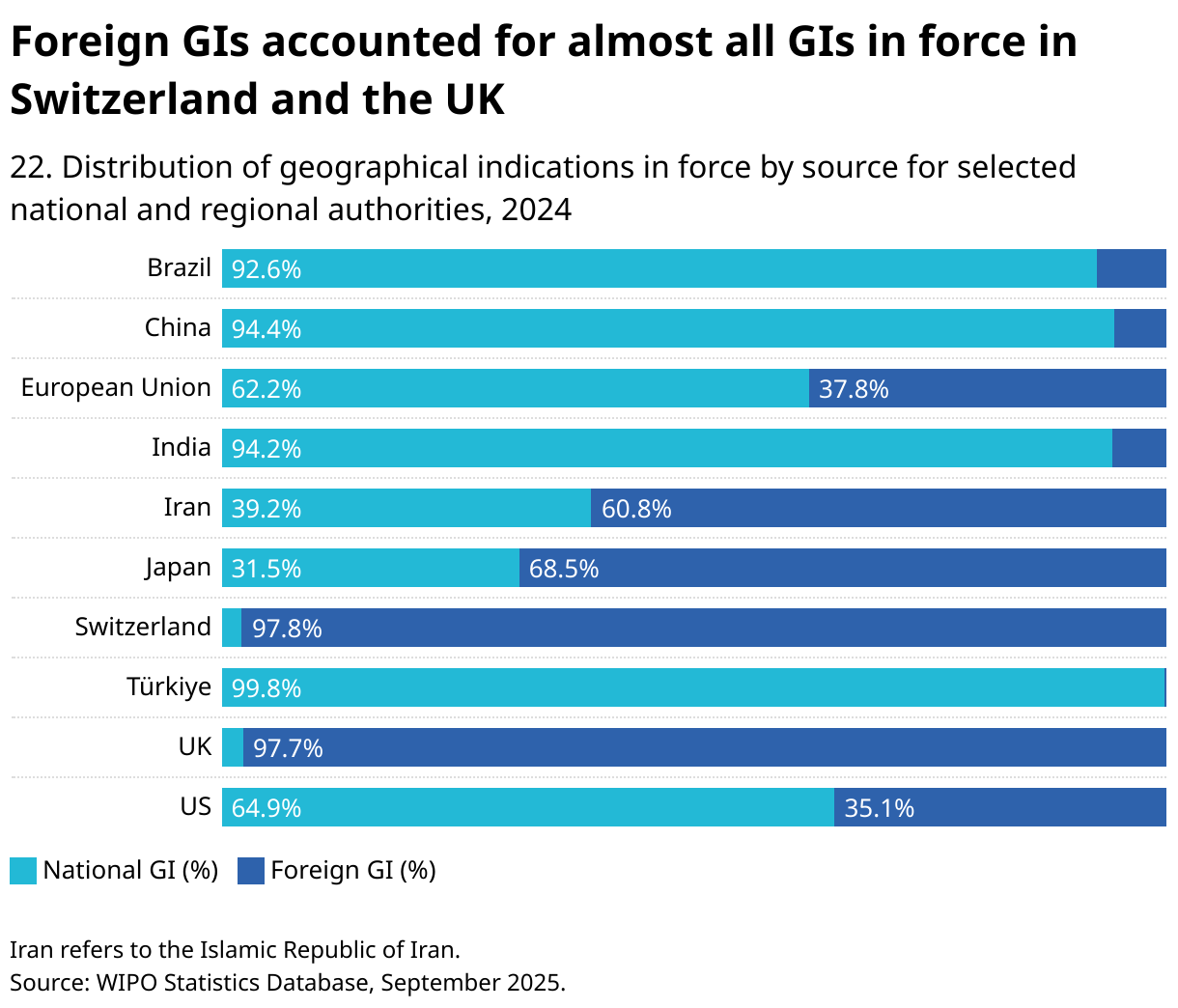
A number of authorities provided data on GIs broken down according to source (that is, whether they are a national or foreign GI). The share of national GIs ranged from as low as 2.2% in Switzerland to as high as 99.8% in Türkiye. Similar to Türkiye, more than 90% of the GIs in force in Brazil (92.6%), China (94.4%) and India (94.2%) were national GIs, whereas almost all those in force in Switzerland (97.8%) and the UK (97.7%) were foreign GIs.
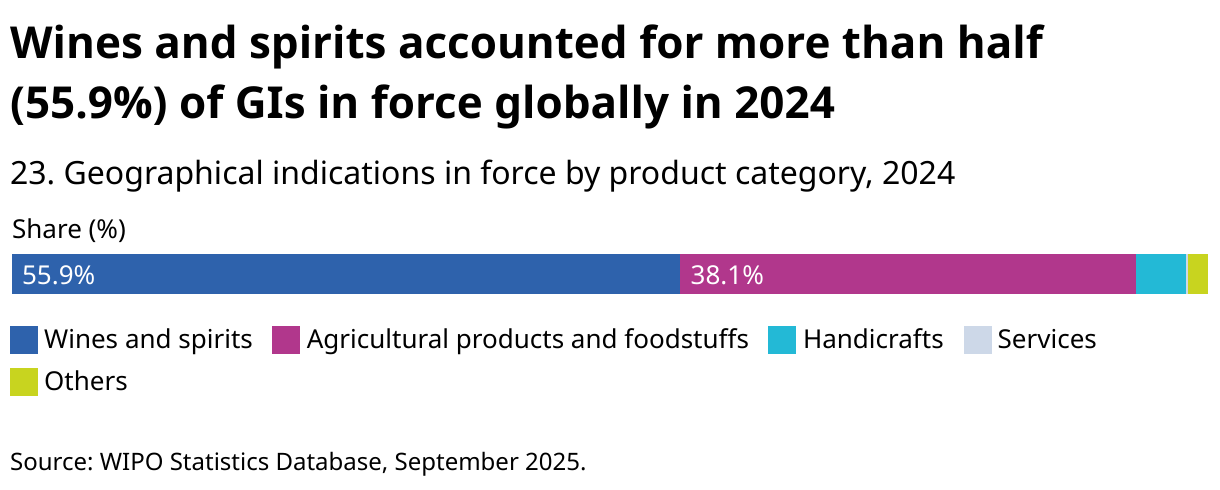
GIs in force relating to wines and spirits (55.9%) accounted for more than half of the 2024 global total, while agricultural products and foodstuffs accounted for 38.1% and handicrafts 4.2% of the total. In terms of absolute numbers, the EU (2,089) reported the highest number of GIs in force for agricultural products and foodstuffs. When it comes to the category of wines and spirits, the EU (3,362) also had the most GIs in force. Austria (189), India (348) and Türkiye (197) each had a considerable number of GIs in force for handicrafts in 2024. Data on the product category breakdown for China, which has the highest number of GIs in force, are not available.