
TISCs provide a diverse range of services to researchers, inventors and entrepreneurs, supporting them at different stages in the innovation cycle, from assistance with using patent databases and performing patent searches to advice on IP management and commercialization (see figure 1).

Since the TISC program launch in 2009, 94 countries have signed SLAs with WIPO to establish national TISC networks. The global TISC network has continued to expand, with 1,734 TISCs present in 2025 (see figure 2).
Mexico is the latest country to formally join the TISC program, following an SLA between WIPO and the Mexican Institute of Industrial Property (IMPI) in July 2025. During the year, IMPI, as the focal point of the new national TISC network, organized a high-level event that brought together national authorities, universities, research centers and other innovation stakeholders to strengthen the innovation ecosystem and consolidate a shared vision for integrating existing initiatives into a structured domestic network aligned with international program standards.
 WIPO and IMPI representatives sign the SLA establishing a Mexican national TISC network, July 15, 2025, Geneva. Photo: IMP
Regional networks have also been established among the member states of the African Regional Intellectual Property Organization (ARIPO), the Association of Southeast Asian Nations (ASEAN), countries in Central America and the Dominican Republic (CATI-CARD), and certain countries in the Arab region.
Significant progress was made in 2025 toward launching a fifth regional TISC network among OAPI member states. This included the signing of a MoU in July, expressing a shared intention to cooperate in developing TISCs in member states and establishing a regional TISC network.
 OAPI Director General Denis Bohoussou and WIPO Director General Daren Tang at the signing of the MoU on establishing a regional TISC network, July 2025, Geneva. Photo: WIPO
Because the sustainability and impact of national TISC networks are critical to their continuous development, maturity levels have been defined to reflect their development status, and the range of services provided. These offer insights into future development requirements to increase impact, as follows:
Maturity level 1: countries that have signed an SLA with WIPO, have institutional agreements at a national level between the TISC national focal point and TISC host institutions, and that report at least annually on national TISC activities.
Maturity level 2: countries that meet maturity level 1 standards and provide basic patent information searches, such as state-of-the-art patent searches.
Maturity level 3: countries that meet maturity level 2 standards and provide value-added IP services, such as patent analytics and drafting patent landscape reports (PLRs).
Out of the 94 national TISC networks, 56 were considered sustainable national networks at the end of 2025, with nine networks at maturity level 1, 30 networks at maturity level 2 and 17 networks at maturity level 3 (see figure 3).

Continued increase in demand for TISC services
The worldwide growth of TISC networks, and their increasing maturity and sustainability, continue to be accompanied by a surge in demand for TISC services from local researchers, inventors and entrepreneurs, the main beneficiaries of TISC support.
According to the annual end-of-year survey completed by TISCs around the world, they received more than 2.5 million inquiries in 2025 (see figure 4).

In Algeria, 2025 marked a milestone year for the national TISC network, with 20 new centers added and more than 1,030 services delivered. The network’s expansion included specialized research agencies and private enterprises, along with the continued engagement of academic institutions (13 new institutions joined), reflecting a more mature and increasingly cross-sectoral approach to IP support.
In Argentina, the national TISC network expanded to 40 TISCs, with three new centers established in 2025. The network offered a wide range of services, including patent searches, IP management and commercialization support, and reported extensive user engagement across regions and sectors.
In Belarus, the national TISC network expanded to include four additional members in 2025, for a total of 36 TISCs. The centers responded to approximately 4,500 service requests that year.
In Cambodia, the national TISC network expanded from three members to five. Jointly coordinated by the Department of Industrial Property (under the Ministry of Industry, Science, Technology and Innovation), and the Department of Intellectual Property (under the Ministry of Commerce), the network comprises the Institute of Technology of Cambodia, the National University of Management, the National Institute of Science, Technology and Innovation, the Automation and Information Technology Division of the Department of Intellectual Property, and the National Polytechnic Institute of Cambodia. TISCs recorded approximately 50 IP consultations to inventors, researchers and students, 10 requests for support in accessing patent and scientific databases, and five instances of assistance and advice on the use of databases.
In China, the national TISC network continued to expand, reaching 202 TISCs across 32 provincial-level administrative regions, including the Hong Kong Special Administrative Region (SAR). It pioneered new collaboration models among its members, establishing regional networks and end-to-end service models connecting universities, research institutions and small and medium-sized enterprises (SMEs).
In Colombia, the national TISC network responded to more than 14,000 inquiries from some 8,000 entrepreneurs, inventors and researchers, representing a significant increase (27 per cent) compared with the previous year. More than 70 per cent of the support was provided to residents outside the capital. Two mobile TISC units were also launched, offering mobile services for the first time in remote regions of Colombia (Amazonía and Orinoquía).
In Costa Rica, TISCs responded to 26,231 inquiries, an increase of 12 percent compared with 2024. The majority (approximately 88 percent) concerned trademarks, followed by copyright, industrial designs, patents and utility models.
In Côte d’Ivoire, the national TISC network welcomed two new members, bringing the total number of TISCs to 23. Efforts to strengthen TISC capacities continued through the flagship Invent’Demain (Invent tomorrow) project, which focuses on establishing innovation hubs in universities and technical and vocational schools.
In Cuba, TISCs handled 3,354 inquiries. The TISC network continued to grow with the addition of two new centers, bringing the total number of TISCs to 25.
In the Dominican Republic, the TISC network added one member. Overall, TISCs reported responding to 461 inquiries and conducting 94 patent searches.
In Ecuador, the national TISC network comprised 15 centers in 2025, with one additional center in the process of being formalized, and two more expressing an interest in joining. During the year, TISCs provided 91 consultations and guidance services, as well as 75 technology-related searches. The network also continued to shift toward more specialized services, including state-of-the-art searches, patent drafting support, protection strategies and initial support for technology transfer.
In El Salvador, the number of services provided increased by 68 per cent, rising from 1,795 in 2024 to 3,021 in 2025. The majority focused on trademarks and other distinctive signs (86 per cent), followed by copyright (8 per cent) and inventions (4 per cent). Notably, TISC advisory services strongly supported the private sector, assisting 1,271 entrepreneurs. Through the PiMóvil program, TISCs also expanded their reach across the country by delivering services beyond their physical locations. In 2025, the program carried out 44 outreach visits.
In Ethiopia, the national TISC network has grown significantly in recent years, with 76 TISCs now established across the country, including five new centers that joined in 2025. TISCs responded to 520 patent search requests and 78 patent drafting requests, representing a 70 per cent increase compared with the previous year.
In Indonesia, 12 reporting TISCs collectively delivered 255 services, demonstrating the network’s evolution beyond traditional patent registration support toward a stronger focus on IP commercialization and technology transfer. Several TISCs reported concluding up to six licensing agreements in 2025, highlighting growing commercialization activity. Patent-related services remained predominant, accounting for 64 per cent of all reported services (164 of 255). This trend aligns with the national strategic shift toward hilirisasi (to downstream IP), which emphasizes the commercialization of research outputs through a more collaborative, market-driven approach that bridges the gap between research and commercial application.
In Jordan, TISCs reported receiving approximately 150 inquiries per month up to May. From June to December, the number of inquiries doubled, to approximately 300 per month.
In Kazakhstan, four new TISCs were established in 2025, bringing the total number in the national network to 40. At the same time, the network adopted a strategic focus on optimizing performance and ensuring the sustainable delivery of high-quality services across all centers. During the year, TISCs provided more than 9,000 consultations, including support on access to patent search databases and comprehensive assistance with patent application preparation and filing.
In Kyrgyzstan, more than 1,900 inquiries were received by TISCs, including more than 1,000 on accessing and using national and international patent and non-patent information databases and search systems.
In Madagascar, the national TISC network expanded to 73 TISCs, with two new centers established in 2025. A key focus was the appointment of new leadership for the network through the Scientific and Technical Documentation and Information Centre, the TISC focal point, as well as efforts to deepen partnerships with national scientific institutions to strengthen collaboration across the innovation ecosystem.
In Mongolia, the national TISC network responded to more than 1,400 requests, providing comprehensive IP services covering patents, trademarks, industrial designs and copyright. Services included prior art and novelty searches, patentability assessments, patent drafting and IP filings, as well as support for licensing agreements and IP commercialization.
In Nicaragua, two new TISCs joined the national network in 2025. To support the establishment and operation of these centers, as well as existing centers, the Ministry of Development, Industry, and Commerce (MIFIC) provided computer equipment and furniture, strengthening the network’s operational infrastructure. During the year, the Nicaraguan TISC network registered 885 inquiries.
TISCs were also integrated into Nicaragua’s National Plan to Fight Poverty and for Human Development (2022–2026), recognizing their strategic role in promoting knowledge dissemination and technology transfer. Under the leadership of MIFIC, efforts continued to strengthen the operational capacity of TISCs and position them as drivers of the country’s productive and social transformation. TISCs are expected to extend their services beyond academia, particularly to support entrepreneurs and SMEs.
In Peru, the national TISC network extended to 50 TISCs in 2025 and provided more than 15,000 innovation support services to users, significantly surpassing its target. The network continued expanding its service offering, with 70 per cent of TISCs already providing value-added services such as technology transfer and IP management. Increasing support for patent drafting and technology transfer activities was identified as a priority for the year ahead.
In the Philippines, the TISC (or ITSO in the Philippines) network expanded to 103 member institutions across 16 of the country’s 17 regions, with 59 per cent of all state universities and colleges now participating. Across the network, ITSOs delivered more than 670 IP advisory services and 1,600 patent search reports. Capacity-building remained a focus, with 48 training activities reaching nearly 58,000 participants. The integration of the WIPO Toolkit on New Product Development and Inventions in the Public Domain, and training on freedom to operate searches and design searches, further aligned the network with international best practices and contributed to the expansion of TISC service offerings.
In the Russian Federation, the national TISC network responded to more than 220,000 requests for support from researchers, inventors and entrepreneurs across the country, including 94,000 requests for access and assistance in using patent databases and 175,000 in using scientific and technical databases, and 3,000 requests for advice on IP licensing.
In Saudi Arabia, the national TISC network comprised 77 centers in 2025, with 11 additional institutions in the process of joining the network. During the year, TISCs received 1,605 service requests. In addition, the Saudi Authority for Intellectual Property, focal point of the national TISC network, conducted 60 awareness-building activities to promote TISC services.
In Ukraine, the national TISC network responded to nearly 1,000 service requests, including for access and assistance in using patent and scientific and technical information, information on legal frameworks surrounding IP rights, and advice on IP protection, enforcement, commercialization and licensing.
In Uzbekistan, the national TISC network expanded to 50 centers in 2025, including 11 new TISCs established during the year in higher education institutions, research institutes and techno parks. TISCs responded to more than 10,000 inquiries, including approximately 2,000 IP searches and 5,000-plus requests for assistance in preparing and filing IP applications.
In Viet Nam, the national TISC network continued to expand in 2025, reaching 60 member institutions by the end of the year. Two new members joined the network: the Truong Thanh Media corporation and the Posts and Telecommunications Institute of Technology, a technology-focused academic institution. Their inclusion reflects the network’s growing diversification beyond its traditional university base and a strategic effort to strengthen links between the TISC ecosystem and industry IP needs.
TISCs as catalysts for filing patent and other IP rights applications
Many TISC networks reported a steady growth in patent applications filed with the support of TISCs, a result of the increased number and quality of services provided to local researchers and innovators. This demonstrates how IP creates value and promotes innovation.
140,000+ IP filings supported by TISCs
In Algeria, 945 patent applications were filed with the support of TISCs, accounting for 70 per cent of all domestic patent applications and demonstrating their central role in driving Algeria’s national innovation and IP ecosystem.
In China, the national TISC network supported the filing of more than 90,000 patents and 26,000 trademarks, contributing substantially to IP asset creation across the country. It also assisted in the development of advanced platforms and tools, including AI patent drafting and quality review systems serving some 10,000 innovators in 2025 alone.
In Colombia, TISCs continued to act as catalysts for filing IP applications. In 2025, 3,084 applications were filed with TISC support, including 83 patent applications, 313 industrial design applications and 2,688 trademark applications.
In Costa Rica, TISCs leverage collaboration with other governmental strategic areas to support national innovation. Through an interinstitutional partnership between the central TISC and the Business Development Center (Centro de Desarrollo Empresarial) of the National Learning Institute (Instituto Nacional de Aprendizaje), six entrepreneurs received assistance with trademark registration prior to filing.
In Cuba, the technology and innovation support services provided by TISCs helped with filing across various forms of IP, including eight patent applications, five industrial design applications and 971 trademark applications.
In El Salvador, innovation support services provided by the TISC network in 2025 contributed to the filing of 27 patent applications, 152 trademark applications and 53 copyright registrations.
In Honduras, the TISC hosted within the National Autonomous University responded to 80 inquiries and assisted with the filing of two patent applications, one utility model application and six trademark registrations.
In Kazakhstan, TISCs supported 203 patent applications, with more than 50 per cent of centers providing this type of assistance. Six TISCs supported international patent filings.
In Kyrgyzstan, TISCs provided 88 consultations on filing IP applications, resulting in 15 applications filed throughout the network.
In Malaysia, IP filings from TISC host institutions increased across all categories, with total filings rising by 14.2 per cent, from 5,098 in 2024 to 5,821 in 2025. Particularly strong growth was recorded in trademark filings and industrial design registrations, reflecting growing awareness of the broader range of IP protection mechanisms. Patent filings also increased from 400 to 433. Collectively, TISC host institutions accounted for approximately 7 per cent of all IP applications filed in Malaysia, underscoring the network’s growing contribution to the national innovation ecosystem.
In Pakistan, TISCs played an important role in supporting the filing and commercialization of IP. Of the 504 patent applications filed locally in 2025, 255 were submitted by or through TISC host institutions. In addition, TISCs supported the filing of 102 applications covering copyright, trademarks and industrial designs. During the year, TISCs also contributed to the successful commercialization of 54 technologies.
In the Philippines, total IP filings from ITSOs reached an all-time high of 3,242, a 43.65 per cent increase on 2024 and an almost fivefold growth since 2020. ITSOs now account for more than half of all domestic patent filings in the Philippines, affirming the network’s central role in resident innovation activity. On commercialization, Platinum ITSOs, the highest tier centers, generated 24,291,336 Philippine pesos (approximately 393,000 United States dollars) from 117 commercialized IP rights, a 67.14 per cent increase on 2024. Meanwhile, three ITSO universities secured internationally granted PCT patents. The WIPO Inventor Assistance Program (IAP) pro bono network – 1,144 IP experts were active domestically in 2025 – helped with the granting of the third patent under the program, reinforcing the network’s commitment to inclusive access to IP protection.
In the Russian Federation, TISCs contributed to more than 4,000 patent filings and 5,300 trademark filings and software and database registrations. They supported the commercialization of 1,100-plus IP assets, generating 163 million Russian rubles in revenue.
In Sri Lanka, TISCs received 570 requests for prior art searches. During the year, fifty-eight patent applications were filed through the TISC network. Eight TISCs also provided support for commercialization processes and startup activities.
In Uganda, TISCs played an important role in supporting the filing of patents, utility models and industrial designs, with 94 IP rights registered in 2025 against 85 the previous year.
Expanding the depth and range of innovation support services
To help inventors and entrepreneurs better exploit their innovation potential and create value from the IP they generate, TISCs around the world also continued to expand the range of services they offer to accompany inventors on their journey from mind to market.
In Argentina, TISCs continued to expand the depth and range of their services in 2025, moving beyond traditional patent search and filing support to include technology transfer, IP management, commercialization, licensing and industry engagement services. New services introduced across the network included technology watch services, licensing and spin-off support, contract review and IP clauses, patent drafting and prosecution services, domain name and copyright services, funding and IP intelligence bulletins, and advisory services on IP strategy and AI.
In Belarus, the national TISC network supported young researchers, inventors and entrepreneurs by offering advice on IP protection to students active in the National Children’s Technopark, an educational institution “aimed at supporting gifted students, developing their interest in scientific, technical, and innovative activities, and encouraging them to pursue personal scientific achievements”.
In Cuba, the services provided by TISCs were expanded to provide industrial property information and data, and domain name searches, to support commercializing research and development (R&D) results and technology transfer. These services contributed to the successful conclusion of five licensing agreements involving trademarks and inventions.
In Guatemala, intensive training activities delivered by the TISC network facilitated registration of 27 trademarks. These included three collective trademarks secured through a project led by the localized TISC at the School of Engineering, University of San Carlos of Guatemala, working with women weavers from Santiago Atitlán. The results highlight the benefits of integrating the TISC program in the local innovation ecosystem, showcasing its role in supporting community-based enterprises and protecting traditional craftsmanship. The main TISC hosted within the Registry of Intellectual Property of Guatemala, the focal point of the network, continued to support entrepreneurs seeking IP guidance. Building on its experience supporting the Atitlán weavers, it also contributed to training a group of weavers in Tactic, Alta Verapaz, on trademarks and collective marks as part of a joint capacity building program by WIPO and the Government of Guatemala aimed at strengthening their marketing and business skills and increasing the visibility and value of their products.
 Poqomchí weavers in Tactic, Alta Verapaz, training in trademarks and collective marks, September 2025. Photo: WIPO
In Honduras, a joint initiative launched in 2025 between the TISCs at the Metropolitan University of Honduras and Zamorano University illustrates how TISCs are expanding their range of services through interinstitutional collaboration. The initiative focuses on developing an innovation project in the agri-food sector, including a digital prototype for data collection and management in banana production.
In Indonesia, a key development in 2025 was the adoption of a more tiered and adaptive TISC support model. The approach combines localized technical assistance, training tailored to individual TISC needs, standardized service delivery through common tools and guidelines, and expanded IP commercialization initiatives, including business-matching events and digital matchmaking platforms. Looking ahead, Indonesian TISCs aim to strengthen their institutional sustainability by embedding themselves more formally within university structures and integrating IP literacy into core academic curricula.
In Jordan, the Industrial Property Protection Directorate, focal point of the national TISC network, continued to advance its Science, Technology, Engineering and Mathematics initiative to educate children aged five to 18 about IP. The directorate, in collaboration with WIPO, also organized a regional patent drafting course for Arab countries, in which TISC staff participated.
In Kyrgyzstan, the TISC at Osh State University supported the development of 14 startup projects, while the TISC at Osh Technological University helped 28 business startup projects, with assistance in filing patent applications to facilitate technology commercialization. This illustrated the expanding range of innovation support services provided through the TISC network.
In Malaysia, several initiatives were implemented to broaden the range of services offered by TISCs. These included a patent drafting training program for TISC host institutions and an IP Valuation Intensive and Examination Program, where staff from four host institutions obtained certification in IP valuation. The IP Fund 2.0 initiative further supports IP commercialization by assisting SMEs and creators with IP filing and registration. A landmark was the first TISC Malaysia-TISC Indonesia joint trademark webinar, which attracted 200 participants and marked the network’s first cross-border collaboration, advancing cooperation objectives discussed at the ASEAN regional TISC meeting.
In Mexico, which formally joined the TISC program in July, a MoU was signed with the Universidad Iberoamericana (IBERO) and Red OTT México (Technology Transfer Office Network of Mexico) to formalize collaboration in IP awareness, innovation-related education and technology-transfer capacity-building, and to explore potential complementarities with the new national TISC network.
In Morocco, as one of the 10 participating countries in the WIPO IAP, the national TISC network further strengthened its support for innovators with the selection of four new pro bono volunteers. The expansion of the IAP to include patent commercialization services reflects the network’s strategic vision to support innovators throughout the full innovation cycle, from invention to market. In 2025, three inventors were selected to benefit under the program.
In Thailand, the Department of Intellectual Property, focal point of the national TISC network, further integrated IP support with innovation commercialization through the Target Patent Fast-Track Program, which was incorporated into TISC activities. Workshops organized during the year with King Mongkut’s Institute of Technology Ladkrabang and Suranaree University of Technology attracted 161 participants and led to the filing of 10 patent applications. Thailand also continued to implement its tier-based TISC support framework, which tailors services to institutional needs, ranging from foundational IP assistance (tier 3) to commercialization support (tier 2) and strategic international IP management (tier 1).
In Uzbekistan, services provided by TISCs during the year included advice and practical assistance for preparing and filing IP applications, support during the formal and substantive examination processes, and consultations on license agreements and the transfer of IP rights. TISCs reported 1,435 instances of assistance in preparing responses to examination questionnaires, as well as 506 consultations on licensing agreements and technology transfer.
In Zambia, the Patents and Companies Registration Agency, focal point of the national TISC network, began outreach to private research institutions and academia to broaden the network and expand the range of innovation support services available across the country. Steps were also taken to establish a new TISC at the National Institute for Scientific and Industrial Research.
Training and awareness-raising: supporting local innovators
In addition to expanding innovation support services for local users, TISCs continued to dedicate significant resources to self-development and awareness-raising activities, showing their progress toward higher levels of sustainability and maturity, as measured by the WIPO scale (see figure 3).
9,000+ outreach and training events reaching nearly 1 million people
In Belarus, the national TISC network further expanded staff capabilities through training in IP protection, management and commercialization offered by WIPO, the Belarusian National Center of Intellectual Property and China’s Academy for International Business Officials.
In Chile, the TISC network strengthened its outreach and collaboration activities in 2025. As the focal point of the national TISC network, the National Institute of Industrial Property launched the development of a dedicated TISC web portal and organized regional TISC meetings, reinforcing coordination across the network. Outreach remained active, with TISCs organizing 121 events for some 4,000 participants. Activities included the University of Talca’s Feria de la Innovación, which attracted 500 participants.
In China, the national TISC network organized 4,400 information and training activities, deepening the knowledge and skills of more than 770,000 participants in areas such as IP information. It further developed its capacities, with some 1,400 TISC staff participating in WIPO distance learning courses and nearly 500 participating in a comprehensive online service development program.
In Colombia, outreach and awareness-raising was expanded significantly, with TISCs organizing 390 IP activities reaching more than 11,000 participants, along with 300 outreach events promoting TISC services that attracted 9,000-plus attendees. TISC support for micro, small and medium-sized enterprises (MSMEs) also strengthened, with 2,297 innovation support services delivered to 1,192 MSMEs located in 188 municipalities across 30 departments.
In the Democratic Republic of the Congo, 2025 was marked primarily by efforts to strengthen the institutional capacities of TISCs and broaden outreach activities to more effectively engage researchers, entrepreneurs and other innovation stakeholders. During the year, an official TISC website and social media channels were launched, improving the national network’s institutional visibility and digital presence.
In the Dominican Republic, TISCs delivered 138 IP training courses, reaching 6,535 participants and strengthening IP awareness and capacity across the innovation ecosystem.
In El Salvador, TISCs delivered 82 IP training courses, reaching 4,760 participants. Attendees spanned the academic sector and entrepreneurial community, with the majority (60 per cent) coming from the general public. At the same time, TISC staff continued their capacity-building efforts throughout the year, participating in 62 training activities attended by 881 participants.
In the Lao People’s Democratic Republic, the TISC network remained centered on the National University of Laos, while the Department of Intellectual Property (DIP), focal point of the national TISC network, pursued network expansion. As part of plans to embed the TISC framework within the national IP strategy, private universities and R&D centers have been identified as priority candidates for future TISC establishment. Capacity-building remained a priority in 2025, with DIP continuing to provide IP information and training to existing and prospective TISCs, building on the first national TISC training on patent information and patent searching held in 2024.
In Liberia, outreach efforts by the Liberia Intellectual Property Office, focal point of the national TISC network, helped expand the TISC network through the addition of two members, namely the University of Liberia and the African Methodist Episcopal University. Awareness-raising sessions and specialized IP training were conducted, with more than 20 TISC managers receiving formal instruction by the end of the year.
In Mongolia, the TISC network organized 16 training and awareness-raising activities covering patents, trademarks, copyright, industrial designs, and IP commercialization and valuation. In addition, the Intellectual Property Office of Mongolia, as the focal point of the national TISC network, organized nine training activities for TISCs and other stakeholder communities, reaching approximately 400 participants. By December, four institutions had active subscriptions to WIPO’s Access to Research for Development and Innovation (ARDI) program, and five to the Access to Specialized Patent Information (ASPI) program, reflecting the ongoing effort to expand access to scientific and patent information resources.
In Morocco, the national TISC network continued to emphasize capacity-building and skills development. Participation in WIPO Academy distance learning courses remained particularly high, with 1,330 enrollments in general IP courses and more than 700 enrollments in advanced courses.
In Nicaragua, the TISC network organized 45 training seminars in 2025, reaching 2,223 participants.
In Pakistan, the TISC network organized 105 training and awareness-raising activities covering topics ranging from IP awareness to patent database searching, patent filing and patent drafting. TISC staff gained further competence through the training resources provided under the TISC program. Approximately 80 per cent of staff completed the WIPO Academy DL-101 course, and more than 50 per cent finished at least one advanced IP course. In addition, two TISC staff at the Intellectual Property Organization of Pakistan, the focal point of the TISC network, completed the WIPO TISC Staff Certification Program, reflecting the dedication to capacity-building and professional development in IP.
In Qatar, increased public awareness of the TISC project, supported by press and social media outreach, fostered stronger stakeholder engagement. At institutional level, TISC host institutions began designating dedicated TISC staff to improve service delivery. During the year, one new TISC was established, with three additional centers expected in 2026.
In the Russian Federation, the national TISC network organized more than 2,700 conferences, seminars and other events, reaching 82,700 participants and helping them develop awareness and understanding of IP.
In South Africa, five new institutions joined the national network following awareness-raising and outreach by the National Intellectual Property Management Office, focal point of the TISC network, with five more preparing to join. TISC staff continued to strengthen their knowledge and skills in 2025, with 130 enrollments in WIPO Academy distance learning courses.
In Sri Lanka, 39 TISC staff successfully completed the TISC Foundation Certificate Course and 11 staff members enrolled in various WIPO Academy distance learning courses. During the year, 86 awareness-raising events were organized by TISCs.
In Uganda, growing IP awareness led to the integration of IP education within the national education system, including a Master’s degree program in IP at the Makerere University School of Law, and also in the secondary school curriculum, to provide students with an early understanding of concepts. The National Agricultural Research Organization, one of the established TISCs, launched an online IP capacity-building program and delivered 98 virtual training sessions, reaching some 700 participants.
In Ukraine, the national TISC network substantially enhanced the IP awareness and knowledge of researchers, inventors and entrepreneurs, organizing 50 information and training events involving 2,500 participants, and preparing 33 promotional and informational publications on TISCs, innovation and IP protection. It strengthened links among its members and with other partners, organizing 23 meetings with TISCs and 33 meetings with stakeholders looking to launch and implement joint development projects.
In Zimbabwe, efforts to strengthen IP awareness and capacity building continued to expand through activities organized by the national TISC network. During the year, awareness-raising events and IP training workshops were held at institutions such as the National University of Science and Technology and the Catholic University of Zimbabwe, while in July, a new TISC was established at the National University of Science and Technology.
Regional initiatives scale up worldwide impact and reach
Regional cooperation has been important in strengthening national TISC networks and increasing their impact and reach. Globally, initiatives facilitating the exchange of experiences and best practices to help TISC networks become more efficient and deliver targeted services continued to flourish in 2025. Regional TISC networks have been formally established in Africa, the Arab region, Asia and the Pacific, and Latin America and the Caribbean.
In Africa, the WIPO-ARIPO TISC regional meeting was held in May in Harare. It provided the opportunity for the ARIPO member states to exchange insights and experiences in developing their national TISC networks and to review and further develop the ARIPO Regional TISC Action Plan. The plan is structured around the five pillars of awareness, capacity development, information sources and platforms, institutional IP policies, and governance.
The signing of a MoU by the African Intellectual Property Organization (OAPI) and WIPO in July, expressing the intention to cooperate in developing TISCs in OAPI member states and establishing a regional TISC network, was regarded as a milestone.
In the Arab region, a regional TISC meeting was held in November in Muscat, Oman, organized in cooperation with Oman’s Ministry of Commerce, Industry and Investment Promotion. The meeting brought together national TISC focal staff from members of the League of Arab States (Algeria, Djibouti, Egypt, Jordan, Mauritania, Morocco, Oman, Palestine, Saudi Arabia, Qatar, Tunisia and Syrian Arab Republic) with representatives from the League of Arab States and the Gulf Cooperation Council Patent Office, and provided a platform to exchange experiences and best practices, and discuss strategies for strengthening regional collaboration and capacity-building. Participants reached a consensus on the importance of knowledge sharing to address existing gaps, ensure sustainability and further develop the regional TISC network across the region.
In the ASEAN region, the annual regional TISC meeting was held in Siem Reap, Cambodia, in February, with 45 participants from Brunei Darussalam, Cambodia, Indonesia, Lao People’s Democratic Republic, Malaysia, the Philippines, Singapore, Thailand and Viet Nam.
The inaugural meeting of the ASEAN TISC Network, a sub-working group of the ASEAN Working Group on Intellectual Property Cooperation (AWGIPC), was also held in February. Presided by the Philippines which was designated as Chair at the AWGIPC’s 74th meeting in December 2024, it marked a significant step toward a more unified, strategic regional framework for TISC collaboration to achieve the IP commercialization and innovation goals of the ASEAN Intellectual Property Rights Action Plans. Designated for a two-year term, the Philippines leads with priorities encompassing the formalization of TISC cooperation frameworks, capacity-building, IP valuation training, patent analytics expansion and alignment with the ASEAN Intellectual Property Action Plans.
These meetings were held back-to-back with another regional training workshop for TISCs and technology transfer offices (TTOs) in the region on institutional IP policies and strengthening regional innovation ecosystems.
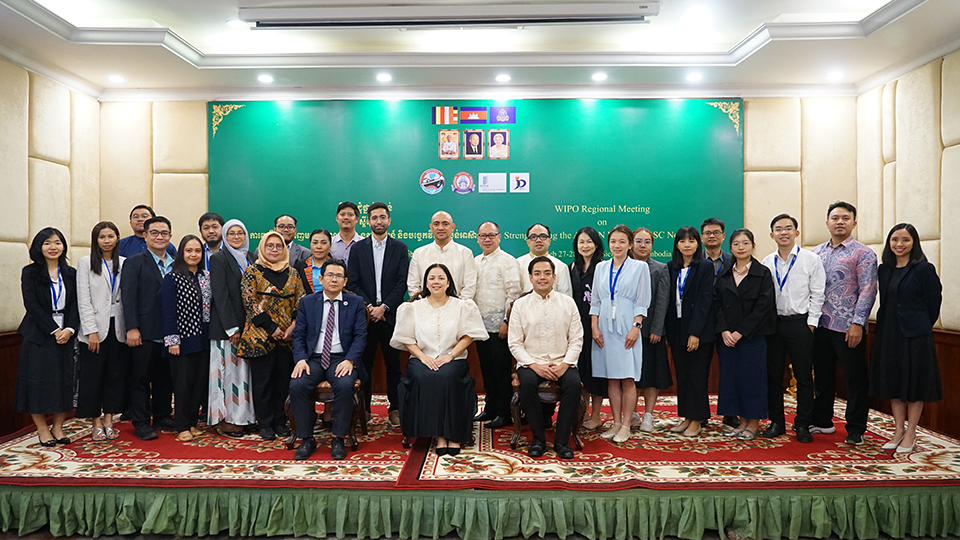 Inaugural meeting of the ASEAN TISC Network, February 28, 2025, Siem Reap. Photo: Department of Intellectual Property of Cambodia
In Central America and the Caribbean, the second subregional meeting of the TISC network in CATI-CARD, organized in collaboration with the National Office of Industrial Property (ONAPI), was held in May, in the Dominican Republic. It convened representatives from the seven CATI-CARD member countries (Costa Rica, the Dominican Republic, El Salvador, Guatemala, Honduras, Nicaragua and Panama), fostering regional coordination, exchange of best practices and strategic alignment for strengthening TISCs across the region.
An initiative led by the Secretariat for Central American Economic Integration (SIECA) was also launched to develop a regional communication campaign positioning TISCs as key stakeholders in fostering innovation across the region. This complements a parallel SIECA-led initiative for a regional IP strategy to promote sustainable development and innovation in Central America.