
Innovation not only transforms existing sports; it also gives rise to entirely new sectors. Digital platforms, immersive environments, advanced analytics and new forms of competition are expanding who can play and who can be a fan. From esports to hybrid physical–digital experiences, this chapter looks ahead to emerging technologies and emerging sectors, using signs of early innovation to explore how the future is already taking shape.
Smart equipment and intelligent materials
Innovation in sport is increasingly embodied not only in data platforms and digital services, but in the equipment itself. Across a wide range of sports, balls, rackets, bats, footwear and protective gear are being enhanced with sensors, connectivity and intelligent materials, transforming passive equipment into active systems that generate data, respond to conditions and adapt to the athlete using them.
This shift is visible across many sporting disciplines. In ball-based sports such as football, basketball, rugby and cricket, equipment embedded with inertial and motion sensors is used to measure speed, spin, trajectory and impact characteristics, supporting performance analysis as well as officiating and rule enforcement.
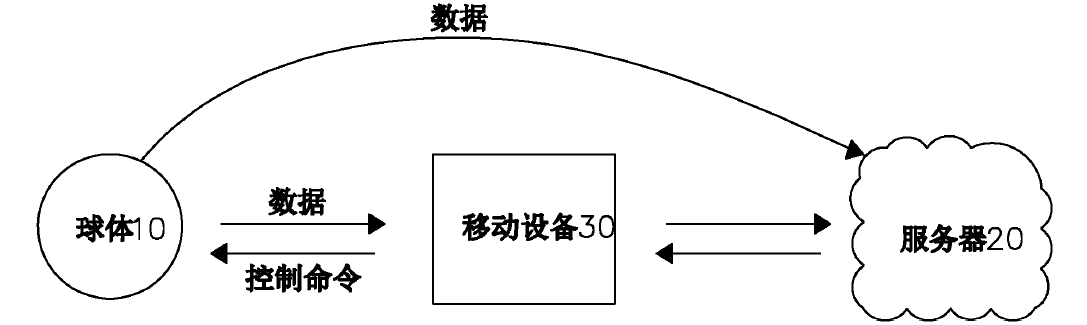
One of the early smart ball patents includes Gengee’s published application for a smart ball that integrates inertial sensors and wireless communication to capture precise motion and positioning data, supporting data-driven athlete training and performance analysis.
Patent number: WO 2016/206413 A1
Applicant: Gengee Technology Co., Ltd
Title: Smart ball and system thereof
First publication date: December 29, 2016
Patent drawing
End-user application
2.jpg) Image courtesy of Gengee Technology Co., Ltd.
Image courtesy of Gengee Technology Co., Ltd.Problem: Existing smart devices fail to effectively utilize sensor data in sports scenarios. Especially in high-intensity sports, it is difficult to highly integrate athletes’ special skills and training loads, and there is a lack of systems which are able to provide athletes with data on a consistent basis.
Solution: A smart ball that integrates a micro control unit, inertial sensing device, clock device, wireless charging receiving device, storage device and wireless communication device. It collects motion-related data through a six-axis inertial sensor and adds a time stamp. It combines mobile devices so that the server performs data processing and storage, and uses a wireless communications positioning base station to achieve precise positioning and motion trajectory calculation.
Benefit: It achieves high-precision, low-power consumption sports data collection and transmission, provides a data basis for athletes’ special abilities, and improves the efficiency of athletes’ training.
In racket and bat sports, integrated wireless connections in rackets, clubs and bats capture swing mechanics, impact location and timing, enabling more precise feedback on technique and consistency. Similar developments are evident in athletics and team sports, where smart footwear integrates pressure sensing and motion tracking to monitor gait, load distribution and injury risk.
Beyond performance measurement, intelligent equipment is also playing an expanding role in player safety and protection. Helmets, mouthguards and protective pads with connective functionality are increasingly designed to detect and record impact forces, providing objective data to support injury assessment and return-to-play decisions.
Although these applications are often presented in sport-specific terms, the underlying technologies are highly transferable across disciplines. Miniaturized sensors, wireless communication modules, power management solutions and embedded analytics recur across many types of equipment, enabling innovations developed in one sport to more easily diffuse into others.
A recently published patent application from Sportable Technologies relates to a rotationally balanced smart ball integrating embedded electronics while preserving natural spin and on-field behavior through a distributed counterbalancing mass system.
Patent number: WO 2025/051398 A1
Owner: Sportable Technologies Ltd.
Title: Rotationally balanced smart ball
First publication date: March 13, 2025
Patent drawing

Illustrative end-user application

Problem: Existing methods for incorporating electronic devices into sports balls, such as mounting them near the center or on the periphery, face challenges in maintaining rotational balance, particularly when using peripheral mounting (which tends to unbalance the ball).
Solution: An inflatable ball design with a distributed balancing mass system. This system includes at least one electronic device mounted on or over the bladder wall, with a center of mass away from the ball’s center. A distributed balancing mass, comprising multiple balancing mass elements, is arranged around a second point opposite the device’s center of mass – closer to that point than the first point – to achieve rotational balance without introducing a preferred rotation axis.
Benefit: This design effectively balances the mass of electronic devices in sports balls, ensuring the ball rotates uniformly and behaves similarly to a conventional ball, without altering its natural rotation characteristics.
A similar pattern can be observed in the use of intelligent and adaptive materials, including smart textiles, flexible electronics and materials engineered to respond dynamically to pressure, impact or environmental conditions. These materials increasingly appear across footwear, apparel and protective gear, regardless of the sport in which they are first introduced.
This convergence highlights a defining feature of emerging sports technologies: advances are driven less by individual sports than by shared technological building blocks. Once an innovation proves its value – whether in improving performance, enhancing safety or enriching feedback – it is readily adapted to new sporting contexts. From an IP perspective, patents in this area can reveal how incremental advances in sensors, materials and system integration combine to reshape sports equipment, often offering early insight into how intelligent gear is redefining training, competition and participation across sport.
Force Impact Technologies’ recently granted patent is a sensor-equipped smart mouth guard that accurately detects and communicates impact forces in real time, improving concussion monitoring without bulky or uncomfortable equipment.
Patent number: US 12232889 B2
Owner: Force Impact Technologies, Inc.
Title: Mouth guard having internal components for sensing impact forces
First publication date: March 16, 2023
Grant date: February 25, 2025
Patent drawing

Problem: Existing solutions for detecting injurious concussive forces in sports and athletic activities are not sufficiently flexible or precise, often requiring bulky equipment like helmets or multiple part pieces that are cumbersome and uncomfortable to wear.
Solution: A customizable, single-piece mouth guard with embedded sensors and on-board electronics that detect impact forces, provide local and remote notifications, and adjust impact thresholds based on user biometric data and activity type.
Benefit: The mouth guard effectively identifies and communicates impact forces to the user and remote devices, enhancing safety by providing accurate and timely notifications while maintaining comfort and usability across various sports and activities.
Esports
Organized, professional competitive video gaming – known as esports – has evolved from recreational play into a global industry with tournaments, teams, sponsorships and audiences comparable with many traditional sports. While the competition takes place in digital environments rather than on physical fields, the technological demands are equally intense. Fairness, precision and performance depend on highly advanced hardware, ultra-fast networks and sophisticated software systems. For this reason, esports are an important part of the broader technology landscape examined in this report. They demonstrate how new forms of competition are increasingly shaped not only by physical equipment and materials, but also by digital infrastructure, data systems and immersive spectator technologies.
The global esports industry is growing into a major spectacle, with hundreds of millions of viewers and expectations that the market could reach tens of billions of US dollars over the next decade.
Esports technologies encompass the high-performance hardware, low-latency networks and sophisticated software engines that facilitate professional competitive gaming. These include specialized peripherals, AI-driven performance analytics and cloud infrastructure designed to eliminate “ping” or lag.
Their importance lies in ensuring competitive integrity by creating a fair, skill-based digital environment. Beyond gameplay, these technologies drive massive economic value through immersive broadcasting tools like augmented reality (AR) or virtual reality (VR) overlays and global streaming platforms. Ultimately, they transform video gaming into a legitimate professional industry, fostering a new ecosystem for STEM (science, technology, engineering and mathematics) innovation, global community-building and digital literacy.
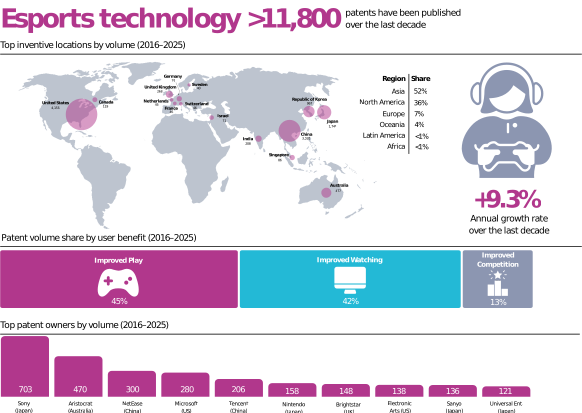 Note: All counts represent the number of inventions, measured in terms of the number of published patent families. One-to-many AI-based tagging was used to classify patents within specific categories. “Inventive location” is based on original patent applicant address. “Patent owners” is based on the current patent assignee’s ultimate owner.
Approximately 12,000 patents have been identified in esports over the last decade, reflecting a strong growth rate of over 9%. This trajectory shows that esports innovation is currently outperforming the overall sports patent growth (7.6%).
The United States leads significantly in esport patenting, with 4,155 patents accounting for 36% of the total. China follows as the second largest contributor with 26%, followed by Japan with 15%. The Republic of Korea and Australia have 8% and 4% of esports patents respectively. Collectively, these five locations represent the primary centers of patenting activity, accounting for over 90% of the total number of esports patents.
Patenting activity in the esports sector is concentrated across three strategic pillars. “Improved Play” (comprising the platform, network and spectator experience) leads with 45% share, focusing on immersive broadcasting and low-latency streaming infrastructure. This is closely followed by “Improved Watching” (comprising competitive play and training) with 42%, which emphasizes performance-enhancing hardware and AI analytics. Meanwhile, “Improved Competition” (comprising tournament operations and monetization) with 13% secures the professional ecosystem through technologies such as anti-cheat systems. Viewed holistically, these patent statistics highlight the importance of optimizing the technical precision of high-stakes play while scaling the digital infrastructure required for a global audience.
Over the last decade, the esports patent landscape has been dominated by major technology and gaming corporations, primarily from Japan and the United States. Sony (Japan) leads by a substantial margin with 703 patents, followed by the Australian gaming giant Aristocrat (470). Other significant players include NetEase (300) and Microsoft (280), alongside prominent industry names like Tencent, Nintendo and Electronic Arts. This distribution suggests a competitive field where both hardware manufacturers and software developers are innovating to define the next generation of digital competition and spectator experiences.
Sony's recently patented system enables spectators to influence esports matches in real time – through actions like cheering or jeering – making audiences visible participants in the game environment.
Patent number: US 12330070 B2
Owner: Sony Interactive Entertainment Inc
Title: Spectator participation in esports events
First publication date: January 25, 2024
Grant date: June 17, 2025
Patent drawing
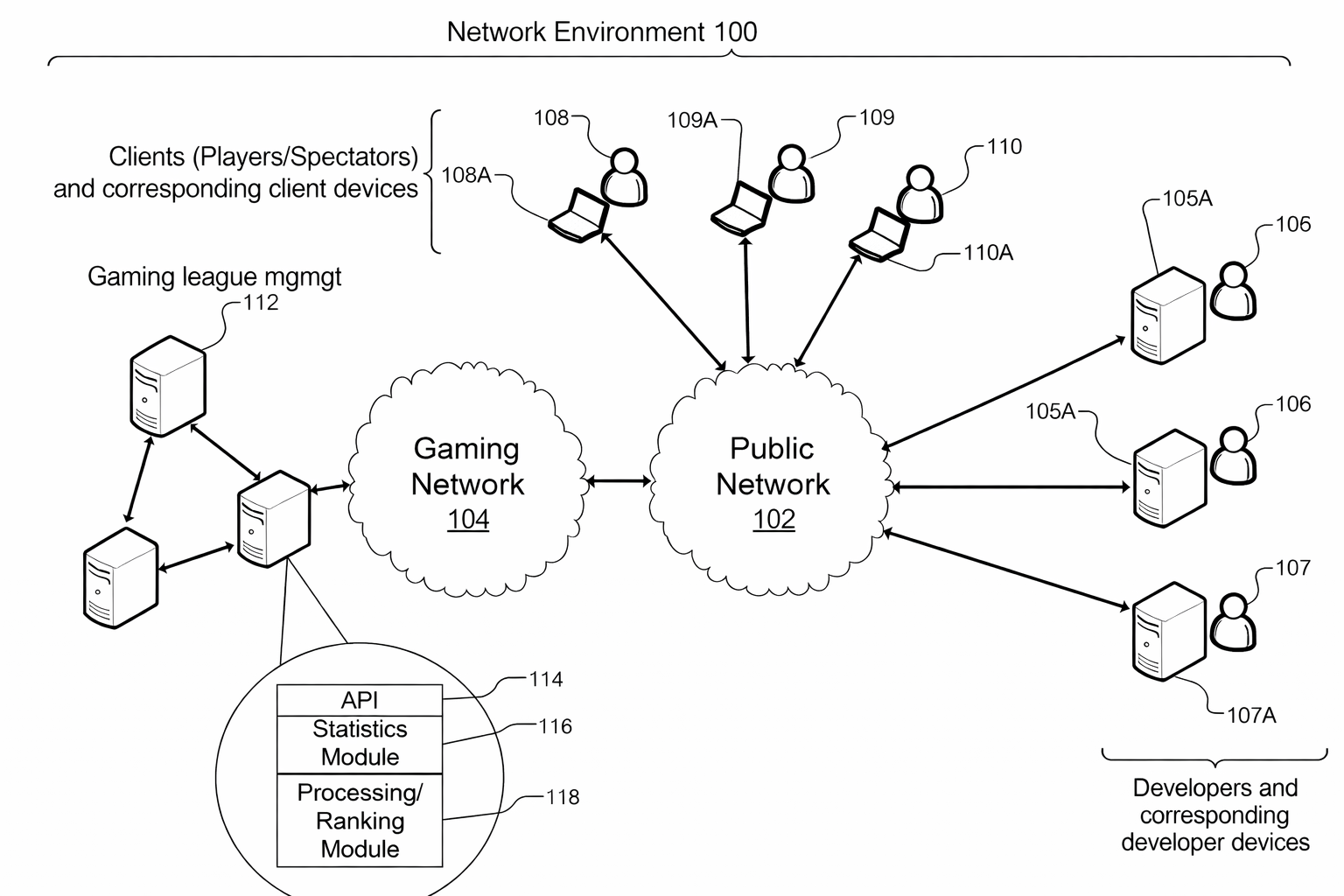
Problem: Current esports event systems lack effective mechanisms for spectator participation, resulting in a lack of immediacy, community and engagement for both players and spectators, as spectators are typically silent and invisible to both each other and the players.
Solution: The system modifies the virtual environment of esports events in real-time based on spectator actions, such as cheering or jeering, by associating these actions with specific players and adjusting game parameters or generating audiovisual effects accordingly.
Benefit: This solution enhances spectator participation and engagement by creating a sense of community and immediacy, allowing spectators to influence the game environment and interact with players and other spectators in meaningful ways.