
The PCT system underpins the most employed patent strategy by both patent attorneys and technology transfer professionals: filing of a priority application, followed by an international application (PCT) and national phase entry 30–31 months later.
Patent budgets define the constraints of an IP strategy and can be optimized by clearer communication with patent attorneys and decreasing the official filing fees where possible.
It is important to understand the different factors of patent prosecution (acceleration or delay, better communication with the examiner, etc.) in designing a commercially relevant patenting strategy.
A substantial proportion of life sciences innovations require the deposit of a biological material at an international depositing authority (Budapest Treaty) to be able to fulfill the disclosure requirements.
Claims of the composition of matter, product or system type (e.g., active ingredients, device) are believed to offer the strongest post-grant protection, assuming proper support within the specification.
2.1 Common procedural elements
Innovations are influenced by different factors, and patent application filing strategy is best discussed with a patent professional or attorney for the best advice on how and when to file to best protect your invention with respect to your business strategy.
Life sciences patent attorneys and technology transfer professionals who participated in our survey indicated that the main patenting strategy they employ in the pharmaceutical and biotechnology sectors is filing a priority application in the country of origin (or a provisional application), followed by a PCT application 12 months later, and a subsequent national phase entry in selected countries at 30–31 months. This approach was reported far more frequently than directly filing a PCT application followed by national phase entry. Strategies based on filing full patent applications directly in selected countries were used less often.
The most common strategy, which was also favored by the attorneys participating in our survey, is: filing a priority application, followed by a PCT application 12 months later and a national phase entry 30–31 months after the priority filing. The second-most favored strategy is beginning by filing a PCT application followed immediately by national phase entry. The key milestones of the most common patent filing strategy are presented in Figure 3.
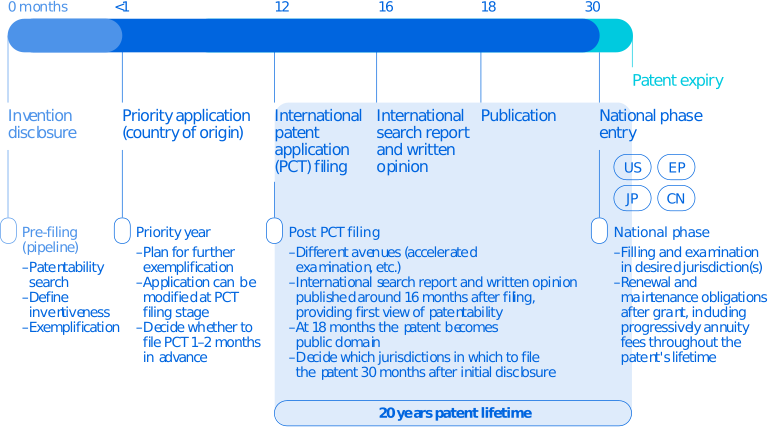 Note: PCT =Patent Cooperation Treaty.
2.1.1 Application filing: what you need to know
Patent systems are now globally aligned and operate on a first-to-file principle. This means that if two different inventors make the same invention in different parts of the world, the protection is going to be granted to the inventor who files first, even if the other inventor can prove that they made the invention first. Historically, the USPTO used a first-to-invent principle until 2011 when the America Invents Act was passed; the transition from first-to-invent to first-to-file occurred for applications filed after March 16, 2013.
The Paris Convention priority year should form an essential part of all informed patent filing strategies. From our experience of working with business start-ups and spinouts in life sciences, this priority year may lead to a better understanding of your invention and the science behind it. Information gleaned during this period will often shape the course of downstream prosecution. During this 12-month period, inventors and research teams frequently continue experimental work and technical validation related to the invention. Additional data generated in this phase may clarify the mechanisms underlying the invention, confirm its practical feasibility, or reveal alternative embodiments and improvements. Such developments can inform subsequent patent filings that claim priority from the initial application, allowing applicants to refine claim scope, strengthen the technical disclosure, and anticipate potential examination issues.
For short-term research projects this period is often the most active in terms of experimental support data, which then feeds directly into the patent specification of the Paris Convention or PCT filing that is claiming the earlier priority date. These data may also provide important defensive value, for example in post-grant revocation proceedings.
Accordingly, the priority year should not be viewed solely as a procedural interval between filings, but also as a strategic opportunity to consolidate the scientific foundation of the invention and ensure that later patent applications more accurately reflect its technical potential and commercial relevance.
Another possibility that has associated risks is, if the data produced in the first 12 months are not sufficient or satisfactory, the initial application can be retracted (without anyone knowing about it if abandoned formally) and a new application filed to gain another 12 months of experimentation. The risk of this strategy is that you lose your protection for the initial priority date, and the protection starts from the new application date. This means that if anyone filed a similar invention before the new application date, they would be awarded the protection. As patent applications are only published 18 months after their filing date, there is no way of mitigating this except by closely monitoring your competitors and the patent landscape you are working within.
A very important aspect of patent filings is the cost, especially for companies or entities with small patent budgets. In this regard, the most effective way of minimizing costs is ensuring a well-prepared invention disclosure record is available (together with any helpful annotated notes) to your trusted patent counsel, who will then prepare and file the corresponding patent specification. A well-prepared invention disclosure record contains all the relevant data for your invention from the beginning, highlighting any unexpected results, and mentions the closest prior art documents you have found.
Another method of lowering costs is to decrease your official filing fees. Different jurisdictions have varied fees for different types of entities and, in most jurisdictions, filing fees are dependent on the number of claims in the application.
At the JPO there is no excess claim fee, but the request for examination fee
2.1.2 Prosecution: what you need to know
In terms of prosecution, the first thing to understand is that examiners may be considering different cases in potentially quite different scientific areas simultaneously. They won’t have a doctorate-level understanding of each subfield of their scientific background. Patent examiners also enjoy stories, in the sense that the patent application needs to be presented in a coherent way (e.g., this is the present gap in the industry or technical area, the invention fills that gap with results that would have been unexpected). Examiners may also misunderstand some features of the claim, as we all personally experience when juggling different projects in parallel; it is therefore the responsibility of the patent attorney to be as clear as possible. Back-and-forth written arguments might not always be the best way of communicating, and a telephone conversation or online meeting may be better in some cases. Additional communication will usually lead to higher costs; however, if required to resolve a misunderstanding, keep these extra costs to a minimum by ensuring any additional communication takes place early in the examination process.
There are certain situations where an applicant may wish to accelerate their patent application(s) (e.g., getting a patent granted before raising an investment round). There are acceleration routes specific to each jurisdiction, such as the Accelerated/Super Accelerated
As discussed in Chapter 1 of this report, there are differences in the bespoke practice of each patent office and in how examiners implement this practice when assessing patent applications. If a patent application is filed in several jurisdictions around the world, it needs to be adapted for each specific jurisdiction to maximize the chances of allowance. Although patent attorneys are usually only qualified to act for one or two patent offices, they partner with firms in other jurisdictions for filings outside their own region.
Examiners will typically raise a wide range of case-specific objections during prosecution, which usually fall within a defined category as illustrated in Figure 4.

2.2 Life sciences and the international patent system
2.2.1 PCT
The PCT is an agreement between 157 countries
2.2.2 TRIPS
The TRIPS agreement
In this report, we highlight the specific articles and effects of the TRIPS agreement relevant to the field of life sciences.
In terms of life sciences patents, the TRIPS agreement mainly repeats what is covered in Chapter 1. An important highlight of the TRIPS agreement is that it requires members to grant a patent if it has an adequate disclosure of the invention. The main purpose of the patent system, a key part of the “social contract”, is to incentivize innovation and disclosure. It is only disclosure that enables other people to use the invention and for new developments to happen. In the field of life sciences, many patent applications have parallel scientific publications that describe the invention in greater detail.
In considering public health, there are some exclusions from patentability that WTO members are allowed to make
diagnostics, therapeutic and surgical methods for the treatment of humans or animals
certain plant and animal inventions, and essentially biological processes for their production
inventions for which commercial exploitation must be prevented to protect ordre public or morality, including to protect animal or plant life or health.
These exclusions act more as guidelines for the WTO member nations, as there is flexibility in terms of implementation as can be seen in the global divergence of patent-eligible subject matter.
2.2.3 Budapest Treaty
As discussed in Chapter 1, sufficient disclosure of the invention is required; however, there exist situations in which the invention is linked to biological material that cannot be described in writing in the patent application in a way that can be reproduced by the person skilled in the art. In such cases, the disclosure provision can be fulfilled by depositing a sample of the biological material at one of the international depositary authorities.
The international depositary authorities are scientific institutions that comply with the Budapest Treaty. The Budapest Treaty, adopted in 1977 (implemented from 1980) and administered by WIPO, is an agreement regarding international recognition of the deposit of microorganisms or biological material for the patenting process. As for the PCT, the treaty makes it easier for the inventors to file internationally by eliminating the need to deposit the sample of biological material in all the countries in which patent protection is desired. All states that are part of the treaty undertook to recognize deposited microorganisms or biological material as part of their patenting process, regardless of which of the member states is the depository authority. As of January 26, 2023, there are 49 international depositary authorities; Japan has two, the United State of America has three and Europe has more than 20.
2.2.4 Biotechnology Directive
The European Biotechnology Directive (Directive 98/44 EC)
Biological processes for the production of plants or animals (breeding) are essentially excluded from patentability (even a process consisting of entirely natural phenomena such as crossing or selection): Directive Article 2(2) (EPC Rule 26(5)).
This was a subject of divergence between the EPO and the European Commission. The latest EPO Enlarged Board of Appeal decision (G3/19) on this matter in May 2020 reversed its previous contradictory decisions (G2/12 and G2/13) to clarify that plants or animals produced by an essentially biological process are not patentable. This decision only applies for patents or patent applications filed after July 1, 2017, and brings more certainty to innovators in the field of technology in agriculture.
(21)G 0003/19 (Pepper (follow-up to Tomatoes II and Broccoli II)) of 14.5.2020. European Patent Office; 2020. Available at: https://www.epo.org/law-practice/case-law-appeals/recent/g190003ex1.html (accessed May 26, 2025). The uses of human embryos for industrial or commercial purposes are excluded from patentability (Directive Article 6(2)(c), EPC Rule 28(c)).
The industrial application of gene sequences must be disclosed (Directive Article 5(3), EPC Rule 29(3)).
A more in-depth analysis of the exclusions relating to human embryos is described by Choudhary et al.,
2.2.5 Aspects of regional and national patent law divergences in life sciences
Divergences between patent offices in terms of main patentability criteria are discussed in the Section 1.1. Our survey of life science patent attorneys identified the most important factor for those working in this field as the difference in approach to patent-eligible subject matter, followed by differences regarding inventive step and sufficiency of disclosure (results presented in Figure 5). As expected, and described in Sections 1.1.2 and 1.1.3, there is more consensus globally regarding the novelty and industrial applicability factors.

One of the most important divergences between patent offices in the field of life sciences is in their approaches to the patentability of many different types of gene sequencing inventions. Nicol et al.

2.3 Typical claim structures
Since claims are the most important part of a patent, it is important to understand the different types of claims and how these claims are used by companies to protect their commercial products.
2.3.1 Products
Selection inventions (Markush claims)
The Patent Information Initiative for Medicines (Pat-INFORMED) database
As an example, searching for Vismodegib (a basal cell carcinoma drug developed by Roche, called Erivedge(R)) on Pat-INFORMED shows us the 91 associated patents. Looking at claim 1 of EP1789390B1
“1.A compound of formula I
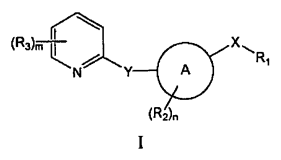
“wherein A is a ring selected from the group consisting of A1 – A7,
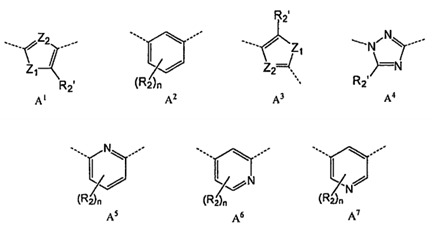
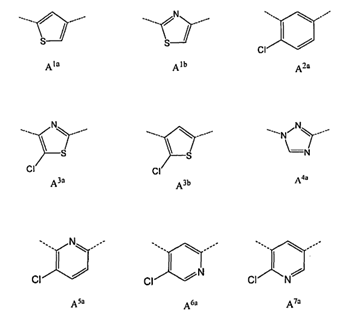
“each with their own variable structure, wherein Z1 is O, S, NR5, wherein NR5 is H or alkyl, Z2 is CH, CR2 or N, and R2 is Cl, and n is 1 or A is a ring selected from A1a, A1b, A2a, A3a, A3b , A4a, A5a, A6a, A7a.
“X is alktylene, NR 4 C(O), NR 4 C(S), N(C(O)R 1 )C(O), NR 4 SO, NR 4 SO 2 , NR 4 C(O)NH, NR 4 C(S)NH, C(O)NR 4, C(S)NR 4, NR 4 PO or NR 4 PO(OH); Y is absent, CHR 4 , O, S, SO, SO 2 or NR 4; R1 is selected from the group consisting of alkyl, a carbocycle or a heterocycle each of which is optionally substituted with hydroxyl, halogen, amino, carboxyl, amidino, guanidino, carbonyl, nitro, cyano, acyl, alkyl, haloalkyl, sulfonyl, sulfinyl, alkoxy, akylthio, carbamoyl, acylamino, sulfamoyl, sulfonamide, a carbocycle or a heterocycle; wherein said amino, amidino, alkyl, acyl, sulfonyl, sulfinyl, alkoxy, alkylthio, carbamoyl, acylamino, sulfamoyl, sulfonamide, carbocycle and heterocycle substituent is optionally substituted with, halogen, haloakyl, hydroxyl, carboxyl, carbonyl, or an amino, alkyl, alkoxy, acyl, sulfonyl, sulfinyl, phosphinate, carbocycle or heterocycle that is optionally substituted with hydroxyl, carboxyl, carbonyl, amino, halogen, haloalkyl, alkyl, alkoxy, alkylthio, sulfonyl, sulfnyl, acyl, a carbocycle or a heterocycle; R3 is halogen, hydroxyl, carboxyl, alkyl, acyl, alkoxy, alkoxycarbonyl, carbamoyl, alkylsulfide, sulfinyl, sulfonyl, a carbocycle or a heterocycle wherein each alkyl, acyl, alkoxy, alkoxycarbonyl, carbamoyl, alkylsulfide, sulfinyl, sulfonyl, carbocycle and heterocycle is optionally substituted with hydroxyl, halogen, amino, nitro, alkyl, acyl, sulfonyl or alkoxy; R4 is H or alkyl; m is 0-3; and salts and solvates thereof.”
The claim as it is granted protects many possibilities and variations of the basic chemical structure, and even the salts and solvates derived from it. This broad claim has the support of 319 exemplification structures, which show the different embodiments of the Markush structures.
If the chemical structure of the API is already known in the prior art, then claims to the compound itself will not be patent-eligible. In this case, the next best protection would be a salt or hydrate form, or a crystal or co-crystal form, of the API. Other protection strategies include different formulations of the API, dosage regimes, methods of manufacture, etc. Large pharmaceutical companies use all these strategies to create a patent thicket around their most important products, and to try to extend the patent lifetime of their portfolio. Markush claims can also be used in a written form by using the expression of “consisting of” and then the list of substituents to be protected.
Device claims
Companies will often use several types of claims in a patent application as a strategy to protect the invention from as many aspects as possible. An example of this approach is seen in granted claim EP2801823B1 that, although primarily directed at an antibody, also includes protection for a device, a kit for detection and a method of detection, all of which make use of the antibody in its claim set. This is possible when all types of claims are linked to the same inventive concept, as illustrated by claim number 7 of patent EP2801823B1.
“7. A device for detecting the presence or absence of whipworm antigens from a sample, the device comprising a solid support, wherein the solid support has immobilized thereon at least one antibody of any one of Claims 1 to 6.”
Monoclonal antibody (mAb): example from Nivolumab drug
Claims to protect monoclonal antibodies are normally based upon the sequence of the antibody. Within this, the sequences of the complementarity-determining regions (CDRs) and variable regions will frequently be part of the claim because of the importance of their contribution to the binding properties of the antibody. Opdivo® (Nivolumab) is one of the best-selling antibody drugs in recent years. The main granted claim (EP2161336B2) for Nivolumab drug is:
“An isolated human monoclonal antibody, comprising:
a heavy chain variable region comprising amino acids having the sequence set forth in SEQ ID NO: 4; and
a light chain variable region comprising amino acids having the sequence set forth in SEQ ID NO: 11; wherein the antibody specifically binds human Programmed Death 1 (PD-1) protein.”
(33)EP2161336B2 Human monoclonal antibodies to programmed death 1(PD-1) and methods for treating cancer using anti-PD-1 antibodies alone or in European Patent Office. Available at: https://worldwide.espacenet.com/patent/search/family/037396674/publication/EP2161336B2?q=EP2161336B2 (accessed May 26, 2025).
CGTs
Cellular therapies are one of the leading life sciences trends, and several cell therapy treatments have already been approved by the FDA. One of these therapies is ciltacabtagene autoleucel (CARVYKTI®) for the treatment of adult patients with relapsed or refractory multiple myeloma.
Claim 1 of the granted ciltacabtagene autoleucel patent (US11535677B2) is:
“An isolated nucleic acid comprising a nucleic acid sequence encoding a multivalent chimeric antigen receptor (CAR) comprising a polypeptide comprising: (a) an extracellular antigen binding domain comprising a first anti-BCMA binding moiety and a second BCMA binding moiety, wherein each of the first and the second anti-BCMA binding moieties is a VHH domain; (b) a transmembrane domain; and (c) an intracellular signalling domain, wherein the first BCMA binding moiety comprises a CDR1 comprising the amino acid sequence of SEQ ID NO:15; a CDR2 comprising the amino acid sequence of SEQ ID NO:53; and a CDR3 comprising the amino acid sequence of SEQ ID NO:91, and the second BCMA binding moiety comprises a CDR1 comprising the amino acid sequence of SEQ ID NO:18; a CDR2 comprising the amino acid sequence of SEQ ID NO:56; and a CDR3 comprising the amino acid sequence of SEQ ID NO:94.”
In this case, while the product itself is a cell therapy, these claims are directed to nucleic acids encoding the CARs that provide the cells with their therapeutic utility.
2.3.2 Methods of treatment
Methods of treatment are excluded from patentability in many jurisdictions to allow medical practitioners to provide the best treatment to a patient without worrying about infringing a patent. However, most patent offices will allow alternative routes by which corresponding protection may be obtained. In EPO practice this involves medical use claims, which take the form of purpose-limited product claims such as: “1. A composition for use in treating fatty liver disease in a patient in need thereof, wherein the composition comprises an anti-ActRIIB antibody.”
A similar approach is used at the JPO, where granted claim 1 of the patent protecting the same product is formulated: “1. A composition for treating fatty liver disease in a patient in need of treatment for fatty liver disease, said composition comprising an amino acid sequence which is at least 90% identical to the sequence of amino acids 29 to 109 of SEQ ID NO: 2.”
The same patent family does not have a granted claim in the United States of America, but since methods of treatments are accepted at the USPTO, the applicant was able to pursue the claim: “A method for treating fatty liver disease in a patient in need thereof, the method comprising administering to the patient an anti-ActRIIB antibody.”
2.3.3 Claims including ranges
Further use of different types of claims in the same patent is shown in EP3319640B1,
“1. A composition comprising nanoparticles formed of a polymer and terbinafine, wherein the nanoparticles comprise particles in at least two distinct particle sizes groups comprising: a) a first species in the range of 0.5 to 5 nm; and b) a second species in the range of 150 to 250 nm.
…
“13. A method of producing a composition for the treatment of a fungal infection comprising mixing a polymer capable of forming nanoparticles with terbinafine under conditions suitable to allow the formation of nanoparticles, wherein: a) the nanoparticles are formed under conditions to enable production of nanoparticles in the range of 0.5 to 5 nm and in the range of 150 to 250 nm; or b) the mixture is further processed so as to only select those nanoparticles in the range of 0.5 to 5 nm and in the range of 150 to 250 nm, and wherein the nanoparticles are formed or processed into at least two distinct particle sizes groups comprising: i) a first species in the range of 0.5 to 5 nm; and ii) a second species in the range of 50 to 250 nm.”
The same patent application has been filed in Japan, the United States of America and Europe. To illustrate the differences, in the United States of America, the first claim offers narrower protection as the claim mentions “said nanoparticles consisting of two particle size species,” although in Europe the claim mentions “at least two distinct”, which means there can be more. The first claim of the Japanese granted patent is similar to the European patent in terms of “comprising particles of at least two different particle size groups”, but it is more restricted as it mentions concentration ranges for terbinafine (“0.06–0.6 mg/mL”) and for the polyhexamethylene biguanide (“0.2–0.4 mg/mL”).
2.3.4 Diagnostics claims
In practice, the impact of the different approaches to patenting diagnostics (Section 3.2) in Japan, the United States of America and Europe can be seen in the different claims granted for Centogene’s patent, “Method to monitor Gaucher’s Disease.”
In Japan the obtained granted claim is: “1. A method for identifying a subject having Gaucher disease to be subject to a therapy for use in treating Gaucher disease, wherein the treatment comprises treating a sample of the subject having Gaucher disease, is free lyso-Gb1 testing for the presence of a biomarker, wherein the subject having Gaucher disease is subject to the therapy if the sample tests positive for the biomarker wherein said sample is selected from the group consisting of a blood sample, a serum sample, a plasma sample, a whole blood sample, and a sample derived from whole blood collected on a dry blood filter card.”
In the United States of America, the obtained granted claim is formulated as: “1. A method for generating quantitative data for a subject consisting of determining a level of a biomarker in a blood sample from the subject, wherein the biomarker is free lyso-Gb1, and wherein the subject is suffering from Gaucher’s disease or suspected of suffering from Gaucher’s disease, and wherein the level of free lyso-Gb1 is determined by means of mass spectrometric analysis.”
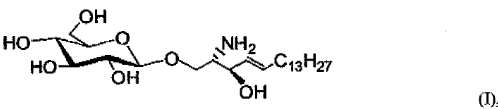
The granted claim in Europe is similar to the Japanese granted claim: “1. A method for determining the course of Gaucher’s disease in a subject comprising the step of determining at several points in time a level of a biomarker present in a sample from the subject, wherein the sample is selected from the group consisting of a blood sample, a serum sample, a plasma sample, a whole blood sample and a sample from whole blood collected on a dry blood filter card, wherein the biomarker is free lyso-Gb1 of formula (I) and wherein the level of the biomarker is indicative of the severity of the disease in the subject.”
2.3.5 Defensibility strength of claim types
It is important to understand the different types of claims and how they can protect different aspects of invention. We therefore asked patent attorneys how they rank the defensibility in their experience, from weak 1 to strong 5, of each type of claim, considering sufficient support within the patent application; our survey results are presented in Figure 6.
