
Trademark applications show a marginal recovery in 2024
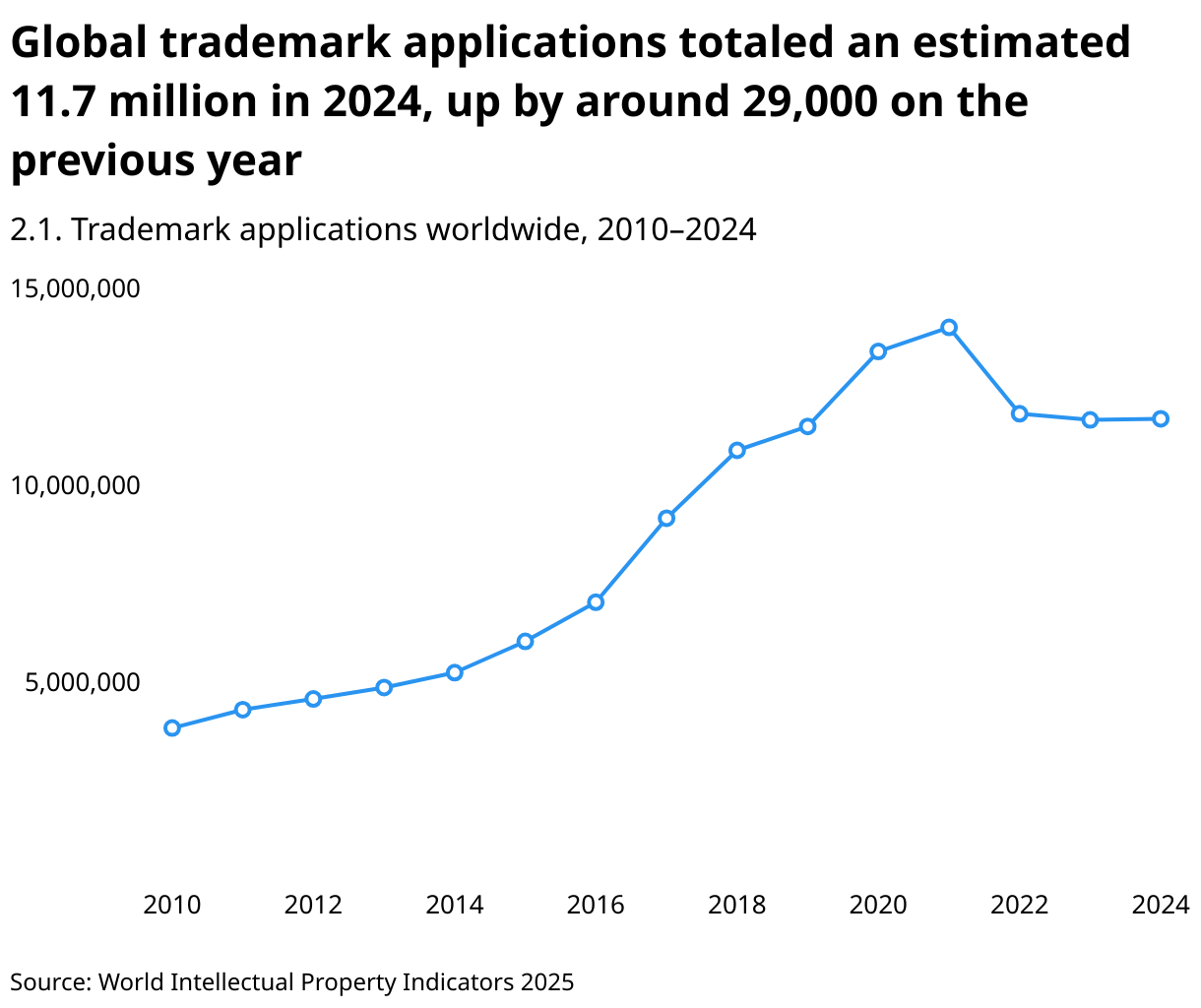
Global trademark applications experienced a slight uptick in 2024, with an estimated 11.7 million applications filed worldwide – approximately 29,000 more than the previous year. While this represents only a slight growth of 0.3%, it does signal a return to positive territory following two years of declining applications (figure 2.1). This recovery, though modest, contrasts sharply with the dramatic surge in applications seen during the early period of the COVID-19 pandemic. In 2020, trademark applications jumped 16.6% as businesses rushed to protect new goods and services amid rapidly changing market conditions. The steep 15.7% fall in applications in 2022 largely explains why 2024 filings exceed 2019 pre-pandemic numbers by only about 2%. The recent declines in 2022 and 2023 interrupted a remarkable 12-year expansion period that began after the 2009 financial crisis. Despite these decreases, the long-term growth trajectory remains notable – 2024 applications were approximately three times higher than 2010 levels, driven largely by double-digit increases in seven of the past 15 years.
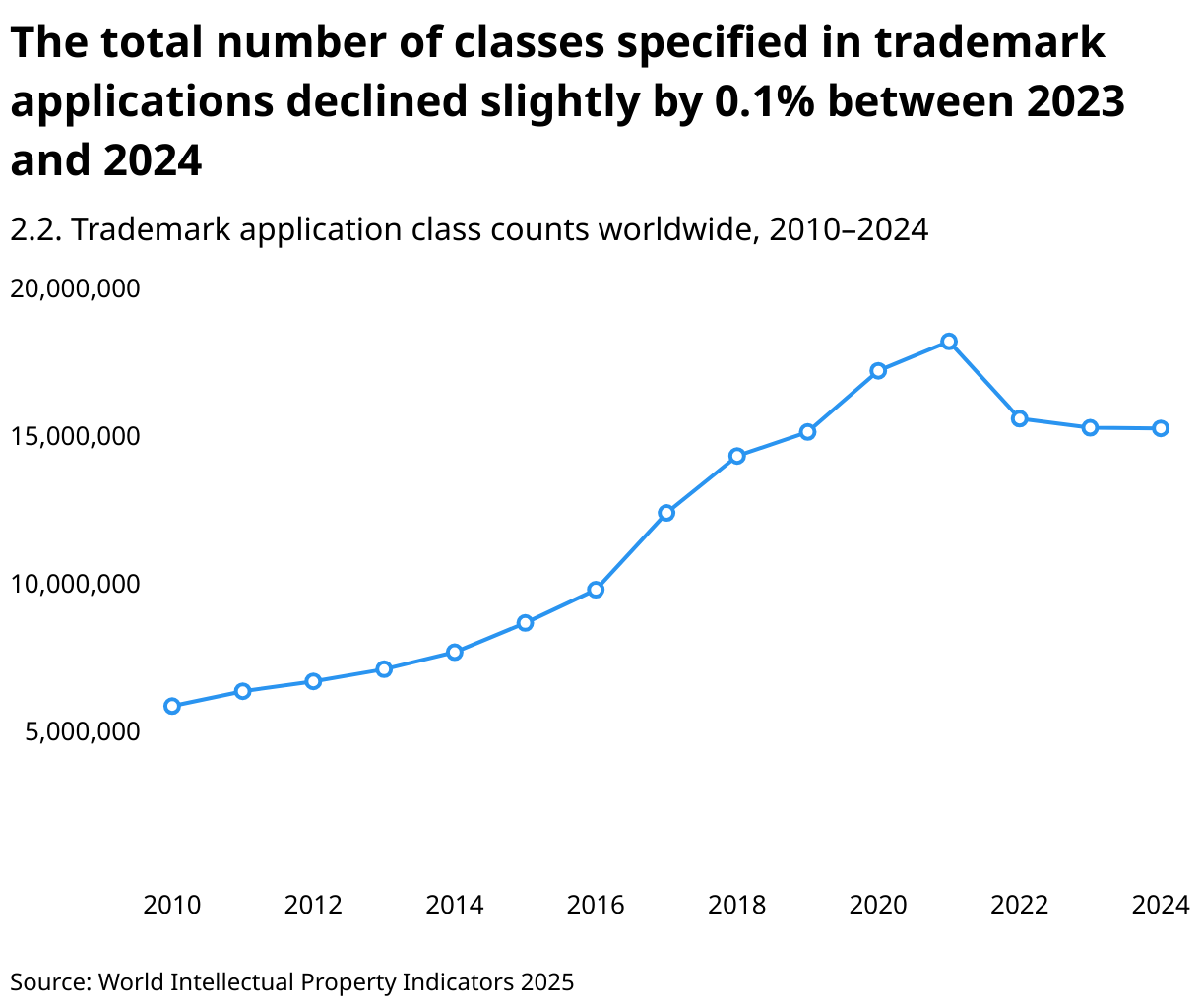
When differences between filing systems across national and regional offices are harmonized based on application class count, 2024 showed a minor on-year decrease in trademark filing of 0.1%. The total number of classes specified in applications – known as the application class count – declined marginally from 15.25 million in 2023 to an estimated 15.23 million in 2024 (figure 2.2). So, although the number of trademark applications increased in 2024, the total number of goods and services classes specified in them actually declined. The global application class count experienced a steep decline of 14.4% in 2022, followed by a smaller 2% decrease in 2023. Together with the drop in 2024, these three consecutive years of decline are the only period the global application class count has fallen over the past 15 years.
A trademark application can refer to different classes of goods or services. Many offices use the Nice Classification. This is an international classification of goods and services used for registering trademarks and service marks. Applications received at these offices are classified according to one or more of 45 Nice classes (see www.wipo.int/classifications/nice). Some offices allow only single-class filing, meaning applicants have to file a separate application for each class. Others permit multi-class filing, enabling applicants to file a single application in which a number of classes are specified. To improve international comparison of the number of applications received, it helps to compare class counts across offices. Class counts are also used to make trademark registration internationally comparable. This method for comparing offices began in 2004, the first year for which complete class count data are available.
Offices with the largest volumes of trademark filing
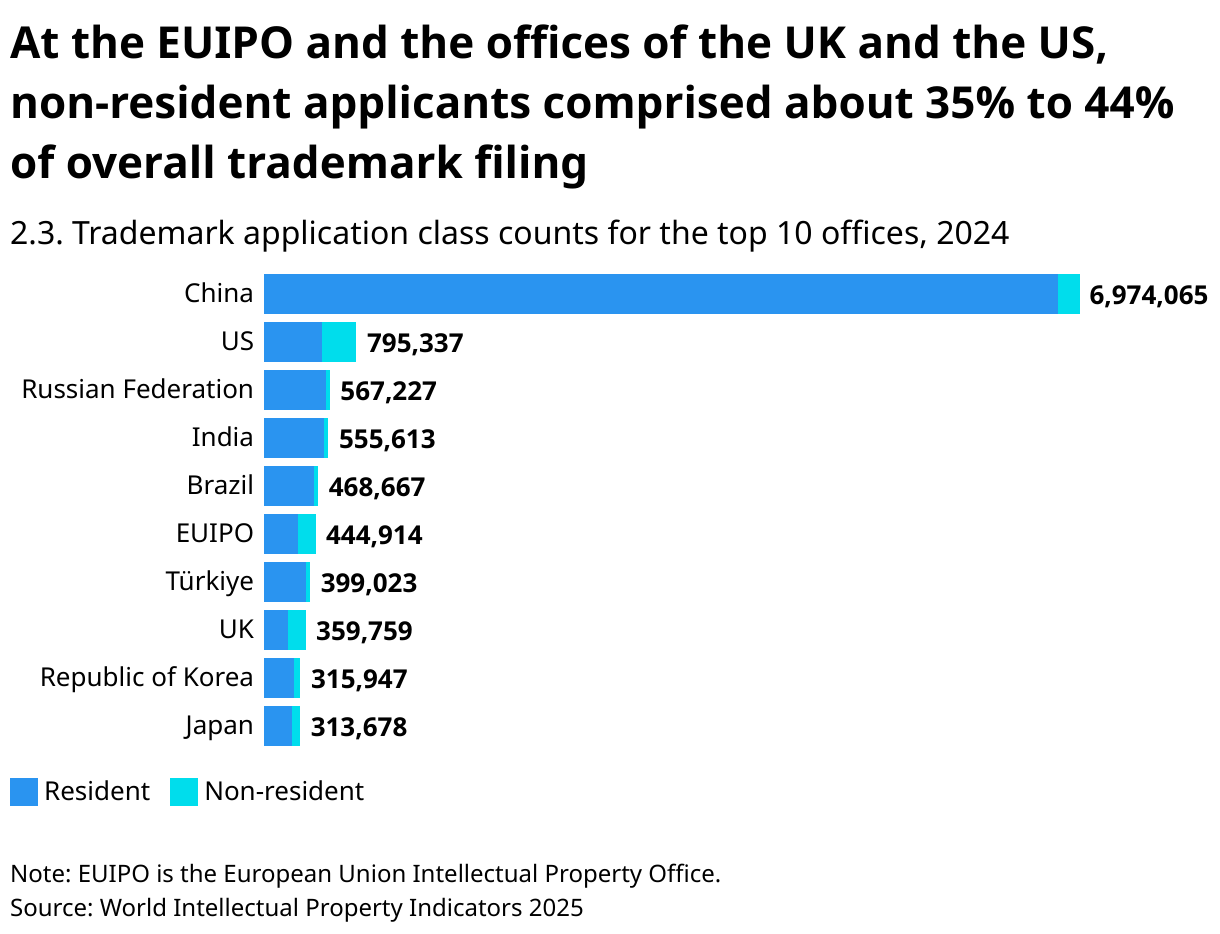
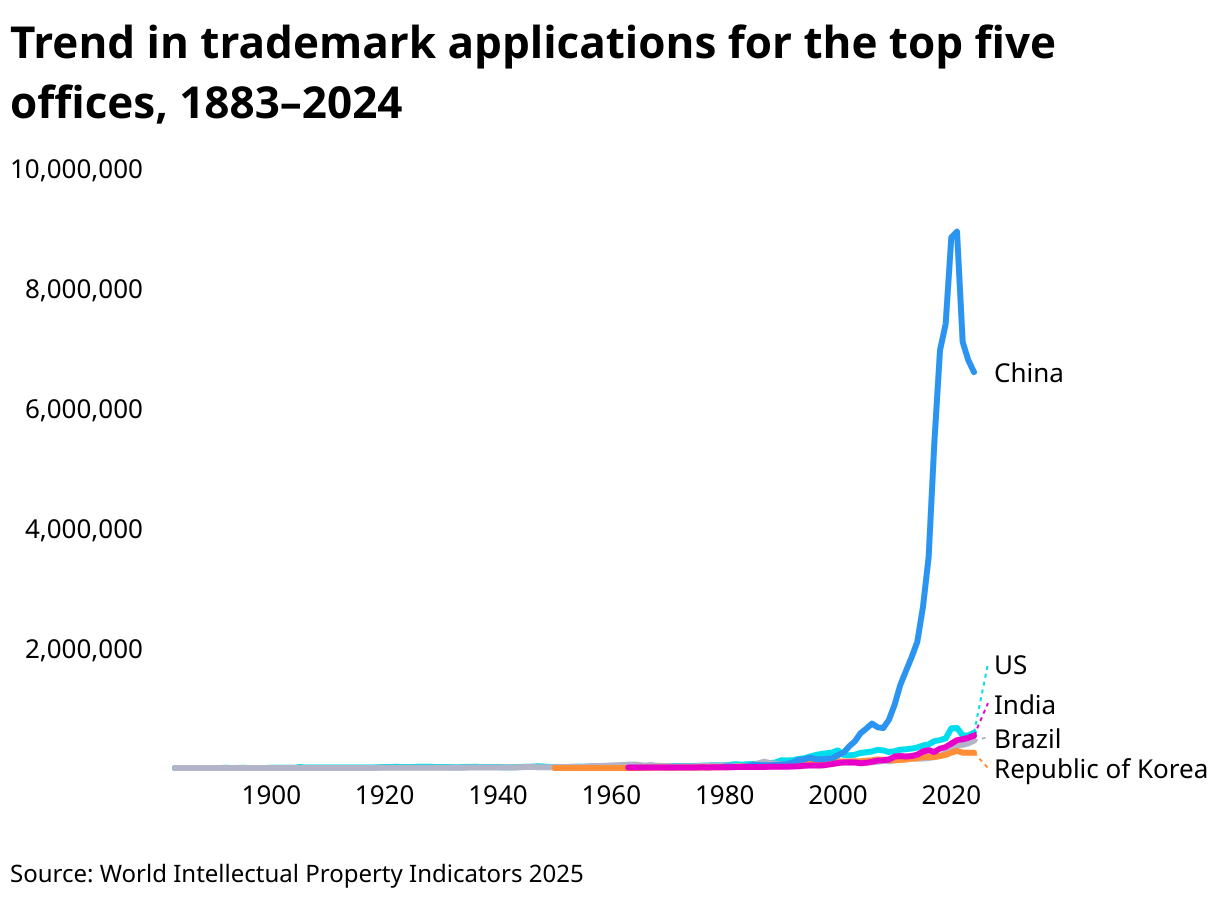
The office of China maintained its position as the world’s most active office in terms of trademark filing in 2024, despite experiencing a 2.9% decline compared to the previous year. The office of China’s application class count of approximately 7 million was significantly higher than that of the United States of America (US), which had a class count of 795,337 (figure 2.3). These two offices have held the top two positions in trademark filing since the early 2000s, but the gap between them has widened considerably over time. China’s remarkable increase in filing becomes clear when comparing relative volumes: what for China was nearly three times the US filing level in 2010 had grown to almost nine times by 2024. This surge stems primarily from the high volume of domestic applications filed by residents of China. The Russian Federation (567,227), India (555,613) and Brazil (468,667) rounded out the top five filing offices. Combined, these five offices accounted for 61.5% of all global trademark filing based on application class counts in 2024. Such a concentration represents a significant increase from a decade earlier in 2014, when the top five offices (then comprising the European Intellectual Property Office (EUIPO), China, France, Japan and the US) received 47.1% of global filing.
Of the top 20 offices, 15 recorded increases in trademark filing in 2024 compared to 2023 (figure B10). This marks a significant turnaround from 2023, when 13 of the top 20 offices experienced an on-year decline. The top offices showing the strongest growth in 2024 were Argentina (+17.4%), Brazil (+9.7%), Indonesia (+9%), Viet Nam (+8.6%) and the US (+7.6%). Growth patterns varied considerably among the top offices. Where both resident and non-resident filing increased, overall growth was primarily driven by higher domestic demand at six offices, with resident filing accounting for the bulk of total growth in each case. For example, resident filing in Argentina contributed 16.5 percentage points of that office’s 17.4% total growth, whereas non-resident filing contributed only a 0.9 percentage point to the total. Conversely, at six offices growth came mainly from foreign demand. In the US, for instance, non-resident filing drove 5.4 percentage points of the 7.6% total increase, with resident filing contributing just 2.2 percentage points. The offices of India and Italy presented a unique scenario in which growth in resident filing compensated for a decline in non-resident filing to yield positive overall growth. Unlike the 15 offices that saw a higher volume of trademark filing in 2024 than the previous year, the remaining five top offices recorded an on-year decrease. Canada and the Islamic Republic of Iran experienced the largest declines of 5.5% each, followed by Japan (–4.5%), France (–4.3%) and, as previously mentioned, China (–2.9%). These reductions stemmed primarily from reduced domestic demand with residents filing fewer trademark applications. With the exception of Japan, these other four offices also saw some decline in non-resident filing. However, its impact was considerably smaller than that of the drop in domestic filing.
The top 20 offices in 2024 were distributed across different income levels. Eleven were located in high-income economies, seven in upper middle-income countries (Argentina, Brazil, China, Indonesia, the Islamic Republic of Iran, Mexico and Türkiye) and two in lower middle-income countries (India and Viet Nam). Certain offices from low- and middle-income countries, while not among the top 20, still recorded substantial trademark filing measured in application class counts (figure B11). These included, for example, Thailand (73,552), the Philippines (67,868), Pakistan (59,073), Ukraine (54,742) and Colombia (52,885). Among 20 selected offices in low- and middle-income countries, several achieved a remarkable annual growth rate of 15% or higher: Kazakhstan led with 25.4% growth, followed by Guatemala (+16.8%), Morocco (+15.8%), Mongolia (+15.4%) and Pakistan (+14.7%). Conversely, there were declines at six of the selected offices, with Bangladesh (–7.2%) and Kenya (–3%) recording the largest decreases (figure B12).
At most offices, the majority of applications originated from residents aiming to secure trademark protection within their domestic jurisdiction. In 2024, filing by residents at their home or regional office constituted 84.1% of the global total, with the remaining 15.9% attributable to non-resident filing (figure B3). Historical trends show that domestic filing growth typically exceeded non-resident growth through until 2020. This pattern shifted in 2021 when non-resident filing surged 21.5%, largely outpacing a domestic growth of only 3.3%. However, demand from both residents and non-residents alike declined in 2022 and 2023, contributing to an overall drop in global trademark filing. Filing in 2024 was mixed: non-resident filing rebounded modestly by 0.4%, while resident filing continued falling by 0.2%. This decline in domestic applications was largely driven by a nearly 3% decrease in resident filing in China.
The share of non-resident filing within the global total has declined significantly over the past decade and a half, falling from 26.7% in 2010 to 15.9% in 2024 – a drop of nearly 11 percentage points. This shift primarily reflects the substantial volume of resident trademark applications filed in China. When China is excluded from the analysis, the decline in non-resident share becomes far more modest, dropping by only about three percentage points over the period.
Among the top 20 offices, five received more than one-third of applications from non-residents– well above the global non-resident share of 15.9%. The EUIPO (34.5%) and the offices of Australia (44.4%), Canada (65.2%), the United Kingdom (UK) (44.3%) and the US (38%) stand out with the largest shares in this regard (figure B9). At the opposite end of the spectrum, nine top offices recorded particularly low non-resident shares of about 10% or less: namely, Brazil (9.1%), China (2.7%), France (5.2%), Germany (10.4%), India (7.7%), the Islamic Republic of Iran (2.3%), Italy (7.7%), the Russian Federation (7.7%) and Türkiye (8.1%). The low non-resident percentages for EU member state offices France, Germany and Italy reflect the fact that many international applicants seek trademark protection within EU countries through the EUIPO rather than individual EU national offices.
The composition of the top 20 offices in terms of trademark filing remained largely unchanged in 2024, with only one new entrant, Argentina, displacing Switzerland to claim 20th spot (figureB9). However, several offices underwent notable changes in rank within the top 20. Overtaking the EUIPO, Brazil climbed from sixth to fifth position due to a surge in domestic trademark filing. Conversely, Japan and the Islamic Republic of Iran each dropped one position due to a decline in filing activity. Japan fell from the ninth to 10th position, mainly due to a reduced resident filing, while the Islamic Republic of Iran slipped from 10th to 11th spot following decreases in both resident and non-resident filing. The combined effect of declining filing in Japan and the Islamic Republic of Iran, coupled with its own modest on-year growth in trademark filing, elevated the Republic of Korea from 11th to ninth spot.
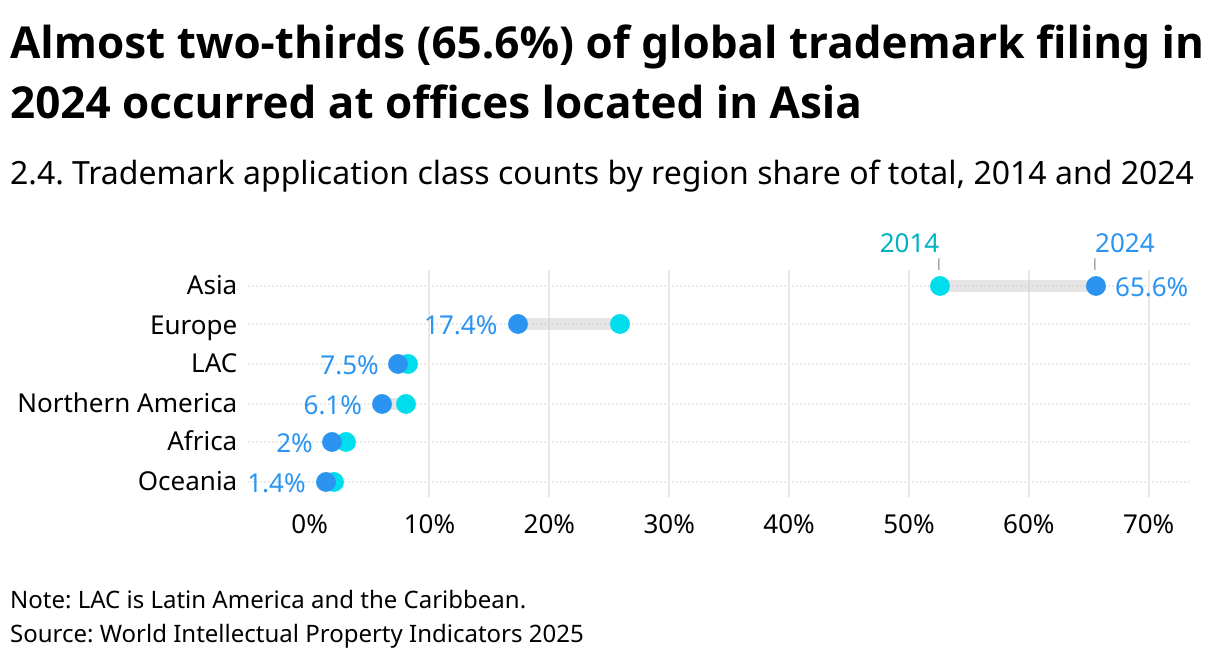
The top 20 offices in terms of trademark filing in 2024 were distributed across multiple regions. Asia was home to eight offices, Europe six, Latin America and the Caribbean (LAC) three, Northern America two, and Oceania one. Asian offices dominated global trademark filing, accounting for nearly two-thirds (65.6%) of all filing worldwide. This represents a substantial increase from that region’s 52.6% share a decade earlier in 2014. This expansion has correspondingly reduced the relative shares of the other five geographical regions (figure 2.4). European offices held the second-largest share at 17.4% of the world total in 2024, followed by LAC offices at 7.5% and those of Northern America at 6.1%. The remaining regions captured smaller portions: Africa accounted for 2% of global filing, while Oceania received 1.4%.
Trademark applications maintained a relatively steady, but modest trajectory until the mid-1980s. The landscape began shifting dramatically in the 1990s when China experienced a surge in filing that continued until 2022, when its numbers began to decline. China overtook the US as the world’s largest office in 2001, a position it has maintained since. Despite being surpassed by China, the US office has shown impressive growth. Trademark applications filed in the US have increased more than 2.5-fold since 2001, weathering notable declines during the dot-com collapse (2001–2002), the global financial crisis (2008–2009), and the recent downturn in 2022–2023. Other major offices have also experienced significant expansion. India, which recorded fewer than 100,000 annual applications up until 2006, reached nearly 539,000 applications in 2024. Brazil followed as the fourth-largest office with approximately 454,000 applications, while the Republic of Korea rounded out the top five, with almost 255,000 applications in 2024.
Among top 20 origins, applicants residing in Argentina (+19.7%) and Brazil (+10.4%) recorded a double-digit growth in filing in 2024
Trademark application statistics can be analyzed from two distinct perspectives. Office data captures all applications received by a particular office by both domestic (resident) and foreign (non-resident) applicants. Origin data, by contrast, tracks applications based on where the applicant resides –encompassing both resident filing (applications filed at an applicant’s home or regional office) and abroad filing (applications filed at foreign offices). This section presents trademark statistics from the origin perspective, organizing data by applicants’ country of residence to complement the picture of trademark filing worldwide. Data by origin can be calculated based on either absolute count (an application filed at a regional office is counted once) or equivalent count (an application filed at a regional office is counted multiple times). Data reported in this section are based on absolute count.
The highest volume of filing – measured in absolute application class counts – came from applicants based in China, whose combined resident and abroad application class count of 7.3 million, significantly outpaced all other countries of origin. The US (836,457) ranked second, followed by the Russian Federation (559,436), India (532,900) and Brazil (436,291) (figure B17). Filing trends among these top five origins showed mixed results. Brazil demonstrated the strongest growth at 10.4%, driven by increases in both resident and abroad filing. India followed with 7.4% growth, while the Russian Federation posted a more modest increase of 2.9%. However, both India and the Russian Federation’s growth came entirely from domestic filing, as abroad filing for applicants of these two origins declined. In contrast, applicants from the two largest countries of origin experienced contractions in 2024. China’s overall filing declined 1.5% – despite a substantial 20.5% increase in abroad filing – due to the previously mentioned reduction in resident filing. Conversely, the US saw a similar 1.5% overall decrease, but in this case a 3.4% growth in resident filing was offset by a 7.7% drop in abroad filing.
While 2023 saw decreased filing from 13 of the top 20 countries of origin, 2024 marked a turnaround, with 12 top origins posting increases. In addition to Brazil’s high growth of 10.4% and 7.4% for India, two other top origins exhibited considerable increases: Argentina (+19.7%) and Indonesia (+8.4%). Like Brazil, growth for Argentina and Indonesia was driven by increases in both resident and abroad filing. In contrast, trademark filing fell for eight top origins. France recorded the steepest drop at 6%, followed by the Islamic Republic of Iran (–5.2%), Italy (–3.4%) and Japan (–3%).
Distinct patterns are evident in resident versus abroad filing preferences. China-based applicants demonstrated a strong domestic focus in 2024, with 92.9% of their trademark filing taking place within China and only 7.1% destined for protection abroad. This domestic orientation has remained consistent over the past two and a half decades, with China-based applicants regularly directing about 93% or more of filing toward their home market annually. Similar domestically focused patterns emerged among applicants from other middle-income countries that recorded substantial trademark filing. Residents of Argentina, Brazil, India, Indonesia, the Islamic Republic of Iran, Mexico, Türkiye and Viet Nam all directed only about 8% or less of total filing toward seeking protection abroad. Within this group, applicants resident in the Islamic Republic of Iran showed the strongest domestic preference, directing only 0.9% of filing abroad. Other notably low abroad filing shares included Brazil (2.4%), India (3.8%) and Indonesia (2.4%).
Among the top 20 origins, Swiss applicants demonstrated the strongest international focus, directing 73.3% of trademark filing toward foreign jurisdictions. Other leading countries in terms of abroad filing included Australia (33.5%), Germany (35.6%), the UK (42.4%) and the US (41%).
Trademark filing abroad varied considerably among applicants of selected low- and middle-income countries (figure B18). For example, a group of upper middle-income countries showed moderate international filing activity, with abroad filing representing about between 11% and 16% of total filing. This included Azerbaijan (11.9%), Colombia (13.6%), South Africa (10.7%), Thailand (16%) and Ukraine (14.8%). In contrast, applicants from three countries – Belarus (43.9%), the Dominican Republic (31.4%) and Serbia (52.9%) – directed substantial portions of their total trademark filing toward filing abroad. Finally, applicants from seven countries – Kenya, Madagascar, Mongolia, Morocco, Pakistan, Peru and the Philippines – maintained a predominantly domestic focus, with abroad filing accounting for around 5% or less of total trademark filing.
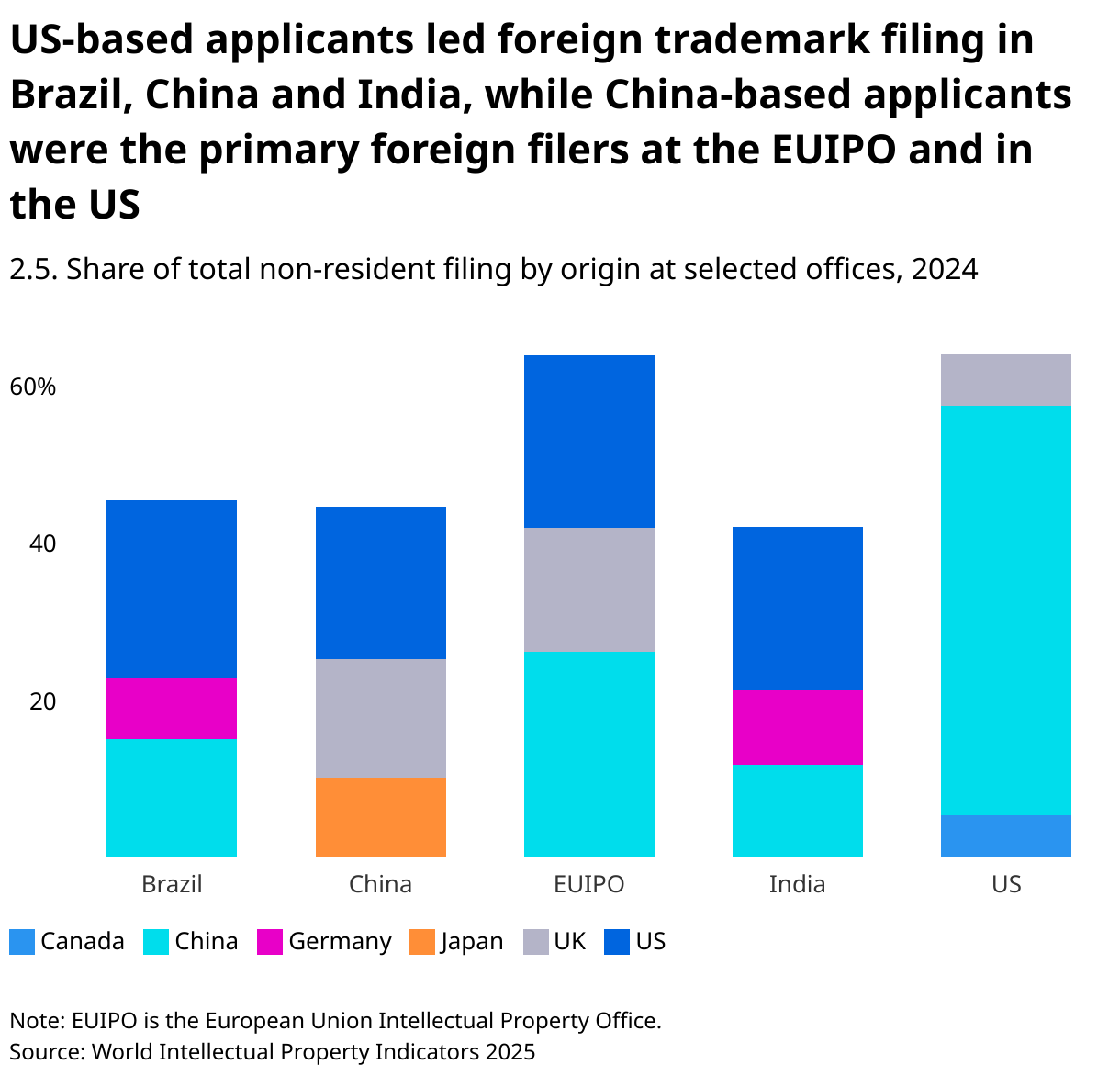
Applicants consider multiple factors when selecting foreign jurisdictions for trademark protection. They include market attractiveness for their goods and services, geographical proximity and historical ties between their home country and the destination country. These strategic considerations are reflected in the filing patterns at major offices in 2024. China received nearly half (44.6%) of its foreign applications from three key sources: the US led, with 19.4% of all non-resident trademark filing, followed by the UK (15.1%) and Japan (10.1%) (figure 2.5). A somewhat reverse pattern emerged in the US, where China-based applicants dominated foreign filing activity, accounting for 52% of all non-resident filing. UK applicants contributed 6.5% and Canadian applicants 5.4%, bringing the combined share for these three origins to 63.9% of total foreign filing in the US. India’s foreign application landscape was more balanced, with the top three sources – the US (20.8%), China (11.8%) and Germany (9.4%) – collectively accounting for 42% of non-resident filing in India. Like the US, the EUIPO showed a high concentration of foreign applications from top origins, with 63.8% originating from just three countries: China (26.1%), the US (21.9%) and the UK (15.8%).
Expanding to include the top 20 offices, China-based applicants emerged as the dominant source of foreign trademark filing across the top offices in 2024, leading non-resident filing at 12 of the other 19 top offices. Their non-resident share was particularly strong at several key offices, representing 39.2% of foreign filing in Germany, 27.2% in Japan and, as noted earlier, 26.1% at the EUIPO and over half (52%) of all foreign filing in the US. Applicants based in the US held the leading position among foreign filers at seven of the remaining top offices. Their share of non-resident filing ranged from the aforementioned 19.4% in China to over one-third at the offices of neighboring Canada (36.9%) and Mexico (34.3%). Applicants residing in Germany played a significant role in non-resident filing at the office of Türkiye, accounting for the largest volume at 14.4%, while Swiss applicants ranked as the second largest source of foreign filing in neighboring France (11.9%) and Germany (9.6%).
Adjusting for GDP and population
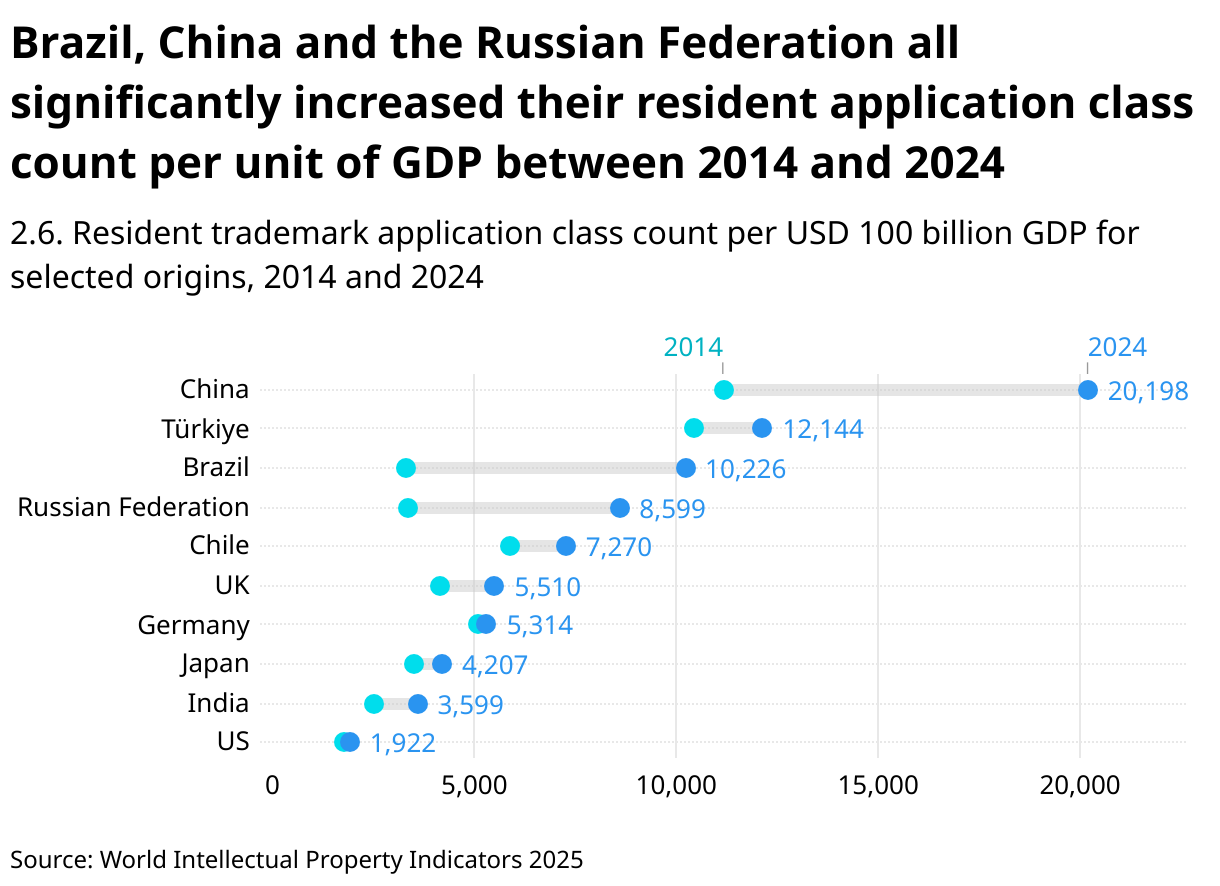
Cross-country variations in trademark filing largely reflect differences in economic size and structure. To account for these dissimilarities, it is informative to examine resident trademark application class counts relative to both gross domestic product (GDP) and population size.
When resident trademark applications are viewed in terms of class counts and adjusted according to GDP, countries with a relatively lower number of classes specified in resident applications, like Brazil and Türkiye, can rank higher than countries, such as India and the US, that have higher class counts. Among selected origins, China (20,198), followed by Türkiye (12,144), Brazil (10,226), the Russian Federation (8,599) and Chile (7,270) exhibited some of the highest ratios of resident application class counts to GDP in 2024 (figure 2.6). This GDP-adjusted perspective highlights the intensity of trademark filing relative to economic output. The decade from 2014 to 2024 saw substantial increases in resident application class counts per unit of GDP for several countries. China experienced the largest increase at 9,030 additional classes per unit of GDP, followed by Brazil (+6,893) and the Russian Federation (+5,210).
Examining resident application class count per million population provides another perspective on filing intensity across countries. In 2024, the Republic of Korea, with a population of about 51.8 million, recorded a particularly intensive resident application class count of 5,130 per million population – the highest ratio across all selected countries of origin (figure B31). China, home to 1.4 billion people, also had a relatively high class count per million population ratio of 4,816. Despite having a significantly smaller population of around 5.3 million in 2024, New Zealand displayed a comparatively high ratio of resident application class count per million population at 3,783. The other selected countries of origin are clustered into several distinct groups. In addition to containing New Zealand, a high filing activity tier included Türkiye (4,286), the Russian Federation (3,648), Germany (3,339) and the UK (2,894). A moderate filing activity group encompassed Spain (2,088), Brazil (2,009), Japan (1,939), Argentina (1,836), Uruguay (1,747), the US (1,451) and Botswana (1,395). Canada (1,134) and Mexico (1,216) showed similar moderate levels, while India, Indonesia, Morocco and Thailand recorded the lowest ratios, ranging between approximately 350 and 730 classes per million population.
Which specific classes and industries attracted the most intensive filing from applicants seeking protection abroad?
Trademarks are registered in relation to particular classes of goods or services. The Nice Classification of goods and services is used in the international trademark system and at certain national and regional offices. Nice classification statistics provide insights into the relative importance of different goods and services. In 2024, goods class 9 – including scientific, photographic, measuring instruments, recording equipment, computers and software – featured in 11.3% of all reported non-resident trademark filing by class (figure B23). Nice class 9 was followed by services class 35 (7.2%), which covers advertising, business management, business administration and office functions, and by services class 42 (5.7%) and goods classes 5 (5.6%) and 3 (5%). Services class 42 includes scientific and technological services, as well as the design and development of computer hardware and software. Goods class 5 relates to pharmaceutical preparations, baby food, dietary supplements for humans and animals, disinfectants, fungicides and herbicides, and goods class 3 covers, among other things, cleaning preparations, soaps, perfumes and cosmetics. Of the 45 total Nice classes, the top five (9, 35, 42, 5 and 3) were specified in more than one-third (34.8%) of all reported non-resident trademark filing worldwide.
Service-related classes represented 28% of all Nice classes specified in applications filed abroad in 2024, despite services comprising only 11 of the 45 total Nice classes (figure B24). This proportion varied significantly across a selection of offices. The lowest service shares appeared at the offices of China, India, Indonesia and Viet Nam, where services classes accounted for about between 28% and 32% of total filing. A middle tier included the EUIPO and the offices of Australia, Canada, Germany, Japan, the Russian Federation, the UK and the US, where services classes were represented approximately between 36% and 42% of applications. Services classes dominated filing at several selected offices, exceeding half of total filing in five: Brazil led with 66.3%,followed by France (51.5%), Türkiye (51.2%), Argentina (50.5%) and Mexico (50.2%) (figure B27).
Grouping the 45 Nice classes into 10 distinct industry sectors offers valuable insights. In 2024, the research and technology sector attracted the largest filing volumes by applicants seeking trademark protection abroad, constituting 19.3% of global reported non-resident trademark filing (figure B25). It was followed by the health (14.1%), clothing and accessories (12.2%) and leisure and education (10.4%) sectors. Trademarks relating to agriculture (10.1%), household equipment (9.3%) and business services (9.1%) accounted for the next largest shares of the total. In contrast, industries linked to chemicals (3.2%), construction (5.4%) and transportation (6.9%)received the smallest proportions of filing abroad.
Research and technology was the sector that attracted the biggest proportion of total filing at the EUIPO (21.4%), as well as at the offices of Japan (18.7%), the UK (20.2%) and the US (18.1%) (figure B26). In China (27.5%), the agricultural sector was the predominant choice, while also accounting for the second largest proportion in India (15.4%), the Republic of Korea (18.4%) and Türkiye (15%), and ranking third in the Russian Federation (12.3%). Business services topped the list of industry sectors in Brazil (26.6%), the Republic of Korea (19.1%) and Türkiye (25.2%), accounting for the largest share of total trademark filing, and was the second top sector in China (13.5%), the Russian Federation (13.4%) and at the EUIPO (12.1%). Clothing and accessories was the sector that garnered the largest share of filing in the Russian Federation (14.8%), whereas it was the third largest sector in the UK (12.6%) and the US (14.5%). Filing for trademarks associated with the health sector constituted the largest proportion of filing in India (23%) and the third largest in China (13.2%). Filing related to leisure and education featured as the second top sector at the offices of Brazil, Japan, the UK and the US, and as third top sector at the EUIPO.
Global trademark registrations reached approximately 8.3 million in 2024
After concluding the examination process, an office may decide to register a trademark. Registration numbers can fluctuate greatly from year to year, due in part not only to a rise or fall in the volume of applications received in any given year, but also to the amount of resources an office is able to dedicate to examining trademark applications. For this reason, it is not possible to accurately compare the number of applications filed at a particular office in any given year with the number of registrations issued by that office in the same year.
The estimated 8.3 million trademark registrations recorded worldwide in 2024 marks a return to growth following two years of decline. At 9.2%, the increase is equivalent to almost 702,000more registrations compared to the previous year (figure B4).
Just as class counts make application filing activity internationally comparable, they also enable a more meaningful comparison of registrations. In 2024, an estimated 11 million classes were specified in the above mentioned 8.3 million trademark registrations, reflecting a 7.2% increase compared to the previous year’s total (figure B5). Unlike 2023, when many offices recorded a decline in registrations compared to the previous year, 13 of the top 20 offices recorded growth from 2023 to 2024. Notably, registrations measured in class counts at the office of China rose by 9.1% from 2023 to 2024, representing almost 399,000 more than in the previous year. Similarly, the office of India recorded a registration class count in 2024 that exceeded the level recorded in 2023 by almost 238,500. These two offices contributed most to the global increase in trademark registrations.
China’s office registered trademarks in which about 4.8 million classes were specified, with that office accounting for a sizable 43.5% of all trademark registration class counts recorded worldwide in 2024. Following China were the offices of the US (526,123), India (490,896), the EUIPO (412,375) and the office of the UK (330,823) (figure B15). Combined, these four offices accounted for almost 16% of all registration activity.
Apart from China, six additional offices among the top 20 in terms of registration activity experienced increases of greater than 9% in 2024. The most significant increase of 94.5% was observed at the office of India, primarily attributed to expanded staffing for application processing, followed by the offices of Viet Nam (+34.3%), Indonesia (+20.1%), Argentina (+19.2%),the US (+18%) and the Russian Federation (+10.6%). In contrast, four top offices recorded a decline of almost 10% or more compared to the previous year. This group comprised Brazil (–19.8%), the Islamic Republic of Iran (–9.5%), Italy (–12.7%) and the Republic of Korea (–9.7%).
Active trademark registrations grew 6.1% globally in 2024
Unlike most forms of intellectual property (IP), trademarks can be maintained indefinitely through the payment of a renewal fee at defined intervals. In 2024, there were an estimated 93.2 million active trademark registrations across 155 IP offices globally, representing an increase of 6.1% compared to 2023 (figure B34).
Once again, the office of China had by far the highest number of trademark registrations in force in 2024, with a total of almost 49.8 million (figure B35). It was followed by the offices of the US (3.6 million) and India (3 million), and by the offices of Brazil and the UK with approximately 2.6 million each. The EUIPO and the offices of France, Japan, Mexico and the Republic of Korea reported figures ranging from about 1.7 to 2.3 million active trademark registrations. The offices of Argentina (1,017,050) and Germany (1,005,301) reported a comparable stock of trademark registrations in force, while Australia (879,331) and Spain (859,333) recorded similar counts.
Around 23.8 million trademark registrations in force at 86 offices lend themselves to being distributed according to the year in which they were initially registered. They represent about 62% of a total of approximately 38.5 million trademark registrations recorded at these offices between 2000 and 2024. Almost one-quarter (24.5%) of the trademarks registered in 2000 remained in force in 2024, showcasing the enduring value of marks (figure B36). For trademarks registered in 2018 or later, the percentage consistently surpasses 80%. More than half (53.8%) of the 23.8 million registrations in force were registered relatively recently, dating back no earlier than 2018.