
In 2024, innovators from around the world submitted a record breaking 3.7 million patent applications, up 4.9% on 2023
In 2024, innovators around the world filed 3.7 million patent applications, marking a 4.9% increase over 2023 and the fastest year-on-year growth since 2018 (figure 1.1). This robust growth is particularly notable given the challenging economic conditions of the past year. Following a 3% decline in 2019 – at the height of the COVID-19 pandemic – patent applications globally have risen for five consecutive years. A substantial increase in filings by applicants residing in China (at least 153,072 additional applications in 2024 compared to 2023), India (+12,274), the Republic of Korea (+7,523) and Japan (+4,533) was the main driver of growth in 2024. Furthermore, over the past five years, China, India and the Republic of Korea have consistently been the main contributors to the overall growth in patent filings.
The worldwide filing of 3.7 million applications in 2024 comprised 2.7 million resident filings (72.6% of the total) and 1 million non-resident filings (27.4%). Resident filings grew by 6.8% in 2024 – the fastest rate of growth since 2016 – while non-resident filings remained stable. Over the past decade, resident filings have grown at a faster pace than non-resident filings, with average annual growth rates of 4.1% and 1.6%, respectively. In terms of volume, resident filings have risen from 1.8 million in 2014 to 2.7 million in 2024, whereas non-resident filings have increased more modestly, rising from 0.9 million to 1 million over the same period. It is notable that the substantial surge in resident filings has contributed to a significant drop in the global share of non-resident filings, which has decreased from 32.6% down to 27.4% over the past decade (figure A2).
The long-term trend in global patent applications has been consistently upward, reflecting the accelerating pace of innovation worldwide. Between 2010 and 2024, filings have nearly doubled, rising 1.9-fold from just under 2 million to 3.7 million.

China’s IP office received 1.8 million patent applications in 2024, more than three times the number submitted to the US Patent and Trademark Office
The National Intellectual Property Administration of the People’s Republic of China (CNIPA) received 1.8 million patent applications in 2024, up 9% on 2023.
Among the top 20 offices, there is a substantial variation in the source of applications (figure A7). For example, non-resident applicants accounted for nine out of every 10 applications received by the offices of Australia, China, Hong Kong SAR, and Mexico. In contrast, only around one in 10 applications received by the offices of China, France and Türkiye was a non-resident application. The IP office of India has experienced the largest shift in the resident and non-resident filings distribution over the past decade, with the increase in resident filings from 28.1% in 2014 to 60.1% in 2024 reflecting a robust expansion of domestic innovation activity. In contrast, while the Russian Federation’s resident share increased from 59.7% to 80.5% over the same decade, growth has largely stemmed from a sharp decline in non-resident filings. The resident and non-resident distribution at the IP offices of Australia, Canada and China, Hong Kong SAR has remained relatively stable over the past decade.
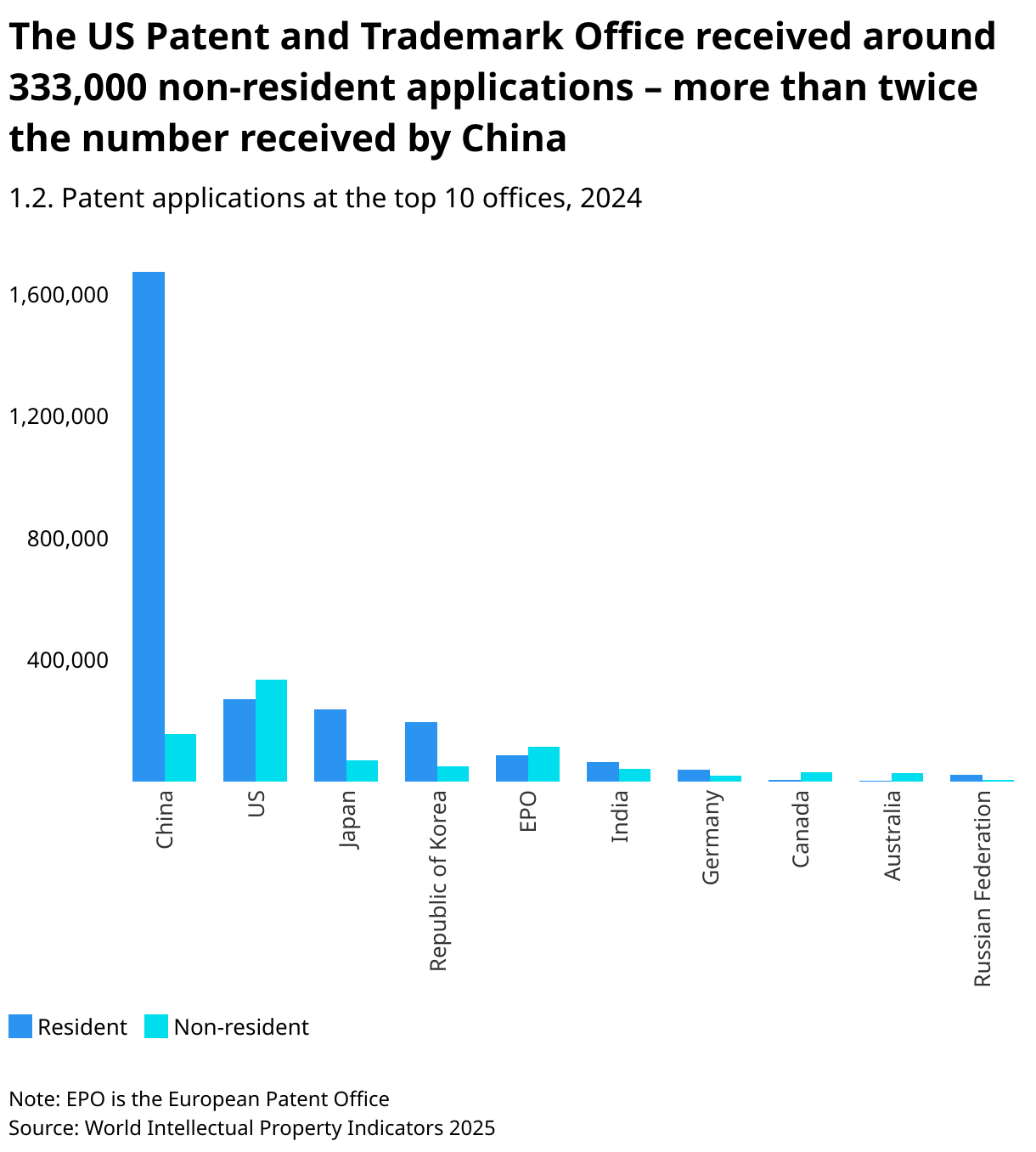
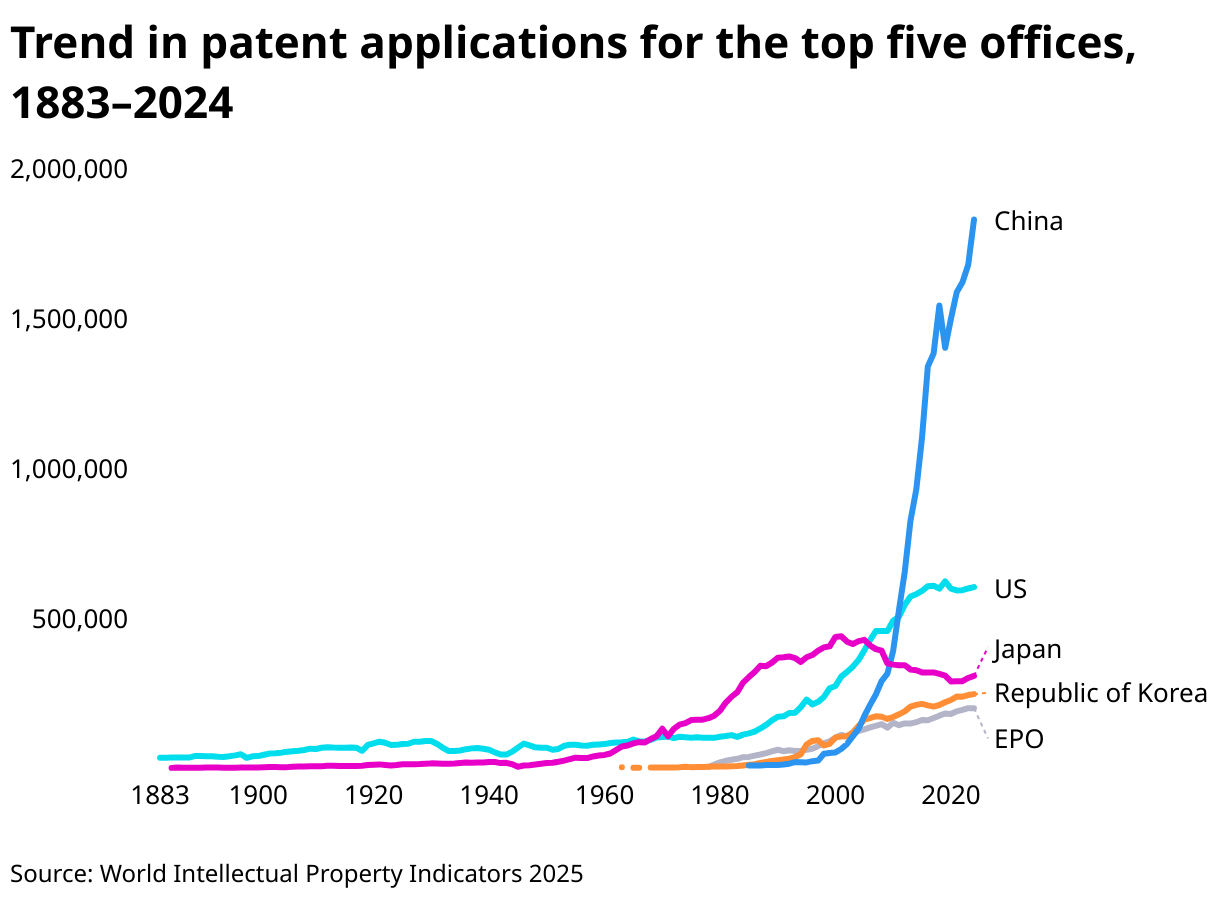
In 2024, four of the top five offices – China (+9%), Japan (+2.2%), the Republic of Korea (+1.2%) and the United States of America (US) (+0.8%) – reported a growth in filings. China marked a fifth consecutive year of increase and its fastest rate of growth since 2018. Japan recorded a fourth straight year of increase, while the US posted growth for the third year in a row, though at a considerably slower rate than the other four offices. By contrast, the EPO experienced a slight decline, receiving 27 fewer applications than in 2023, following three years of strong growth.
A majority of the top 20 offices – 13 out of 20 – received a greater number of patent applications in 2024 than in 2023 (figure A8). Among the biggest increases were those at the offices of Türkiye (+18.4%), India (+16.5%), China (+9%) and Italy (+7.1%). Türkiye returned to growth, with an increase in resident filings driving the overall growth for 2024. For India, on the other hand, it was an eighth straight year of growth, with the 16.5% in 2024 representing a third successive year of double-digit growth driven by a substantial increase in resident filings. Similarly, a strong growth in resident filings was the primary driver of overall growth in China and Italy.
Seven of the top 20 offices received fewer applications in 2024 than in 2023, with China, Hong Kong SAR (–10.4%) and France (–9.2%) recording the sharp declines. The United Kingdom (UK) also registered a notable drop in applications of 5.1%. Australia (–3.3%) and Singapore (–2.5%) recorded a similar decline, while Canada (–0.7%) and the EPO (–0.01%) observed a modest decrease in 2024 applications.
Looking beyond the top 20 offices to selected offices of low- and middle-income countries shows the offices of South Africa (8,899), Thailand (8,727) and the Islamic Republic of Iran (8,657) having received over 8,500 applications in 2024 (figure A9). In the case of both Thailand and South Africa, the majority of applications were filed by non-resident applicants. In contrast, resident filings accounted for nearly all applications submitted to the IP office of the Islamic Republic of Iran. Tunisia (+26.4%), albeit from a low base (440 filings in 2024), reported the fastest growth rate in 2024, with a substantial increase in resident filings the main driver of overall growth at that office. Kazakhstan (+22.2%) also reported double-digit growth, driven primarily by a sharp rise in resident filings. A majority of the selected low- and middle-income country offices reported in figure A10 received fewer applications in 2024 than in 2023. A drop in non-resident filings was the primary contributor to the overall decline at all these offices, apart from those of Algeria, Egypt and the Islamic Republic of Iran.
Each of the three regional offices – the African Regional Intellectual Property Organization (ARIPO), the Eurasian Patent Organization (EAPO) and the African Intellectual Property Organization (OAPI) – received fewer applications in 2024 than the previous year, marking a second consecutive year of decline. In each case, the overall decrease was driven by a fall in non-resident filings.
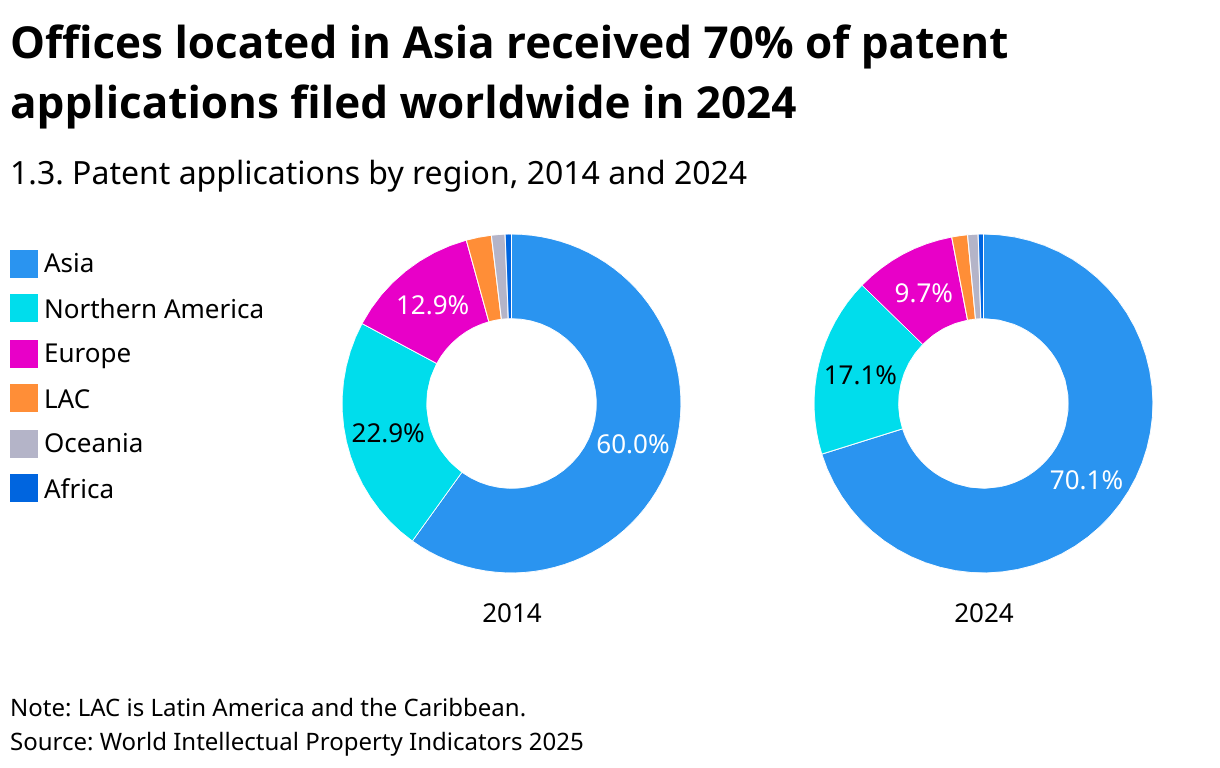
In 2024, Asia further consolidated its position as the hub of global innovation, with that region’s IP offices receiving seven out of every 10 patent applications filed worldwide
Offices located in Asia received approximately 2.6 million applications in 2024, constituting 70.1% of the world total (figure 1.3). This is to be expected considering that three of the top five offices to have received the most patent applications in 2024 are located in Asia. Over the course of a decade, Asia’s share of total applications filed globally has increased by 10.1 percentage points from 60% in 2014 to 70.1% in 2024. This has been mostly because of robust filing growth in China, which contributed 70% of all applications filed within Asia during 2024, with the remaining 45 offices contributing 30% of the total.
Both Northern America and Europe have seen a significant decline in shares over the past decade. Northern America’s share has decreased from 22.9% in 2014 to 17.1% in 2024, while that of Europe has fallen by 3.2 percentage points down to 9.7% over the same period. The combined share for Africa, Latin America and the Caribbean (LAC) and Oceania stood at 3% in 2024, 1.2 percentage points lower than in 2014.
Every year from 1883 to 1963, except for 1942–1943 and 1949–1950, the patent office of the United States of America (US) was the world’s leading patent filing office.
Among the top 20 origins, applicants residing in Finland (+15.4%), India (+19.1%) and Türkiye (+14.6%) recorded double-digit filings growth in 2024
Applications received by offices from resident and non-resident applicants are referred to as office data, whereas applications filed by applicants at a national or regional office (resident applications) or at a foreign office (applications abroad) are referred to as origin data. Patent statistics based on the residence of the first named applicant are reported in order to complement the picture of patent activity worldwide. Data by origin can be calculated based on either absolute count (an application filed at a regional office is counted once) or equivalent count (an application filed at a regional office is counted multiple times). Data reported in this section are based on absolute count.
Innovators residing in China filed around 1.8 million patent applications worldwide in 2024 (resident plus abroad filings). China was followed by the US (501,831), Japan (419,132), the Republic of Korea (295,722) and Germany (133,485) (figure A17).
The distribution of resident and abroad filings varied considerably across the top 20 origins. China recorded by far the lowest share of abroad filings, for instance, at just 6.9% of its total. By contrast, abroad filings accounted for the majority of applications originating from Canada (82.2%) and Israel (90.5%). Most of these filings were filed at the USPTO, likely reflecting both geographical proximity and strong bilateral ties.
Beyond the top 20 origins, applicants from Brazil (7,988), the Democratic People’s Republic of Korea (6,957) and the Islamic Republic of Iran (8,433) filed a substantial number of applications in 2024, the majority of which were resident filings – ranging from 99.7% in the Democratic People’s Republic of Korea to 72% in Brazil. For each of the selected origins shown in figure A18, except for Jordan and South Africa, resident filings accounted for more than half of the total, reflecting applicants’ focus on seeking patent protection within their domestic market.
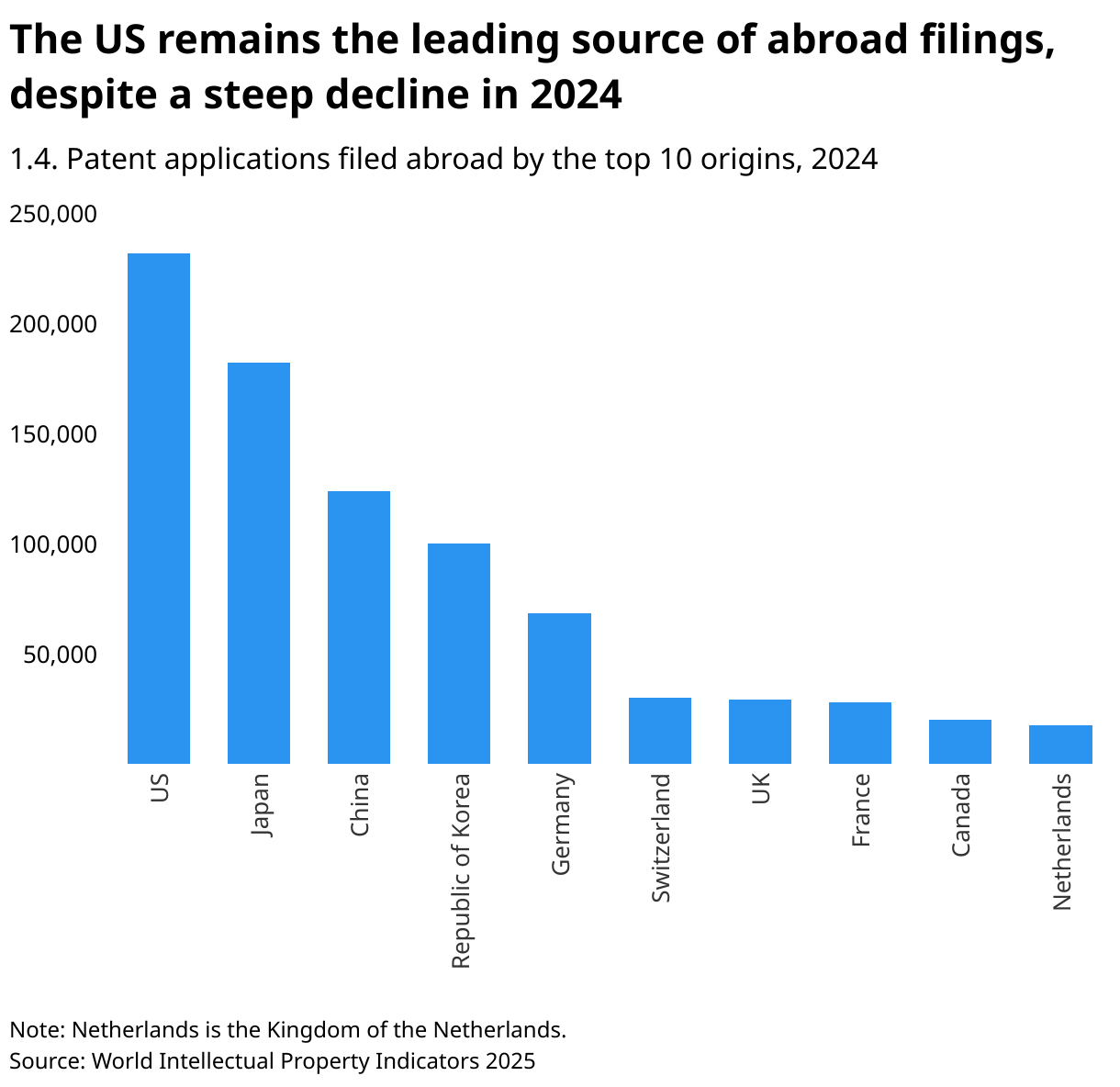
Focusing on abroad filings, US-based applicants filed the most patent applications abroad in 2024, with a total of at least 231,536.
Switzerland (29,907), the UK (29,290), France (27,976), Canada (19,844) and the Kingdom of the Netherlands (17,466) round out the top 10 rankings for abroad filings. Several countries have seen substantial increases in abroad filings over the past decade. For example, China’s abroad filings grew 3.6-fold between 2014 and 2024, while Singapore and Saudi Arabia recorded 1.9-fold and 1.8-fold increases, respectively.
Analysis of the flow of non-resident applications between origins and offices shows that US applicants accounted for the largest proportion of non-resident filings in 12 of the 20 offices presented in table A19. Proportions ranged from 50% at the IP office of Canada to 25.3% at that of the UK. Applicants residing in Japan held the largest non-resident share at four of the 20 offices – namely, China (29%), Germany (34.4%), Indonesia (23.6%) and the US (21.9%). China based applicants accounted for 24.2% and 25.9% of non-resident applications in the Russian Federation and Türkiye, respectively. Meanwhile, applicants resident in Germany accounted for 32.7% of all non-resident applications filed in France, while Swiss applicants accounted for 30.8% in Italy, reflecting the geographical proximity of these four European countries.
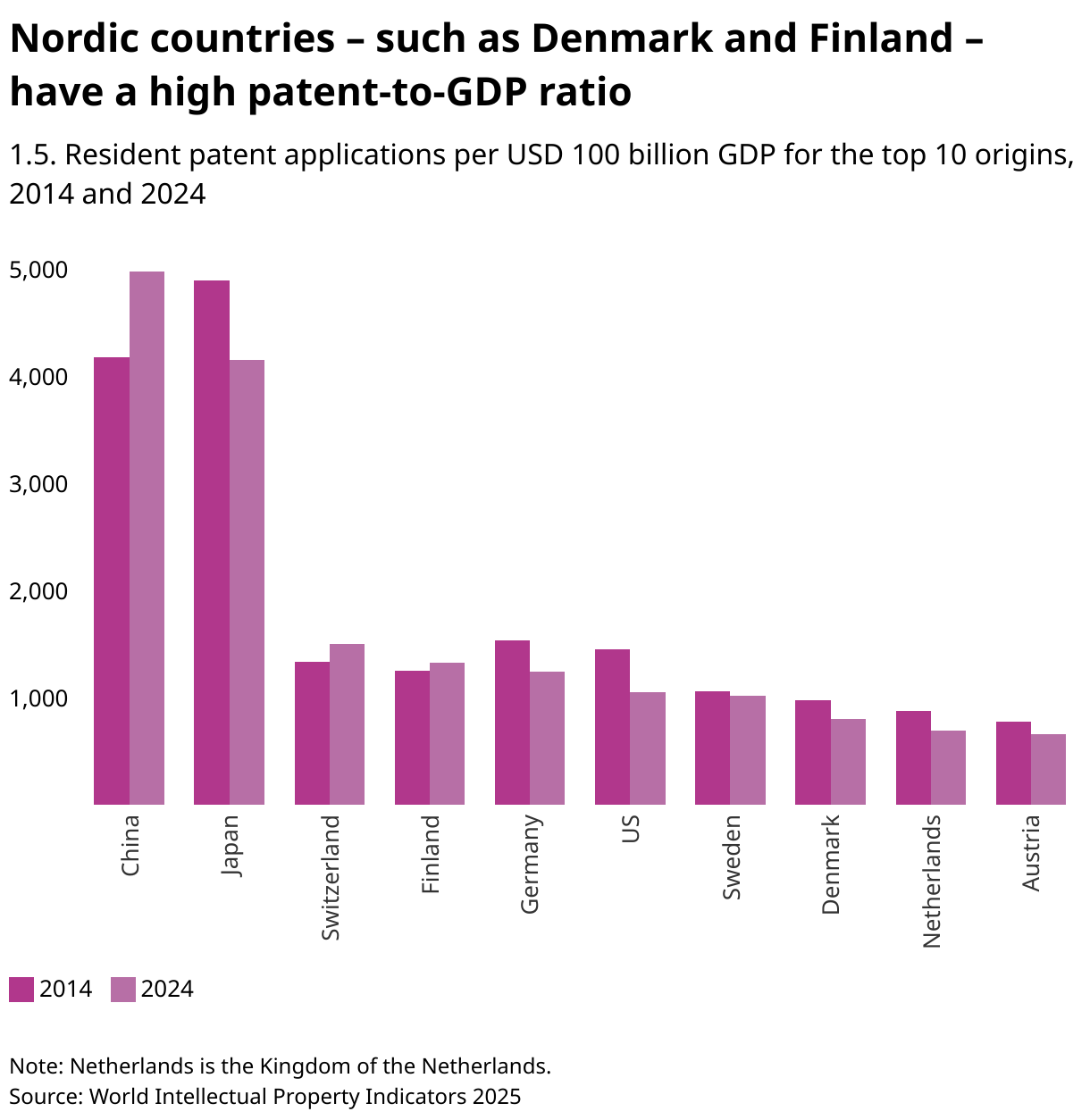
China’s residents filed the most patents per GDP in 2024
Variations in patenting activity across countries reflect differences in the size and structure of economies. It is therefore informative to examine resident patent activity with regard to variables such as population, research and development (R&D) spending, and gross domestic product (GDP).
In 2024, China filed the highest number of resident patent applications, with 4,977 per USD 100 billion of GDP, followed closely by Japan with 4,150 per USD 100 billion of GDP (Figure 1.5)
Among top origins, China has seen a considerable improvement in its resident patent-to-GDP ratio, increasing from 4,181 in 2014 to 4,977 in 2024. Similarly, India and Switzerland have also seen a significant improvement in patent-to-GDP ratio. The increase in the ratio for China, India and Switzerland can be attributed to resident filings growing at a faster rate than GDP. In contrast, three origins with high a patent-to-GDP ratio – Germany, Japan and the US – have consistently recorded a downward trend in the ratio over the past decade. This has been due to a decrease in resident filings, combined with strong GDP growth.
The ranking of resident applications per million population largely mirrors the patent-to-GDP ranking, with some differences. The Republic of Korea leads, with 3,783 patents per million, followed by Japan (1,913) and Switzerland (1,235). China, first according to patent-to-GDP, ranks fourth according to patents per capita, while India – ranked 16th by patent-to-GDP – does not appear in the top 20 (figure A38). In terms of long-term trends, the patent-to-population ratio exhibits a pattern similar to the patent-to-GDP ratio. China, the Republic of Korea and Switzerland have seen a notable improvement in patent-to-population ratio, whereas Germany, Japan and the US have undergone a considerable decline. For example, Japan’s patent-to-population ratio has declined from 2,090 in 2014 to 1,913 in 2024, driven by a decline in resident filings.
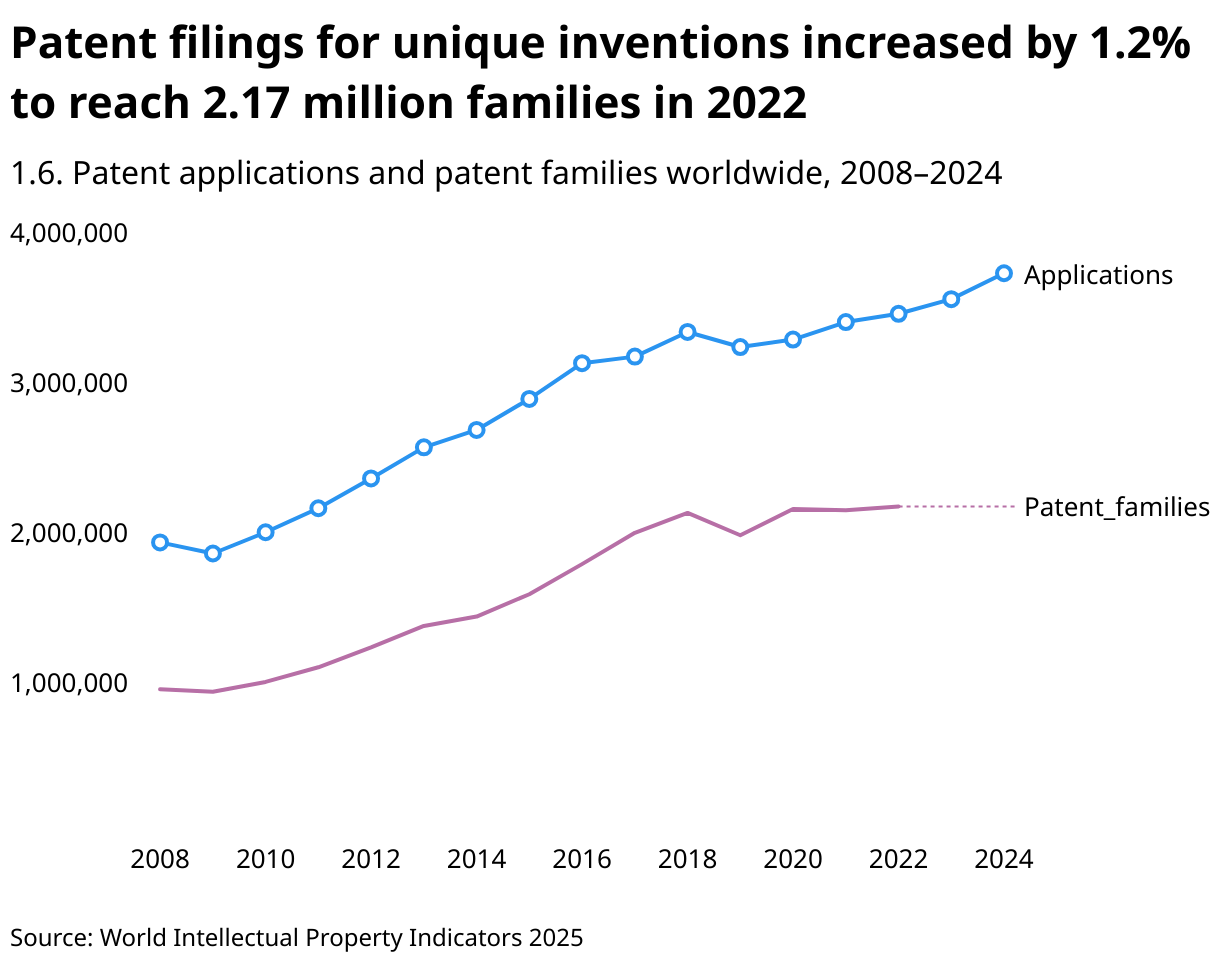
Patent filings for unique inventions more than doubled, increasing from 0.95 million in 2008 to 2.17 million in 2022
Patent rights are territorial in nature. In order to protect an invention in several countries, applicants often file patent an application for the same invention in multiple jurisdictions. This being the case, adding patent data from different jurisdictions would inflate the number of new inventions. Patent family data are therefore frequently used in order to eliminate (or at least minimize) double counting. The basic idea behind a patent family is to group together all applications – original and subsequent filings – related to each other via priority filing(s). WIPO has developed indicators for patent families with the aim of capturing the actual number of unique inventions by excluding double counting so far as possible. The drawback of such data is the consequent time lag, which can be up to three years.
Patent family numbers worldwide have fluctuated over the past four years. There was a steep decline in 2019 (–7%) at the height of the COVID-19 pandemic. But the number of patent families rebounded in 2020, reaching 2.15 million, with an 8.8% growth rate, before a small decrease (–0.4%) in 2021, followed by a 1.2% increase in 2022 to reach 2.17 million patent families (figure A23). The trend over the past 15 years shows the number of patent families increasing significantly from 0.95 million in 2008 to 2.17 million in 2022 (figure 1.6).
In 2022, applicants from China accounted for nearly 70% of all patent families, followed by Japan (8.1%), the Republic of Korea (6.9%), the US (6.8%) and Germany (2.1%). Together, these five origins represented 93.8% of the global total. China’s patent families have grown exponentially from around 165,800 in 2008 to around 1.5 million in 2022, whereas those of Japan have declined from 300,200 to 175,800 over the same period. The Republic of Korea has shown a steady increase in patent families, while both Germany and the US have maintained a relatively stable number over the past 15 years.
The US (165,570) created by far the most patent families that were foreign-oriented, accounting for 20.6% of the world total for the period 2020–2021 (figure A26).
The size of a patent family (indicating the number of offices at which a patent is filed) reflects its geographical coverage. Around 85.6% of patent families created worldwide between 2020 and 2022 were filed at a single office (figure A24). This high percentage of single-office families is mainly attributable to the filing behavior of Chinese applicants, who mostly file applications at a single office – 96.7% of patent families originating from China are single-office families. This is somewhat to be expected considering China is the second largest economy after the US. However, there is a considerable variation among top origins. For example, more than 70% of all patent families originating from the Kingdom of the Netherlands (70.1%), Sweden (74.7%) and Switzerland (71.3%) covered two or more offices. In contrast, only around 5% of patent families originating from China (3.3%) and the Russian Federation (5.1%) were filed at more than one office. Origins whose patent families had the widest geographical coverage were the Kingdom of the Netherlands and Switzerland, where 12.7% and 19.2% of patent families, respectively, covered more than five offices. This could be partly because these two countries have a small domestic market combined with having a large number of multinational companies within their borders.
A patent family is a set of interrelated patent applications filed at one or more offices to protect the same invention. Patent applications within a family are interlinked by one or more of the following: priority claim, Patent Cooperation Treaty (PCT) national phase entry, continuation, continuation-in-part, internal priority, and addition or division. A special subset comprises foreign-oriented patent families – that is, those patent families that have at least one filing office different from the office of the applicant’s country of origin. Some foreign-related patent families include only one filing office. This is because applicants may choose to file only at a foreign office. For example, if a Canadian applicant files a patent application directly with the United States Patent and Trademark Office (USPTO) without having previously filed with the patent office of Canada, that patent family will constitute a foreign-oriented patent family with just one office.
Patent filings in computer technology have grown by 10.3% over the past decade and now represent 13.2% of global filings
In 2023 – the latest year for which complete data are available owing to the delay between application and publication – computer technology emerged as the most frequently featured technology in published patent applications worldwide, accounting for 13.2% of the world total (table A29). It was followed by electrical machinery (7.2%), measurement (6.2%), digital communication (5.8%) and medical technology (4.9%). These five fields have consistently ranked among the top five since 2012, though their relative positions have shifted over time. Together, their share of total filings has risen from 29.4% in 2013 to 37.4% in 2023, driven primarily by a rapid growth in computer-related technologies. Computer technology alone recorded an average annual growth rate of 10.3% between 2013 and 2023 – significantly outpacing other four fields. Among the top 10 fields of technology, computer technology (+10.3%) is the only field to have witnessed double-digit growth between 2013 and 2023. Filings related to measurement (+7.2%) and digital communication (+6.6%) also saw robust growth over the same period.
Focusing on specialization patterns of countries across different technology fields using the relative specialization index (RSI) shows that China and the US stand out with positive RSI values in computer technology, indicating that this field accounts for a larger share of their total patenting activity compared to the global average (figure A30). In digital communication, India, the Republic of Korea, Sweden and the US have a positive RSI value, with Sweden showing a particularly strong specialization.
In electrical machinery, apparatus, and energy, Germany, Japan, and the Republic of Korea exhibit positive RSI values, suggesting specialization in this area. Medical technology and pharmaceuticals show strong specialization in Israel, the Kingdom of the Netherlands, Switzerland and the US, highlighting a relative strength in those two fields. Meanwhile, transport technologies are dominated by France, Germany, Italy and Sweden, reflecting Europe’s advantage within this sector. Overall, European countries tend to specialize more in transport-related technologies, whereas Asian countries and the US show stronger specialization in computer technologies and digital communication.
Energy-related patent applications rose by 3.2% in 2023, reaching 47,200 published applications
The number of published patent applications related to energy technologies – solar, fuel cell, wind, geothermal and hydro energy – have increased from around 31,200 in 2008 to around 47,200 in 2023 (figure A31), with double-digit year-on-year growth in 2009 (+17.7%), 2010 (+12.7%) and 2021 (+15.4%). Among the individual technologies, solar energy consistently accounts for the largest share of energy-related patent filings, rising from 13,917 in 2008 to 26,931 in 2023, and representing more than half of total filings in most years. Fuel cell applications began strongly, with 11,560 filings in 2008, but have subsequently declined steadily to just over 7,100 in 2023. In contrast, wind energy has experienced sustained growth, more than doubling from 3,223 filings in 2008 to 8,516 in 2023. Geothermal energy remains a relatively niche field, with filings staying below 800 annually, while hydro power has remained largely stable, but saw a sharp spike in applications in 2021, reaching 7,646 filings.
Figure A32 presents the RSI for the top origins, where a positive value indicates that a country specializes in a given field. Solar energy is led by Singapore, Israel, the Republic of Korea, and China, with the US and France showing modest specialization. Patent applications related to hydro energy are concentrated in the Russian Federation, Türkiye, Norway, Italy and the UK. In fuel cells, Japan leads by a wide margin, followed by Germany, the UK and India, with the US and France also displaying positive specialization. Geothermal energy activity is driven by Finland, Canada, Sweden, Norway and Australia. Wind energy is dominated by Denmark, Spain, Norway, the Kingdom of the Netherlands and Austria.
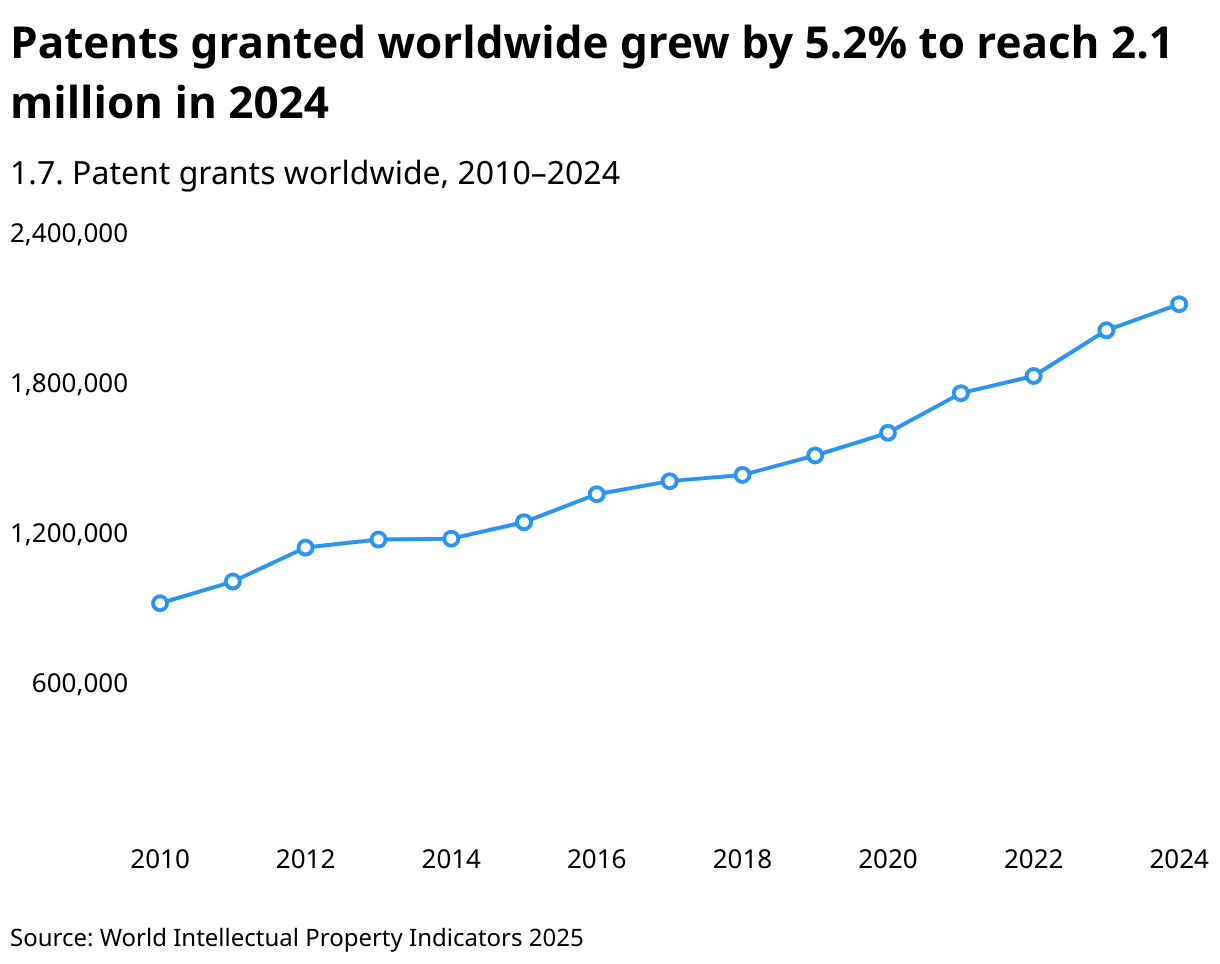
China issued around 124,000 additional patents in 2024 compared to 2023 – 27-times higher than the additional patents issued by the US
Offices carry out a formal and substantive examination before deciding whether to issue a patent. The procedure for granting a patent varies between offices. Differences between offices in the number of patents granted depends on factors such as examination capacity and procedural delays. For this reason, application data for a given year should not be compared with grant data from the same year.
In 2024, an estimated 2.1 million patents were granted worldwide, representing a 5.2% increase from 2023 (figure 1.7). This strong growth rate was driven by a substantial increase in the number of patents issued by the IP office of China, which issued 123,980 additional patents in 2024 compared to 2023. This is 27 times more than the additional patents issued by the US (+4,570).
Since 2015, the IP office of China has issued the highest number of patents globally, surpassing the US. In 2024, China issued over 1 million patents, more than three times the amount issued by the US (319,815), which ranked second (figure A13). China and the US were followed by Japan (200,284), the Republic of Korea (127,806) and the EPO (109,524). The ranking of the top five offices has remained unaltered since 2020.
Five of the top 10 offices granted more patents in 2024 than in 2023, two of which reported double-digit growth. Australia (+23.8%) reported the fastest growth rate, followed by China (+13.5%), Germany (+7.1%), the EPO (+4.7%) and the US (+1.4%) (figure A14). China recorded its fifth consecutive year of double-digit growth, while the IP offices of Australia, Germany and the US returned to growth following a decline the previous year. The EPO’s growth rate in 2024 was 4.7%, a steep decline compared to the 29% growth recorded in 2023. A marked increase in patents granted to non-resident applicants drove overall growth in Australia and the US. Both resident and non-resident grants contributed to total growth at the EPO and Germany. China’s overall growth is attributable to a sharp increase in resident grants. Among the five offices to have issued fewer patents in 2024, Brazil saw a significant decline for a third consecutive year, the 12,096 patents issued in 2024 being less than half of the amount issued in 2021 (26,872). This overall decline is due to a reduction in both resident and non-resident grants.
Beyond the top 10 offices, Türkiye (38.9%), the Philippines (+23.6%) and Viet Nam (+20.8%) experienced substantial growth in 2024. This increase was mainly driven by a strong rise in non-resident grants for the Philippines and Viet Nam, and by higher resident grants in Türkiye (figure A16). In contrast, the three regional offices – ARIPO, EAPO and OAPI – saw a double-digit decline in grants during 2024.
Asia’s share of worldwide patent grants stood at 71.1% in 2024, marking a significant increase of 16.8 percentage points above its global share a decade earlier in 2014. This reflects the fact that three of the top five patent issuing authorities – China, Japan and the Republic of Korea – are located within the region, with China alone accounting for almost half (49.5%) of the world total. Offices located in Northern America accounted for 16.4% of patent grants worldwide in 2024, while those in Europe contributed 9.5% to the global total (table A11). The combined share for Africa, LAC, and Oceania amounted to 3%. Over the past decade, the share for all regions – except Asia – has declined, largely due to the significant increase in patents granted by China’s IP office. The distribution of patent applications (table A5) and patent grants (table A11) for all six regions are of a similar order of magnitude.
Worldwide patents in force rose to 19.7 million in 2024, a 6% increase from the previous year
Patent rights generally last for up to 20 years from the date an application is filed. An estimated 19.7 million patents were in force across 142 jurisdictions in 2024 (figure A41). This represents a strong 6% increase on 2023. Growth was driven mainly by China, which had an additional 698,234 patents in force in 2024 compared to the previous year.
In 2024, only four offices had at least 1 million patents in force. They were China (5.7 million) had the highest number of patents in force, followed by the US (3.5 million), Japan (2.1 million) and the Republic of Korea (1.3 million) (figure 1.8). Among the top 10 jurisdictions, China saw the fastest growth in patents in force in 2024 (+14%), followed by the Kingdom of the Netherlands (+8.5%) and the UK (+6.6%). Beyond the top 10, India sustained six years of double-digit growth, with patents in force rising from 76,556 in 2019 to 228,402 in 2024. Luxembourg (+18.2%) and Sweden (+18.2%) – alongside China – were the only other top 20 offices to see double-digit growth, partly reflecting the 2023 introduction of the EPO’s Unitary Patent system.
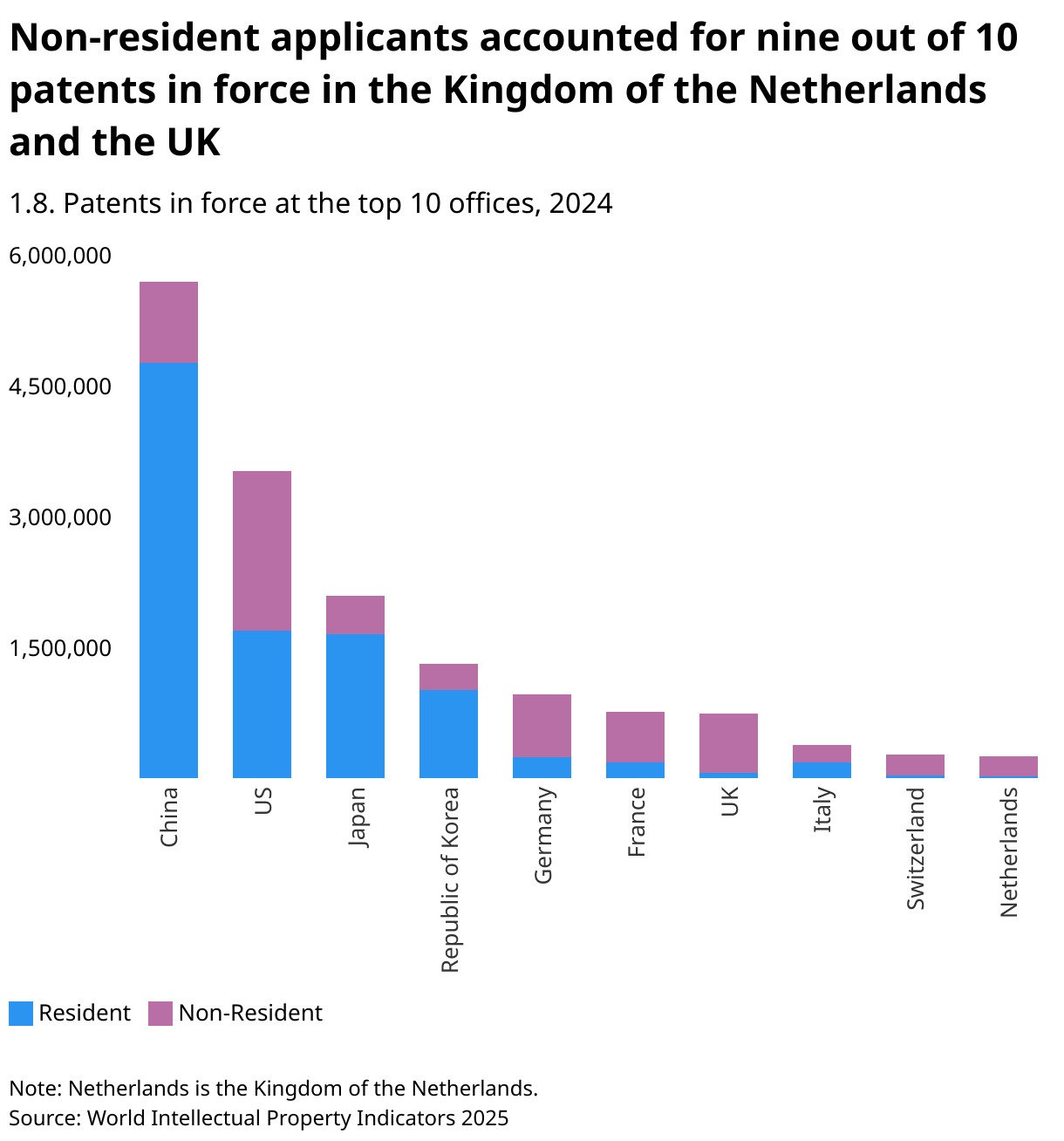
The source of patents in force within the top 10 jurisdictions differs considerably (figure 1.8). At least three-quarters of all patents in force in France (76.6%), Germany (74.7%), the Kingdom of the Netherlands (90.4%), Switzerland (88.5%) and the UK (91.8%) originated from non-resident applicants. In contrast, around four-fifths of all patents in force in China and Japan were granted to resident applicants. This trend is somewhat to be expected owing to the high share of resident patent grants at the IP offices of China and Japan (figure A13). Beyond the top 10 offices, non-resident patent holders contributed more than 80% of all patents in force at most offices. However, there are a few exceptions – for example, the Islamic Republic of Iran and the Russian Federation – where resident applicants are the main source of patents in force.
A holder must pay a maintenance/renewal fee in order for a patent to remain valid, and may opt to let a patent lapse before the end of its full term. Of the 85 offices that provided in-force data categorized by year of filing, approximately 35.3% of granted patents remained in force for at least 10 years after the filing date. Additionally, about 17% of patents lasted the full 20-year term (figure A44).
Although patents can be maintained for up to 20 years, their average age varies between offices. Among the selected 20 offices reported in figure A45, the average age of patents in force in 2024 ranged from 11.6 years in Brazil down to 6.5 years in Italy. Patents in force in France (10.1 years), Germany (11.2 years), Mexico (10.4 years) and Poland (10.6 years) shared a similarly high average age with those in Brazil. When comparing the average age of patents across the 20 IP offices reported in 2024 to those in 2019, there is an overall similarity, except at the offices of Brazil and India, where there was a decrease in the average age of 2.3 years and 2.5 years, respectively, over this period.
Grants for patent applications processed in 2024 ranged from 44.9% to 99%, rejections peaked at 29.6% (China) and withdrawals were highest at the offices of the UK (55.1%) and Brazil (38.3%)
A patent office examines applications and decides whether to grant patent rights. Examination processes differ between offices, which makes cross-country comparison difficult. Every effort has, however, been made to compile examination outcome data based on common definitions and concepts. In 2024, 95 IP offices shared data on patent examination outcomes – granted, rejected or withdrawn – with WIPO.
Among the top 10 offices, Brazil (47.8%) and the UK (44.9%) were the only two to grant patents for less than half of all applications processed in 2024 (figure 1.9).
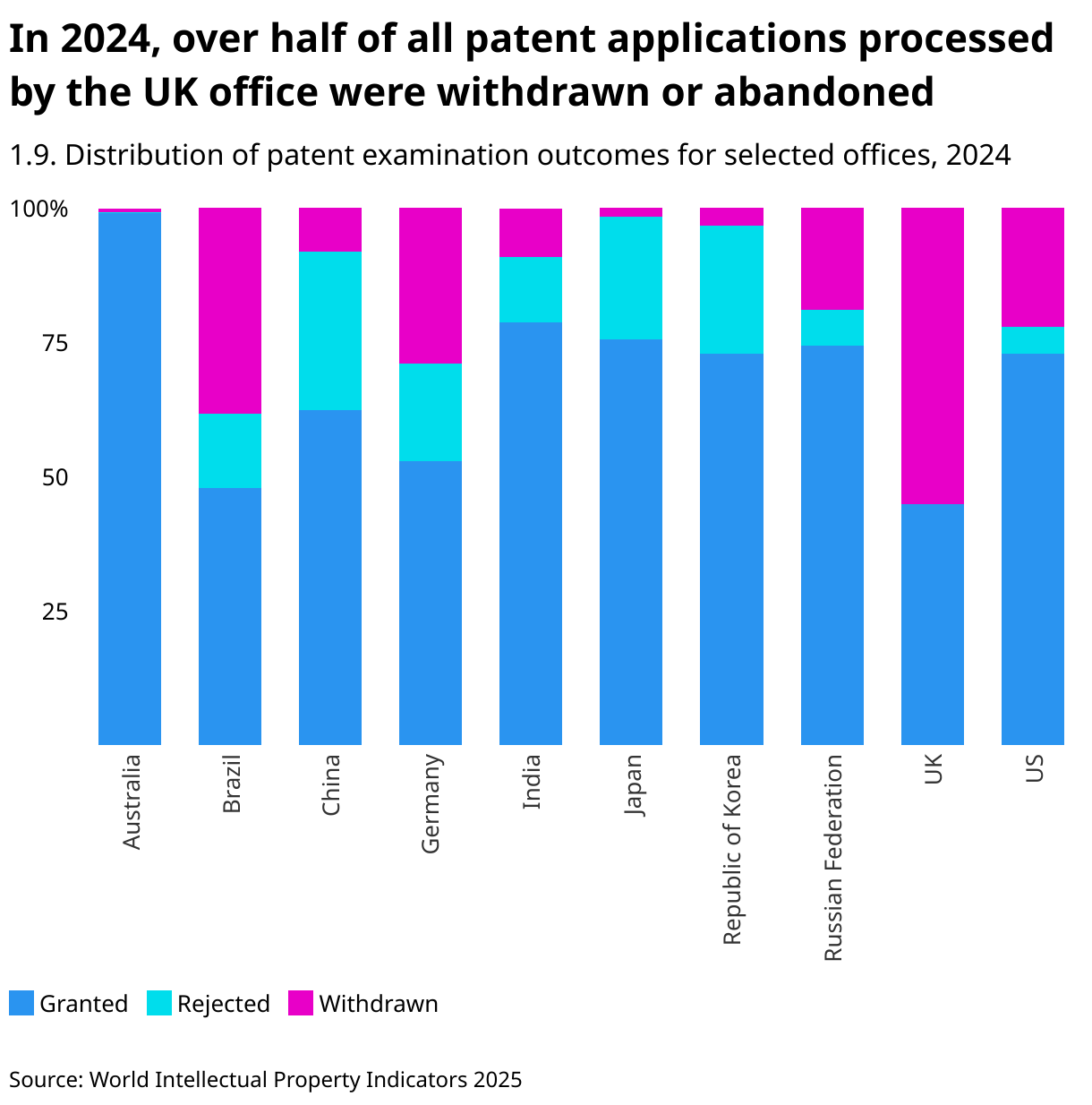
Among the five offices with the highest number of pending applications, only Germany’s IP office reported a lower volume in 2024 compared to the previous year
Patent offices must assess whether the claims presented in an application meet the standards of novelty, non-obviousness and industrial applicability defined in national law. Processing patents therefore consumes time and resources. The estimated total number of potential applications pending worldwide climbed to 4.7 million in 2024, representing a 3.6% increase on the previous year. This estimate is based on data collected from 113 offices, but excludes China, for which only partial 2024 data are available.
In 2024, the US had around 1.2 million pending patent applications, followed by Japan (804,935), the EPO (695,918), the Republic of Korea (394,184) and Germany (367,880) (figure A47). China’s 2024 pending data are not available. Among the top 20 offices, Viet Nam (+75.4%) saw the fastest growth rate in pending applications between 2023 and 2024, followed by Philippines (+15.4%) and Mexico (+11.1%). Conversely, the Russian Federation (–11.3%), Thailand (–10.6) and the UK (–10.5%) managed to substantially reduce their stock of applications pending over the same period.
Where offices have a large proportion of applications pending a request for examination, the scope to reduce the stock of applications pending is somewhat limited. This because an office is unable to start the substantive examination process until an applicant has filed a request for examination: for example, more than 70% of total pending applications in the Republic of Korea and the UK are awaiting a request for substantive examination.
Applications pending is defined as all patent applications, at any stage in the process, awaiting a final decision by a patent office, including those applications for which applicants have not filed a request for examination (where applicable).
Women inventors accounted for no more than 18% of all inventors listed in published PCT applications in 2024
In 2024, women constituted 18% of all inventors listed in published PCT applications, while men accounted for the remaining 82% (figure A33). The proportion of women inventors has increased notably from 11.6% in 2010 to 18% in 2024. Moreover, the proportion of women inventors has expanded in every region of the world over the past decade.
About 37% of published PCT applications named at least one woman as inventor in 2024, and 96% featured at least one man as inventor (figure A34). The share of published PCT applications with at least one woman as inventor has risen from 23.1% in 2010 to 37% in 2024, whereas the share of those with at least one man as inventor has slightly decreased over the same period from 97.5% down to 96%. Despite the upward trend over the past decade, the share of PCT applications with at least one woman as an inventor is considerably lower than the share of PCT applications with at least one man as an inventor.
The gender gap among PCT inventors varies considerably between countries. Among top 20 origins of published PCT applications, China and Türkiye had the largest proportion of women inventors in 2024 (figure A35). They were the only two origins within the top 20 where one quarter of inventors were women. In contrast, for Austria, Germany and Japan only around one in 10 inventors named in published PCT applications were women.
Fields of technology related to the life sciences had comparatively high shares of published PCT applications with women as inventors in 2024. Women represented more than 30% of inventors named in published PCT applications in the fields of biotechnology (31.9%), food chemistry (33.1%) and pharmaceuticals (30.7%) (figure A36).
Utility model applications worldwide increased by 4% to reach 3.3 million applications in 2024
A utility model (UM) is a special form of patent right granted by a state or jurisdiction to an inventor or the inventor’s assignee for a fixed period of time. The terms and conditions for granting a UM differ slightly from those for normal patents, including a shorter term of protection and less stringent eligibility requirements.
Filing activity for UMs increased by 4% in 2024, representing a third consecutive year of strong growth. driven by applications originating from China, which accounted for the 96% of the total growth (figure A53). The Russian Federation also contributed to overall growth. The total number of UM applications filed worldwide amounted to 3.25 million, of which resident applications constituted 99.5% of the total, with non-resident applications making up the remaining 0.5%. Worldwide filings have increased 3.4-fold over the recent decade, from just under 1 million applications in 2014 to 3.25 million in 2024. In 2024, applicants based in China accounted for approximately 97.8 percent of the global total, compared with 90.9 percent in 2014.
Applicants residing in China filed 3.2 million applications in 2024, followed by those in the Russian Federation (13,594), Germany (6,169), Indonesia (4,842) and Thailand (4,277) (figure A56). Among the top 10 origins, Brazil (+27.1%), Indonesia (+10.9%), the Russian Federation (+40.2%) and Thailand (+10.2%) recorded double-digit growth in 2024 compared to 2023. In contrast, applicants residing in the Republic of Korea filed 12.5% fewer applications in 2024 compared to the year before. Over the recent decade, patent filings from high-income countries, including Germany, Japan and the Republic of Korea, have registered a marked decline. For example, Germany submitted 6,169 UM applications in 2024, representing approximately half the volume recorded in 2014 (12,125). In contrast, the volume of UM filings from middle-income countries, such as Indonesia and Thailand, has increased substantially. For instance, Thailand recorded 4,227 filings in 2024, more than double the number submitted in 2014 (1,680).