
The convergence with digital technologies
Decarbonizing heavy-duty road transport depends primarily on making a transition to low-emission energy sources and the rollout of suitable energy infrastructure. But digitalization – comparable to vehicle efficiency technologies – has an important complementary role to play. Much like aerodynamic enhancements or lightweighting, digital tools do not in themselves replace the need for clean energy, but rather optimize its use. The convergence of automotive engineering with digital technologies is driving a new wave of patenting activity focused on the following key areas:
Autonomous driving technologies can reduce emissions by optimizing driving behavior, improving safety and smoothing traffic flows. Advanced driver-assistance systems (ADAS), automated braking, lane-keeping and sensor fusion systems lower fuel use and minimize congestion or accident-related energy losses. Future autonomous trucks could further enhance efficiency through the imposition of consistent driving patterns and coordinated platooning, whereby multiple trucks travel closely together at automated, synchronized speeds to reduce aerodynamic drag and lower overall energy consumption.
Navigation and GPS systems have evolved into sophisticated optimization tools. Today they integrate real-time traffic data, road grade information, weather conditions, and charging or refueling availability. For heavy-duty vehicles, this enables energy-efficient routing, minimizes downtime and supports range management for battery-electric and fuel cell trucks.
Further important aspects of transport digitalization are connected vehicles and road-traffic interaction – the real-time coordination between vehicles, infrastructure and traffic management systems. Road-traffic interaction technologies use connectivity, sensors and AI-based prediction models to optimize how vehicles move through the road network. This connectivity supports collision avoidance, dynamic route optimization, predictive maintenance, and real-time energy management. For heavy-duty road transport, it helps ensure that zero-emission trucks operate at optimal efficiency and charging or refueling is synchronized with operational needs. The relevance of these technologies is illustrated in a recent joint study by autonomous logistics company Einride and Fraunhofer ISI showing that AI-based planning optimization for freight operations significantly increases the operational efficiency of electric trucks and reduces the overall cost of ownership.
(1)Engholm et al. (2025). Beyond replacing diesel trucks: How optimized fleet planning increases electrification and lowers transportation costs. Fraunhofer Institute for Systems and Innovation Research ISI. Available at: https://publica.fraunhofer.de/entities/publication/dc780649-f9c4-4d1f-99bc-617dd591ea06. Smart city technologies enhance the overall efficiency of urban mobility by synchronizing transport flows, traffic signals and freight movement. For heavy-duty vehicles such as buses, smart traffic management can reduce stop-and-go driving, as well as mitigate congestion in dense urban environments.
Urban logistics and automated warehousing are transforming the distribution chain. Automated warehousing systems, digital inventory management and optimized loading/unloading processes reduce dwell time and improve fleet utilization. Urban consolidation centers and digitally coordinated last-mile logistics help decrease the number of vehicle kilometers traveled.
It is important to note that the primary driver for most digitalization technologies, such as route optimization or automated logistics, is to increase revenues and profit margins through operational speed and cost reduction. However, these innovations can also play a part in decarbonization. By optimizing routing, reducing idle times, enabling predictive maintenance, coordinating freight flows and improving system-wide logistics, digital tools help lower energy consumption, maximize the utilization of low-emission vehicles and support more efficient transport operations.
In the patent analysis conducted for this chapter, AI-based patent evaluation has been used to identify only those patents in digitalization technologies that contain inventions relevant to reducing CO2 emissions in heavy-duty road transport – referred to throughout the chapter as green digitalization (see Appendix for more details).
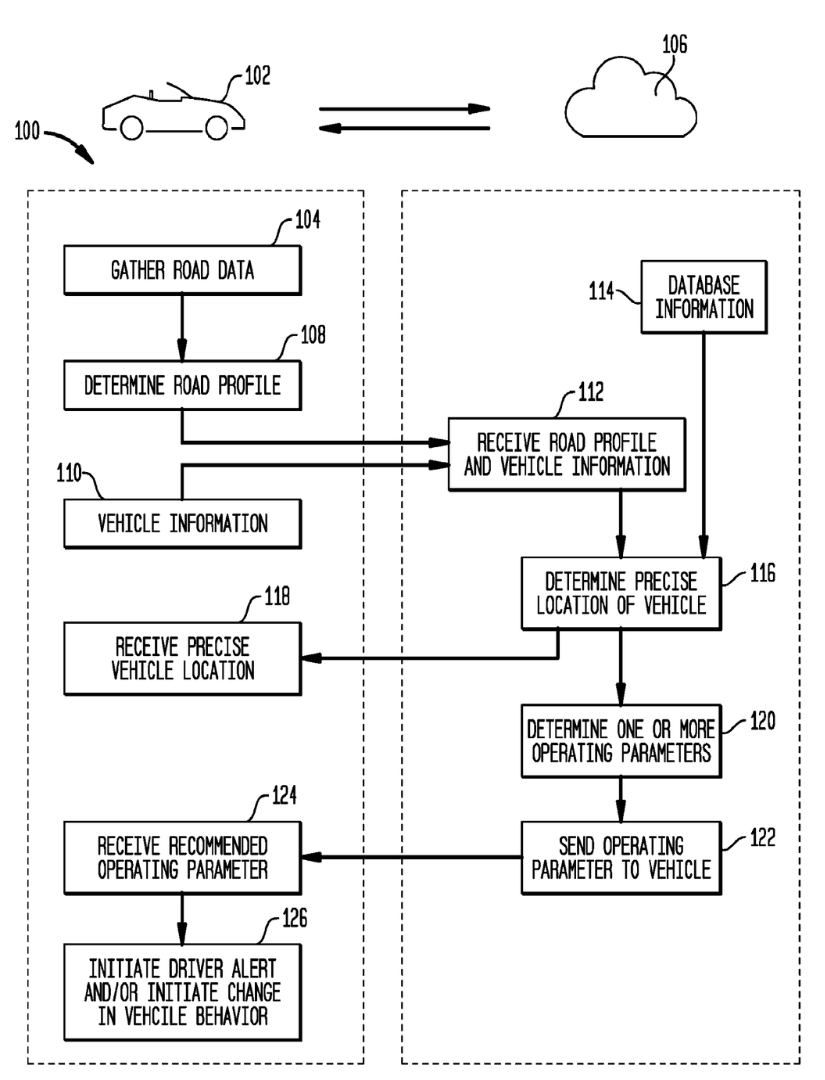
A Clearmotion patent application – which is suitable for heavy-duty road transport – describes a terrain-based vehicle localization system that improves control, anticipates road surface featuresand enhances comfort, durabilityand computational efficiency.
Patent publication number: WO 2022/146866 A1
Owner: Clearmotion
Title: Systems and methods for vehicle control using terrain-based localization
Publication date: July 7, 2022
Patent drawing
AI simulation
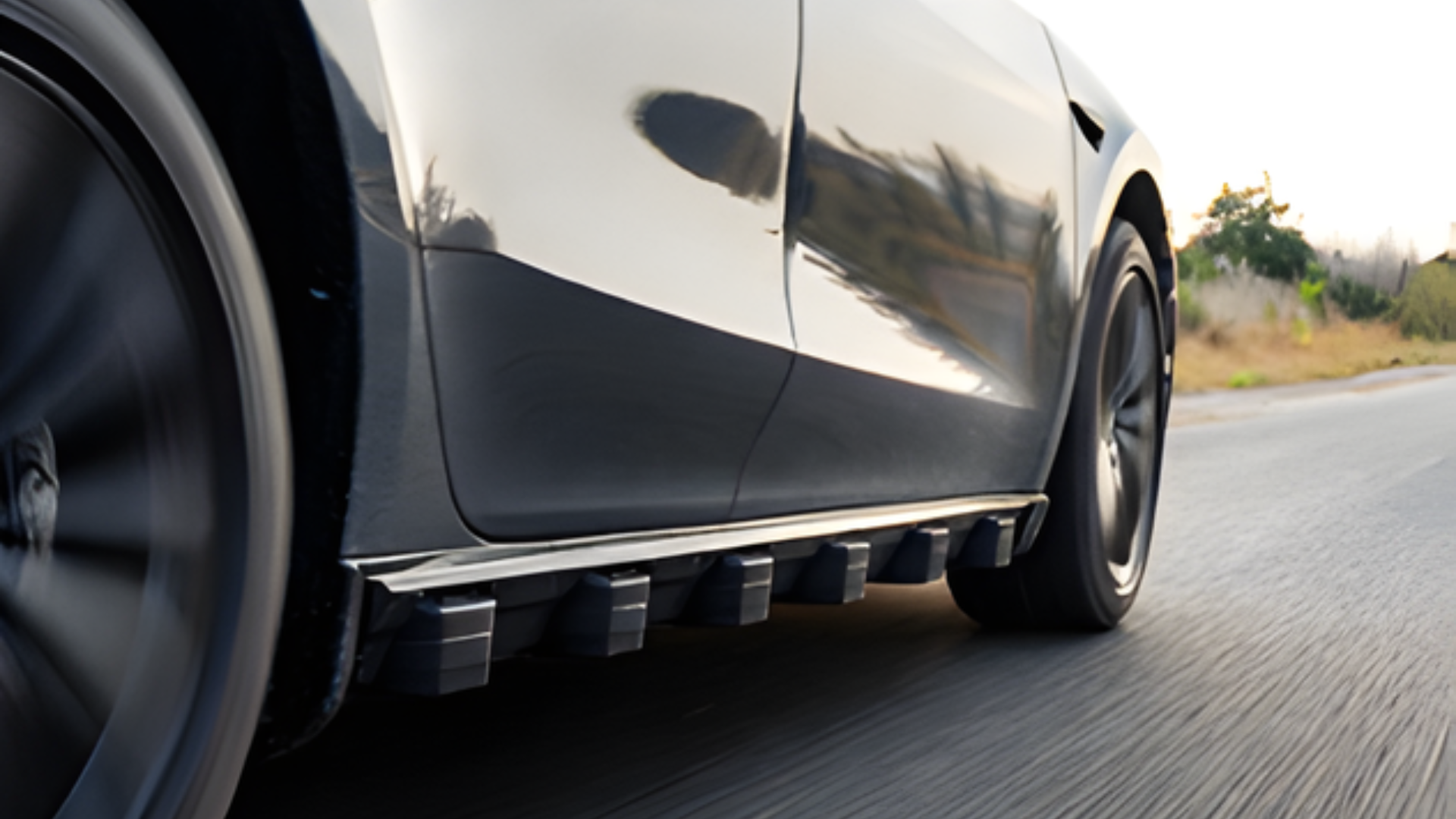
Problem: Current vehicle localization systems, particularly those relying on global navigation satellite systems (GNSS), lack sufficient accuracy and resolution for advanced driver assistance systems and autonomous driving features, leading to inadequate control of vehicle systems when interacting with road surface features like potholes and bumps.
Solution: Implementing a terrain-based localization method that uses road surface data from sensors to determine vehicle position, comparing measured road profiles with reference profiles, and employing dead reckoning and GNSS tracking to reduce computational and network bandwidth requirements, allowing for discretized and intermittent data comparisons to enhance localization accuracy.
Benefit: This approach provides more accurate and efficient vehicle control by enabling better anticipation and response to road surface features, improving occupant comfort and vehicle durability while reducing computational and network demands.
Global patent development
Global patent development in green digitalization of heavy-duty road transport
Between 2000 and 2024, the number of published patent families in green digitalization technologies for heavy-duty road vehicles rose steadily from 24 to over 885 (Figure 6.1). International patent families (IPFs) showed slower growth, rising from 19 to 336. Although patenting activity in green digitalization remains considerably smaller than in the other key technology areas (low-emission energy sources, energy infrastructure and vehicle efficiency), it has seen the highest growth rate, with no dip in activity in 2024, unlike in the other areas. This demonstrates that research in green digitalization continues to gain relevance for heavy-duty road transport.

Patenting growth compared to other technologies
Patenting in green digitalization technologies for heavy-duty road transport has experienced the strongest growth of all technology areas analyzed in this report – far outpacing overall global patenting trends (Figure 6.2). Since 2000, annual patenting activity in this field has increased over 3,600%, although this surge began from a relatively low baseline.

Top inventor locations
The United States and China lead in innovation for green digitalization in the field of heavy-duty road transport, as illustrated by their strong performance in terms of published patent families (Figure 6.3). Between 2000 and 2024, both these two locations were responsible for around 2,100 published patent families. Japan (1,133), Germany (918), and the Republic of Korea (755) complete the top five key research locations worldwide.
As outlined in previous chapters, China places a significantly stronger emphasis on domestic-only patents compared to the United States and the majority of other major research locations.

Patent growth and specialization
Sweden has achieved the highest patent growth rate in the area of green heavy-duty road transport digitalization over the past five years, at a compound rate of 27% per annum (Figure 6.4). India, Israel, the Netherlands and China have also demonstrated notable double-digit growth. In contrast, patenting activity has stagnated in the United States since 2019 and declined in Germany, the United Kingdom, France and Austria.
In terms of relative specialization (RSI), Sweden once again achieves the highest ranking, followed by Germany, the United States and Canada. In contrast, both China and India have below-average levels of specialization.

Top patent owners
The list of leading research entities in green digitalization technologies for heavy-duty vehicles closely mirrors the patterns observed for low-emission energy sources (Chapter 3), energy infrastructure (Chapter 4) and vehicle efficiency (Chapter 5). As is the case in these other areas, Toyota remains the largest patent owner, and the top 25 ranking is again dominated by major global automakers and suppliers, including VW (via Traton), Ford, Hyundai, Kia, General Motors, Volvo, and Bosch (Figure 6.5).
However, some companies that appear in the top 25 for green digitalization do not feature in any other technology rankings. They include two firms whose core business lies in electronics and software rather than vehicle manufacturing – Republic of Korea technology conglomerate LG Electronics and US semiconductor company Qualcomm. These two companies have recently cooperated in the introduction of a cross-domain controller platform capable of managing multiple vehicle functions simultaneously, including navigation, safety systems and ADAS.

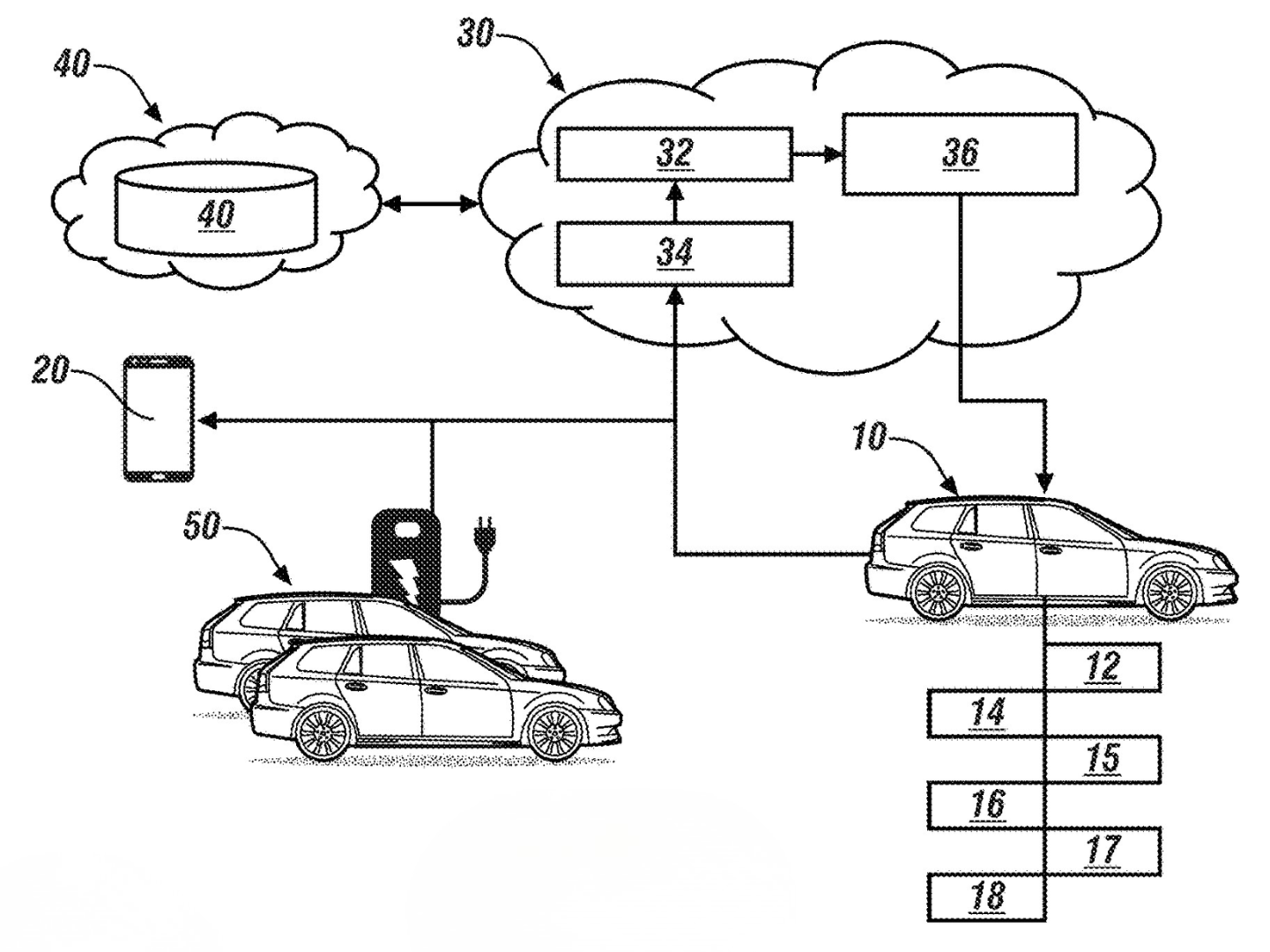
This General Motors granted patent – which is suitable for heavy-duty road transport – describes a system that ranks electric vehicle (EV) charging stations by route, cost, waiting time and user preferences, improving charging efficiency and reliability, supporting decarbonization and increasing operational efficiency and daily mileage for heavy-duty electric trucks.
Patent publication number: US 11203268 B2
Owner: General Motors
Title: Electric powertrain for truck
Publication date: July 15, 2021
Grant date: December 21, 2021
Patent drawing
AI simulation
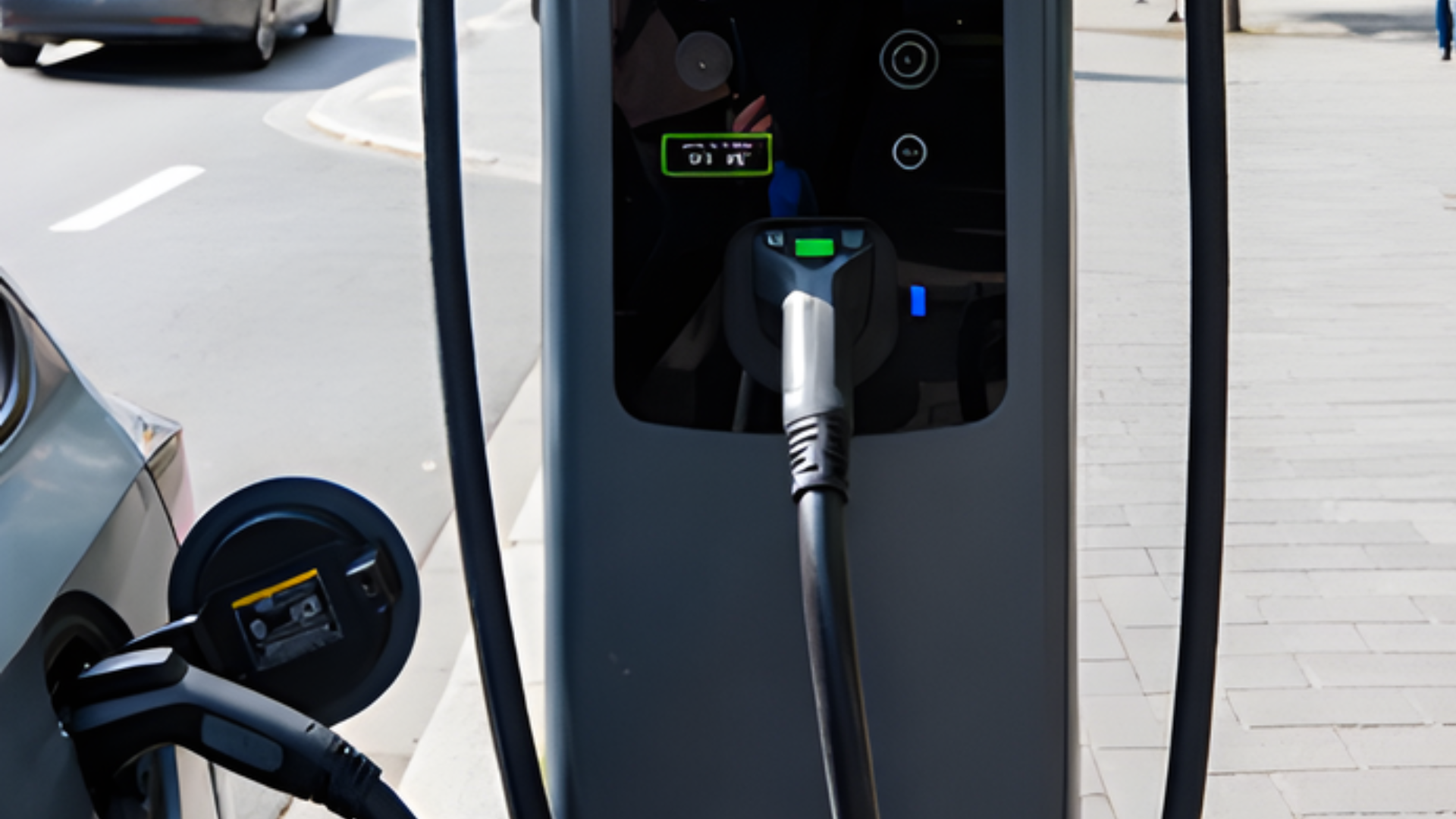
Problem: Electric vehicle owners face challenges in selecting the most convenient and cost-effective charging stations based on their travel routes and preferences, as existing systems do not efficiently integrate factors like charging cost, waiting time, route deviation, and user preferences into the selection process.
Solution: A method and system that determines the state of charge of an EV’s direct current (DC) power source and ranks nearby charging stations based on user-selectable parameters such as charging cost, waiting time, route deviation, and customer reviews, using a weighting factor algorithm to prioritize stations according to user preferences, facilitating the selection and scheduling of the best charging station.
Benefit: This solution reduces waiting time and travel distance by optimizing the selection of charging stations according to user preferences, ensuring a more efficient and convenient charging experience for EV owners.
Patent growth
Recent patent trends show two companies – Geely and Volvo – stand out in terms of patent dynamics in green digitalization technologies for heavy-duty road transport, with Geely having increased compound annual patenting activity by around 45% and Volvo by around 40%. One example of Geely’s activities is its strategic partnership with autonomous-vehicle technology provider Foretellix, aimed at integrating advanced simulation, verification and validation tools into its autonomous driving development processes.
The next greatest technological revolution for heavy-duty road transport
Software defined vehicles (SDV) technology will most likely be the next greatest technological revolution for trucks and buses. Zero-emission powertrains and ADAS are pushing current vehicle data exchange networks (CAN) to the limit due to the amount of data and the need for faster and more accurate diagnostics to ease a transition toward new engine types. It is believed that, once vehicles are electrified with a backbone made of more resilient electronics, autonomous driving would meet its enabling conditions for deployment. Progress on SDVs varies greatly worldwide. While US and EU stakeholders are just getting started, Chinese OEMs are already putting SDV-equipped vehicles on the road, although in limited numbers, the technology being used to extend operational range for the same battery pack.
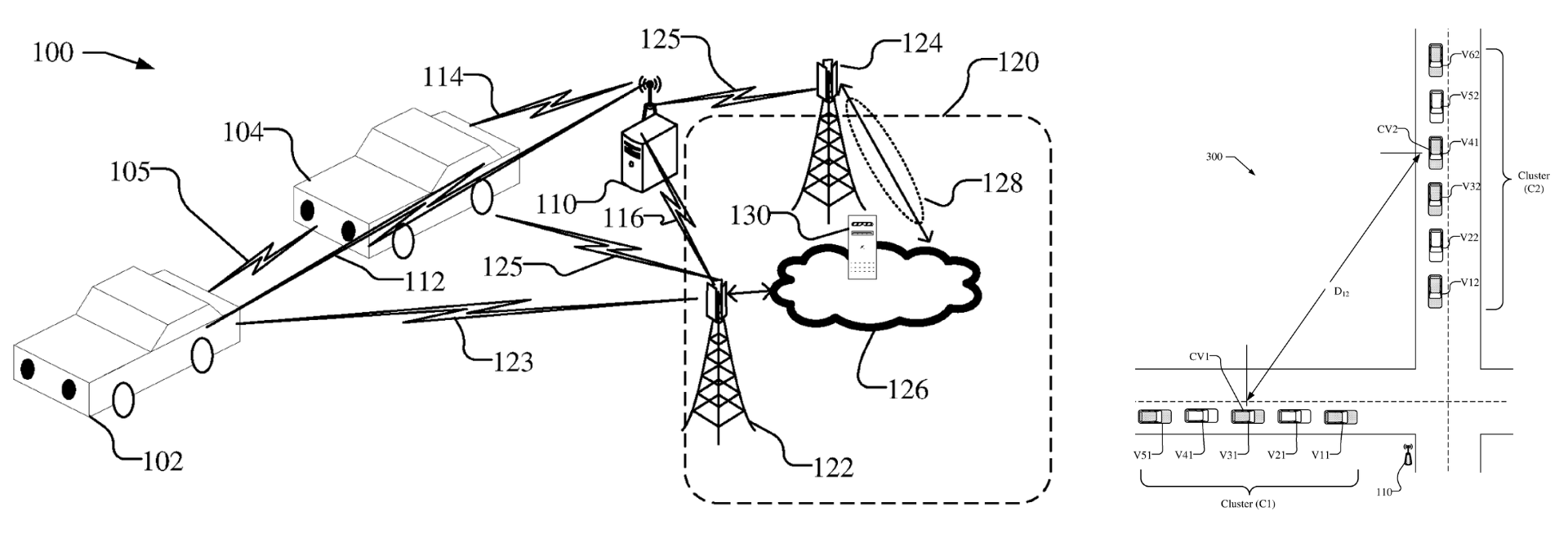
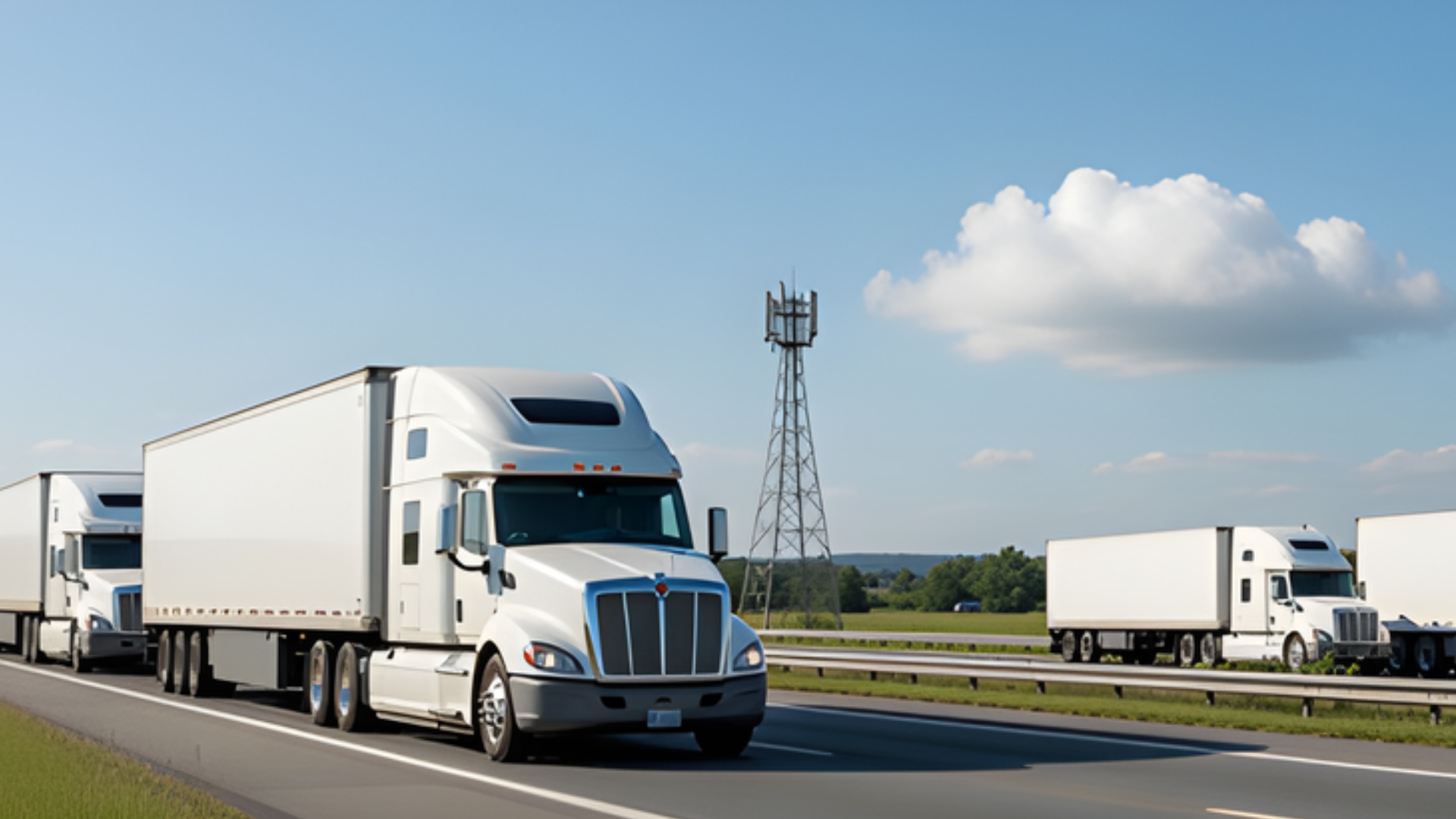
A Qualcomm patent applicatdescribing a cluster-based vehicle positioning method for platooning and autonomous trucking that reduces communication overhead, while maintaining accurate inter-vehicle distance estimation.
Patent publication number: IN 202227046518 A
Owner: Qualcomm
Title: A cluster-based approach to positioning of vehicles in vehicle platooning or autonomous trucking
Publication date: October 21, 2022
Patent drawing
AI simulation
Problem: Current positioning techniques in wireless communication systems for vehicle platooning require all vehicles to broadcast ranging signals, leading to inefficiencies and increased overhead, especially when determining inter-cluster distances is more critical than intra-cluster distances.
Solution: A method where a designated representative vehicle in each cluster broadcasts ranging signals on behalf of the cluster to determine inter-cluster distances, minimizing overhead until intra-cluster distances become relevant, at which point all vehicles within the cluster begin broadcasting.
Benefit: This approach reduces the overhead of ranging signal broadcasts, conserves power, and improves positioning accuracy when necessary, while maintaining efficient communication and safety between clusters.