
Transitioning away from internal combustion engines
A key element in the process of decarbonizing heavy-duty road transport is the transition from internal combustion engines running on fossil fuels to more sustainable energy sources. These include battery-electric systems, hydrogen fuel cells, hybrid powertrains, as well as combustion engines operating on low-carbon fuels, such as biofuels, e-fuels and natural gas. Each of these technologies contributes to reducing greenhouse gas emissions in a different way and has distinct technical and economic characteristics:
Battery-electric trucks and buses (BEVs) are currently the most advanced zero-emission option for short- and medium-haul operations, particularly on routes with predictable distances. They offer high energy efficiency, zero tailpipe emissions and low operating costs. However, adoption remains constrained by high upfront costs, limited payload capacity due to battery weight, and lower uptime due to charging time and the lack of an extensive charging infrastructure. As battery energy density improves, costs decline and networks expand, battery-electric trucks are expected to become the dominant solution for short- and medium-haul freight, and increasingly competitive for longer distances. According to the International Energy Agency (IEA), global sales of electric buses surpassed 70,000 in 2024, while electric truck sales exceeded 90,000, accounting for approximately 6% of total bus and 2% of total truck sales.
(1)https://www.iea.org/reports/road-transportIEA (2025a). IEA Global EV Outlook 2025. International Energy Agency. Available at: https://www.iea.org/reports/global-ev-outlook-2025/trends-in-heavy-duty-electric-vehicles. While electric heavy-duty vehicles already play a major role in China and certain European countries, they still constitute a very small percentage of the total fleet in most other countries.Hydrogen fuel cell trucks have the potential to become a viable option for long-haul operations where battery-electric trucks face range or charging constraints. They offer faster refueling and have the potential for longer driving ranges than BEVs, and comparable payload and performance to diesel trucks while emitting only water vapor. The technology, however, remains expensive due to high vehicle and hydrogen production costs, limited refueling infrastructure and the need for low-carbon hydrogen supply. A key disadvantage of hydrogen fuel cell trucks is their lower overall energy efficiency. Because the hydrogen production and conversion chain has substantial energy losses, fuel-cell trucks typically require around two times more energy per kilometer compared to battery-electric trucks.
(2)Basma, H. and F. Rodríguez (2022). Fuel Cell Electric Tractor-Trailers: Technology Overview and Fuel Economy. ICCT Working Paper 2022-23. International Council on Clean Transportation. Available at: https://theicct.org/wp-content/uploads/2022/07/fuel-cell-tractor-trailer-tech-fuel-1-jul22.pdf. Global sales of fuel cell trucks reached only around 3,000 units in 2023 – over 90% of which were in China.(3)BloombergNEF (2024b). Zero-emission commercial vehicles: The time is now. Available at: https://assets.bbhub.io/professional/sites/24/Commercial_ZEV_Factbook.pdf. While current deployment is very small, ongoing technological improvements and supportive policy frameworks could make hydrogen a relevant option for long-haul trucking in the coming decade.(4)Clean Air Task Force (2023). Zero Emission Long-Haul Heavy-Duty Trucking. Available at: https://cdn.catf.us/wp-content/uploads/2023/03/13145547/zero-emission-long-haul-heavy-duty-trucking-report.pdf. Hybrid heavy-duty trucks and buses that combine a conventional internal combustion engine with one or more electric engines offer moderate fuel savings and emissions reductions, especially in urban or stop-and-go operations. While they do not offer zero tailpipe emissions, they serve as a practical transitional technology toward full electrification without requiring dedicated charging infrastructure. However, their advantages disappear on long-haul routes, and the dual-powertrain design adds cost, weight and complexity.
The use of alternative low-emission fuels, such as biofuels, synthetic fuels and natural gas, for heavy-duty road vehicles can reduce greenhouse gas emissions while utilizing existing engines and refueling networks, offering an immediate drop-in solution for decarbonization. However, the production of synthetic fuels is energy-intensive and often costly and the potential climate benefits depend primarily on the use of renewable energy in their production. The use of biofuels is restricted due to a lack of sustainably available feedstock.
Total cost of ownership (TCO) is a key metric in the heavy-duty road transport sector, helping to assess the competitiveness of low-emission trucks and buses compared to traditional, fossil fuel trucks and buses. TCO is calculated by adding together all the costs involved in acquiring, operating, maintaining and disposing of a vehicle over its useful life, and then expressing these costs on a per-kilometer or per-year basis. A TCO analysis helps businesses optimize costs and make informed decisions about fleet management.
However, because heavy-duty vehicles operate in different duty cycles, TCO results are vocation dependent. Last-mile delivery, urban buses and long-haul trucks, for example, each produce a different balance of upfront capital, energy consumption and utilization. Regional differences also play a role since battery costs and the availability of charging or hydrogen infrastructure influence TCO.
Currently, diesel trucks and buses generally have the lowest initial purchase price and often the highest residual value, while their operating fuel costs fluctuate with the price of diesel.
According to estimates from the IEA for 2024, the TCO of battery-electric trucks is already lower in China than that of diesel trucks in several market segments due to the low cost of electric vehicle (EV) batteries in China.
Decarbonization brings a green premium as new technologies often result in greater TCO, that needs to be mitigated to avoid cargo owners paying higher freight rates. While intermediary measures, such as purchase incentives and tolling exemption, could bring zero-emission technologies’ TCO below that of diesel, it is expected that the combined effect of an increase for diesel and a decrease of alternative’s TCO will result in TCO parity in the future. The technological advancements in heavy-duty road transport technologies, which are the focus of this report, will play a significant part in enhancing competitiveness.
Global patent development
Global patent development in low-emission energy sources
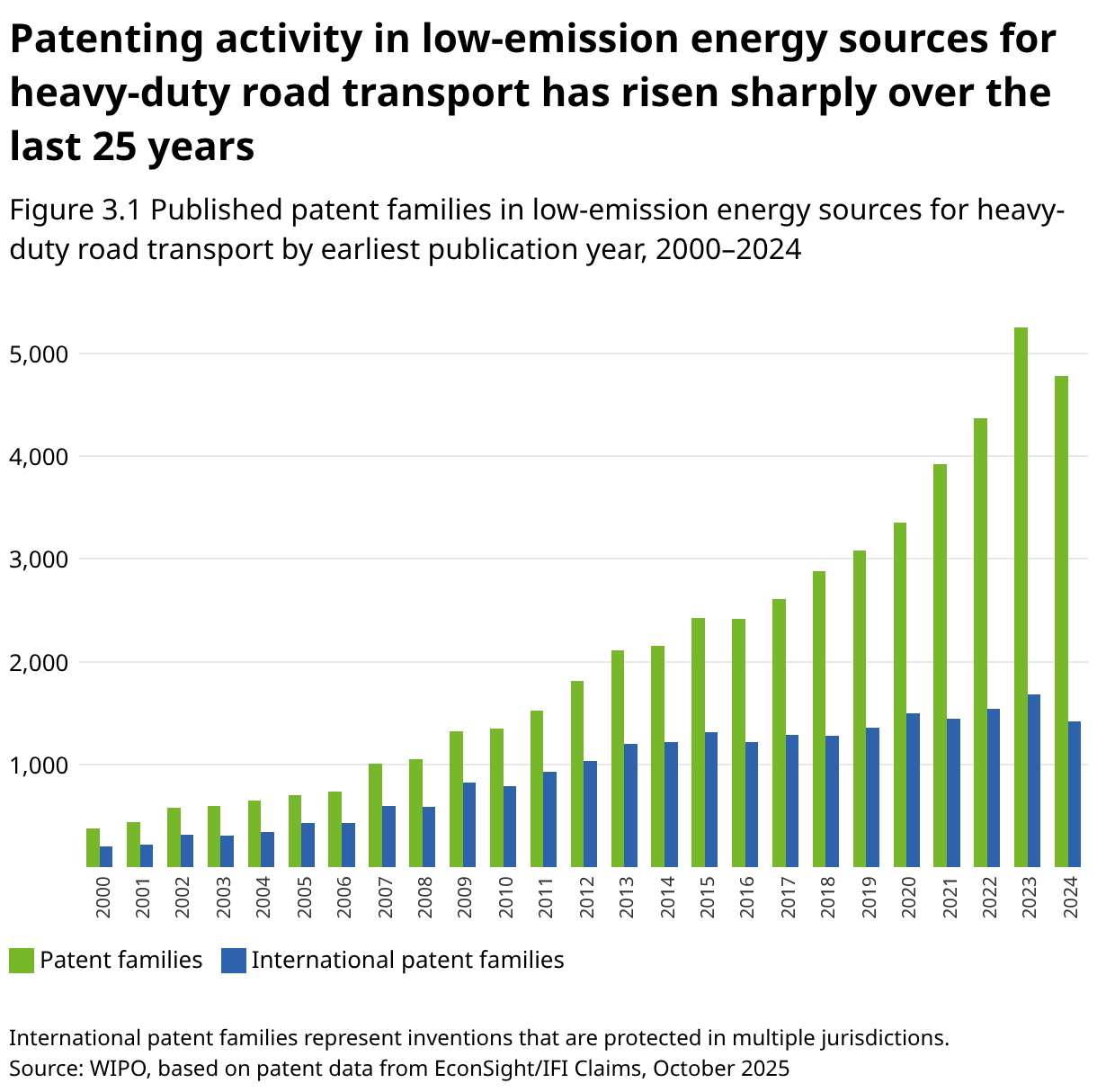
Significant technological advances in low-emission energy sources for vehicles are clearly reflected in the impressive increase in patenting activity over the last 25 years (Figure 3.1). Between 2000 and 2024, the number of published patent families in the field of low-emission energy sources for heavy-duty road vehicles increased from fewer than 380 annually to almost 4,800. Analysis of international patent families (IPF) – inventions that are protected in multiple countries – reveals that the numbers increased from under 200 annually to around 1,400 within the same period.
However, 2024 saw a dip in patenting activity. This drop was probably influenced by increasing overcapacity in the production of batteries, particularly in China.
Overview of the four key low-emission energy sources
Taking a closer look at patenting activities in the four key low-emission energy sources (Figure 3.2), it becomes evident that battery research dominates research activities within heavy-duty road transport. The number of published patent families in this field jumped from 137 in 2000 to 3,511 in 2024. Consequently, in 2024, the field of batteries accounted for 73% of all patent families in low-emission energy sources. Research focus areas therefore align with commercial trends, with battery-electric heavy-duty vehicles outselling other types of low-emission energy sources by a large margin.
With 1,472 published patent families, hybrid heavy-duty vehicles were the second-largest field in terms of patent numbers in 2024. However, patenting activity has only increased moderately in recent years.
In contrast, patenting activity in hydrogen fuel cells for heavy-duty road transport has been more dynamic, with the number of patent families increasing threefold over the last 10 years (from 339 in 2015 to 1,065 in 2024).
Meanwhile, patenting activity in alternative fuels for heavy-duty road transport remained low over the entire period analyzed and even declined in 2024 (to just 173 patent families).

Over the past 25 years, battery systems for road vehicles have evolved from expensive, niche technologies into a commercially viable backbone for passenger cars, and increasingly for heavy-duty trucks and buses. From the late 1990s onward, lithium-ion chemistry emerged as the dominant solution, overtaking legacy battery types, such as lead-acid, nickel-cadmium and nickel-metal hydride (NiMH). Manufacturers have rapidly improved the energy density of lithium batteries while significantly decreasing costs by optimizing cell chemistry, pack design and production scale (Figure 3.3). These advances have enabled the early large-scale deployment of electric buses and regional distribution trucks.

The first lithium-ion batteries used in vehicles employed lithium cobalt oxide (LCO), nickel-cobalt-aluminium (NCA) or nickel-manganese-cobalt (NMC) cathodes with graphite anodes. However, the high cobalt content meant high costs and supply risks. During the 2010s, the trend shifted toward nickel-rich cathode formulations to increase energy density and reduce cobalt usage. Meanwhile, cost-sensitive sectors, including many heavy-duty vehicles, adopted lithium iron phosphate (LFP) cells and, more recently, lithium manganese iron phosphate (LMFP) cells.
Currently, global demand for EV batteries is roughly evenly split between LFP and NMC chemistries. LFP is the fastest-growing segment, particularly dominant in China thanks to its lower cost and longer cycle life.
Patenting growth compared to other technologies
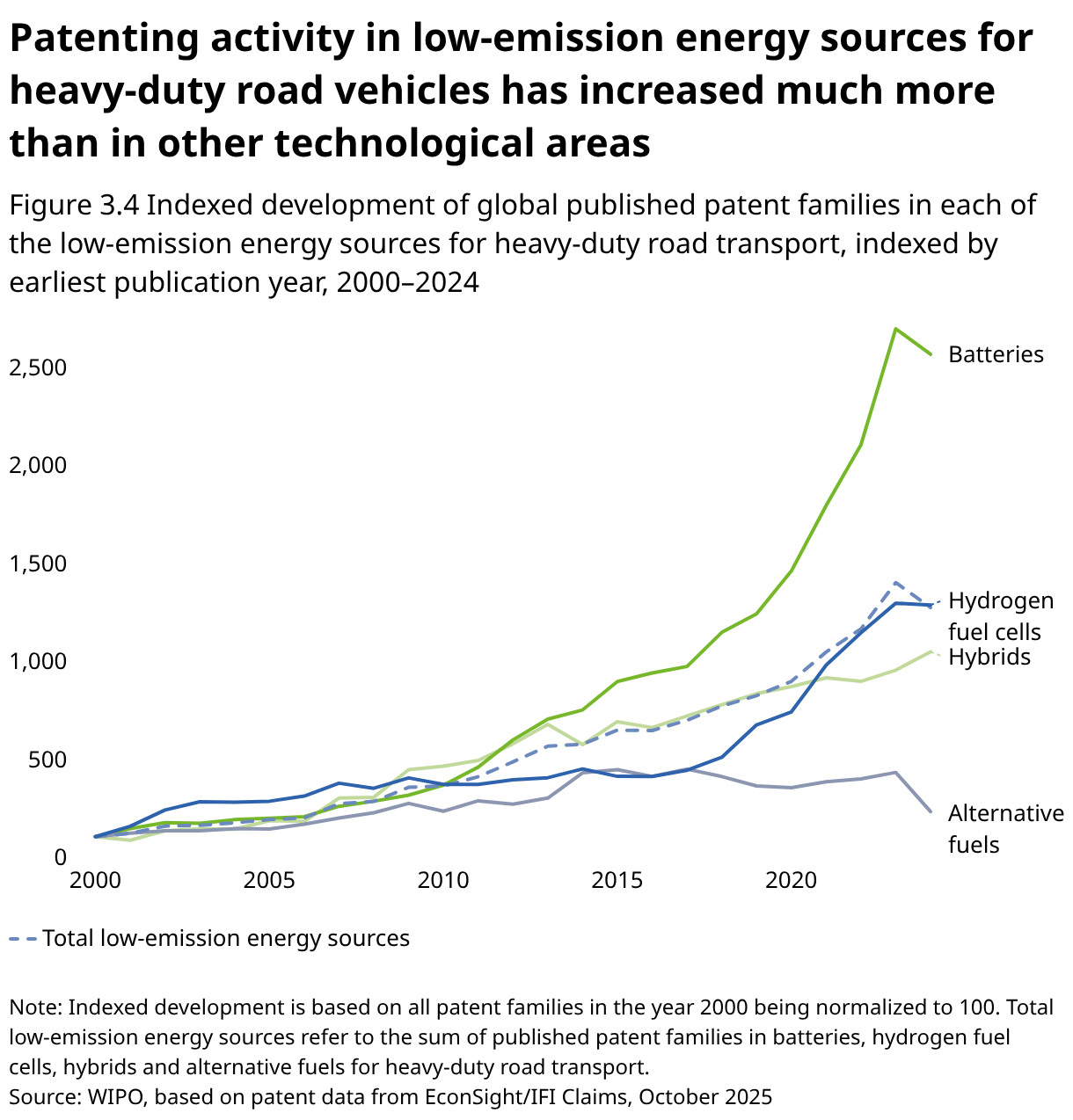
When we compare the development of patenting activity in the four key low-emission energy sources (batteries, hydrogen fuel cells, hybrids, alternative fuels) for heavy-duty road vehicles with both the overall patenting trends in heavy-duty road transport and total global patenting, it becomes clear that innovation speed in low-emission energy sources has been very dynamic (Figure 3.4).
While the number of published patent families across all areas of heavy-duty road transport has almost quadrupled since 2000 (compared with a roughly threefold increase in total patents), the number of patents in the four key low-emission energy sources for heavy-duty road vehicles has increased by almost 1,200% – roughly a 13-fold rise. As previously mentioned, the most significant growth was demonstrated by battery-electric heavy-duty road vehicles (+2,500%).
A recent BYD patent publication relates to a redesigned battery pack with a top cable outlet and recessed groove that improves space utilization and wire routing in electric trucks.
Patent publication number: WO 2024/152619 A1
Owner: BYD
Title: Battery pack, chassis assembly and vehicle
Publication date: July 25, 2024
Patent drawing

AI simulation
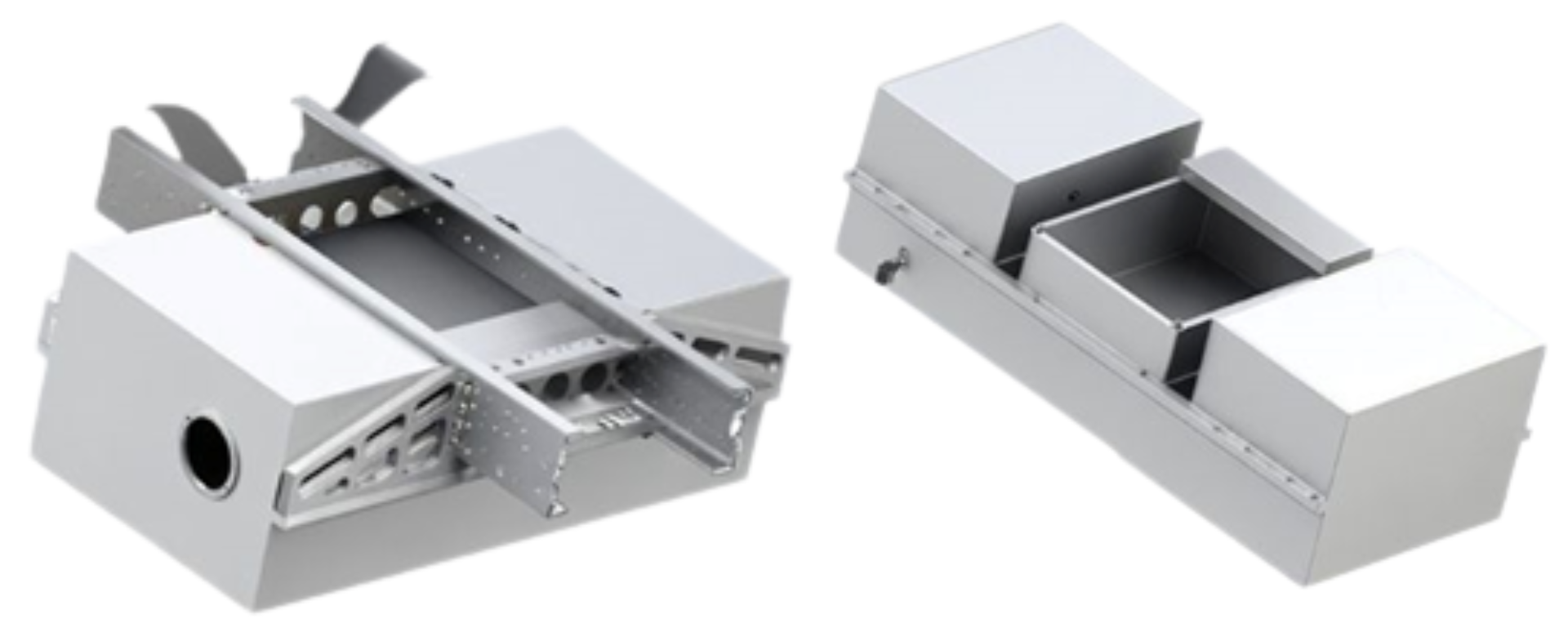
Problem: The outlet openings of the new energy heavy-duty truck battery pack are located on both sides of the chassis frame, resulting in restricted space for connecting the wire harness and creating difficulties in arranging the battery pack lead wire harness and connecting it to other components.
Solution: Design a battery pack with a groove structure that accommodates the frame longitudinal beam, and forms a cable outlet at the top for the outlet of the battery pack wire harness to facilitate arrangement and connection and improve space utilization.
Benefit: Use of the top outlet makes it convenient to arrange and connect the battery pack wire harness, makes full use of the space above the battery pack, improves the overall space utilization, and improves the structural strength and installation efficiency of the frame.
How do we move on from diesel?
Today’s transport operations reflect optimization around a single technology. Moving from diesel to more sustainable options will likely change transportation patterns. Multiple energy sources may coexist to replace diesel in the long run, keeping future operations similar to what stakeholders use today. However, since standardization enables cost reduction and time efficiency, future operations may instead adapt to technology limitations. For instance, cargo owners are exploring a return to owning their own fleets to secure transport capacity while reducing their Scope 3 emissions. While no clear trend has emerged yet, this thinking challenges the decade-long reliance on transport suppliers, who handle over 90% of EU road freight volumes.
Top inventor locations
China is at the forefront of global patenting activity in low-emission energy sources for heavy-duty vehicles (Figure 3.5). Between 2000 and 2024, China was responsible for almost 17,400 published patent families, based on inventor addresses on published patents. However, it is noteworthy that only 10% of all Chinese patents belong to international patent families with protection extended to two or more countries. This percentage is lower than in all other leading countries. The huge domestic market in China means that many Chinese companies do focus solely on their domestic market and therefore only seek patent protection there. As a result, their inventions are legally protected only within China, which can limit the companies’ ability to expand internationally.
The United States is the second most important research location for low-emission energy sources, with a total of around 8,650 patent families between 2000 and 2024, of which more than 6,200 are international patent families (a 72% share). Japan, Germany and the Republic of Korea are also key research locations, with all three ranking in the top five countries worldwide (third, fourth and fifth, respectively). It is evident that these five locations are responsible for most of the patenting activity related to low-emission energy sources for heavy-duty vehicles, contributing around 89% of the dataset.
Due to its high patent growth rates in recent years, India has propelled itself into sixth place in the ranking, with almost 1,900 patent families. It is interesting to note that India displays a comparable trend to China, with a very high proportion of domestic-only patent families and a share of international patent families of just 1%. As with China, the substantial Indian domestic market is probably a contributing factor in this regard.
India has demonstrated particularly high patenting activity and growth in battery-electric propulsion. For example, India has recently witnessed a surge in the deployment of electric buses: in 2024 alone, roughly 3,600 electric buses were newly registered.

Patent growth and specialization
Since 2000, China has experienced the highest patent growth rates of any of the top 15 inventor locations. Between 2000 and 2019, Chinese patent families expanded by compound rate of 38% per year. However, China’s patent growth has slowed in recent years, leading to an annual growth rate of 14% between 2019 and 2024 (Figure 3.6). As the absolute volume of patents has grown significantly, percentage-based growth has naturally levelled off. Meanwhile, rising overcapacity in China’s battery production has probably further dampened growth recently, with companies prioritizing cost reduction and efficiency over research and development activities.
Consequently, since 2019, India, Sweden, Canada and France have surpassed China’s patent growth rates, albeit from a much lower starting point. In contrast, the annual patenting activity has only increased moderately since 2019 in Germany, has stagnated in the United States and the Republic of Korea, and has even declined in Japan.
As shown in Figure 3.6, it is also noteworthy that China’s level of specialization, as measured by the Relative Specialization Index (RSI),

Relative specialization in the four low-emission energy sources
A closer look at the level of specialization across the four low-emission energy source types (Figure 3.7) shows that the most specialized countries (Sweden, Germany, Austria and France) mainly have a high level of specialization across all four types. India is an exception, with high RSI levels in batteries, hybrids and alternative fuels, but only an average RSI in hydrogen fuel cells.
China shows below-average relative specialization across all four energy source types (RSI below 0). It should be noted that low RSI figures do not necessarily indicate low patent volumes. Rather, they suggest that China is less focused on those technologies relative to its overall innovation output. Despite its position as the global leader in terms of patent volume, China exhibits an RSI level that is below the average benchmark.
It is possible to observe different specialization strategies in other countries. For instance, the Netherlands has a high level of relative specialization in alternative fuels, while its specialization in the other energy sources is significantly lower. Some commentators note that the Netherlands is currently facing obstacles to fast expansion of its electric production and distribution grid,

Research priorities
Examining the various research areas of focus across the top research locations (Figure 3.8) reveals noteworthy differences. China has a strong focus on batteries, accounting for 56% of published patent families between 2000 and 2024, boosted by the presence of major battery manufacturers such as CATL and BYD. India (with a battery share of 64%) and the Republic of Korea (47%) are the other two countries that clearly focus on battery research in heavy-duty road transport.
In contrast, Italy and Sweden have the highest share of patent families related to hybrids (39% and 38%, respectively). However, it should be noted that Figure 3.8 is based on data from 2000 to 2024. If data solely from 2024 were considered, the battery share would exceed the hybrid share both in Italy and in Sweden, as well as in all other major research countries. Some commentators note that current local regulations and a vehicle’s CO2 assessment mean that hybrid technology is not beneficial for original equipment manufacturers (OEMs) attempting to meet their decarbonization objectives.
Regarding hydrogen fuel cells in heavy-duty road transport, Switzerland and Canada have the highest shares with 28% and 25% of patenting activity, respectively, while India’s share is only 7%.
The Netherlands (33% share) and Australia (31%) have an above-average focus on developing alternative fuels for heavy-duty vehicles. In contrast, Japan and China have a relatively low level of specialization in this field, with shares of 5% each, despite having developed a significant number of patents in absolute terms.

The differences in research priorities are also reflected in the location rankings for the four low-emission energy sources (Figure 3.9). China is the clear leader in battery research, with 11,360 patent families, compared to around 3,800 each in, respectively, second- and third-ranked Japan and the United States.
China is also ahead in hydrogen patent families (around 2,650 patent families), but its lead over Japan (1,926) and the United States (1,911) is smaller. In hybrid research, China leads with around 5,250 patent families, with Japan (3,507) and the United States (3,231) behind. In the field of alternative fuels, the United States tops the rankings with almost 1,500 patent families, ahead of China (936) and Germany (752).

Key filing jurisdictions
An analysis based on filing jurisdictions of patent families for low-emission energy sources for heavy-duty vehicles provides an additional perspective showing where in the world patent protection is sought. Members of patent families can be filed directly in one or more countries or via the Patent Cooperation Treaty (PCT) or the European Patent Convention (EPC) routes, which are administered by WIPO and the European Patent Office (EPO), respectively. Direct national filings are generally the most cost-effective option when protection is needed in a single market, but they offer little flexibility to expand coverage later if strategic priorities change. In contrast, the PCT system has higher upfront costs but preserves the option to pursue protection in multiple locations and defers major national-stage costs for up to 30 months, giving companies valuable time to evaluate market potential before committing. The EPC route enables a single examination for patent protection across Europe, but total costs depend on how many member states are ultimately validated.
As shown in Figure 3.10, China is not only the leading inventor location in terms of patent families, but also the top country in terms of patent filings. Between 2000 and 2024, over 24,900 patents were filed in China to seek patent protection. In the United States and Germany, the corresponding figures were 14,434 and 10,585, respectively.
The PCT and the EPC are both relevant routes for seeking patent protection. Since 2000, more than 8,850 patent filings have been made under the PCT and almost 7,500 patent filings under the EPC.

Top patent owners
Most leading research entities in the field of low-emission energy sources for heavy-duty vehicles are headquartered in the United States, Japan, Germany, China or the Republic of Korea (Figure 3.11). Within the top 10 patent holders, German automotive manufacturers and suppliers account for five positions: VW (owner of Traton (Scania and MAN brands)), Bosch, ZF, Mercedes-Benz and BMW. The United States is represented by Ford and General Motors (GM), while the Republic of Korea’s leading firms, Hyundai and Kia, also rank among the top 10. Japan’s involvement is evident through Toyota, which owns Hino Motors and Daihatsu. The first Chinese companies to appear in the global patent ranking are BYD (13th) and Geely (14th). Beyond these, only Volvo from Sweden and Stellantis, headquartered in the Netherlands, feature among the top 25, making them the sole firms outside the five dominant innovation regions.
Notably, the ranking is expected to shift in 2026, following the announced integration of Hino Motors (a Toyota subsidiary) and Mitsubishi Fuso (a Daimler Truck subsidiary) into a new independent company, ARCHION, which is scheduled to begin operations in April 2026.
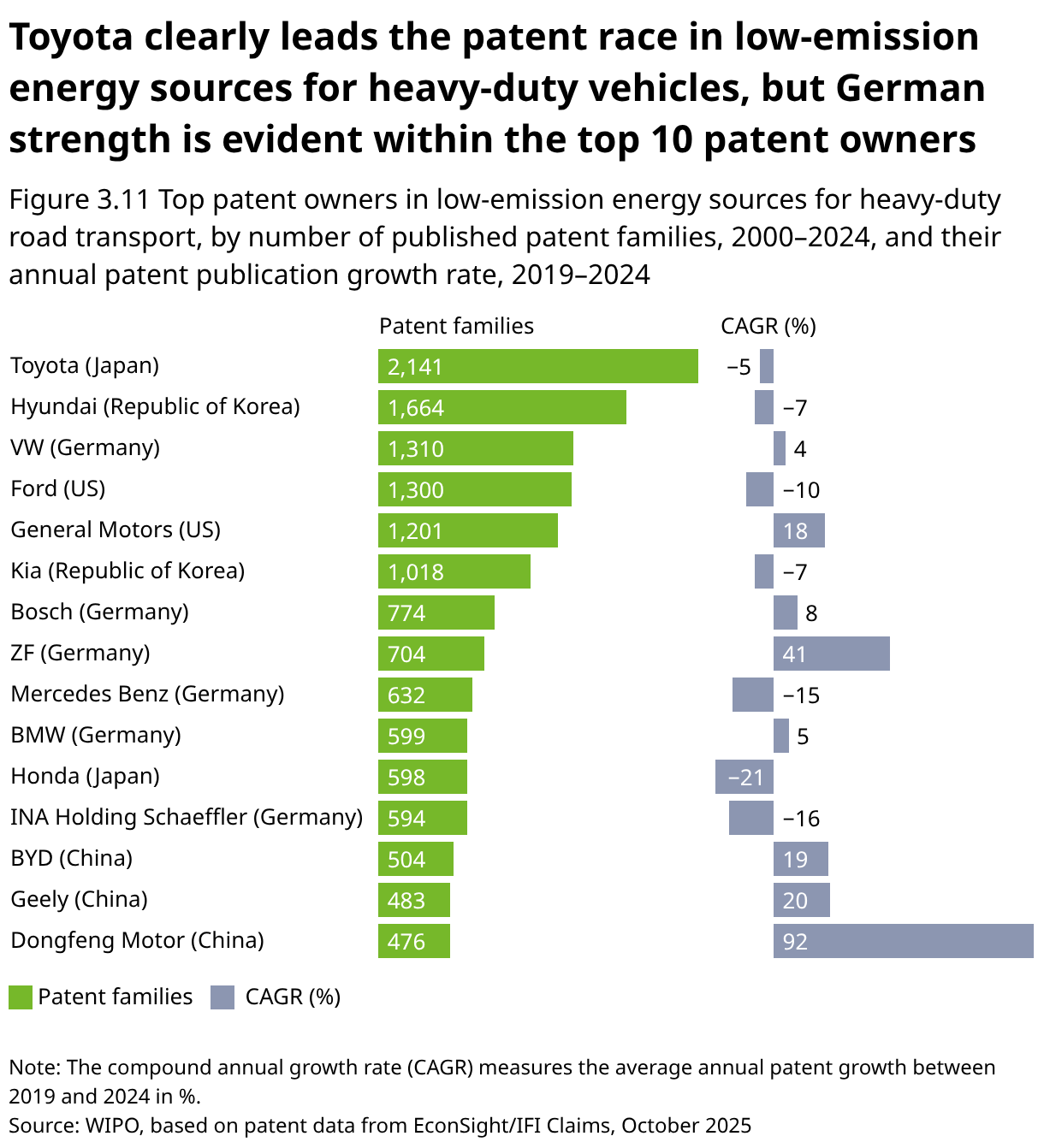
Toyota is currently leading the way in the patent race for low-emission energy sources for heavy-duty vehicles, having published almost 2,150 patent families since 2000. This is significantly ahead of second-placed Hyundai Motor, which has published 1,664 patent families. Toyota has published the most patent families in three of the four low-emission energy sources (batteries, hydrogen fuel cells and hybrids) and ranks eighth in alternative fuels. Toyota’s wide-ranging innovation capabilities are closely linked to its strategic emphasis on both electric and hydrogen fuel cell vehicles.
Hyundai’s strategy is comparable to that of Toyota, with large investments in hydrogen and battery-electric heavy-duty vehicles. This includes the recent introduction of the XCIENT Fuel Cell truck
It is interesting to note that there are no universities or research institutions among the top 25 patent publishers. This signals that heavy-duty road transport is a mature industry where research is dominated by corporate research and development activities, particularly for applied technologies like batteries, fuel cells or hybrid drivetrains. While universities and public research institutions do not appear among the top 25, they nonetheless contribute to fundamental research and early-stage development.
Tsinghua University in China is the first university on the list (ranked 51st), having published 131 patent families since 2000. The Zero Carbon Transportation Research Center at Tsinghua University has four key research areas: electrochemical power, battery and energy storage systems; hydrogen fuel cells and electrolytic green hydrogen systems; vehicle-to-grid (V2G) and intelligent energy systems; zero-carbon engines and intelligent powertrains.
There are also currently no Indian companies in the top 25. Tata Motors is the first Indian company in the ranking, coming in at 30th place with 234 published patent families and significant patent growth in recent years. This trend may change in the future because Tata Motors has recently purchased European OEM IVECO.
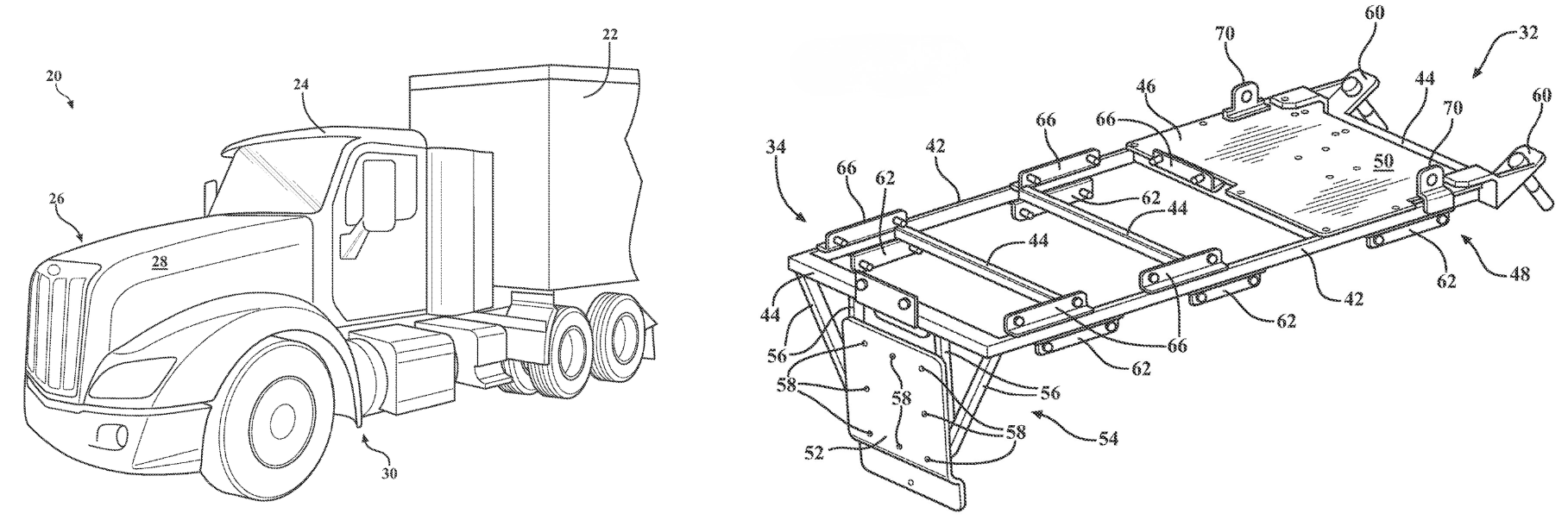
A granted Toyota Motor patent covers a modular carrier assembly enabling multiple fuel cell stacks to be installed or removed as a single unit in heavy-duty vehicles.
Patent publication number: US 11845346 B2
Owner: Toyota Motor
Title: Carrier assembly for multiple fuel cells
Publication date: August 11, 2022
Grant date: December 19, 2023
Patent drawing
AI simulation

Problem: Heavy duty trucks require multiple fuel cell stacks to meet increased power and load requirements, necessitating an efficient assembly and removal system for improved serviceability.
Solution: A powertrain carrier assembly with a frame structure and mounting system that allows for the secure installation and removal of multiple fuel cell assemblies as a single unit, utilizing a three-point mounting system and high-strength steel components, suitable for both new and retrofitted vehicles.
Benefit: Enables efficient assembly and removal of multiple fuel cell assemblies, enhancing serviceability and build efficiency with high repeatability, while accommodating different fuel cell designs and power outputs.
Patent growth
There has been a significant increase in the number of patents related to low-emission energy sources for heavy-duty vehicles in recent decades. However, there has been a slight slowdown in patent growth since 2019, as shown in Figure 3.11. This is reflected in the patent dynamics of the top patent owners. Between 2019 and 2024, only 14 out of 25 of the top patent owners have increased their published patent families, with particularly strong growth from Dongfeng Motor, Chery Holding Group, ZF and Volvo. Dongfeng Motor has made substantial investments in recent years in the development of battery-electric, hybrid and hydrogen fuel cell heavy-duty vehicles.
In contrast, over the past five years, 11 of the leading patent holders have seen a decline in their patent output. Notably, particularly major Japanese companies, such as Denso, Aisin, Honda and Nissan, published a reduced number of patent families in 2024 compared to 2019.
Research priorities
The technological research priorities of the top patent owners within the field of low-emission energy sources for heavy-duty road transport is shown in Figure 3.12. In percentage terms, battery-electric and hybrid patent families represent the most significant segments for the majority of the top patent owners when considering the entire analysis period from 2000 to 2024. It should be noted that battery-electric patenting has been the most dynamic for the majority of companies; consequently, focusing solely on the past five years would result in higher battery-electric shares compared with hybrid shares for most firms.
Key research players, including Toyota, Hyundai, Kia and Bosch, exhibit a similar pattern, with battery- and hybrid-related patent families accounting for the majority of all low-emission energy source patents since 2000, while hydrogen also represents a notable research focus area.
Other companies, including VW,

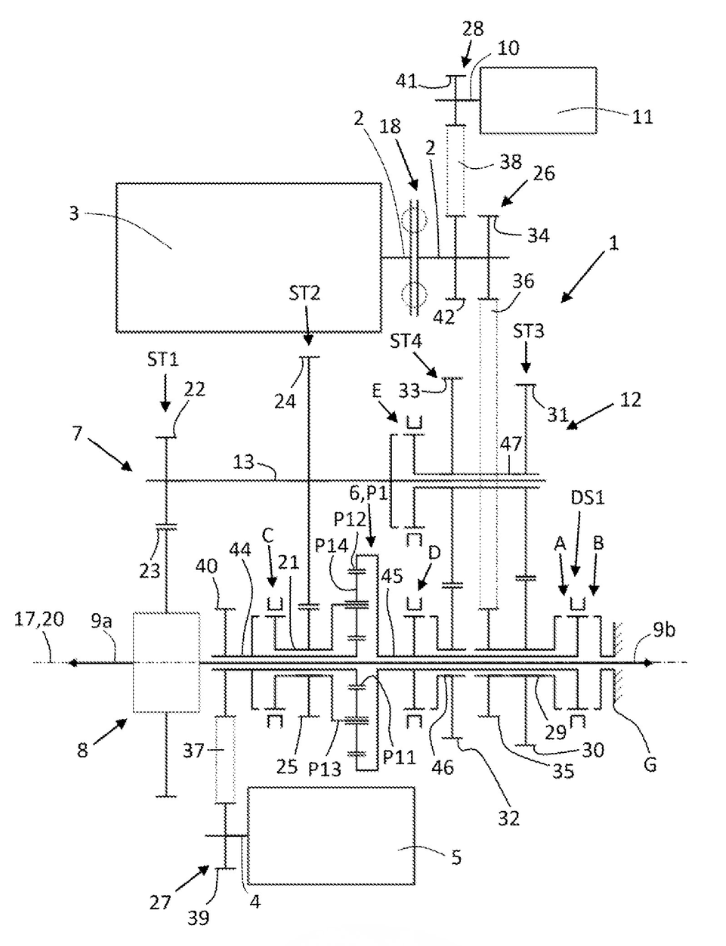
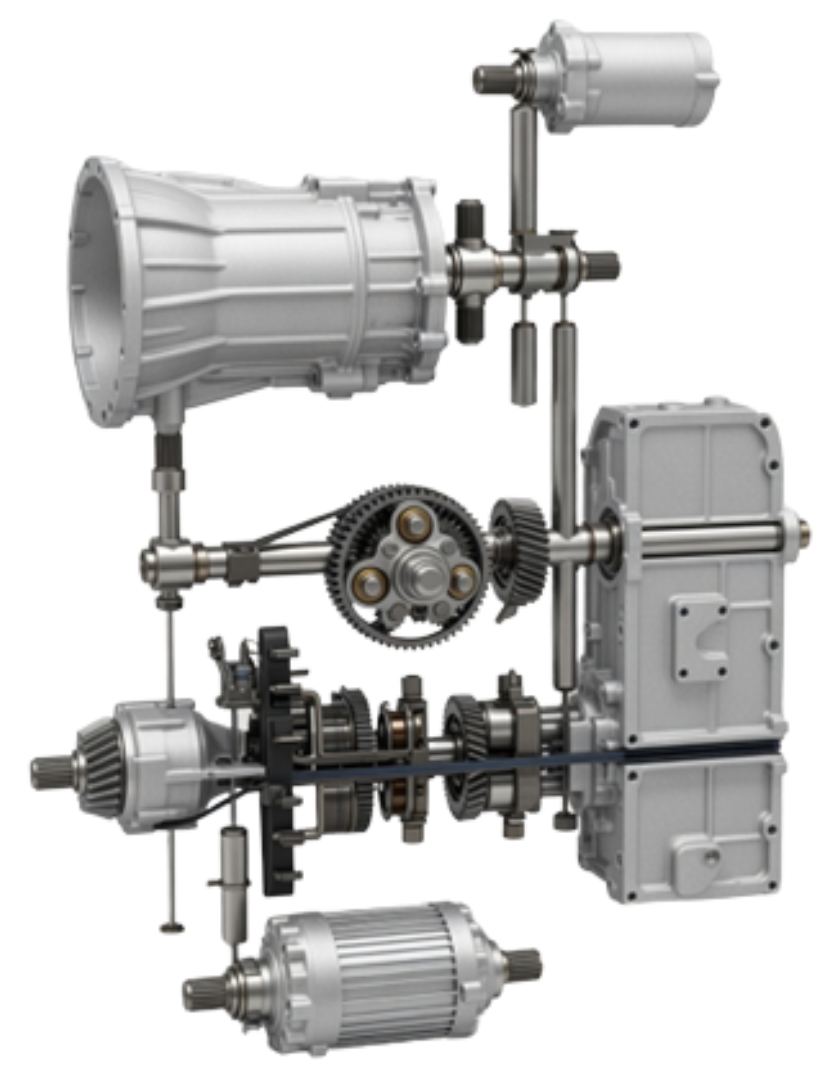
A granted patent from ZF describes a compact hybrid transmission integrating combustion and electric drives through a superposition gear system to improve flexibility and installation efficiency.
Patent publication number: DE 102021204618 B4
Owner: ZF Friedrichshafen
Title: Hybrid transmission device and motor vehicle with a hybrid transmission device
Publication date: November 10, 2022
Patent drawing
AI simulation
Problem: Existing hybrid transmission devices for motor vehicles lack a compact and efficient design that effectively integrates both internal combustion engines and electric motors, limiting their flexibility and installation space utilization.
Solution: A hybrid transmission device with a superposition gear system that includes a first and second transmission input shaft for the internal combustion engine and electric motor, respectively, a planetary gear set, countershaft stage and switching elements for electrodynamic and hybridized drives, allowing for a compact and flexible power transmission system.
Benefit: The solution provides a compact design that optimizes installation space, enhances flexibility and enables efficient electrodynamic starting and hybridized driving modes, improving the overall performance and efficiency of the motor vehicle.
Top patent owners in the four low-emission energy sources
The rankings for the top patent owners in battery-electric, hydrogen fuel cell and hybrid heavy-duty vehicles demonstrate notable similarities, with research in all three areas being led by automotive manufacturers and suppliers. However, the top patent owners in alternative fuels are more diverse, with construction vehicles company Caterpillar leading the ranking. The alternative fuels list also includes the industrial gas companies Linde and Air Liquide, the fuel specialist Westport Fuel Systems, the aerospace and defense company Rolls-Royce and the Chinese Academy of Sciences.
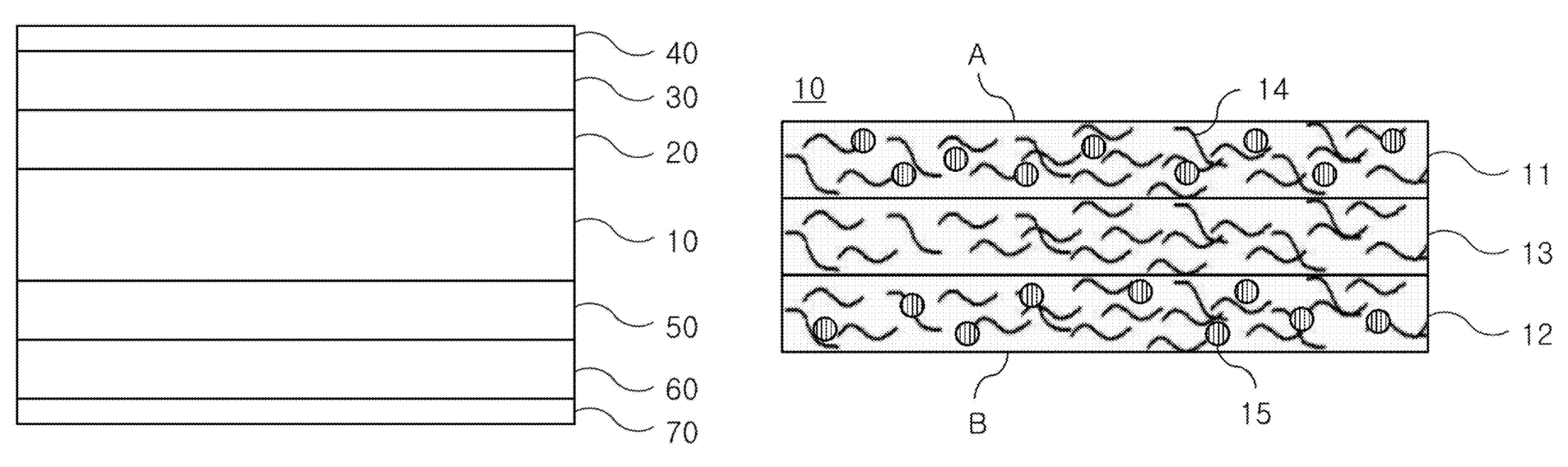
Hyundai Motor’s recently published patent application describes an all-solid-state battery using a porous composite membrane to improve lithium uniformity, energy density and battery lifespan.
Patent publication number: KR 1020240116099 A
Owner: Hyundai Motor
Title: An all-solid-state battery including a porous composite membrane
Publication date: July 29, 2024
Patent drawing
AI simulation

Problem: Non-cathode all-solid-state batteries exhibit lower energy density, capacity retention issues and a shorter lifespan due to uneven lithium deposition on the current collector, leading to thickness deviations during charging and discharging cycles.
Solution: A non-cathode all-solid-state battery design incorporating a composite membrane with a conductive material, including carbon nanofibers or carbon nanotubes, forming a porous structure that stores lithium ions in pores and uses metal powders to facilitate lithium alloying, with specific layer compositions to enhance stability and capacity.
Benefit: The design achieves high energy density, excellent capacity retention and a long lifespan by storing lithium uniformlywithin the composite membrane, preventing structural collapse and dendrite formation.