
As climate-driven crises intensify, emerging technologies, such as AI, IoT, drones, satellites, and nature-based systems, are redefining how we protect lives and livelihoods. From flood forecasting to modular shelters, these adaptive solutions combine digital intelligence with disaster-ready infrastructure in an increasingly volatile climate.
- Foreword by WIPO
- Foreword by partners
- Acknowledgments
- Acronyms
- Methodology
- Key messages
- Executive summary
- Introduction: The new reality of climate-driven disasters
-

Image: WIPO Storms and flooding
As floods and storms grow fiercer, technology is building dynamic defenses. Advanced satellite networks provide real-time tracking, while minisondes gather hyperlocal storm data. Cities fortify defenses with self-healing concrete, impact-resistant roofs and automated flood barriers that activate at the first sign of water. AI early warnings and digital twin models reduce damage and strengthen resilience.
-
Image: WIPO Coastal erosion
The world's coasts are vanishing before our eyes, but a wave of innovation is fighting back. Hybrid defenses now merge engineering with nature: 3D-printed seawalls incorporate oyster habitats, while AI-guided drones map erosion in real time. From living breakwaters that tame storm surges to geotextiles that knit shorelines together, these solutions protect both communities and ecosystems and buy time for 600 million coastal residents on the climate frontline.
-
Image: WIPO Landslides
As climate change intensifies rainfall and thawing permafrost triggers landslides, innovative safeguards are emerging. Models now forecast risk globally every 30 minutes, while AI analyzes real-time data from tiltmeters, InSAR satellites, and drone-mounted LiDAR. On unstable slopes, bioengineered biogrout strengthens soil, and smart barriers deploy automatically when sensors detect movement, protecting communities before rocks fall.
-
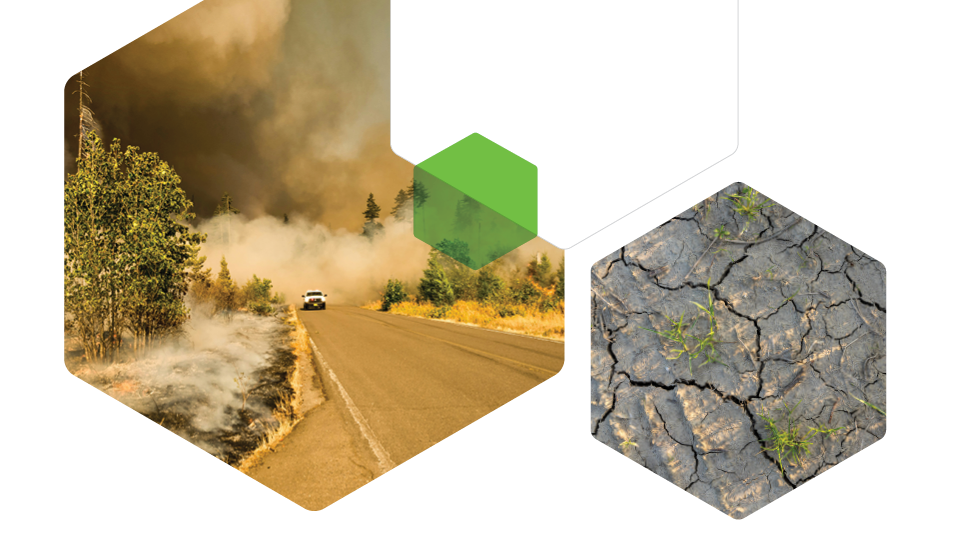
Image: WIPO Wildfire
Cutting-edge technologies are transforming wildfire management. AI-powered satellites and thermal drones enable early detection, while digital twins improve fire modeling. Autonomous aircraft deploy retardants with precision, and fire-resistant materials protect homes. IoT sensors and mobile Doppler radar track fire weather. Robotics handle dangerous operations, and VR enhances training to detect, predict, and combat severe wildfires.
-
Image: WIPO Drought
As droughts grow longer and more severe, a wave of innovation is reshaping how we manage water. AI-powered forecasting and satellite-based monitoring to smart irrigation and atmospheric water harvesters are enabling more efficient use. Emerging solutions like fog nets, hydrogel-enhanced soils, wastewater recycling, desalination, and leak detection sensors are helping communities capture and conserve water in arid environments.
-

Image: WIPO Extreme heat
Innovative cooling technologies combat extreme heat through urban and infrastructure solutions. Reflective cool roofs and permeable pavements reduce urban heat islands, while misting systems lower outdoor temperatures. Buildings integrate thermal mass materials, green roofs, and smart ventilation. Wearable sensors monitor worker heat stress in real-time, and AI-enhanced early warning systems target vulnerable populations. Community cooling centers and mobile apps provide heat relief, complemented by emergency backup systems during power outages.
-
Image: WIPO Extreme cold
Emerging technologies are transforming responses to extreme cold. Precision frost protection shields crops with targeted sprinklers and wind machines. Buildings use ultra-insulated materials and self-regulating roof heaters. Arctic-ready electric vehicles, GPS-guided snow clearing, and low-temperature district heating protect communities. Winterized energy infrastructure and ice-resistant wind turbine coatings safeguard critical systems during deep freezes.
-

Image: WIPO Emergency infrastructure and rapid deployment
Climate-driven disasters are displacing millions, overwhelming traditional response systems. Innovations like 3D-printed shelters, rescue drones, and mobile solar grids enable faster, adaptive responses. Resilient shelter designs, amphibious aid vehicles, and decentralized logistics tackle challenges while cutting costs and environmental impact.
-
Image: WIPO Communications and digital coordination
Digital connectivity is now a lifeline in disaster response. When traditional networks fail, satellite systems, mesh networks, and emergency radios keep responders connected. Mobile apps, AI-driven chatbots, and community feedback tools enable real-time alerts and coordination. Meanwhile, blockchain and IoT are streamlining aid supply chains, while drones bridge last-mile delivery gaps.
-
Image: WIPO Financial resilience, risk transfer and insurance technologies
Innovative financial technologies are transforming disaster risk response: parametric insurance triggers automatic payouts, while index-based insurance protects smallholder farmers using weather or yield benchmarks. AI-enhanced catastrophe bonds attract private capital, and mobile money platforms deliver anticipatory cash transfers before disasters strike. Biometric systems and blockchain streamline aid distribution while combating fraud.
- Bibliography
- Copyright