How to Protect Hardware with IP
12 июня 2026 г.

Hardware innovation often requires major R&D investment and can be a key source of competitive advantage. Yet, many ventures overlook how much intellectual property (IP) protection is available for physical products. Any innovation can be broken down into different elements. It’s important to identify what elements are most important for a venture’s Unique-Selling-Point (USP) before prioritizing IP protection.
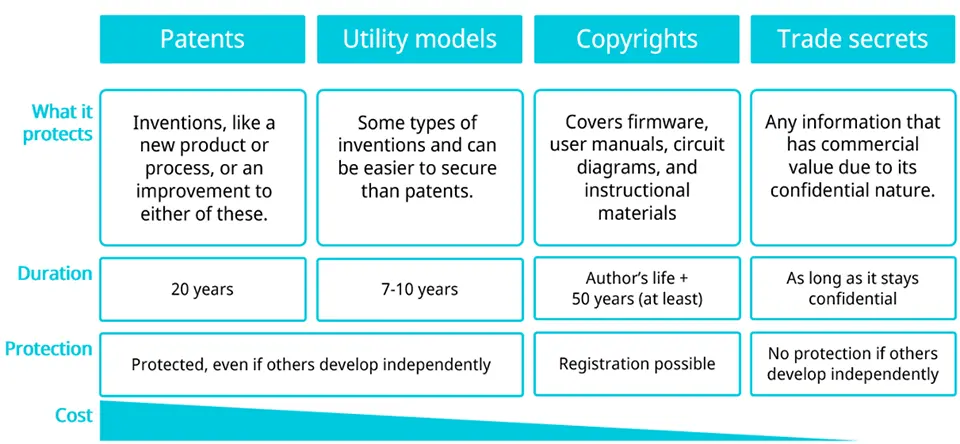
Most ventures use a mix of IP rights. This is true also with hardware, as it can be protected through multiple IP mechanisms, each serving different strategic purposes:
1. Patents for Hardware
Patents protect inventions for 20 years like a new product or process or an improvement to either of these.
2. Utility Models for Hardware
Utility models protect some types of inventions for 7 to 10 years and can be easier to secure than patents.
3. Copyrights for Hardware
Copyrights protect firmware, user manuals, circuit diagrams, and instructional materials during the author’s life and 50 years after the author’s death.
4. Trade secrets for Hardware
Trade secrets protect any information that has commercial value due to its confidential nature and lasts forever as long as it stays confidential.
Two Aspects to Consider when Registering for Hardware’ IP Protection
IP is an investment to get control over the destiny of inventions and innovations. It is important to make sure that the investment is cost-effective, by prioritizing:
1. IP Protection of Hardware in Key Markets
More countries mean higher costs of protection. Prioritize choice of markets strategically based on present and future commercial objectives:
- Manufacturing and production bases: protect IP in countries where hardware will be manufactured to prevent unauthorized copying during production.
- Distribution markets where innovation will be used: File in primary sales territories and markets where customers will use the hardware products.
- Markets where main competitors are active: secure protection in regions where competitors operate to prevent market entry with copied designs.
2. Timing when Registering Hardware for IP Protection
Innovations evolve rapidly. Strike a balance between speed to market and comprehensive IP protection:
- Check timing of R&D and publications: make sure the innovation is ready enough to be protected, and not disclosed in any other platform.
- Cost considerations and budget planning: ensure the venture can absorb IP filing and maintenance fees.
- Public disclosure implications: IP filings may reveal USP to competitors, make sure product is ready for launch.
6 Ways to Strategically Manage Hardware’ IP Portfolio
- Maintain hardware patent portfolios: Make sure maintenance fees are paid, and applications for new improvements and iterations filed.
- Secure hardware manufacturing: Include terms for suppliers and manufacturing partners to protect trade secrets and prevent IP leakage (link to suppliers / manufacturers agreements).
- Supply chain IP management: Establish clear policies for component sourcing and supplier agreements to protect proprietary designs and processes.
- License opportunities: Identify potential licensing partners for non-core hardware components or manufacturing processes available to market.
- Build a data room for IP records: Keep comprehensive IP records including patents, design files, manufacturing specifications for investor due diligence and potential acquisitions.
- Manufacturing partnerships: Explore strategic manufacturing agreements to enter new markets when commercializing hardware.
Protecting hardware through IP rights is a critical yet often underutilized strategy for ventures seeking to safeguard their competitive advantage. By leveraging a combination of IP mechanisms — including patents, utility models, copyrights, and trade secrets — ventures can build a comprehensive shield around their physical innovations. At the same time, once IP protection is established, ventures should actively and strategically maintain their IP portfolio to preserve its value.