With rising populations, growing economies and increasingly digital ways of living, the global demand for energy is set to continue its rapid increase. In 1950, the entire world used about 29,000 terawatt hours or energy; today, the United States alone consumes more than double that amount.
At the same time, economies are beginning a profound switch from petroleum-based energy sources – coal, oil and natural gas – to renewables like wind and solar. In the past decade alone, global renewable energy capacity has doubled, and continues to far outpace the growth of other energy sources.
The result of these two trends is a surge in the creation of low-carbon technologies and energy systems. China has been at the forefront of this shift: with its clean energy capacity increasing by more than a gigawatt every day, the country stands as the world’s biggest producer of renewable energy technology. This rapid pace is essential if China is to meet its “Dual Carbon” goals of reaching peak carbon emissions by 2030 and achieving carbon neutrality by 2060.
Efficient clean energy systems
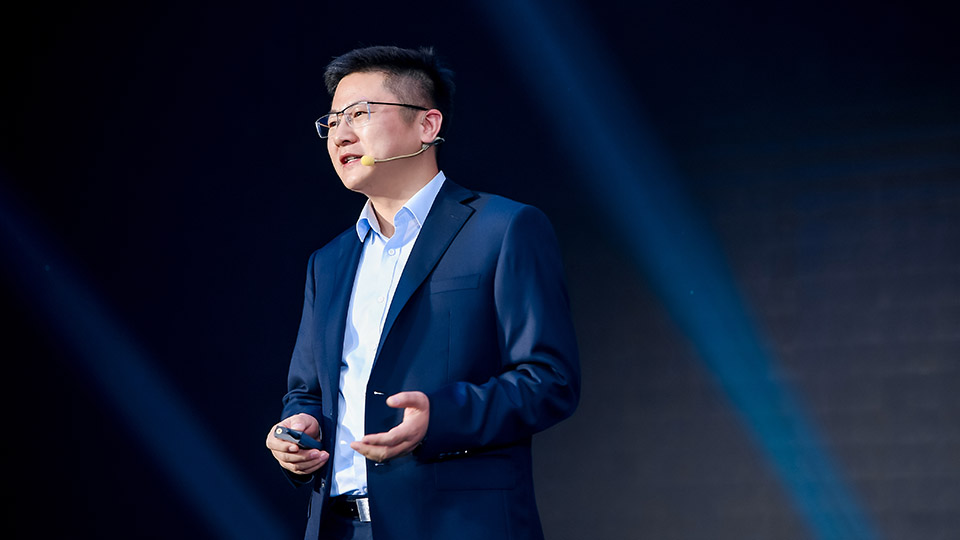
To achieve true sustainability, however, energy systems must not only be clean, but efficient. This is easier said than done. Modern energy systems are incredibly complex, incorporating a vast array of energy producers, pipelines, storage facilities and end-users, as well as the software needed to manage all these components. Sub-optimal coordination across the system inevitably results in inefficiencies and wasted energy. This is where Dr. Wang Lei steps in.
Over the course of 30 years in the energy sector, during which he led the design and delivery of energy systems around the world, Dr. Wang identified a fundamental flaw in the way energy was being delivered in his native China. The industry was trapped in what is known as a “push-type” supply model, whereby systems operate at maximum equipment capacity regardless of actual demand. This results in widespread uneven heating and cooling, massive pipeline transmission losses, and chronically inefficient operations. China’s energy systems were also reliant on algorithms developed overseas, meaning that the country lacked an integrated, domestically developed energy solution tailored to its industrial parks, commercial complexes and residential communities.
Driven to develop independent domestic energy systems and cut carbon emissions across society, Dr. Wang founded Shandong Bomo Intelligent Technology Co., Ltd. in 2016. He assembled a team of academics, system simulation specialists and algorithm engineers to launch an intensive research and development initiative for a new type of energy system. Drawing on data from over 3,000 completed energy projects and tens of thousands of simulations, this team pioneered the “pull-type” modular energy system.
Matching sustainable energy production to demand
A fundamental rethink of the operational logic of energy infrastructure, Shandong Bomo’s pull-type system uses real-time heating, cooling and power load data from building and factory endpoints to match energy production to actual demand. In addition, the technology breaks down large, complex energy systems into modular units that can be independently scheduled, making it much easier to optimize and expand energy supplies.
In the ten years since the company was founded, this technology has been deployed in more than a hundred comprehensive energy projects, including the 328-meter-tall Wuxi Suning Plaza Complex, Jinan Medical Center Industrial Park and a large residential community in South Nanyuan, Beijing. When the company is called to retrofit its technology onto existing systems, payback is usually achieved in just three years.
Industry recognition has followed: the company has won the 3rd Bluetech Award and the “Top Ten Energy-Saving Technologies” honor from China’s National Development and Reform Commission (NDRC). Shandong Bomo has also helped draft industry standards for public building energy efficiency in the populous Jiangsu Province, one of China’s financial and technological centers.
Comprehensive IP protection for the Hybrid Energy Operating System
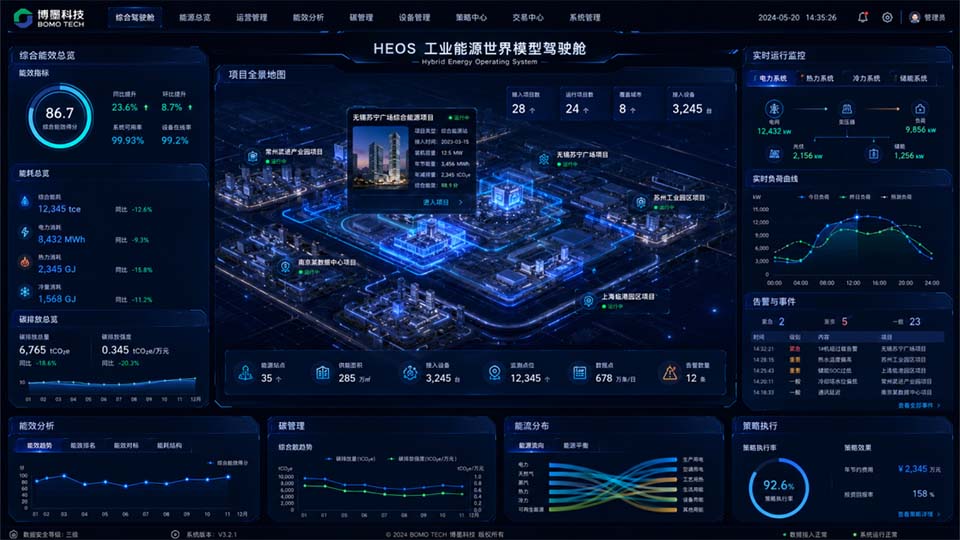
From the company’s founding, Dr. Wang’s team recognized that the core competitiveness of their energy system – which they named the Hybrid Energy Operating System (HEOS) – lay in its underlying theories, simulation algorithms and operating system architecture. Without comprehensive intellectual property (IP) protection, these innovations would be vulnerable to imitation.
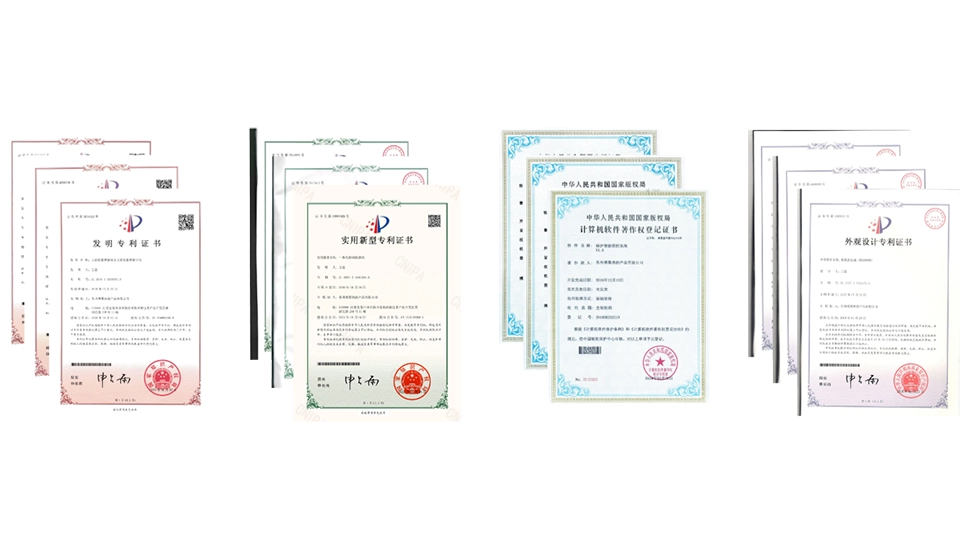
The company has therefore built a comprehensive IP portfolio comprising invention patents, utility model patents and full software copyrights, as well as proprietary technical know-how. Together, these cover all aspects of HEOS’s hardware, software and algorithm architectures, from digital modeling to fault prediction to dynamic energy allocation.
However, as the business expanded, the team identified gaps in its IP system, such as a lack of overseas patents, incomplete internal IP management workflows and no standardized valuation framework for IP assets in financing.
IP Management Clinic helps refine Shandong Bomo’s IP strategy
To address these gaps and clear the way for further commercialization and global expansion, in 2025 Shandong Bomo participated in WIPO’s IP Management Clinic (IPMC), implemented by Bluetech Clean Air Alliance. Now in its fifth year, the IPMC is a unique program that provides small and medium-sized enterprises with free professional IP advice to help them safeguard their property and maximize their potential, both at home and overseas.
Shandong Bomo was paired with IP attorneys who provided a thorough review of the company and offered tailored recommendations to improve its IP strategy and portfolio. Foremost among these suggestions was that Shandong Bomo conduct a comprehensive inventory and diagnostic review of its important IP assets. This would reduce the risk of technical leaks from outsourced projects and enable standardized valuation metrics for intangible assets.
The review would also help establish a tiered protection strategy for the company’s IP. This would see Shandong Bomo’s underlying algorithms and simulation models protected with international patent filings via the Patent Cooperation Treaty (PCT). Additional invention patents would be secured for auxiliary pipeline regulation technologies, while critical project simulation processes be designated as trade secrets.
IPMC experts also recommended that the company develop an internal IP governance framework, led by a newly created, dedicated IP role. Under this framework, the Shandong Bomo would embed mandatory IP risk reviews across all stages of research and development, project simulation and outsourced collaboration. The company was also encouraged to produce standardized non-disclosure agreements for employees and partners, and to introduce specialized IP training for staff on equity financing, industrial collaboration and global technology expansion.
Long-term transformation
The advice and mentorship provided by the IPMC has driven lasting change across Shandong Bomo. Following a full audit of core IP, the company finalized PCT overseas patent layout plans, creating a multi-layered protection framework that effectively blocks competitors from replicating essential system algorithms and simulation models. Dr. Wang and his team also embedded mandatory IP risk review mechanisms into system simulation, algorithm iteration and project delivery workflows, safeguarding core dispatch technology confidentiality from the project’s initial stages.
Thanks in part to these improvements, Shandong Bomo’s portfolio of patents and software copyrights became the main valuation driver for the company’s 100-million-yuan ($14.7 million) equity financing round, earning it important recognition from provincial new energy industrial funds. This lays a solid foundation of intangible assets for the company’s next steps: shareholding restructuring in 2026, followed by listing on China’s National Equities Exchange and Quotations and, in 2028, the Beijing Stock Exchange.
A vision for global impact with the pull-type energy system
Today, Shandong Bomo continues to improve its pull-type energy system for residential, commercial, industrial and data center scenarios. It has also partnered with Tianjin University to build a postdoctoral workstation, which will help optimize the company’s algorithms for load forecasting, multi-energy coordination and virtual power plant dispatch.
Dr. Wang remains steadfast to his original mission: to create low-cost, high-efficiency, full-chain intelligent energy solutions for industrial parks and buildings across China, using fully domestically developed energy systems supported by comprehensive global IP layout, all with the ultimate aim of accelerating delivery of China’s Dual Carbon goals.
Looking ahead, the company will leverage the IP framework established with the IPMC’s support to export its energy systems to international markets. Powered by proprietary technology and IP protection, Shandong Bomo plans to establish intelligent, efficient and low-carbon industrial and building energy systems worldwide.