Can a pocket-knife experiment in a Nevada desert grow into a globally-recognizable brand? In 1989, Italian entrepreneur Mario Moretti Polegato turned a walking-shoe frustration into one of the most distinctive intellectual property (IP) strategies in modern fashion — using patents to protect a core invention, and trademarks to build a brand that would outlast those patents.
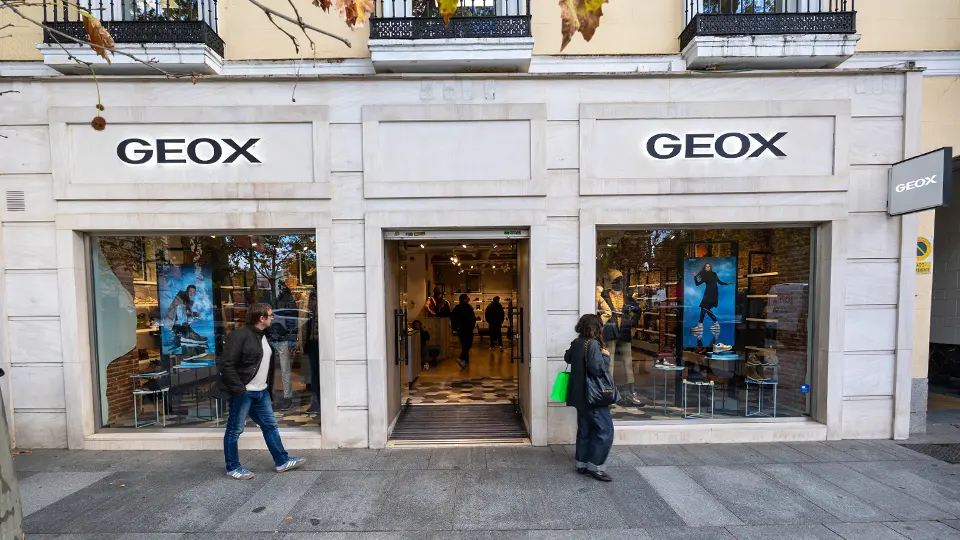
Today, the Geox Group operates more than 600 single-brand stores in over 60 countries and protects its products with 61 active patents and a further five pending applications across more than 60 jurisdictions. The business Mr. Polegato founded with a bank loan and five employees has become a textbook example of how IP, combined with disciplined branding, can turn a technical insight into a durable commercial asset.
Geox: innovation and fashion
Geox S.p.A. was founded in Montebelluna, Italy, in 1995. Its name combines the Greek word geo ("earth") with the letter x — a symbol, in the company's framing, of the advanced technology developed in its Italian laboratories and protected internationally through patents. Listed on the Milan Stock Exchange since December 2004, the group today designs, develops and distributes footwear, apparel and accessories that share a single defining feature: breathability.
From the outset, Geox has described itself as a technology company that happens to make shoes. That self-image is supported by a consistent R&D policy — the company has historically invested around 3% of turnover in research, innovation and IP protection — and by a layered IP strategy that combines utility patents on its core technologies with trademarks on the brand language that communicates them.
The idea for a breathable shoe
For Mario Moretti Polegato, the heat of the Nevada desert proved to be the ideal innovation climate. In 1989, during a business trip to Reno to promote his family's wine business at a trade fair, he took a walk and was bothered by his overheated feet. Using a hunting knife, he punctured several holes in the soles of his sneakers to let hot air escape — a crude but effective way to cool his feet in dry heat.
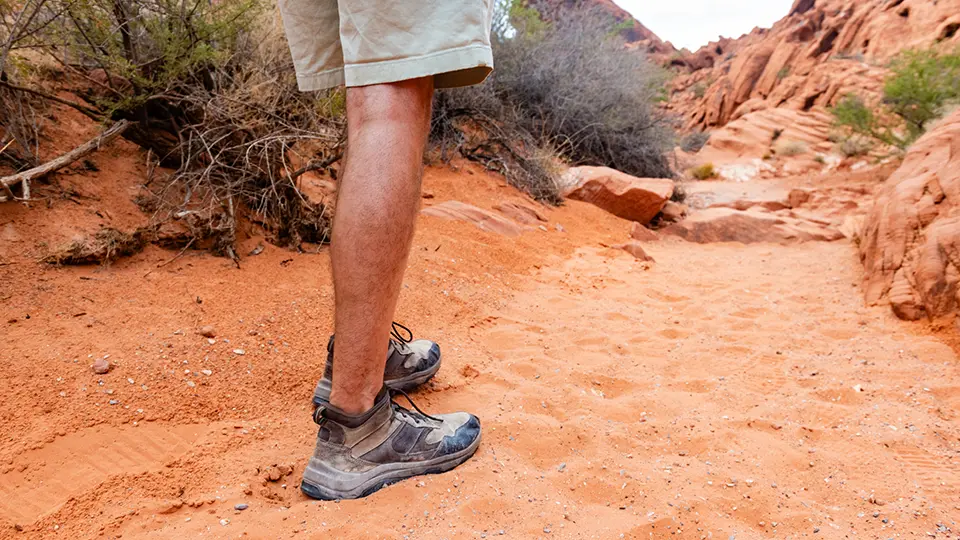
Back in Italy, Mr. Polegato — who holds degrees in wine technology and law — began researching his intuition in the workshop of a small footwear company owned by his family. After several years of experimentation on footwear construction, he arrived at the key insight: applying a membrane that was both waterproof and breathable, positioned between the foot and a perforated sole. The membrane's millions of micro-pores are smaller than a drop of water but larger than a molecule of water vapor, allowing perspiration to escape while keeping rain out.
Patenting a waterproof, breathable sole
The resulting technology consists of three components: a perforated outsole, a perforated mid-sole, and a membrane — permeable to vapor but waterproof — positioned between them. The combination allows vapor to move out while preventing water from entering. As soon as the rubber-sole version was in place, Mr. Polegato filed patent applications (EP0382904) in several countries to protect it. A parallel solution for leather soles (WO2004028284) was patented later through the Patent Cooperation Treaty (PCT) system for international patent filing.
From failed licensing to launching Geox
Mr. Polegato initially intended to license his patented technology to established shoe manufacturers, but none were interested. Rather than abandon the invention, he decided in 1995 to manufacture the shoes himself, backed by a bank loan and a workforce of five.
The company launched with a line of children's footwear — a strategic choice, given children's shoes' shorter life cycle, which reduced commercial risk while the concept was being validated. Once the market responded, the range was extended to men's and women's footwear. The decision to move from licensing to direct manufacture turned a strong patent into a full business.
Building the Geox trademark
The Geox name (WO500000000626350, registered since 1994) and logo (WO500000000572512, since 1991) have been registered internationally through the Madrid System, giving the company a single, streamlined route to protection across most of its target markets. Alongside the Geox word mark, the company has built a secondary signature trademark — Respira™ ("breathe" in Italian) — which now serves as the umbrella label for its breathable technologies across footwear and apparel (WO500000000869735, registered with the Madrid System since 2005).
This layered branding matters commercially: patents eventually expire, but trademarks, if actively used and renewed, do not. Even after an individual patent has lapsed, the consumer-facing language that signals "the shoe that breathes" — Geox, Respira, and the slogans used in marketing — remains owned by the company.
Extending the IP portfolio: from footwear to apparel
Those first filings in the 1990s became the seed of what is now a portfolio of patents, covering not only the original sole but a widening set of membranes, perforated geometries, aeration channels for apparel, and component-level innovations. For example, already in 1999, Geox filed patent applications using its breathable-and-impermeable concept on garments such as jackets, anoraks and sports jackets (IT1306681). After a testing phase, the "total breathable look" — Geox's own line of apparel — was commercialized.
Overall, over 1300 patent applications registered by Geox or Mr. Polegato since 1990 can be found on the PATENTSCOPE database. Among those, Geox registered 84 patent applications through the PCT system between the years 2001 and 2025.
In over 30 years of its existence, Geox has also considerably expanded its trademark and design portfolio. As of 2026, the Global Brand Database shows almost 500 records of trademark applications filed by Geox in over 100 countries, with over 350 active trademarks and over 20 trademark applications pending.
The Global Design Database also demonstrates the active use of different forms of IP protection at Geox. A simple search shows that between the years 2006 and 2026, Geox filed more than 900 design protection applications. As of 2026, over 500 of those are active, and 71 more applications are pending.
Sustainable innovation and next-generation materials
Since the late 2010s, Geox has extended its innovation pipeline into sustainability, applying the same patent-protected R&D model to lower-impact materials. The Spherica line uses uppers made from Econyl, a regenerated nylon derived from recycled fishing nets and PET bottles; a partnership with Italian textile specialist Manteco produced a fabric made up of 70% certified Mwool® regenerated wool; and the outerwear collection uses XDown regenerated padding and EcologicWARM synthetic padding obtained from recycled materials.
The sustainability agenda has also shaped the group's external commitments. Geox is a signatory of The Fashion Pact, has committed to decarbonization targets through the Science Based Targets initiative (SBTi), and is a member of the Leather Working Group. Packaging moved to FSC-certified materials in 2020 and to fully recyclable materials in 2023. A 2022 capsule collection with ACBC — a B Corp specialized in circular footwear — combined the Geox breathable sole with bio-based and recycled components, a model for how patented core technology can be deployed alongside third-party sustainability innovation.
A global brand built on patents and trademarks
Between 2000 and 2003, the group expanded internationally using a balanced mix of multi-brand points of sale and single-brand Geox Shops. The 2005 opening of a boutique on New York's Madison Avenue marked its breakthrough in North America. In 2009, Geox acquired Italian sportswear brand Diadora, broadening its presence in athletic footwear without diluting the core Geox brand. In 2010, the group inaugurated the "Breathing Building" in Milan's historic city center — the largest Geox Shop in the world and the brand's flagship store.
According to the Annual Report 2024, the Geox Group operates 616 single-brand shops — 240 directly managed and 376 franchised — alongside roughly 9,000 multi-brand points of sale worldwide. Europe remains the largest market, with Italy, Germany, France, Spain and the Iberian Peninsula together accounting for the majority of sales. The company reported total revenues of €720 million in 2023 and, in September of that year, named Spanish actress Penélope Cruz as its first-ever global brand ambassador — tying the long-standing "shoe that breathes" message to a contemporary face. Through a difficult industry environment between 2020 and 2024, the company's patented technology platform and internationally registered trademarks remained the core competitive assets the business has been repositioned around.
Intellectual property as a lasting competitive edge
The Geox story is, at its core, the story of a small technical idea protected and extended with care. Ever since its inception, the group has maintained a company policy aimed at enhancing technological innovation, creatively using different types of IP protection. According to the Annual Report 2024, the group spent €9.6 million on research and development in 2024.
That constant stream of patented inventions gives Geox a specific competitive edge: because new patents keep arriving, competitors cannot simply wait for an earlier patent to expire and copy the product unchanged. At the same time, the globally registered Geox and Respira trademarks keep the company instantly recognizable to consumers around the world. Overall, Geox's IP-first approach can be summed up in its founder's quote:
«It's time to invest in ideas. An idea is worth more than a factory.»
Mario Moretti Polegato