As Djibouti prepares to introduce substantive examination of patent applications, a South-South cooperation program with Algeria is helping the country’s IP office build the skills, procedures, and institutional capacity needed to serve innovators, entrepreneurs, and researchers seeking to develop and protect new technologies.
Effective patent protection takes more than filing an application. It also depends on access to reliable patent information, skilled examiners, and clear procedures for assessing whether an invention meets the legal requirements for patentability.
The Djibouti Industrial and Commercial Property Office (ODPIC) is working with Algeria’s National Institute of Industrial Property (INAPI), supported by WIPO and the Funds-In-Trust Japan. In September, senior ODPIC officials took part in a week-long, practice-oriented training in Algiers. Drawing on INAPI’s experience, the training covered the regulatory frameworks of both countries, filing procedures, prior art searches, examination, appeals, and the use of the Patent Cooperation Treaty (PCT).
What stronger examination capacity means for innovators
When an IP office examines a patent application, it assesses whether the invention meets the requirements for patent protection, including novelty, inventive step, and industrial applicability. Patents granted after substantive examination give applicants greater legal certainty and help build confidence in the national IP system among investors and business partners.
Developing this expertise requires examiners to know how to search existing patent information, assess prior art, apply examination procedures, and communicate their findings consistently. Participants also looked at how examiners can draw on work already done by other offices. International search reports and written opinions issued under the PCT, along with tools such as PATENTSCOPE and WIPO CASE, can give examiners useful technical information when processing applications, in accordance with national law and practice.
I would like to express our deepest appreciation to WIPO and Algeria’s INAPI for this first-of-its-kind South-South cooperation in building patent examination capacity in Africa. Upon return to Djibouti, I will make sure that the action plan on patent examination and processing is executed to ensure sustainable impact in the future and follow up on the establishment of a memorandum of understanding (MoU) between the University of Djibouti and the Houari Boumediene University of Science and Technology.
Mr. Abdourahman Hassan Moussa, Head, Planning and Project Management Service and TISC Focal Point, ODPIC.
Supporting researchers in making informed IP decisions
The path to patent protection can also start well before an application reaches a patent office. For researchers and universities, understanding what has already been developed helps determine whether a technology is new, whether similar work has been disclosed, whether there is scope for further research, and whether to publish, seek patent protection, or explore a partnership.
Technology and Innovation Support Centers (TISCs) help researchers and innovators make these decisions earlier. Depending on the services available, TISCs provide access to patent information, conduct searches, monitor technological developments, and advise on options for IP protection and commercialization.
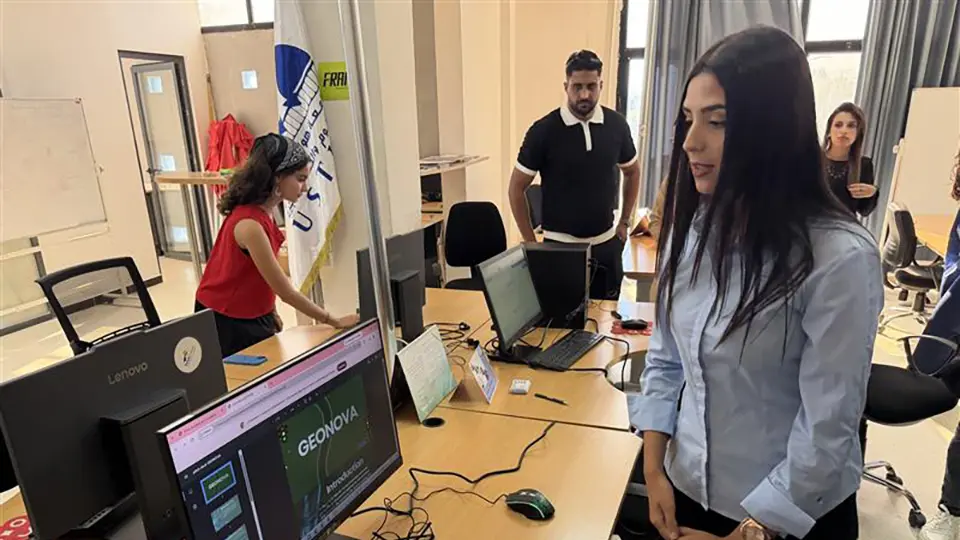
As part of the program, the Djiboutian delegation visited the TISC at the Houari Boumediene University of Science and Technology (USTHB), located in the Startups Hall, which incubates promising artificial intelligence (AI) startups. They held a working session with INAPI’s pilot TISC and representatives of Algeria’s TISC network. The visit showed how an IP office can connect its patent expertise with universities and research communities, bringing IP support closer to where new technologies are developed. ODPIC and INAPI agreed on a joint action plan, which includes strengthening collaboration between TISC networks of Algeria and Djibouti, sharing tools, materials, and good practices, and holding regular exchanges. The Algerian TISC network is one of the largest in the world, with 158 centers.
Using the PCT System for international protection
ODPIC officials also explored how INAPI uses the PCT System in its daily work and how it supports Algerian applicants. Alongside the training, the WIPO Algeria Office delivered two seminars on the PCT System, one for 13 project leads in Algeria and the other for 30 TISCs.
The PCT System allows inventors to seek protection in over 155 Contracting States through a single international application. It also gives them up to 30 months from their first filing before they need to pursue protection country by country, time they can use to assess commercial potential, secure funding, or identify licensing partners.
During this period, applicants receive an international search report and a written opinion from an International Searching Authority, covering relevant prior art and giving a preliminary, non-binding opinion on patentability. This helps them decide whether and where to proceed before committing to national or regional filings.
Applicants from Djibouti can file international applications with ODPIC or with WIPO, including online through ePCT.
Building an innovation ecosystem that serves users
In the longer term, stronger examination capacity contributes to an environment in which inventors can navigate the patent system, researchers can identify and protect new technologies, SMEs and entrepreneurs can make informed decisions about IP, and institutions can support knowledge and technology transfer as research moves toward commercialization.
South-South cooperation is particularly valuable because offices that have built examination capacity can share approaches, tools, and lessons that peer offices can adapt to local needs.
The initiative forms part of WIPO’s International Cooperation on Search and Examination (ICSE) Program and WIPO's broader work to promote knowledge sharing and support Member States in developing IP ecosystems that foster innovation and economic development. This cooperation will serve as a model for other IP offices that are introducing or strengthening their patent examination capacity.
For further information about international cooperation on search and examination, contact WIPO.
Related links
Patent and Technology Information
PCT – The International Patent System
Funds-In-Trust Japan Industrial Property Global
ODPIC – Office Djiboutien de la Propriété Industrielle et Commerciale