Making a living in the creative industries means many different things to different people. For some it represents an ideal of creative freedom, for others a business strategy for economic performance. Individual motivations and roles are as varied as the activities that make up the creative industries – a sector that includes a range of activities from architecture to production of video games.
Whatever creative industry role interests you, and whatever your motivation, intellectual property (IP) is crucial.
How to Make a Living in the Music Industry
Building a successful career in music involves abilities to manage IP rights. WIPO supports authors and performers in enhancing their knowledge of the intellectual property aspects involved in their professional work. Copyright and related rights can help musical authors and performers to generate additional income from their talent.
In this area of work WIPO is assisting music professionals in identifying their income streams, based on their IP. It provides practical information to authors and performers who are in the process of establishing themselves in the market and clarifies the interface between talent and creativity on the one hand and management skills and entrepreneurship, on the other hand. An important factor for success is the existence of an enabling infrastructure involving copyright management structures and appropriate compensations schemes.

How to Make a Living in the Film Industry
Films are considered an important art form with social, cultural and economic impact. They are essentially collaborative works, fusing the creativity and effort of a multitude of collaborators: scriptwriters, actors, directors, costume and set designers, music composers, to name a few.
Copyright is present in all stages in the making of the film (development, financing, marketing and distribution) and it is important that key players in the industry know what and how the various rights can be protected. It is necessary that contractual agreements defining copyright ownership and its use be put in place, not only to protect the interests of all concerned, but also to facilitate financing and distribution, avoid costly disputes and reduce the risk of illegal reproduction.
To build awareness about the importance of copyright in the making of films, WIPO collaborated with public and private partners in the film industry and implemented technical cooperation projects in the field of creative industries in coordination with other relevant entities. An important development in this area is the recent adoption of the Beijing Treaty on Audiovisual Performances, which formally recognizes and strengthens the economic and moral rights of performers.
The WIPO Academy offers an advanced distance learning course in copyright and related rights, including the collective management of rights.

How to Make a Living in the Video Game Industry
People working in different creative industries, such as music, film, publishing, and now interactive entertainment software – or video games – have specific information needs regarding different intellectual property (IP) issues. WIPO’s “How to Make a Living” publications address those needs.
The video game industry - where cutting edge creativity meets the latest technology - is the fastest growing content sector in the world. Yet its entrepreneurs and creators, especially in small and medium-sized enterprises, may be unaware of the legal and business implications of IP when they create and distribute content. Video game developers may, for example, have little knowledge of the importance of copyright in negotiating contracts that will determine ownership of the creative content in their video games.
Mastering the Game: Business and Legal issues for Video Game Developers explains key business and legal issues to help video game developers promote and protect their copyright works.
How to Make a Living in the Publishing Industry
Copyright is perhaps the most significant intellectual property (IP) right in relation to the publishing industry. Publishers, at the outset, need to acquire from authors the exclusive rights of reproduction and distribution, which are recognized by the WIPO-administered Berne Convention for the Protection of Literary and Artistic Works (the Berne Convention) and the WIPO Copyright Treaty (WCT).
Publishers play a key role in making literary works known and available to the reading public. They are responsible for acquiring, preparing, managing, marketing, selling and distributing such works. They are also the creators, managers, acquirers and custodians of numerous IP rights, possessing certain rights in the books that they produce and sell, and holding rights on behalf of third parties.
To a large extent, the relationships in the publishing industry are traditionally managed on an individual, or rather on a one-to-one basis. Yet the increasingly widespread use of the photocopying technology has led to an explosion of the reproduction of printed works. Copying takes place everywhere and by everybody. Consequently, rights holders mandate organizations to manage their rights collectively. Such organizations issue licenses for the reproduction of literary and artistic works. They collect the fees, and channel them back to the authors and publishers. In the case of literary works, such collecting societies are known as Reproduction Rights Organizations (RROs).
Distance Learning
The WIPO Academy offers a distance learning course on managing IP in the book publishing industry, which serves as a basic guide to publishers who wish to increase their understanding of how to manage IP rights in a business context.
How to Make a Living in the Advertising Industry
The advertising industry plays a key role in marketing strategies of enterprises. Advertising has become an important strategic tool for enterprises wanting to stand out or position themselves in the market place. The importance of advertising is increasingly appreciated by enterprises given the intensification of competition among producers/providers of goods and services.
Technological advances have enhanced the capacity of enterprises to reach out to potential customers in distant markets. At the same time, customers continue to be faced with multitude of products and services in the market place from which they have to choose in order to have optimal satisfaction and value for their money. This reality has lead to the growth of the Advertising industry and advertisements are the main products of the industry. However, for an advertisement to be released to a potential market, it requires inputs from a combination of creative works, most of which are protected by intellectual property (IP).
WIPO’s publication “Managing Intellectual Property in Advertising Industry” provides details of the value chain in the preparation of an advertisement, the types of IP that are associated with a particular creative work contributing to the advertisement, important issues in managing IP in the advertizing industry and some best practice case studies.
How to Make a Living in Creative Enterprises
A growing number of studies have recently demonstrated the impressive contribution of creative enterprises to economic growth, jobs and wealth creation.
These enterprises which are professionally involved in the creation, production and distribution of creative goods and services have established themselves as an integral component of the vibrant creative economy. They often rely on various forms of intellectual property (IP) to boost their income streams.
WIPO supports creative businesses entrepreneurs in enhancing their IP knowledge, management skills and ability to grow their businesses. In its capacity building activities in this specific area it focuses on understanding the specifics of the creative markets, their funding, marketing and managing IP assets in the process of setting up and running viable creative businesses.
Intellectual Property Rights for Mobile Applications
Mobile apps are protected by various IP rights including but not limited to copyright, trademark and patent. Protecting your mobile app reviews. This publication examines the mobile application value chain and provides a legal checklist for determining applicable intellectual property rights, protective measures, and strategic approaches.
Cómo ganarse la vida en las industrias creativas
Ganarse la vida en las industrias creativas significa cosas muy diferentes según cada persona. Para algunos, representa un ideal de libertad creativa; para otros, una estrategia empresarial orientada al rendimiento económico. Las motivaciones y los perfiles profesionales son tan diversos como las propias actividades que integran las industrias creativas, un sector que abarca desde la arquitectura hasta el desarrollo de videojuegos.
Sea cual sea el puesto que le interese en la industria creativa, y sea cual sea su motivación, la propiedad intelectual (PI) es fundamental.

Cómo ganarse la vida en las industrias creativas
año de publicación: 2017
El cine se considera una forma de arte importante por su impacto social, cultural y económico. Se trata, en esencia, de obras colaborativas que aúnan la creatividad y el esfuerzo de multitud de profesionales: guionistas, actores, directores, diseñadores de vestuario y escenógrafos, compositores, por nombrar solo algunos.
Con el fin de sensibilizar sobre la importancia del derecho de autor en la producción cinematográfica, la OMPI ha colaborado con interlocutores públicos y privados del sector cinematográfico y ha puesto en marcha proyectos de cooperación técnica en el ámbito de las industrias creativas, en coordinación con otras entidades pertinentes. Una novedad importante en este ámbito es la reciente adopción del Tratado de Beijing sobre Interpretaciones y Ejecuciones Audiovisuales, que reconoce oficialmente y refuerza los derechos patrimoniales y morales de los artistas intérpretes o ejecutantes.
Con el fin de sensibilizar sobre la importancia del derecho de autor en la producción cinematográfica, la OMPI ha colaborado con interlocutores públicos y privados del sector cinematográfico y ha puesto en marcha proyectos de cooperación técnica en el ámbito de las industrias creativas, en coordinación con otras entidades pertinentes. Una novedad importante en este ámbito es la reciente adopción del Tratado de Beijing sobre Interpretaciones y Ejecuciones Audiovisuales, que reconoce oficialmente y refuerza los derechos patrimoniales y morales de los artistas intérpretes y ejecutantes.
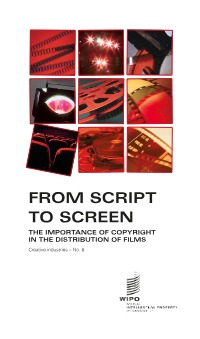
Del guion a la pantalla: La importancia del derecho de autor en la distribución de películas
año de publicación: 2011
La industria de los videojuegos —donde la creatividad de vanguardia se une a la tecnología más avanzada— es el sector de contenidos de más rápido crecimiento en el mundo. Sin embargo, es posible que sus empresarios y creadores, especialmente en las pymes, no sean conscientes de las implicaciones legales y empresariales de la PI a la hora de crear y distribuir contenidos. Los desarrolladores de videojuegos, por ejemplo, pueden tener un conocimiento limitado de la importancia que tiene el derecho de autor a la hora de negociar contratos que determinarán la titularidad de los contenidos creativos de sus videojuegos.
En la publicación "Dominar el juego: Aspectos comerciales y legales para desarrolladores de videojuegos", se explican aspectos empresariales y legales esenciales para ayudar a los desarrolladores de videojuegos a promocionar y proteger sus obras protegidas por derecho de autor.

Dominar el juego: Aspectos comerciales y legales para desarrolladores de videojuegos
año de publicación: 2022
El derecho de autor es, quizá, el derecho de PI más importante en el sector editorial. En primer lugar, los editores deben obtener de los autores los derechos exclusivos de reproducción y distribución, que están reconocidos en el Convenio de Berna para la Protección de las Obras Literarias y Artísticas (Convenio de Berna), administrado por la OMPI, y en el Tratado de la OMPI sobre Derecho de Autor (WCT).

Gestión de la propiedad intelectual en la industria editorial de libros
año de publicación: 2007
En gran medida, las relaciones en el sector editorial se han gestionado tradicionalmente de forma individual, es decir, entre partes concretas. Sin embargo, la expansión del uso de la fotocopia ha provocado un crecimiento exponencial de la reproducción de obras impresas. La copia de obras se realiza en todas partes y por todo tipo de usuarios. De ahí que los titulares de derechos encarguen a ciertas organizaciones la gestión colectiva de sus derechos. Dichos organismos conceden licencias para la reproducción de obras literarias y artísticas. Recaudan las regalías y las distribuyen a los autores y editores. En el caso de las obras literarias, estas entidades de gestión colectiva se conocen como organismos de derechos de reproducción.
Enseñanza a distancia
La Academia de la OMPI ofrece un curso de enseñanza a distancia sobre la gestión de la PI en el sector editorial, que sirve de guía básica para los editores que desean comprender mejor cómo gestionar los derechos de PI en el contexto empresarial.
El sector publicitario desempeña un papel fundamental en las estrategias de marketing de las empresas. La publicidad se ha convertido en una herramienta estratégica clave para las empresas que buscan diferenciarse o consolidar su posición en el mercado. Las empresas valoran cada vez más la importancia de la publicidad, dada la intensificación de la competencia entre los productores y proveedores de productos y servicios.
Los avances tecnológicos han mejorado la capacidad de las empresas para llegar a clientes potenciales en mercados lejanos. Al mismo tiempo, los consumidores se enfrentan a una oferta cada vez más amplia de productos y servicios entre los que deben elegir para obtener la mejor satisfacción y relación calidad-precio. Esta realidad ha impulsado el crecimiento del sector publicitario, cuyos principales productos son los anuncios publicitarios. Sin embargo, para que un anuncio pueda llegar al mercado, es necesaria la combinación de diversas obras creativas, la mayoría de ellas protegidas por derechos de PI.
La publicación de la OMPI “Gestión de la propiedad intelectual en la industria publicitaria” ofrece información detallada sobre la cadena de valor en la elaboración de un anuncio, los tipos de propiedad intelectual asociados a las distintas obras creativas que lo integran, las principales cuestiones relacionadas con la gestión de la propiedad intelectual en la industria publicitaria y diversos casos prácticos de buenas prácticas.

Gestión de la propiedad intelectual en la industria publicitaria
año de publicación: 2011
Cada vez más estudios ponen de relieve la notable contribución de las empresas creativas al crecimiento económico, el empleo y la generación de riqueza.
Estas empresas, que se dedican profesionalmente a la creación, producción y distribución de productos y servicios creativos, se han consolidado como un componente esencial de la dinámica economía creativa, y a menudo recurren a diversas formas de PI para potenciar sus fuentes de ingresos.

Gestión de empresas creativas
año de publicación: 2006
La OMPI ayuda a los emprendedores del sector creativo a ampliar sus conocimientos sobre PI, mejorar sus habilidades de gestión y potenciar su capacidad para hacer crecer sus negocios. En sus actividades de capacitación en este ámbito, se centra en comprender las particularidades de los mercados creativos, su financiación, la comercialización y la gestión de los activos de PI a lo largo del proceso de creación y desarrollo de empresas creativas viables.

Monetización de los activos derivados del derecho de autor por las empresas creativas
año de publicación: 2014
Las aplicaciones móviles están protegidas por diversos derechos de PI, entre los que se incluyen, entre otros, el derecho de autor, las marcas y las patentes. Protección de las aplicaciones móviles En esta publicación se examina la cadena de valor de las aplicaciones móviles y se ofrece una lista de verificación para determinar los derechos de propiedad intelectual aplicables, las medidas de protección y las estrategias pertinentes.

La protección de las aplicaciones móviles
año de publicación: 2021